Turnkey CRM + Lead Funnel: The Unified System That Turns Leads Into Customers
11 min read · AstraLoop Studio
Most companies buy the funnel on one side and the CRM on the other. An agency builds the campaigns and landing pages, a software vendor sells the platform licenses, and in between sits a black hole. The leads the funnel generates almost never make it into the CRM in the right way, with the right status, at the right time. You know the result all too well: contacts coming in from Facebook or Google and sitting untouched in a spreadsheet, WhatsApp inquiries left unanswered for two days, quotes sent out and never followed up on.
The problem isn't the tools. The problem is keeping them separate. A turnkey CRM + lead funnel system starts from the opposite idea: the funnel and the CRM aren't two products, they're two parts of the same engine. The funnel generates and qualifies demand, the CRM works it through to the sale, and between the two flows a continuous, automatic stream of data. In this article we'll look at how to build this unified system, how the funnel feeds the CRM step by step, where automation and AI come in, and why WhatsApp integration moves the numbers.
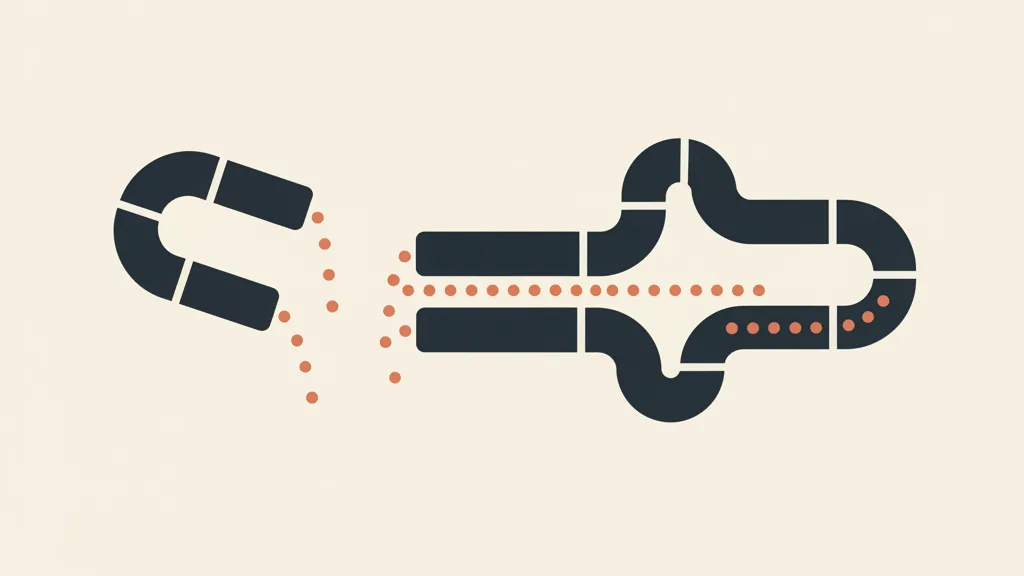
Why a Separate Funnel and CRM Don't Work
Picture the journey of a typical contact. They click an ad, land on a landing page, and leave their name, email, and phone number. So far, the funnel has done its job. Then what happens? In most Italian companies, here's what happens: the lead lands in an email notification, someone copies it by hand into a CRM (or doesn't copy it at all), nobody knows whether it's already been followed up on, and three days later the contact has gone cold. You paid to generate it, and you threw it away.
This friction has a precise name. It's the point where marketing and sales hand off the baton and drop it. When the funnel and the CRM live in two disconnected worlds, every handoff is manual, every manual handoff is a chance for error, and every error costs you a lead you paid for. If you want to understand the structural difference between the two tools, we cover it in detail in our piece on the difference between a funnel and a CRM. In short: the funnel is the path that brings the contact to you, the CRM is the memory and the engine that works it afterward. You need both, but you need them connected.
This isn't a philosophical point, it's an economic one. Every lead has a cost (your cost per lead), and if half your leads get lost in the handoff from funnel to CRM, you've doubled the real cost of every acquired customer without realizing it. An integrated system doesn't generate more leads. It makes sure the ones you do generate don't evaporate.
The Unified System: How the Funnel Feeds the CRM
The difference between "a funnel and a CRM" and "a CRM + funnel system" comes down to one word: flow. In a turnkey system, the lead isn't copied, it's delivered. Let's walk through the end-to-end journey, the way it looks when it works well.
1. The Funnel Captures and Qualifies
The funnel isn't just the landing page. It's the whole sequence that turns a stranger into a qualified contact: ad, landing page, form, and often a short qualification step (a few questions that tell you whether the lead is on target). The stages of this journey are the classic ones from the TOFU MOFU BOFU model, and if you want to build one from scratch we have a dedicated guide on how to build a customer acquisition funnel.
2. The Lead Enters the CRM Already "Ready"
The moment the contact submits the form, the system automatically creates the record in the CRM. Not tomorrow, not whenever someone notices: right away. And it doesn't arrive "bare" — it comes in with the source (which campaign, which ad, which keyword), the qualification answers, and an initial score. The salesperson who opens the CRM in the morning doesn't find a name and a number, they find a contact with context.
3. The CRM Assigns, Prioritizes, and Starts the Follow-Up
This is where the CRM starts working. It assigns the lead to the right salesperson based on rules (territory, product, availability), places it in the pipeline with the correct status, and triggers the first automatic follow-up. The distinction between MQL and SQL becomes operational here: a still-lukewarm lead enters a nurturing sequence, a purchase-ready lead gets pushed to the top of the salesperson's list with a notification. That's the difference between a CRM that's an archive and a CRM that's an engine.
4. The Sale Closes, the Data Stays
The salesperson works the deal inside the CRM: notes, calls, quotes, reminders. Every interaction stays on record. When the lead becomes a customer, that history isn't lost — it feeds post-sale support, renewals, and future reactivations. It's the same principle as the single source of truth: one place where the whole truth about the customer lives, from the first click to the umpteenth repeat purchase.
This is the flow we mean when we talk about a funnel that feeds the CRM. It's not a bolt-on technical integration, it's the system's architecture itself.
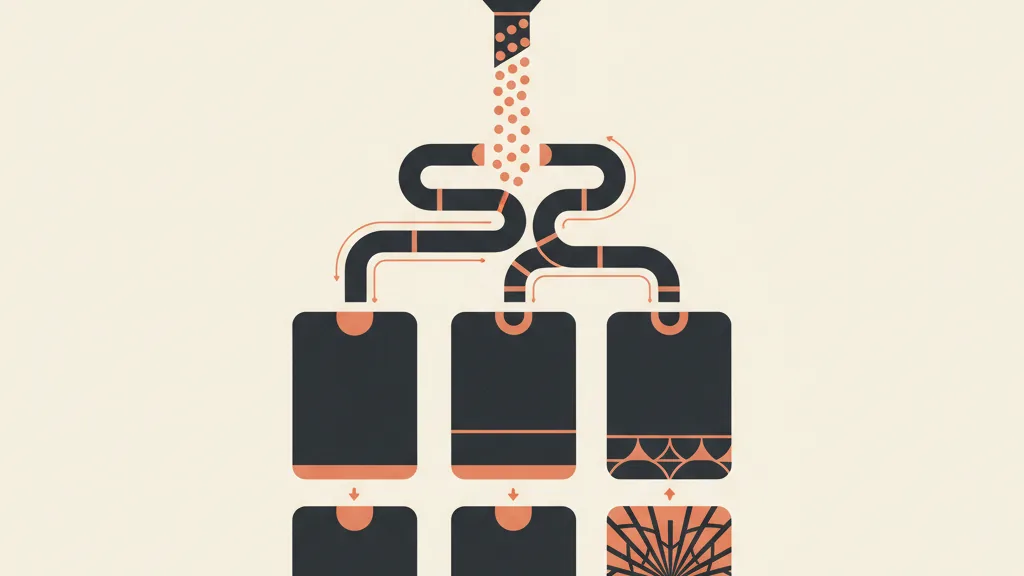
Custom CRM: Why "Turnkey" Means Tailor-Made
There's a shortcut a lot of companies take: buy an off-the-shelf CRM (HubSpot, Salesforce, whatever platform) and try to bolt the funnel onto it with no-code tools. It works, within certain limits. But the limits show up fast, and they're always the same: you pay for licenses on features you don't use, you run into fields and workflows that don't match how you actually sell, and every customization costs extra. It's the difference between buying off the rack and going to a tailor.
A custom CRM starts from your actual sales process, not from a template. The pipeline stages are yours, the automations follow the way you work, the fields capture the data you actually need. And above all, the funnel isn't "connected afterward" — it's designed alongside the CRM, so the flow we talked about above is native, not a patch job. We compared the two paths in custom CRM vs. SaaS: when each one is worth it, and here's the short version: below a certain complexity, SaaS is enough; above it, custom pays for itself quickly.
"Turnkey" adds the last piece: you don't receive software for you to configure — you get the system already built, populated, integrated with your channels, and ready to work. From the funnel to the CRM to the automations, everything set up for your specific case. If you want to understand the scope and the cost, we cover it in custom CRM with integrated funnel and in the guide to the cost of a custom CRM.
Where Automation and AI Come In
An integrated system opens the door to a level that's nearly impossible with separate tools: intelligent automation. We're not talking about "sending an automatic email" (anyone can do that), but about putting the data the funnel collects to work making decisions.
Automatic Lead Scoring
The CRM can assign a score to every lead based on behavior (pages viewed, emails opened, form answers) and source. The hottest leads rise to the top, and salespeople stop wasting time on cold contacts. With AI, this becomes predictive lead scoring: the system learns from the customers you've already closed which signals actually matter.
Follow-Ups That Don't Get Forgotten
The classic black hole in sales is the follow-up. The lead asks for a quote, you send it, and then? In most cases, silence. AI-driven sales follow-up automation closes this gap: scheduled sequences that recontact the lead if they don't reply, automatic reminders for the salesperson, and for stalled quotes a dedicated automatic recovery flow for unclosed quotes. These are customers you'd already have lost, recovered without adding manual work.
AI Agents That Qualify and Book Appointments
The most recent step is delegating part of the qualification to an AI agent. An AI agent that qualifies leads on WhatsApp can respond in real time to anyone who writes in, ask the right questions, and pass on to the salesperson only the contacts who are ready, with an appointment already on the calendar. It's AI business process automation applied to sales: not replacing people, but taking the repetitive work that slows them down off their hands.
Want to understand how to connect your funnel and CRM into one system that never loses a lead again? Request a free analysis of your acquisition process.
WhatsApp Integration: Where Italian Leads Actually Respond
In Italy there's a fact you can't ignore: people respond on WhatsApp far more than to emails or calls from unknown numbers. A lead who ignores three emails will open and reply to a WhatsApp message within minutes. If your system doesn't speak WhatsApp, you're leaving most of the conversations on the table.
WhatsApp-CRM integration means every WhatsApp conversation becomes part of the contact's record: messages get logged in the CRM, the salesperson sees the full history, and automations can kick off right from there. A lead coming from the funnel gets an automatic first WhatsApp message, an AI agent qualifies them, and if they're on target the appointment lands on the salesperson's calendar without anyone lifting a finger. This is the heart of WhatsApp Business automation with AI, and it's often the single integration that moves the numbers the most in an Italian acquisition system.
The Numbers: What Changes With an Integrated System
It's worth looking at the effect in concrete terms. These aren't guarantees (they depend on the industry and the starting point), but they're the order of magnitude we see when companies move from disconnected tools to a unified system.
| Metric | Separate Funnel and CRM | Turnkey Integrated System |
|---|---|---|
| Time to respond to a lead | Hours or days | Seconds or minutes (automatic) |
| Leads lost in the marketing-to-sales handoff | High (manual entry) | Near zero (automatic flow) |
| Follow-ups executed | Depends on the salesperson's memory | 100% (automatic sequences) |
| Lead source traceability | Often absent | Complete (from campaign to sale) |
| Quotes recovered | Few, at random | Systematic (automatic recovery) |
The metric that sums it all up is cost per acquired customer. When you stop losing leads in the handoff and recover the forgotten follow-ups, your CAC goes down even without touching ad spend: you're simply monetizing leads you used to throw away. That's why an integrated system often pays for itself faster than you'd expect.
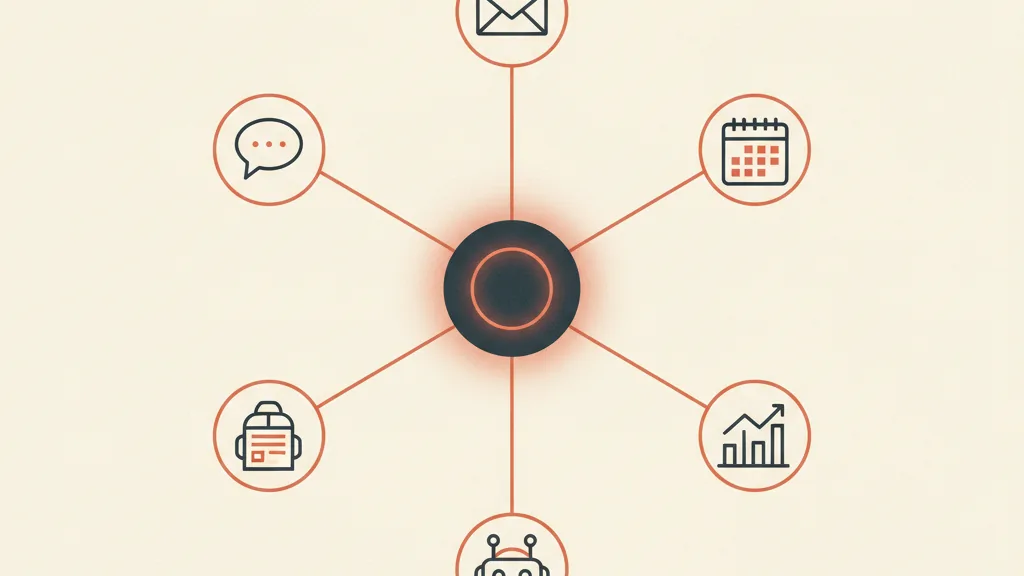
How It's Built, in Practice
A well-executed turnkey project follows a precise sequence. It's not "let's install some software," it's "let's map how you sell and build the system around it."
- Sales process analysis. How customers reach you today, where they get lost, what the real stages of the deal are. This is where the pipeline structure comes from.
- Funnel design. Channels, landing pages, forms, qualification logic. The funnel is designed to deliver leads to the CRM already enriched with context.
- Building the custom CRM. Pipeline, fields, automations, roles and permissions modeled on how you work.
- Integrations. WhatsApp, email, calendar, and any existing platforms or software already in use. This is the piece that makes the system "one engine" instead of a pile of parts.
- Automation and AI. Lead scoring, follow-up, qualification agents, quote recovery.
- Population and rollout. The system arrives already configured and tested, with the team trained to use it from day one.
As for timelines, a project like this isn't an app you install in an afternoon, but it isn't an endless build either: in our guide on how long it takes to implement a CRM you'll find realistic ranges. The important thing is that the value doesn't arrive at the end: a funnel that starts delivering leads correctly to the CRM produces results within the first few weeks.
Who It's For (and Who It's Not)
A turnkey CRM + funnel system makes sense when you have a lead volume that justifies it and a sales process with more than one step. If you sell an impulse product with a single click, you need far less than this. But if you work with leads that need to be qualified, recontacted, and followed over time, then the integrated system is what separates companies that grow predictably from those that live off word of mouth, with good months alternating with empty ones.
This pillar is the hub of our cluster on how to integrate a CRM and sales funnel. If you want to widen the view to the whole acquisition system, start with the master guide on the customer acquisition system and the turnkey automatic one. If instead your focus today is generating more contacts upstream, the starting point is B2B lead generation. And if you'd rather see first what an engagement like this costs and includes, we cover it in the custom CRM quote guide.
The underlying rule stays the same: stop buying the funnel on one side and the CRM on the other. Buy them together, as a single system, and turn the leads you're already paying for into customers who stick around.
Frequently asked questions
What's the difference between a CRM and an acquisition funnel?
The funnel is the path that turns a stranger into a qualified contact (ad, landing page, form, qualification). The CRM is the system that works that contact through to the sale and keeps its history. You need both: on their own they're worth little, connected they become a system that carries the lead all the way to the customer.
What does 'turnkey CRM and funnel' mean?
It means you receive the system already built and working, not software you have to configure yourself. The funnel, the custom CRM, the integrations (WhatsApp, email, calendar), and the AI automations are designed together and delivered ready to work on your real sales process.
Is it better to use a standard CRM or a custom one to integrate the funnel?
A standard CRM is enough below a certain level of complexity. When your sales process has multiple steps, specific fields, and its own automations, a custom build pays for itself quickly: the funnel is designed natively alongside the CRM, so the lead flow is integrated from the start rather than bolted on with no-code solutions.
How does the funnel automatically feed the CRM?
When the contact submits the form, the system immediately creates the record in the CRM, already enriched with source, qualification answers, and a score. The CRM then assigns the lead to the right salesperson, places it in the pipeline, and triggers the first automatic follow-up, with no manual entry.
Why is WhatsApp integration so important in Italy?
In Italy, people respond on WhatsApp far more than to emails or calls from unknown numbers. Integrating WhatsApp into the CRM means every conversation enters the contact's record and that automations (including AI qualification agents) can respond and book appointments in real time.
How long does it take to roll out a CRM + funnel system?
It's not an app you install in an afternoon, but it's not an endless build either. Timelines depend on the complexity of your sales process and the integrations involved. The value shows up early, though: a funnel that starts correctly delivering leads to the CRM produces results within the first few weeks.
If you want a custom, turnkey CRM + funnel system, talk to us: we'll analyze how you acquire customers today and show you exactly where you're losing them.