Customer Acquisition System: the Complete Machine for a Predictable B2B Client Flow
12 min read · AstraLoop Studio
Most B2B companies don't have a lead problem. They have a predictability problem. One month brings fifteen inquiries, the next brings three, and nobody can explain why. Everyone lives on word of mouth, the odd referral, a Meta campaign turned on and off depending on the mood of the bank account. It works until it doesn't, then the empty quarter hits and the panic starts.
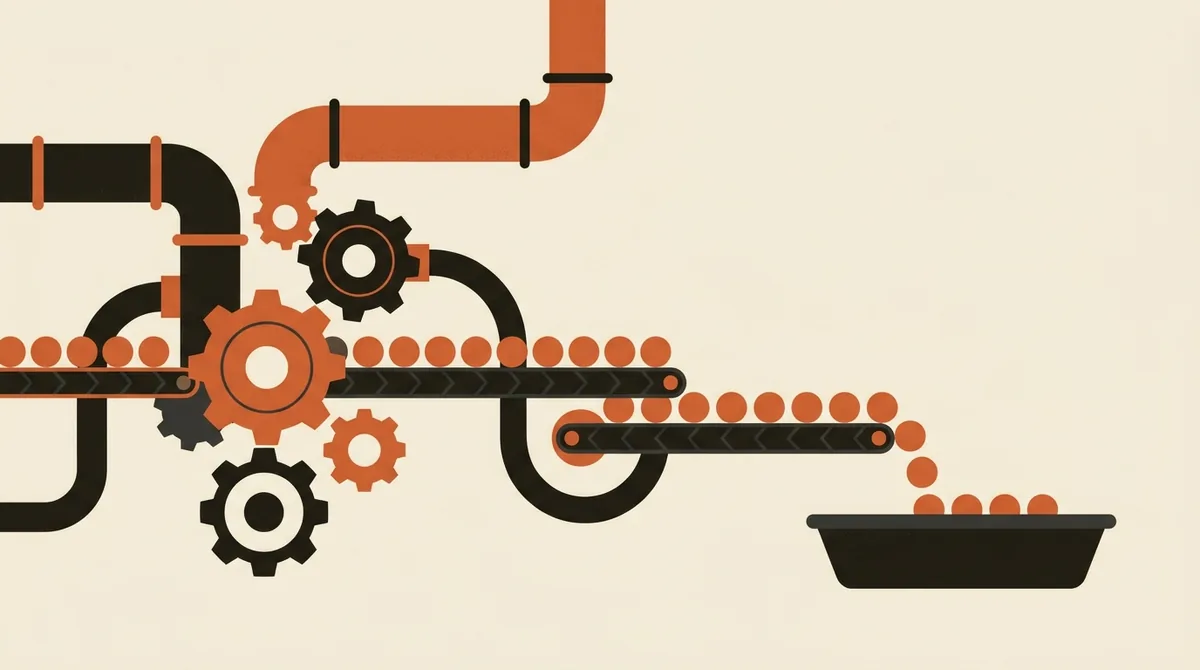
A customer acquisition system exists precisely to take chance out of the equation. It isn't a tactic, a channel, or "let's do a bit of cold email." It's a complete machine that connects offer, channels, contact and qualification into a single repeatable flow, designed to produce a predictable number of qualified appointments every week. In this guide we'll cover what this machine is made of, how it's measured, how long it takes to get running, and why owning it is worth far more than buying leads on a pay-as-you-go basis.
What a "customer acquisition system" really means
The key word is system. Disconnected individual tactics are easy to buy and just as easy to abandon: a round of ads, an email sequence, a LinkedIn consultant for three months. Each produces a spike, then fades out, and you're back to square one. A system, by contrast, has three properties an isolated tactic will never have.
- It's orchestrated across multiple channels. Contact doesn't depend on a single entry point. If email deliverability drops, you still have LinkedIn; if paid gets expensive, you lean on organic. The channels cover for each other.
- It's measurable end to end. You know what a contact costs you, how many turn into appointments, how many close, and what a customer is worth over time. Every stage has its own number.
- You own it. The domains, lists, content, and prospect data stay yours. You're not renting a tap someone else can shut off whenever they want.
This is also the most important dividing line in the Italian market, and one we'll come back to more than once: the difference between owning a machine and buying leads by the piece.
Owned system or pay-as-you-go leads
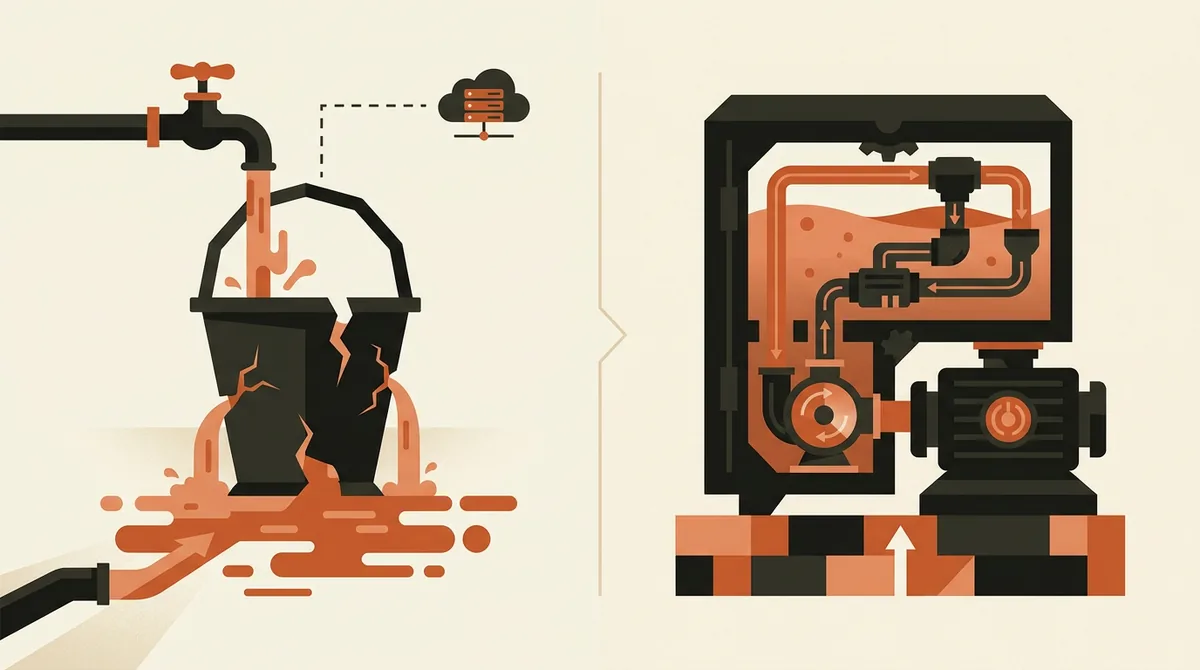
Many agencies sell leads in bundles: you pay X euros, you get Y contacts, often shared with three other competitors who bought them alongside you. It's a model that works for certain high-volume verticals, but it has a structural flaw: the moment you stop paying, the flow stops dead and you're left with nothing. No asset, no data, no list, no accumulated learning.
An owned system works the other way around. Every euro spent builds something that stays: a warmed-up domain, a list of profiled accounts, sequences you've tested and know how to convert, content that keeps driving traffic even with the campaign switched off. The upfront cost is higher and results arrive later, but after the first 60-90 days the cost per appointment tends to fall instead of rise.
| Aspect | Pay-as-you-go leads | Owned system |
|---|---|---|
| Who controls the flow | The provider | You |
| What's left if you stop | Nothing | Domains, lists, data, content |
| Contact exclusivity | Often shared | 100% yours |
| Cost over time | Flat or rising | Falling after ramp-up |
| Start-up time | Immediate | 60-90 days |
It's not an ideological choice: it depends on what a customer is worth to you and how long you plan to operate. If a customer is worth a few tens of euros and your horizon is short, pay-as-you-go leads may be enough. If you sell B2B services with four- or five-figure tickets and want to build a business that lasts, the owned system is the only approach that holds up over time. For a deeper look at how the different approaches compare, we dedicated an article to customer acquisition strategies compared.
The components of the machine
A complete acquisition machine is made up of six blocks. Each can be explored on its own, but the value comes from how they work together.
1. Offer and positioning
No system saves a weak offer. Before activating any channel you need to know who you're targeting, what specific problem you solve, and why they should choose you instead of silence or a competitor. Vague positioning ("we help companies grow") sinks even the best outreach. A clear, vertical offer ("we recover missed appointments for dental practices with more than three chairs") already does half the job on its own.
2. Paid and organic channels
A mature system doesn't live on a single channel. Paid channels (Meta Ads, LinkedIn Ads, Google Ads) give you volume and speed: switch them on and traffic arrives. Organic channels (SEO, content, LinkedIn presence) give you low marginal cost and credibility over time: they build more slowly but don't switch off the moment you cut the budget. The strength of an integrated setup lies in making them work together, not in picking just one. If you handle paid traffic, you'll find practical guidance in our guides on lead generation with Google Ads and on Facebook and Instagram.
3. Multichannel outreach
Cold outreach remains one of the most controllable B2B channels, as long as you don't reduce it to a mass blast. Outreach done well combines email and LinkedIn in the same sequence, spreads touchpoints out over time, and above all starts from profiled lists rather than contacts bought in bulk. On the long-running debate between the two main channels, we've written a dedicated comparison: cold email or LinkedIn, which works better.
4. AI SDR and human setter
This is a market full of overinflated promises, so it's worth being honest. An AI SDR (an AI agent that sends multichannel sequences, reads replies, and tries to book meetings) scales first contact impressively: it handles volumes no human could sustain and never gets tired. But it has real limits. It doesn't pick up on nuance the way a person does, it can torch a domain's reputation if configured poorly, and left on its own it tends to fill the calendar with appointments that never close.
That's why the model that works is hybrid: AI handles the volume, a human setter acts as the quality filter on warm replies, genuinely qualifies the need, and only books people worth meeting. AI brings the scale, the human brings the quality. Anyone promising you a fully autonomous agent that closes deals on its own is selling you smoke.
5. Qualified appointments
The system's goal isn't to generate "leads" — a word that's been drained of meaning by now. It's to generate qualified appointments: meetings with people who have the problem you solve, the budget to pay for it, and the authority to decide. An unqualified appointment costs the same in sales-rep time as a qualified one, but produces nothing. That's why qualification (human or assisted) is the real bottleneck to guard closely. If you want to understand how to tell a ready contact from one that's just wasting your time, read how to qualify leads and the difference between MQL and SQL.
6. Unit economics and predictability
The last block is the one that turns acquisition from an expense into an investment: the numbers. A system without metrics isn't a system, it's a bet. We'll look at the numbers in the next section, because they're the heart of everything.
Unit economics: let's talk real numbers
This is where competitors often go quiet. They promise "guaranteed customers" without ever showing a credible number. A serious system, by contrast, is measured against three or four metrics you should know by heart.
- CPL (cost per lead): how much you spend to generate one interested contact. Varies enormously by channel and vertical.
- CAC (customer acquisition cost): how much you spend in total to close one new customer. Includes the cost of leads that don't close too.
- LTV (customer lifetime value): how much a customer brings you over the entire relationship.
- LTV/CAC ratio: the number that tells you if the system is healthy. Below 3 usually means you're operating at a loss or close to it; above 3 you have room to scale.
The most important point, and the one the miracle agencies won't tell you, is ramp time. A well-built outreach system doesn't perform at full capacity from day one. It realistically takes 60-90 days before the numbers stabilize: time to warm up the domains, test the messaging, work out which lists convert, and calibrate qualification. Anyone who promises a full calendar in the first week is compressing a process that needs room to breathe, and usually doing it by burning through domains.
Once it's up to speed, though, something interesting happens: revenue stops being sporadic and becomes pipeline. If you know the system produces, say, twelve qualified appointments a week and you close one in five, you can forecast. You can decide how hard to push to grow. You can plan hiring. This shift, from unpredictable sales to predictable recurring revenue, is the real reason it's worth building a system instead of buying spikes. For a broader look at the numbers, see our guide to cost per lead by industry.
Want to find out if a customer acquisition system makes sense for your company, and with what numbers? Request a free analysis: we'll look at your offer, channels, and pipeline potential together.
Deliverability: the technical detail that decides everything
In 2026 you can have the perfect offer and the best lists, but if your emails land in spam the system doesn't exist. Deliverability is the piece Italian agencies ignore most, and that's exactly why it's where you win or lose. Google, Yahoo, and Microsoft have introduced strict rules for bulk senders.
- Full authentication: SPF, DKIM, and DMARC configured correctly, with DMARC ideally set to a p=reject policy. Without all three, bulk sends get penalized or rejected outright.
- Domain warmup: you don't start by firing off hundreds of emails a day from a brand-new domain. You warm it up gradually over weeks, increasing volume carefully. Skipping this step burns the domain within days.
- Reputation thresholds: major providers expect a spam rate below 0.3% and bounces below 2%. Consistently exceeding them gets you flagged as spam for everyone.
- One-click unsubscribe: for bulk sends, a one-click unsubscribe mechanism is now required. It's not optional.
This is also why AI SDR needs handling with care: a tool that sends volume without respecting these rules doesn't bring you customers, it burns your infrastructure. A well-warmed, authenticated domain is an asset; a burned domain is a problem that drags on for months.
Signal-based selling: contacting only people with a reason to listen
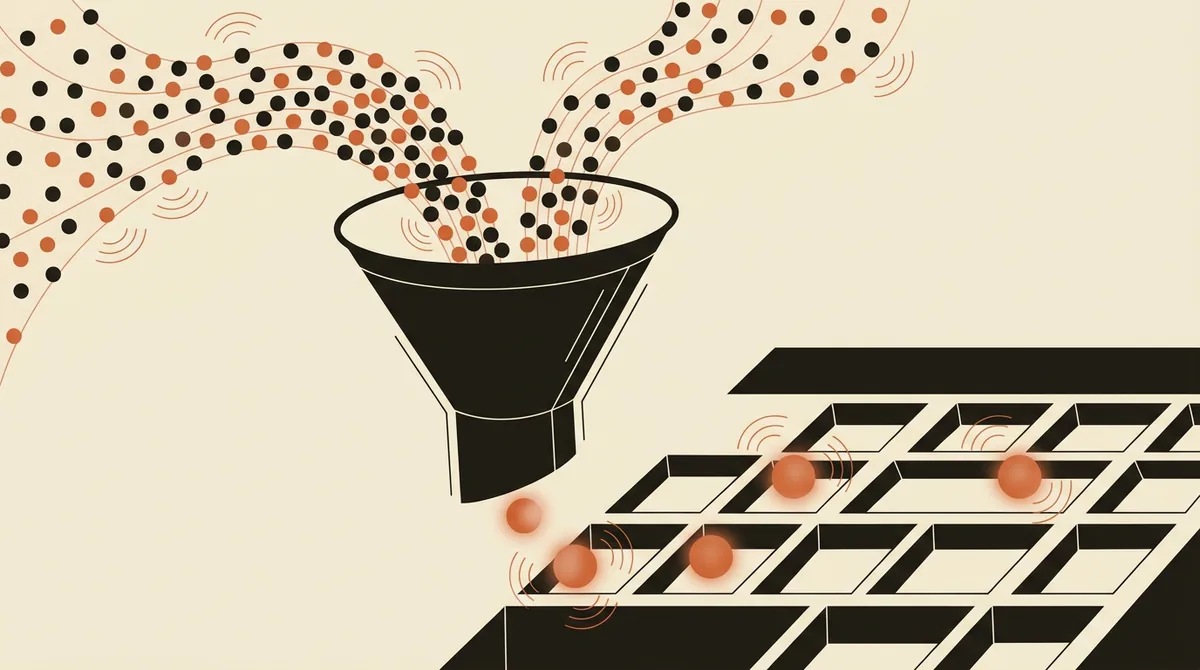
The mass cold blast (sending the same message to ten thousand random contacts) is dead, for two reasons: it damages deliverability and gets laughably low response rates. The direction in 2026 is the opposite: signal-based selling, meaning contacting only the accounts that show a buying signal.
Signals are concrete events that indicate a company might need you right now: a key person changing roles, a new funding round, a hire in a specific department, repeated visits to your site. Contacting a hundred accounts that just showed a relevant signal beats contacting ten thousand cold ones, both in response rate and in reputation. Less volume, more relevance. It's the exact opposite of pay-as-you-go lead logic, where more contacts always seem better.
GEO and AEO: the acquisition channel almost no one is watching
There's a new channel in 2026 you can no longer ignore. Over 30% of searches now go through AI assistants like ChatGPT, Perplexity, and Google's AI Overviews. When a potential customer asks an AI "who can help me build a customer acquisition system," you either get cited or you don't.
GEO/AEO (optimization for generative engines and AI answers) is the work that makes your company citable by these tools. It isn't generic SEO: it's producing structured, clear, trustworthy content that AIs choose as a source when answering commercial questions. It's an emerging acquisition channel, still with almost no competition in Italy, and that makes it a huge advantage for those who get there early. Getting found and cited by AI today is like being on page one of Google fifteen years ago.
How to build it, in practice
Setting up the machine isn't an afternoon project. It follows a logical sequence worth respecting.
- Define your offer and ideal customer. Who, what problem, why you. Without this, everything else is noise.
- Set up the technical infrastructure. Dedicated domains, SPF/DKIM/DMARC authentication, warmup started. Before you even write the first email.
- Build your lists with signal-based logic. Profiled accounts, filtered by buying signals where possible.
- Launch multichannel outreach. Email and LinkedIn coordinated, AI for volume, a human setter for qualification.
- Pair paid with organic. Ads for immediate volume, content and SEO/GEO for the long-term asset.
- Measure and optimize. CPL, CAC, appointment rate, show rate, close rate. It's an ongoing adjustment.
If you want to see how the conversion side downstream of outreach is structured, our guides on building a lead generation funnel and a landing page that converts are useful. And if your focus is specifically B2B, our guide to B2B lead generation goes deeper into single-channel tactics that we've kept at the system level here.
Who should build a system (and who shouldn't)
A customer acquisition system makes sense when certain conditions hold. Your customer is worth enough to justify a non-trivial CAC: think B2B services, consulting, agencies, software, mid-to-high-ticket products. You have the sales capacity to handle the appointments that come in (a system that fills a calendar nobody works is money wasted). And you have a time horizon: you want to build, not patch a quarter.
If you sell a low-euro product with thin margins, or you need an immediate stopgap with no capacity to wait 60 days, the full system can be overkill. In those cases, lighter tactics make more sense. But if you fit the first profile, every month spent buying spikes instead of building the machine is a month you're not accumulating any asset.
In summary
A customer acquisition system is neither a trick nor a channel. It's a complete machine (offer, paid and organic channels, multichannel outreach, AI SDR with a human setter, qualified appointments, measured unit economics) designed to produce a predictable flow of customers that stays yours. It costs more effort than pay-as-you-go leads and takes 60-90 days to bear its first fruit, but in exchange it turns revenue from a monthly gamble into plannable pipeline. In 2026, the pieces that make the difference (technical deliverability, signal-based selling, GEO/AEO) are still almost ignored in Italy: whoever claims them now builds an advantage that's hard to catch up to.
Frequently asked questions
What's the difference between a customer acquisition system and buying leads from an agency?
Buying pay-as-you-go leads means renting a flow: the moment you stop paying, everything stops and you're left with nothing. A customer acquisition system is yours, so domains, lists, data, and content stay with you, and the cost per appointment tends to fall over time instead of rise. Bought leads are often shared with other competitors, while yours are exclusive.
How long does it take before a customer acquisition system delivers results?
Realistically 60-90 days to reach full speed. It takes time to warm up email domains, test messaging, work out which lists convert, and calibrate qualification. Anyone promising a full calendar in the first week is compressing a process that needs time, usually by burning the domains' reputation in the process.
Can an AI SDR really book appointments on its own?
An AI SDR scales first contact and volume handling enormously, but on its own it tends to fill the calendar with appointments that don't close, and if poorly configured it damages domain reputation. The model that works is hybrid: AI handles the volume, a human setter filters warm replies and genuinely qualifies them. Anyone promising a fully autonomous agent that closes deals on its own is overselling.
Why does email deliverability matter so much in 2026?
Because Google, Yahoo, and Microsoft have introduced strict rules for bulk senders: SPF, DKIM, and DMARC authentication (ideally p=reject), a spam rate below 0.3%, bounces below 2%, and one-click unsubscribe. Without these in place, emails land in spam and the system, however well designed, produces nothing.
What is signal-based selling?
It's the approach of contacting only accounts that show a concrete buying signal (a key role change, new funding, a hire in a specific department, repeated site visits) instead of sending the same message to thousands of cold contacts. Less volume, far more relevance: it beats the mass cold blast both in response rates and in reputation.
Is my industry a good fit for a full acquisition system?
It makes sense if your customer is worth enough to justify a non-trivial acquisition cost (B2B services, consulting, agencies, software, mid-to-high-ticket products), if you have the sales capacity to handle incoming appointments, and if you have the horizon to build. If you sell at a few euros with thin margins or just need an immediate stopgap, lighter tactics may be enough.
If you want to build an owned acquisition machine instead of buying spikes, let's talk: we'll show you what your system would look like, step by step.