How Much Does a Custom CRM Cost in 2026: Real Price Ranges and Breakdown
9 min read · AstraLoop Studio
Ask a vendor how much a custom CRM costs and in most cases you get the same answer: "it depends." True, it does depend. But that word alone doesn't help when you need to put a figure into a budget or convince a partner. SaaS vendor pages dodge the number because custom work doesn't fit their monthly-license price list. The result? Anyone evaluating a CRM built around their own processes is left without even a ballpark figure.
This article fills that gap. We give you the real ranges seen on the Italian market in 2026, a line-by-line breakdown (discovery, development, integrations, retainer and maintenance), and the concrete factors that push a quote up or down. No inflated figures to make you feel like you got a deal, no bait numbers. By the end you'll have a clear idea of what to expect and the questions to ask anyone who hands you a proposal.
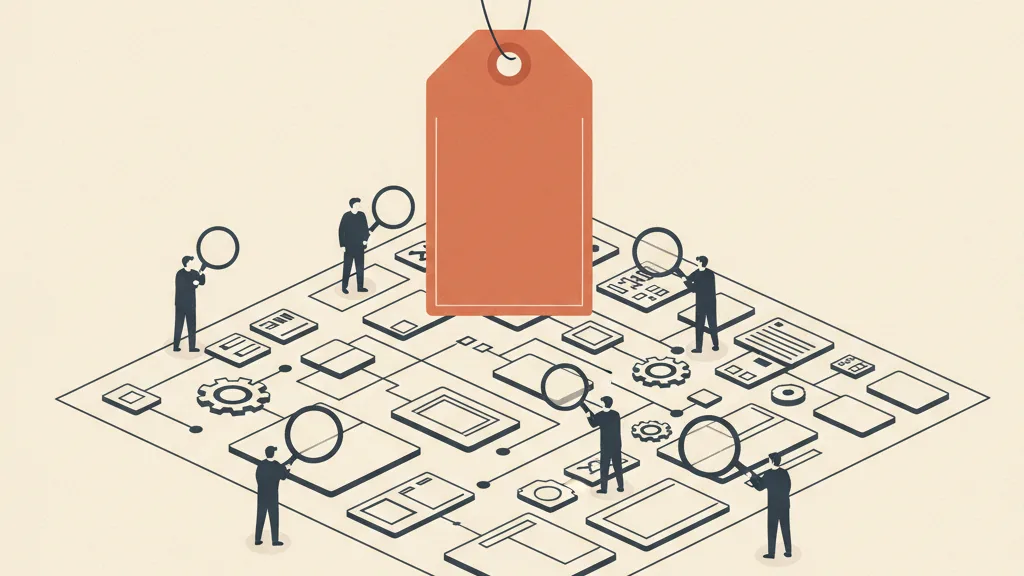
Real price ranges in 2026
Let's start with the order of magnitude before the detail. A custom CRM in Italy, in 2026, falls into three fairly clear tiers. This isn't marketing: these are the price clusters that emerge once you collect dozens of real quotes and sort them by complexity.
| Tier | Initial development cost | What's included | Who it's for |
|---|---|---|---|
| Entry / vertical | €4,000 - €12,000 | One well-defined workflow, few integrations, few users. Often built on a low-code layer. | Freelancer, micro-business, a single sales team |
| Standard SME | €12,000 - €35,000 | Custom pipelines, 2-4 serious integrations, automations, roles and permissions, tailored reporting. | Structured SME, multiple departments, data coming from different sources |
| Enterprise / complex | €35,000 - €120,000+ | Elaborate business logic, integrations with legacy ERP systems, heavy data migration, compliance requirements. | Mid-to-large companies, supply chains, regulated environments |
Three honest caveats. First: below €4,000 you're not buying a custom CRM, you're buying the configuration of an existing product (which can work perfectly well, but it's a different thing). Second: the enterprise tier doesn't really have a ceiling — a project with dozens of integrations and dedicated teams can go past €200,000. Third: these figures are the initial build. Retainer and maintenance are separate line items covered shortly, and ignoring them is the most common mistake people make when comparing quotes.
If you want to dig into what really sets a custom project apart from a license, we've written a dedicated guide on what a custom CRM actually means and one that helps you decide between a custom solution and an off-the-shelf one.
The line-by-line breakdown
A serious quote isn't a single number. It's the sum of four blocks, and understanding how it's built puts you in a position to negotiate and to tell an inflated proposal apart from a realistic one.
1. Discovery and design (10-20% of the total)
This is the phase where your processes get mapped, the objects get defined (contacts, companies, deals, orders), pipelines get sketched out and specs get written. Anyone who skips this step or rushes through it in half a day is setting you up for a project that will need rebuilding. On a €20,000 project, expect €2,000 - €4,000 for discovery. It looks like money spent on "documents," but it's the phase that decides whether the rest of the budget gets used well or thrown away.
A good sign: the vendor asks to see how you work today instead of jumping straight to screens. Discovery is also when you decide how the CRM plugs into the rest of your sales system. If you're not yet clear on how to integrate the CRM with your sales funnel, this is where it gets addressed.
2. Development (45-60% of the total)
The bulk of the spend. It covers building the data model, the interfaces, the automations, roles and permissions, and reporting. Cost scales with the number of entities to manage, the complexity of the logic (automatic lead scoring costs more than a text field), and how deep the automations go. A CRM that just logs contacts is cheap. One that assigns leads, calculates priority, sends follow-ups and updates forecasts costs more, simply because it does more.
The technology choice matters a lot here. A project on a low-code platform (where part of the infrastructure is already built) costs less than one built from scratch in raw code, but it ties you to that platform. It's the classic trade-off between upfront cost and future freedom, which we break down in the make-or-buy comparison.
3. Integrations (variable, often underestimated)
Every external system that needs to talk to the CRM is a cost of its own. An integration can run from a few hundred euros (a standard link with clean, documented APIs) to several thousand (a legacy ERP with no API, where you have to work around fragile exports and syncs). The most requested integrations in 2026:
- Email and calendar: almost always included, low cost.
- WhatsApp Business: increasingly central. The WhatsApp-CRM integration is one of the most requested, so you don't lose leads coming in from there.
- ERP and invoicing: the most expensive and delicate one, depends on the quality of the ERP's APIs.
- Lead sources (forms, landing pages, ad campaigns): to funnel contacts to where they'll be worked.
- Voice assistant or chatbot that writes straight into the CRM.
Our advice: list every system you want connected from the very first call. Integrations discovered halfway through the project are the number one cause of budget overrun.
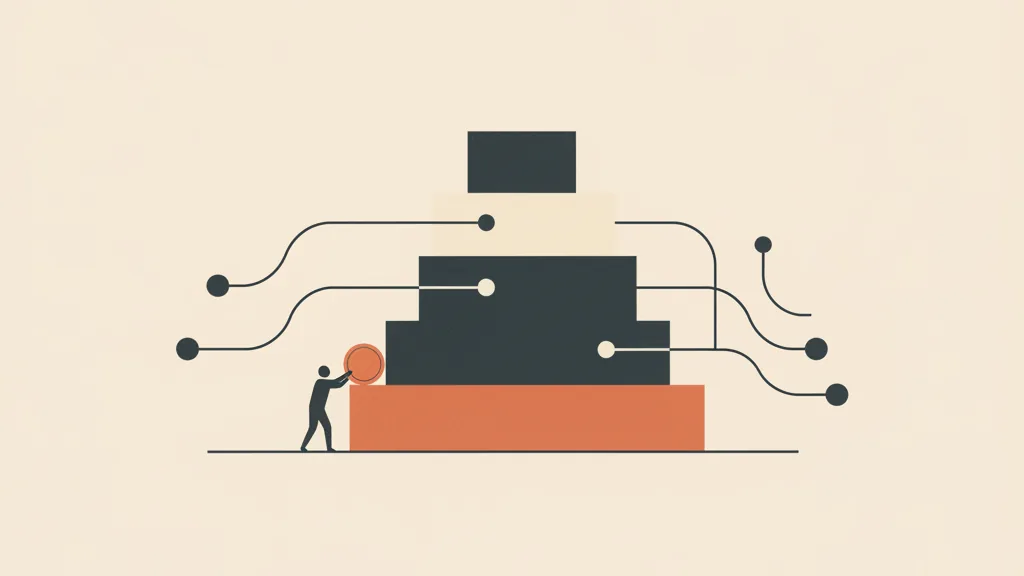
4. Data migration (often overlooked in the first quote)
Bringing existing data (Excel sheets, an old ERP, a CRM you're leaving) into the new system requires cleanup, mapping, deduplication and verification. On small, well-organized databases it's a marginal line item. On messy archives, with years of inconsistent data, it can run into the thousands of euros. Always ask whether migration is included: if it's not in the quote, it'll show up on the invoice.
Retainer and maintenance: the line item that decides the real cost
This is where the most common misunderstanding lives. Many people evaluate only the initial build and ignore the recurring cost, then get caught off guard. A custom CRM carries ongoing costs that need to be accounted for from day zero.
| Recurring item | Order of magnitude | Notes |
|---|---|---|
| Hosting / cloud infrastructure | €50 - €500/month | Scales with users, data volume and traffic |
| Ongoing maintenance | 10 - 20% of development /year | Updates, fixes, security |
| Third-party component licenses | variable | Low-code platform, email/SMS sending services, etc. |
| Enhancements and new features | pay-as-you-go or hour packages | The CRM grows with the company |
The rule of thumb that works: for the first year, budget the development cost plus roughly 15-20% of that same amount for ongoing management. On a €20,000 project, that means planning for €23,000 - €24,000 in year one and €3,000 - €4,000 in the years after (plus hosting). A CRM the vendor walks away from after delivery is money lost: ongoing maintenance is part of the value, not an optional extra.
For an even more detailed comparison focused just on build costs, it's worth reading our deep dive on the cost of developing a custom CRM and the one specifically about costs for SMEs.
Want a real number instead of "it depends"? Tell us about your processes and the integrations you need: we'll put together a transparent, line-by-line quote for your custom CRM.
What pushes the quote up (or down)
Two CRMs that look identical on paper can end up costing double one another. Here are the factors that really move the needle.
What pushes the cost up
- Complex business logic: assignment rules, calculations, multiple conditional workflows.
- Integrations with legacy systems: without modern APIs, every connection has to be built by hand.
- Many granular roles and permissions: who sees what, who can do what.
- Compliance requirements: GDPR consent management, traceability, audit trails.
- Smart automations: AI-driven lead scoring, forecasting, automatic data enrichment.
- Migration from messy databases: the messier the data, the more it costs to bring it in.
What brings the cost down
- Already clear, documented processes: if you know how you work, discovery flies.
- Starting from an MVP: build the core first, add features later. Reduces risk and spreads out the spend.
- Few integrations at launch: connect the rest in later phases.
- Low-code foundation: part of the infrastructure is already built.
- One decisive internal point of contact: slow decisions and endless revisions cost time, and time is the most expensive line item of all.
The most underrated factor is exactly the last one. A client who knows what they want and responds quickly lowers the real cost more than any discount, because every round of revisions eats billable hours.
Custom CRM vs. SaaS: the right economic question
The honest comparison isn't "how much does custom cost" versus "how much does SaaS cost." It's total cost over 3-5 years. A monthly-license SaaS starts lower, but the bill grows with users and add-on modules, and the hidden costs of platforms like HubSpot surface as the company grows. Custom starts higher but has a more predictable recurring cost and doesn't tax you for every new user.
The typical threshold where custom starts to make financial sense is when you have processes SaaS doesn't cover well, many users, or when the monthly license summed over 3 years exceeds the cost of development plus maintenance. We've dedicated a full analysis to when a custom CRM is worth it over SaaS. And if the CRM is just one piece of a bigger picture, it's often worth evaluating it within a full customer acquisition system, where the CRM is the engine that collects and works the leads generated by the acquisition funnel.
A concrete quote example
Let's make it tangible. A B2B services SME, 8 salespeople, wants a CRM that manages custom pipelines, integrates email and WhatsApp, scores incoming leads and connects to the ERP for orders. Here's how the quote realistically breaks down.
| Item | Amount |
|---|---|
| Discovery and design | €3,000 |
| Development (data model, pipelines, automations, roles, reporting) | €14,000 |
| Email + calendar integration | included |
| WhatsApp Business integration | €2,500 |
| ERP integration (APIs available) | €3,500 |
| Automatic lead scoring | €2,000 |
| Data migration (well-organized database) | €1,500 |
| Total initial development | €26,500 |
| Management retainer + hosting (year 1) | ~€4,000 |
This is an example, not a price list: change the ERP, change the data quality, change the number of automations and the total shifts. But it gives you the structure to read any proposal that comes your way and tell whether every line item is there, or whether something has been swept under the rug to make the price look lower.
How to ask for (and read) a serious quote
Before you sign, check that the proposal answers these questions. If it doesn't, ask before moving forward.
- Is the discovery phase included and priced separately?
- Is every integration listed individually with its own cost?
- Is data migration inside the price or an extra?
- What's the recurring retainer and exactly what does it cover?
- What happens after delivery: who maintains the system and with what response times?
- Is the code and configuration yours, or do you stay locked to the vendor?
A quote that answers all six clearly is worth more than a cheaper one that leaves them hanging. A low price that hides line items almost always turns into a higher one at final invoice. If you want to look at timelines alongside cost, it's also worth knowing how long it takes to implement a CRM, because budget and timeline need to be read together.
Frequently asked questions
How much does a custom CRM typically cost in Italy in 2026?
For a structured SME, the realistic initial development range is €12,000 - €35,000, plus a recurring management and hosting cost of roughly 15-20% of development per year. Simple vertical projects start at €4,000-€12,000, while complex enterprise contexts exceed €35,000 and can go past €120,000.
Why don't vendors put the price of a custom CRM on their website?
Because custom isn't a listed product: the cost depends on the processes to be modeled, the integrations, and the quality of the data to migrate. A fixed number would be misleading. What you can demand, though, are ranges and a line-by-line breakdown, which is what makes a quote trustworthy.
Is a maintenance retainer mandatory?
It's not imposed, but skipping it is risky. A CRM needs ongoing updates, fixes and security. Budget roughly 10-20% of development per year for maintenance, plus hosting. A system abandoned by the vendor after delivery quickly turns into a cost rather than an asset.
Is a custom CRM or a subscription SaaS better value?
It depends on total cost over 3-5 years. SaaS starts lower but grows with users and modules; custom starts higher but is more predictable and doesn't tax every new user. Custom pays off when you have processes SaaS doesn't cover, many users, or when the license cost summed over the years exceeds development plus maintenance.
What drives up the quote for a custom CRM?
The main factors are: integrations with old ERP systems lacking APIs, complex business logic, many roles and permissions, GDPR compliance requirements, smart automations like lead scoring, and migration from disorganized databases. Already-clear processes and an MVP approach, on the other hand, bring the cost down.
Can I start with a small budget and expand later?
Yes, and it's often the smarter choice. Starting with an MVP that covers the essential core and few integrations reduces risk and spreads the spend over time. You add automations and connections in later phases, as the CRM proves its value and the company grows.
If you're evaluating a CRM built around your own processes, request a free assessment: together we'll figure out the right tier and give you a clear quote with no hidden costs.