B2B Lead Generation: The Complete Guide to Acquiring Qualified Clients
12 min read · AstraLoop Studio
B2B lead generation is the process by which a company attracts, captures, and qualifies potential business clients: it turns people who've never heard of you into real deals. On paper it sounds simple. In practice it's where most Italian companies burn through budget without ever understanding why.
The problem isn't the tools. It's that almost everyone treats lead generation as a series of disconnected campaigns (a month of LinkedIn, a month of Google Ads, the occasional webinar) instead of as a system. And a system, unlike a campaign, can be measured, corrected, and scaled.
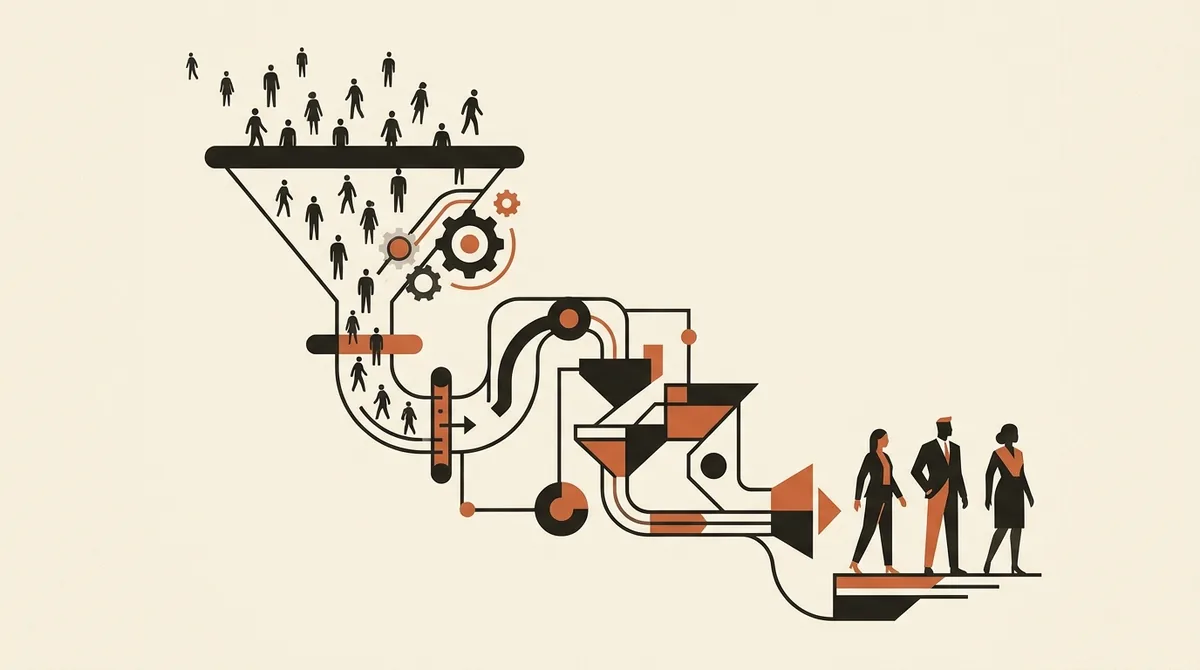
This isn't the usual "10 channels to generate leads" listicle. It's how to build a machine that produces qualified contacts predictably, with real 2026 numbers and the decisions that actually matter. Straight to the point.
What B2B lead generation is (and why it's nothing like B2C)
A lead is a commercial contact: a company or person who has shared their details, showing interest in what you sell. B2B lead generation is the set of activities that generates these contacts systematically.
The difference from B2C is structural, not cosmetic. In B2B, a group decides, not one person. The sales cycle lasts weeks or months, not minutes. Contract value is high, so every client matters. And above all: buyers do their homework. They research, compare, and ask for references before they've even talked to you.
That changes everything. A 20% coupon doesn't move a procurement director. Content that shows them how to solve an expensive problem does. If you want to start from the basics, we've written a guide on what lead generation is and how it works that covers the fundamentals.
A lead isn't just any contact
Here's the first mistake we see companies make: counting every contact the same way. An email collected through a contest isn't worth as much as an IT manager who downloaded your technical whitepaper and opened the next three emails. Telling the two apart is the foundation of everything. We go into detail in our guide on what a qualified lead is and how to recognize MQLs and SQLs.
The funnel: the stages that actually matter
Every lead moves through a journey, from first contact to signature. Simplifying, the lead generation funnel has three levels:
- TOFU (Top of Funnel), the awareness stage. The person has a problem but doesn't know you yet. This is where SEO, content, and social work. Goal: get found.
- MOFU (Middle of Funnel), the consideration stage. The contact evaluates solutions. This is where lead magnets, webinars, nurturing emails, and case studies come in. Goal: build trust and qualify.
- BOFU (Bottom of Funnel), the decision stage. The lead is ready to buy. This is where demos, quotes, and sales reps matter. Goal: close.
The funnel isn't a smooth pipe. It's made of steps, and you lose people at every one. What matters is knowing where you lose them and how many. We've dedicated a deep dive to the lead generation funnel, its stages, and the numbers that matter, because this is where you win or lose.
The real B2B funnel numbers in 2026
Now for the part almost nobody puts in writing, because it's uncomfortable. B2B conversion benchmarks are getting worse, not better:
- The median MQL → SQL conversion rate dropped from 13.1% in 2024 to 9.8% in 2026 (Forrester and Demand Gen Report data). In other words: out of 100 marketing-qualified leads, fewer than 10 become real sales opportunities.
- Roughly 79% of leads never convert into a client. Not because the product is wrong, but for lack of nurturing and follow-up.
- The average lead-to-client rate in B2B sits between 2% and 5%.
Why does it matter? Because if you build your whole business expecting one in two leads to buy, you're telling yourself a fairy tale. The real numbers tell you how many leads you need to generate upstream to hit your targets downstream. It's math, not optimism.
Speed is the most underrated competitive edge
If you had to pick a single lever to work on, this would be it. And it's not the channel, the copy, or the budget. It's response time. The 2026 data is brutal:
Companies that follow up with a qualified lead within the first hour convert at 53%. Those that wait more than 24 hours convert at 17%.
Same lead quality, three times the results. The only difference is speed. And yet most Italian SMBs respond to a submitted form after one or two business days, by which point the prospect has already talked to three competitors.
That's why we talk about lead generation as a system, not a campaign. A system responds automatically, qualifies automatically, and puts sales reps only in front of the contacts that are worth it. A pile of disconnected campaigns doesn't. This is where automation and AI agents for lead generation make a difference you can see by the end of the quarter.
Want to see what a lead generation system built specifically for your company would look like, instead of yet another disconnected campaign? Let's talk.
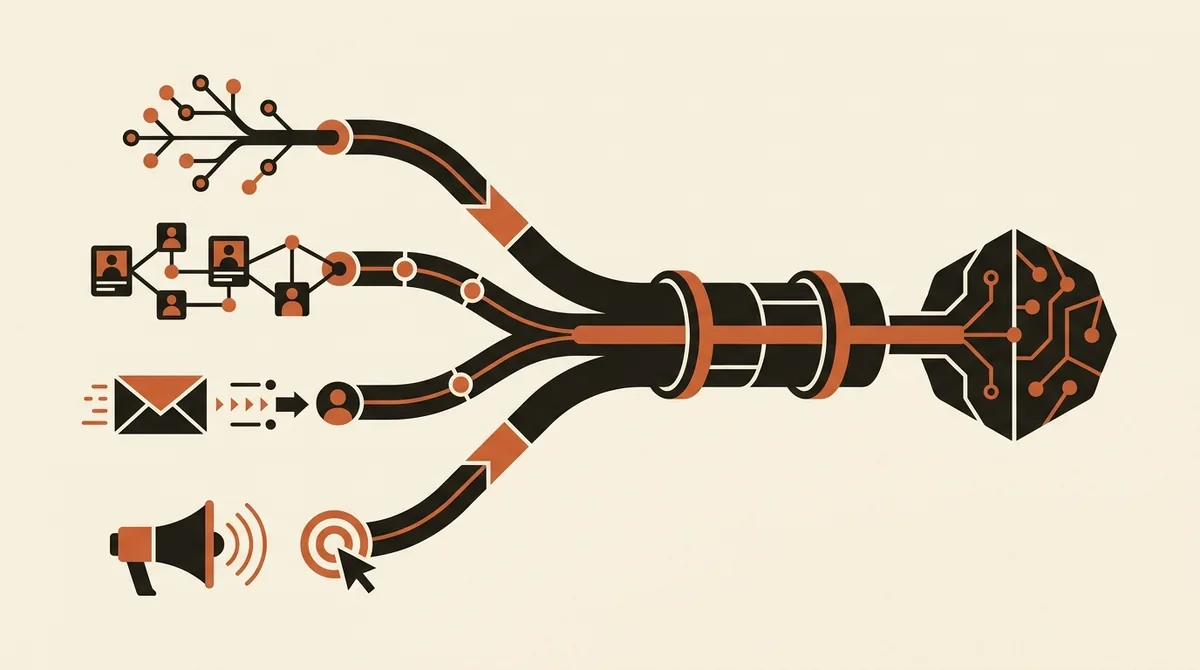
The channels: which one to pick (and for whom)
There's no such thing as "the best channel." There's the right channel for your product, your sales cycle, and your audience. Let's look at each one honestly, strengths and flaws included.
SEO and content marketing
You intercept people who are already searching for a solution. Organic traffic is the most qualified there is, because it starts from an explicit need. The downside is that it's slow: it takes 4 to 8 months for stable results. The upside is that once you rank, leads keep coming without paying for each one individually. It's an asset, not a recurring cost.
LinkedIn and social selling
The quintessential B2B channel: roughly 80% of B2B social leads come from LinkedIn. It lets you target by role, industry, and company size, and it's excellent for reaching decision-makers. The downside is that it's expensive and demands real content, not spam. We compare LinkedIn outreach against cold email in cold email vs. LinkedIn: which channel for B2B lead generation.
Cold email and outbound
You go to the client instead of waiting for them. It works well with well-defined sales cycles and a clear target. It requires clean lists, personalization, and compliance: GDPR isn't optional. Done badly, it torches your domain's reputation. Done well, it fills the pipeline fast.
Paid advertising (LinkedIn Ads, Google Ads)
The fastest lever: first contacts arrive within days. Google Ads on transactional keywords intercepts people who are ready to buy. LinkedIn Ads costs more but targets with surgical precision. The flaw is obvious: the moment you turn off the budget, everything stops. It doesn't build an asset.
Lead magnets and webinars
The fuel of MOFU. In B2B, coupons don't work: technical whitepapers, industry reports, free audits, demos, and webinars do. Offer real value in exchange for data and contact details. That's how you turn anonymous traffic into leads with a name, surname, and job title.
How to split the budget
A practical rule, not a dogma. If you're just starting out and need leads now, weight advertising and outbound more heavily. If you can invest for the medium term, gradually shift budget toward SEO and content, which lower cost per lead over time. There's no fixed ideal mix: it changes with the maturity of your funnel. We cover this in our guide on client acquisition strategies that actually work and in how to generate qualified B2B leads.
Qualifying leads: MQL, SQL, and lead scoring
Generating leads is half the job. The other half is figuring out which ones are worth a sales rep's time. That's where qualification comes in.
- MQL (Marketing Qualified Lead), a contact who has shown interest: downloaded content, opened emails, visited key pages. Warm, but not yet ready to buy.
- SQL (Sales Qualified Lead), a contact that sales has validated on budget, decision-making authority, real need, and timing. Ready for a sales conversation.
The bridge between the two is lead scoring: a score that grows based on behavior (opens, clicks, pages viewed) and data (role, industry, company size). And here's a number that flips priorities on their head:
Scoring models that use behavioral and intent signals reach MQL→SQL conversion rates of 39-40%, versus 9-10% for those that use demographic data alone.
The gap between lead scoring based on "what's your role" and scoring based on "what did you actually do" is enormous: four times the conversion rate. To set it up without wasting time on cold contacts, read how to qualify leads and recognize who's really going to buy.
How much a B2B lead costs in Italy
The right question, with an answer that depends. The cost per lead (CPL) in Italian B2B in 2026 tends to run:
- Inbound leads (SEO, content, lead magnets): roughly €25-150.
- Outbound or LinkedIn Ads leads: roughly €60-300.
The figure that should really worry you is different: the cost of acquiring a contact has doubled in three years. Lead generation is becoming more expensive and more competitive. Companies that don't systematize and automate pay more and more for the same results.
But CPL on its own tells you nothing. A €200 lead is expensive if you sell a €500 product. It's a bargain if you close €100,000 contracts. The number that matters is the ratio between client value (LTV) and acquisition cost (CAC): below a 3-to-1 ratio, the model isn't sustainable. We've dedicated an entire guide to cost per lead by industry in Italy, with benchmarks to help you understand whether you're spending well.
The tools: which ones you actually need
The temptation is to buy software before you have a process. That's the wrong order. First define how you qualify and follow up with leads, then choose the tools that make it possible.
The minimum stack for a B2B lead generation system includes:
- A CRM, the heart of everything. Where contacts and their history live.
- A marketing automation tool, for nurturing and automatic scoring.
- A landing page and form platform, to capture contacts.
- Outreach tools, for email and LinkedIn, if you do outbound.
You don't need twenty tools. You need a few, well integrated. A pile of disconnected software is the fastest way to end up with dirty data and zero overview. We've sorted through it in the best B2B lead generation tools, and which ones are actually enough.
How AI is changing the rules of the game
Here's the part that separates the companies that will grow from the ones that will fall behind. And this isn't marketing talk: it's what we do every day.
Remember the two key numbers from this guide? Response speed (53% versus 17%) and behavioral scoring (40% versus 10%). Both share one problem: you can't do them by hand. No human team responds to every lead within an hour, 24/7, and no one manually calculates a real-time behavioral score across hundreds of contacts.
This is where AI applied to lead generation stops being a buzzword and becomes infrastructure. Concretely:
- Automatic qualification. An AI agent analyzes every lead, cross-references data and behavior, assigns a score, and decides whether to hand it to sales or put it into nurturing.
- Instant response. The lead gets a relevant first reply in seconds, not days. The first-hour window covers itself.
- Personalized nurturing. Sequences that adapt to the contact's behavior, instead of the same drip campaign for everyone.
- Data cleaning and enrichment. Lists that stay up to date, without the manual work nobody wants to do.
The result isn't "less work." It's a system that runs while you sleep, never forgets a contact, and leaves humans with the one thing AI doesn't do: closing complex deals. That's exactly how we build systems for our clients, combining AI and automation with lead generation. It's the approach that has generated over 370,000 qualified leads and built more than 140 automated systems. If you want to see how we put them to work, take a look at what AI agents for lead generation are.
DIY or hire an agency
A fair question, with an honest answer: it depends where you stand.
It makes sense to do it in-house if you already have marketing skills, a team that follows up on leads, and time to build the system. It makes sense to hire an agency if you want results sooner, don't feel like spending six months learning by trial and error, or simply want your team focused on its actual job instead of improvising marketing.
The risk with agencies is ending up with one that sells you "leads" without qualifying them, or that sets up disconnected campaigns instead of building a system. The right question isn't "how many leads do you bring me," but "how do you qualify them and how do you integrate them into my sales process." On how we work and what results to expect, we've written how an AI-powered lead generation agency works.
The mistakes we see most often
The list of mistakes that burn the most budget in B2B lead generation. If you recognize one, you've already found your first area for improvement:
- Treating leads as numbers, not as contacts to qualify. Volume without quality is vanity.
- Responding slowly. Every hour that passes costs you conversions. Remember 53% versus 17%.
- Misalignment between marketing and sales. Marketing brings in leads, sales says they're weak, and nobody defines what "qualified" actually means. You need a written agreement.
- Betting everything on one channel. If LinkedIn changes its rules, you're left with nothing.
- Ignoring nurturing. 79% of leads aren't ready today. Discarding them means handing revenue to your competitors.
- Buying tools before having a process. The tool doesn't fix a process that doesn't exist.
- Not measuring beyond CPL. Without knowing how many leads become clients and what a client is worth, you're flying blind.
B2B lead generation done right isn't a stroke of luck or a magic channel. It's a system: attract, qualify, respond fast, nurture those who aren't ready yet, and measure every step so you can fix it. Those who build it generate clients predictably. Those who improvise campaigns keep chasing ever more expensive leads.
The good news is that today, with AI and automation, a system like this is within reach even for an SMB, not just large companies with huge teams. The difference comes from starting to think in systems, not campaigns.
Frequently asked questions
What is B2B lead generation?
It's the process by which a company attracts, captures, and qualifies potential business clients, turning unknown contacts into real deals. Unlike B2C, it involves group decisions, long sales cycles, and high-value contracts, so it focuses on contact quality more than volume.
How much does a B2B lead cost in Italy in 2026?
The cost per lead (CPL) for inbound (SEO, content, lead magnets) runs roughly from €25 to €150, while outbound or LinkedIn Ads leads cost between €60 and €300. The cost of acquiring a contact has doubled in three years. The figure to evaluate isn't CPL in isolation, but the ratio between client value (LTV) and acquisition cost (CAC), which should stay at least 3 to 1.
How long does it take to see results from a B2B lead generation strategy?
With paid advertising, the first contacts arrive within days. With SEO and content, it takes 4 to 8 months for stable results. To assess the real impact on revenue, meaning closed contracts, the reference is 3 to 6 months, due to longer B2B sales cycles.
What's the best channel for B2B lead generation?
There's no single best channel. LinkedIn is the quintessential B2B social channel (roughly 80% of social leads), Google Ads intercepts people ready to buy, SEO brings the most qualified traffic but is slow, and cold email fills the pipeline fast if done well. The choice depends on the product, the sales cycle, and the budget: it's almost always a mix, not a single channel.
What's the difference between MQL and SQL?
An MQL (Marketing Qualified Lead) is a contact who has shown interest, for example by downloading content or opening emails, but isn't yet ready to buy. An SQL (Sales Qualified Lead) is a contact validated by sales on budget, decision-making authority, need, and timing, and is therefore ready for a sales conversation. The bridge between the two is lead scoring.
If you want to turn your client acquisition into a system that generates qualified leads predictably, combining AI, automation, and lead generation, write to us at astraloopstudio@gmail.com. We'll tell you exactly where things stand, with no fluff.