Recovering unclosed quotes: the automated follow-up that wins back 30-40% of lost deals
9 min read · AstraLoop Studio
You do the site visit, take the measurements, prepare the quote, send it. And then? In most small businesses, the answer is "and then nothing." The quote just sits there, the customer never replies, you're already caught up in the next job, and that quote turns into a forgotten line in your system.
Here's the number almost nobody looks at: between 40% and 60% of quotes never receive even a "no." They're not rejected, they're simply forgotten. On both sides. And the most frustrating part is that a good chunk of those customers would have bought, if only someone had called them back at the right moment.
What we're talking about here is something concrete: how to build an automated follow-up system, hooked into your CRM, that recovers on average 30-40% of quotes left pending. It's not magic, and it's not AI closing the sale for you. It's sales discipline turned into automation. Let's look at how it's done, with practical examples for HVAC/plumbing contractors, window installers, and other quote-based service businesses.
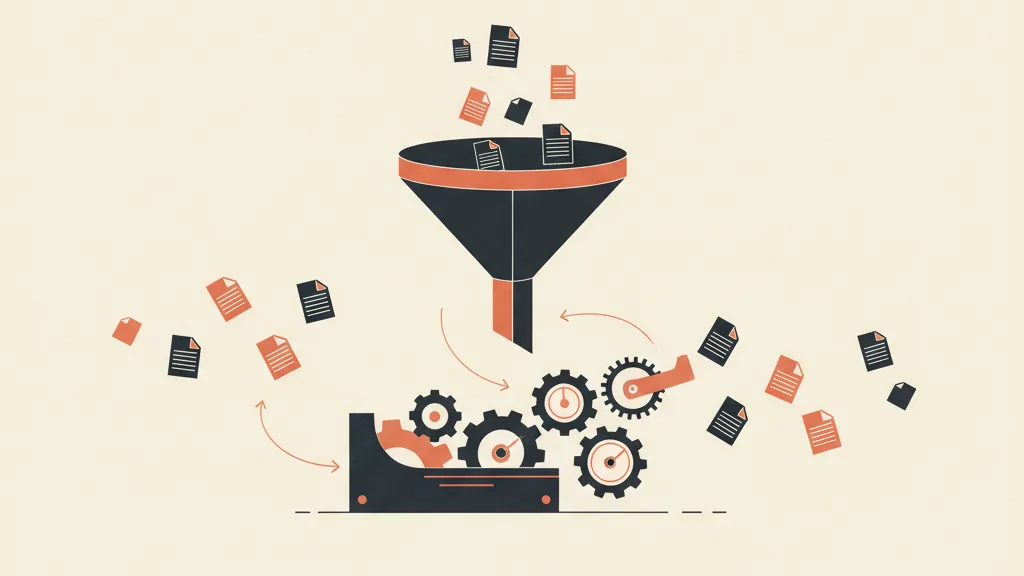
Why quotes stay pending (and it's not the price)
The convenient explanation is always the same: "we cost too much, they went with the cheaper option." Sometimes that's true. But if you look at the real numbers, price matters a lot less than you'd think. The truth is more uncomfortable.
A customer asking for a quote on windows or a boiler is weighing 3-4 suppliers at once. They get the offers on different days, compare them in a rush, and then life gets in the way: work, kids, something more urgent. Your quote drops to the bottom of their mental list. They haven't ruled you out. They've parked you.
At that point, whoever reaches out first wins. Not the best price — whoever gets back into the customer's head at the right moment with the right message. And this is exactly where things fall apart: you don't call back. Because you've got 12 other jobs going, because calling back feels "pushy," because you don't even remember who you sent what to anymore.
This is precisely the gap an automated follow-up fills. It doesn't replace your sales skill, it multiplies it. It handles the tedious, repetitive part that no owner has the time (or the will) to do by hand.
What not calling back actually costs you
Let's run real numbers. Picture a window and door company sending out 40 quotes a month, averaging €6,000 each, with a 25% close rate. That's 10 jobs closed, €240,000 of potential monthly revenue, and 30 quotes "lost" every month.
Of those 30, a good portion isn't actually lost — it's pending. If a structured follow-up recovers even 30% of them, that's 9 quotes reactivated per month. At the same close rate, that's 2-3 extra jobs, meaning €12,000-18,000 of additional revenue every month, without spending an extra euro on advertising. These are customers you already had in hand.
Run the same math on your own numbers and you'll instantly see why this topic is so underrated: the cost of skipping follow-up is invisible. You won't find it on a bank statement — you only see it if you stop to calculate it. If you want to dig deeper into this logic, we've also covered how to win back lost customers and the cost of reactivation versus acquisition.
The follow-up sequence that recovers 30-40%
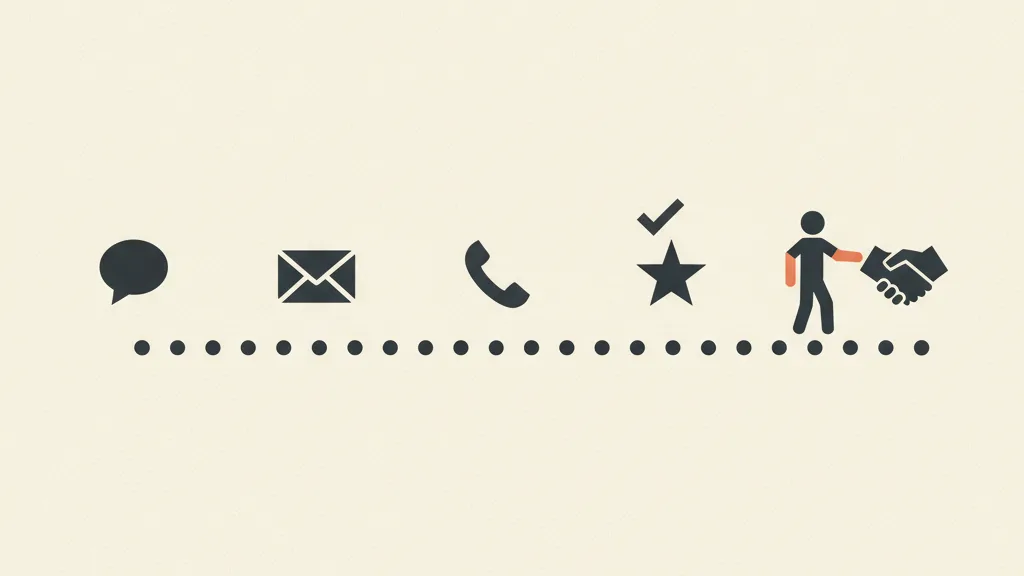
An effective follow-up isn't "just checking in to see if you've decided." That's desperation, and customers can smell it. The follow-up that converts is a planned sequence, with distinct messages, the right timing, and at least one added reason to reopen the conversation each time. Here's the framework that works for quote-based jobs.
| Touch | When | Channel | Content |
|---|---|---|---|
| 1 | +2 days after sending | WhatsApp / email | Confirm receipt: "Did you get the quote? If you have questions about materials or timing, I'm here." |
| 2 | +5 days | Phone call or voice message | Clarification: address a common concern (installation time, warranty, tax incentives). |
| 3 | +10 days | WhatsApp / email | Added value: a photo of a similar finished job, a review, a technical detail. |
| 4 | +18 days | An honest time-based nudge: offer expiry, calendar availability, an expiring tax incentive. | |
| 5 | +30 days | Short message | Closing the loop: "Should I close this out, or would you like me to keep the quote open a bit longer?" (this is often what unlocks it). |
Notice one thing: the channels rotate. You don't hammer people on the same medium. WhatsApp works extremely well for trades and home services, with much higher open rates than email (we covered this in WhatsApp vs SMS in marketing). Email is best for more detailed content, and phone calls for higher-value quotes.
The other key point: every touch has to give something, not just ask for something. Touch 3, the one with the photo of a finished job or a review, is often the most effective one because it lowers perceived risk. The customer isn't buying the product, they're buying the confidence that they chose well.
Why you need a CRM (not a spreadsheet)
At this point you might think: "okay, I'll just jot down the dates on a spreadsheet and call people myself." That works for 5 quotes. At 40 a month it becomes unmanageable. You forget touch 3 on one, send the same message twice to another, and within two weeks the whole system has already fallen apart.
The point of a custom CRM with built-in follow-up is that the sequence starts on its own. The moment you log a quote as "sent," the system:
- Automatically schedules the 5 touchpoints at the right intervals.
- Personalizes the messages with the customer's name, job type, amount, and site visit details.
- Stops itself the moment the customer replies, books, or signs: no awkward messages to someone who's already said yes or no.
- Alerts you when human input is needed — the phone call on the big quote you can't hand off to a message.
- Tracks everything: how many recoveries, on what amounts, on which touch, so you keep optimizing the sequence over time.
The difference between a generic CRM (HubSpot, Salesforce, whatever system you're using) and one built around your process is exactly this. A standard CRM gives you the building blocks, but then it's on you to assemble everything and hope your sales team actually uses it. A custom-built system runs the sequence from day one, with your messages, your tone, your timing. If you're weighing the choice, read when a custom CRM beats a SaaS platform.
This piece of sales-contact automation fits into a bigger picture, the one we cover in automating sales follow-up with AI, where the machine handles the repetition and you focus on the deals that actually matter.
How many quotes are you leaving pending every month? Request a free analysis: let's see together how many your sales process is recovering, and build the right follow-up sequence for your industry.
HVAC/plumbing and window installers: two concrete examples
Quote follow-up works everywhere, but in home-trade businesses it has an extra edge, because decision cycles are long (weeks, sometimes months) and the value per job is high. Let's look at two cases.
Plumbing and HVAC
A customer asks for a quote to redo their heating system. It's a significant expense, so they put it off. Your follow-up here needs to lean on two levers: technical expertise (show you know what you're doing) and tax incentives, which are often the deciding factor. A message at touch 4 that reminds them of an expiring tax credit can close a job that's been stalled for a month. We covered this approach in detail in custom CRM for plumbers and HVAC contractors.
Windows and doors
Here the customer is comparing several offers and perceived risk is very high: it's a lot of money, and the result has to last twenty years. The winning follow-up leans on proof: before/after photos, reviews from local customers, a short installation video. Touch 3, the value-driven one, is decisive. You'll find the full funnel for this vertical, from inquiry to signature, in funnel and CRM for windows and doors.
The mistakes that kill your recovery rate
A poorly executed follow-up doesn't just fail to recover — it often burns the customer. Here's what to avoid:
- Repeating the same message every time. "Have you decided?" five times over is begging. Every touch needs a different angle.
- Never stopping. If the system keeps writing to someone who's already bought or already said no, you look disorganized. Automation needs a built-in brake.
- Timing that's too aggressive. Three messages in three days will scare people off. The sequence should be spread over 30 days.
- Handing everything to the machine. On a €15,000 quote, you need the phone call, not an automated WhatsApp message. The rule: automate the volume, humanize the value.
- Not measuring anything. If you don't know which touch converts, you can't improve. Your CRM should tell you exactly where recoveries happen.
There's a deeper, more strategic point here too: many business owners assume customers "just aren't buying anymore" when the real problem is the sales process. We talked about this in why customers stop buying, and quote follow-up is one of the biggest gaps of all.
How to set it up (without overhauling how you work)
The good news is you don't need to rebuild everything. Automated follow-up plugs into the process you already have. In practice:
- Map your real sales cycle: when a quote goes out, who follows up on it, which objections come up most often.
- Write the messages in your own voice, for each type of job. Not cold templates — text that sounds like you wrote it.
- Connect it all to your CRM (or build a lightweight custom one) that kicks off the sequence the moment a quote is sent.
- Integrate WhatsApp, email, and your calendar so the channels talk to each other and recoveries land straight in your schedule.
- Measure and optimize over the first two to three months, adjusting timing and messages based on what converts.
Usually the first recovered deals show up within the very first weeks, because you're working on quotes that were already in the pipeline. You're not generating new demand, you're just stopping the waste of demand you already have. That's exactly why, among all sales automations, quote recovery has the fastest and most measurable return. This kind of intervention is one piece of a complete customer acquisition system, where every lead gets worked all the way through instead of falling through the cracks.
In summary
Pending quotes aren't lost customers, they're forgotten ones. Price is rarely the real reason for the stall: silence is. An automated follow-up, structured into 5 touches over 30 days, alternating channels and adding value at every contact, recovers on average 30-40% of those deals. For a window and door or HVAC/plumbing business, that's thousands of euros a month in revenue you already had in hand and were leaving on the table. The hard part isn't the idea, it's consistent execution — and that's exactly what a CRM with built-in follow-up does for you, every day, without ever forgetting anyone.
Frequently asked questions
How many quotes can you actually recover with automated follow-up?
On average between 30% and 40% of quotes left pending — meaning the ones that never got an explicit no. The percentage depends on the industry and the quality of the sequence: for quote-based jobs (windows, HVAC/plumbing) with long decision cycles, recovery tends to be higher, because many customers simply put off the decision.
Doesn't automated follow-up risk coming across as pushy or spammy?
Not if it's done well. The secret is alternating channels (WhatsApp, email, phone), spreading messages over 30 days, and adding value at every contact (a photo of a job, a review, a technical clarification) instead of repeatedly asking have you decided? It's essential that the system stops itself the moment the customer replies or buys.
Do I really need a CRM, or is a spreadsheet enough?
A spreadsheet holds up while quotes are few. Above 15-20 a month it becomes unmanageable: you forget touches, send duplicates, and the system falls apart. A CRM with built-in follow-up schedules the sequence on its own as soon as the quote is sent, personalizes the messages, and stops when needed. That's the difference between good intentions and actual recovery.
How long does it take to see the first results?
Much less time than with most other marketing activities, because you're working on quotes already in the pipeline, not on new demand. Usually the first recovered deals show up within the first few weeks of activating the sequence. It's one of the sales automations with the fastest and most measurable ROI.
Does this work for HVAC/plumbing or window and door businesses too?
It's precisely in home-trade businesses that it pays off most. Decision cycles are long (weeks or months), the value per job is high, and customers compare multiple offers. A follow-up that reminds them of tax incentives, shows finished jobs, and lowers perceived risk can unlock deals that have been stalled for a month.
Can I automate everything, or do I still need a salesperson?
The rule is: automate the volume, humanize the value. Small and mid-size quotes are handled well by the automated sequence over WhatsApp and email. On high-value quotes, the system alerts you and you make the call yourself. Automation frees up time for the deals that really matter — it doesn't replace them.
If you want to stop leaving revenue on the table, talk to us: we'll analyze your quote pipeline and design a custom CRM with automated follow-up for your business.