How Long Does It Take to Implement a Custom CRM: Timeline by Project Size
8 min read · AstraLoop Studio
Short answer, for anyone in a hurry: a custom CRM takes anywhere from 4-8 weeks for an MVP, to 3-5 months for a standard project, up to 6-9 months (or more) for an enterprise system with heavy integrations and a large user base. There's no single number, because the timeline depends on how complex your process is, how many data sources need to be connected, and how fast you are with decisions and feedback.
Here's the part almost nobody spells out: most of the timeline isn't driven by development, it's driven by the choices you make upfront. A well-scoped project can launch in a few weeks. A project that "has to do everything from day one" can drag on for months without ever reaching production. In this guide you'll find the real timelines for each project size, a stage-by-stage breakdown of where the weeks actually go, what stretches the schedule, and the concrete levers for shortening it without sacrificing quality.
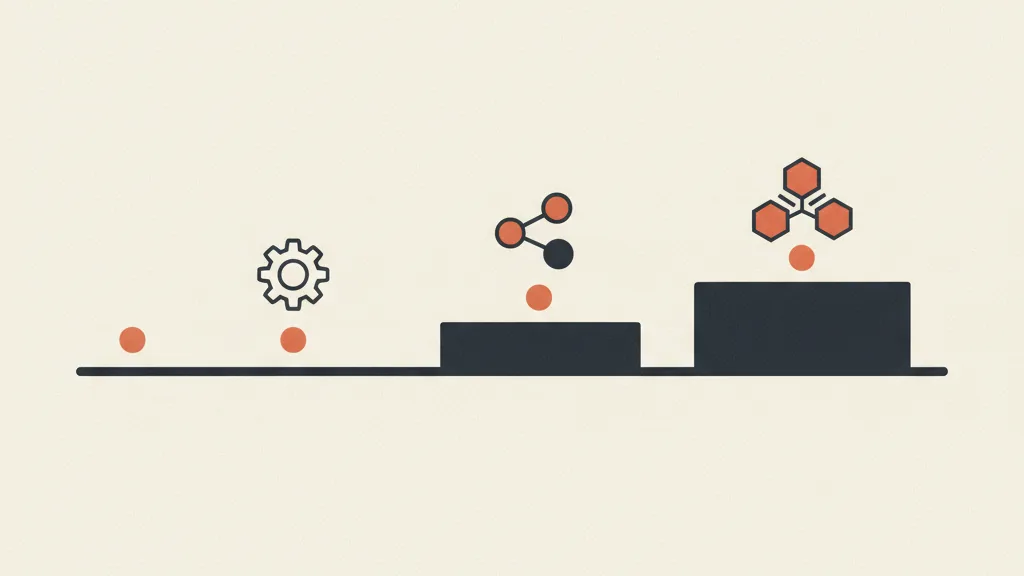
Timeline by project size: MVP, standard, enterprise
The most honest way to answer "how long does it take" is to split projects into three tiers. A field-service tool for a plumbing business and a platform for a 40-person sales team aren't in the same league. Here are the ranges we see in practice on the Italian market.
| Tier | What it includes | Time from go-ahead to go-live | Rough investment |
|---|---|---|---|
| MVP | Contact/account records, sales pipeline, fields and stages matched to your process, 1-2 key integrations, essential reports | 4-8 weeks | €15,000-40,000 |
| Standard | MVP plus extra modules (quotes, automations, detailed roles and permissions), 3-5 integrations, data migration | 3-5 months | €40,000-90,000 |
| Enterprise | Complex business logic, many users and departments, external portals, ERP and invoicing integrations, scalability requirements | 6-9 months and up | €90,000+ |
Be careful how you read these numbers. "Go-live" means the system goes into production and the team actually starts using it, not that the project is closed forever: a custom CRM is alive and keeps evolving. And the time quoted starts from the formal go-ahead, not from when you first started thinking about it. If you want the cost details behind these figures, we broke them down line by line in our guide on how much a custom CRM costs.
Why the MVP tier is the fastest (and almost always the right call)
The MVP (Minimum Viable Product) is the leanest version that solves the main problem and is already usable every day by the team. It's not a toy prototype: it's a working CRM with only the essentials inside. It's fast precisely because it deliberately skips everything you won't need in the first three months.
The understandable temptation is to cram in every conceivable feature from the start. That's mistake number one on the timeline: every extra requirement you demand at launch adds weeks, and often covers functions you'll barely use afterward. Starting with an MVP and growing module by module is the path that cuts time, lowers risk, and shows value sooner. If you're still weighing whether custom is right for you, this comparison helps: custom CRM vs. SaaS, when it's actually worth it.
Implementation stages, with real timeframes
To see where the weeks actually go, you have to open up the project and look inside. A serious implementation, at the standard tier, breaks down into five stages. The timeframes below apply to a standard project: roughly halve them for an MVP, multiply them for an enterprise build.
Stage 1. Process analysis and mapping (1-3 weeks)
Before a single line of code is written, you map how you actually work: how leads come in, how you qualify them, who does what, which data matters, which steps are still manual today. This stage determines the quality of everything that follows. Skipping it, or rushing it, is the surest way to lengthen the timeline later, because every ambiguity left unresolved here resurfaces as rework during development. If your sales process still isn't clear even to you, it's worth revisiting how the funnel connects to the CRM: they're two parts of the same engine.
Stage 2. Data design and prototyping (1-2 weeks)
Here the data structure gets designed (entities, fields, relationships) and the main screens get prototyped. You see the CRM take shape before it's built, so you can correct course while it's still cheap. A big part of the speed depends on whether the build starts from an already-proven modular foundation or truly from scratch: in the first case, customization is mostly about fields, flows, and interface, and the timeline compresses considerably.
Stage 3. Development and automations (4-10 weeks)
This is the core stage and the longest one. Modules, automations (lead assignment, reminders, notifications, follow-ups), roles, and permissions get built here. The duration depends almost entirely on how many modules and automations you decided to include. A well-built sales follow-up automation saves you hours every week once it's running, but it needs to be designed and tested, and that costs development time. Hence the golden rule for the timeline: pay (in time and budget) for what you'll actually use in the first three months, and push the rest to phase two.
Stage 4. Integrations and data migration (2-4 weeks)
The CRM doesn't live in isolation: it needs to connect to email, calendar, website, WhatsApp, ERP, invoicing, depending on your case. Each integration is a mini-project of its own, with its own API, its own limits, its own surprises. Migrating historical data (contacts, deals, history) deserves its own chapter: dirty data, duplicates, or incompatible formats are one of the most frequent causes of delay. Properly connecting WhatsApp to the CRM to manage leads, or hooking up the ERP, requires cleanup and mapping work that's easy to underestimate at the quoting stage.
Stage 5. Testing, training, and go-live (1-2 weeks)
Before launch, everything gets tested with real data, people get trained, and the team is supported through the first few days. This stage often gets cut to "save time," and that's a mistake: a CRM nobody knows how to use is a CRM that goes nowhere. Training and post-launch support don't lengthen the project, they're what actually makes it land.
Have a launch date in mind and want to know if it's realistic for your case? We'll map your process with a free assessment and give you honest timelines and stages, backed by numbers.
What stretches the timeline (and how to avoid it)
When dates slip, nine times out of ten the cause isn't technical. Here are the factors we see push projects off schedule, in order of frequency.
- Requirements changing mid-project. Every "while we're at it, let's also add..." reopens the analysis and pushes back go-live. Freeze the MVP scope and keep a "phase two" list where you park new ideas.
- Historical data in disarray. If contacts are scattered across Excel, an old system, and email inboxes, migration turns into a construction site. Where you can, start cleaning up in parallel with the early stages.
- Slow decisions on your end. The development team waits on feedback, approvals, access. Appoint one point of contact with decision-making power: it cuts dead time in half.
- Integrations with closed or legacy software. An outdated ERP with no decent API can add weeks all by itself. This needs to surface during analysis, not halfway through development.
- Wanting to launch "perfect." Perfectionism is the number-one enemy of the timeline. Better to be in production at 80% and improve on real data than stuck at a theoretical 100%.
The most powerful countermeasure sits upstream: a well-cut scope. A custom CRM isn't a single lump-sum project, it's a path built in modules. The logic is the same one behind any AI-driven business process automation: start with the most expensive bottleneck, fix it, measure, then move to the next one.
How to shorten the timeline without lowering quality
Moving faster doesn't mean rushing and redoing it later. It means working better upstream. These are the levers that actually shift the go-live date.
- Start from a proven modular foundation. Building on tested groundwork, instead of from scratch, compresses the development stage and cuts down on bugs.
- Define the MVP with discipline. Only what you'll use in the first three months. Everything else is phase two. This single decision moves the timeline more than anything else.
- Prepare your data in advance. Clean up and export contacts while analysis is underway, so migration doesn't become the final bottleneck.
- Put one responsive point of contact in place. Someone who replies within the day instead of within a week saves entire stages of waiting.
- Work in short iterations. Reviews every 1-2 weeks, not one giant testing marathon at the end, when fixes cost three times as much.
A well-implemented CRM is never an isolated end point: it's the heart of a customer acquisition system where the funnel brings in qualified leads and the CRM works them through to close. Thinking about CRM timelines in isolation, ignoring how it plugs into the rest of the sales engine, is why so many projects end up technically ready but commercially crippled. If you want to understand the right order to assemble the pieces, start with how to integrate the CRM into the sales funnel.
In short
How long it takes to implement a custom CRM depends on the tier: weeks for an MVP, a few months for a standard project, over half a year for an enterprise build. But the number that matters most isn't technical, it's about scope. A well-cut MVP reaches production early and grows on real data, while the "it has to do everything at once" approach stays stuck. If you have a launch date in mind and want to know if it's realistic for your case, the fastest way to find out is to map the process with the team that will build it.
Frequently asked questions
How long does it take to implement a custom CRM?
From 4-8 weeks for a bare-bones MVP, to 3-5 months for a standard project with more modules and integrations, up to 6-9 months or more for an enterprise system. The time depends on process complexity, the number of integrations, and how fast feedback comes from your side.
Which is the longest stage of implementation?
Building the modules and automations, which takes 4-10 weeks in a standard project. The duration depends almost entirely on how many features you include at launch: the more you demand upfront, the more weeks you add.
Is a custom CRM slower to launch than a SaaS like HubSpot?
A SaaS activates instantly, but then you have to adapt your company to the software. Custom requires weeks or months of build time, but it launches already matched to your process. A well-built MVP closes most of that initial gap.
What causes CRM project timelines to slip?
Mostly non-technical factors: requirements changing mid-project, messy historical data that needs migrating, slow decisions on the client's side, and integrations with legacy software that lacks a decent API. A frozen scope and a responsive point of contact are the most effective countermeasures.
Can I start small and expand later?
Yes, and it's the recommended path. You start with an MVP that solves the main problem in a few weeks, go into production, measure on real data, and add modules in later phases. It cuts time, cost, and risk.
How soon can I expect a return?
With an MVP in production in 4-8 weeks, the first benefits (less manual work, automated follow-ups, data in one place) show up within the first weeks of use. Full ROI builds up as the team adopts the system and later modules get added.
Tell us how you handle leads and deals today: together we'll define the right MVP and a concrete timeline, from the first weeks to go-live. Request your free assessment.