AI Sales Follow-Up Automation: How to Recover Cold Leads
8 min read · AstraLoop Studio
You spent money on ads, you filled the CRM with contacts, and then? Most of those leads never buy. Not because they don't need the product, but because nobody called them back in time, or the rep messaged once, got no reply, and moved on. The lead just sits there, goes cold, and two weeks later it's worth about as much as a contact bought off a cold list.
Follow-up is the part of the sales process everyone knows they should do and almost nobody does well. It's repetitive, it has to happen at the right moment, and it demands consistency: exactly the kind of work AI handles better than a person. In this article we look at how AI sales follow-up automation works, starting from the most underrated lever (response speed) all the way to the nurture sequences that bring back leads that have already gone cold. It's a concrete piece of a bigger topic, business process automation with AI, applied to the stage where the most money is won or lost: the gap between "I'm interested" and the signature.
Why leads go cold (and what it's costing you)
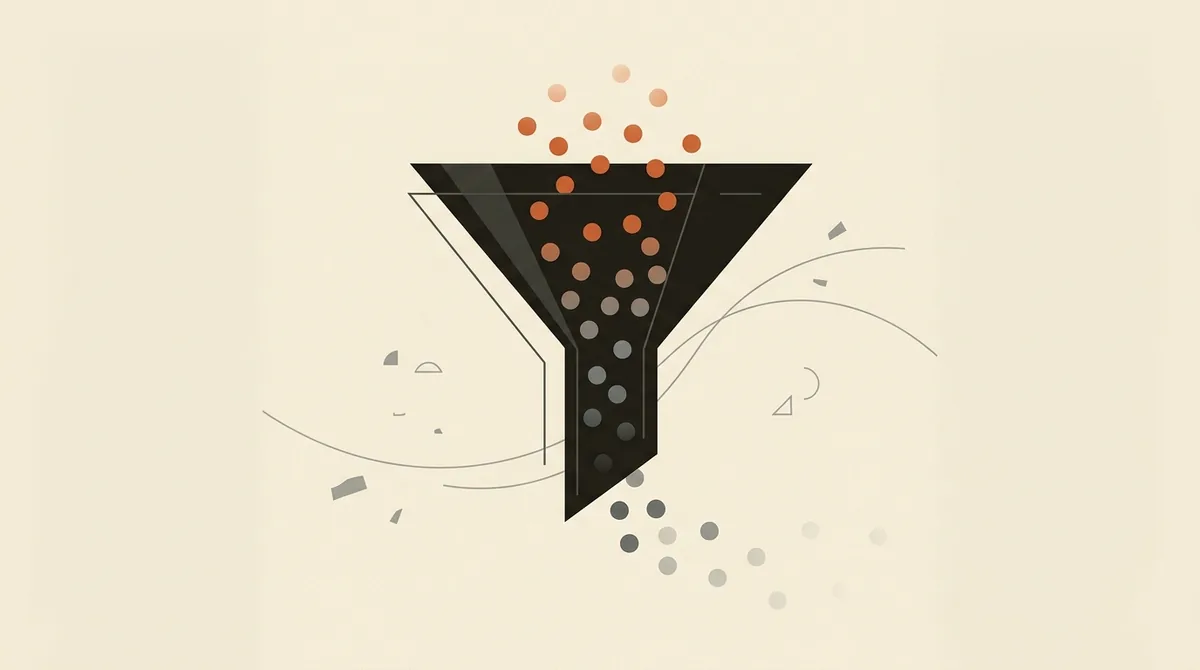
A lead isn't cold by nature, it becomes cold. There are two moments when it happens, and both can be automated.
The first moment is right away. A contact fills out a form or writes on WhatsApp, and in the first five minutes their attention is at its peak: they're thinking about you right now. Reply within those minutes and the conversation starts warm. Reply an hour later and you've already lost half your edge. Reply the next day and that lead has meanwhile messaged three competitors and maybe already booked a call.
The second moment comes after a few days of silence. The lead replied, showed interest, then stopped. They didn't say no, life just moved on. This is where you need a sequence of consistent follow-ups over time, and this is exactly where the human factor breaks down: the rep has other deals open, forgets, or writes the lead off after the second message goes unanswered.
The standard sales stat is well known: most sales close after the fifth contact, yet most reps stop before that. Not because they're lazy, but because manually juggling dozens of follow-ups staggered over time is unmanageable. That's exactly the gap automation fills.
Response speed is a competitive edge, not a detail
If you had to improve just one metric in your sales process, I'd pick first-response time. It's the one factor where you can beat bigger, more structured competitors simply because they're slow and you're not.
An AI agent connected to your channels (website forms, WhatsApp, social campaigns) can:
- reply in a few seconds, 24 hours a day, even at night and on weekends, when most leads from social campaigns come in;
- ask the first qualifying questions (budget, timeline, specific need) before a human even gets involved;
- offer a calendar slot on its own, so the lead books a call while they're still warm;
- hand off to the rep only the contacts already screened, with the conversation context already gathered.
We're not talking about the button-based chatbot from ten years ago. The leap in 2026 is that these systems don't just respond, they take action. They update the CRM, write the deal notes, book the appointment, send the reminder. It's the difference between an AI that "talks" and one that "does", a topic we cover in depth in our articles on what AI agents are and the difference between a chatbot and an AI agent.
On the phone channel there's now a dedicated category: the AI receptionist that qualifies leads and books appointments, with entry-level solutions starting around 49 euros a month. It picks up the call that would otherwise be lost, filters out people who aren't a fit, and cuts no-shows with automatic reminders. If instead most of your contacts come from web forms and WhatsApp, the front to focus on is WhatsApp Business automation, the channel with by far the highest open rates.
Nurture sequences: how to warm up dormant leads
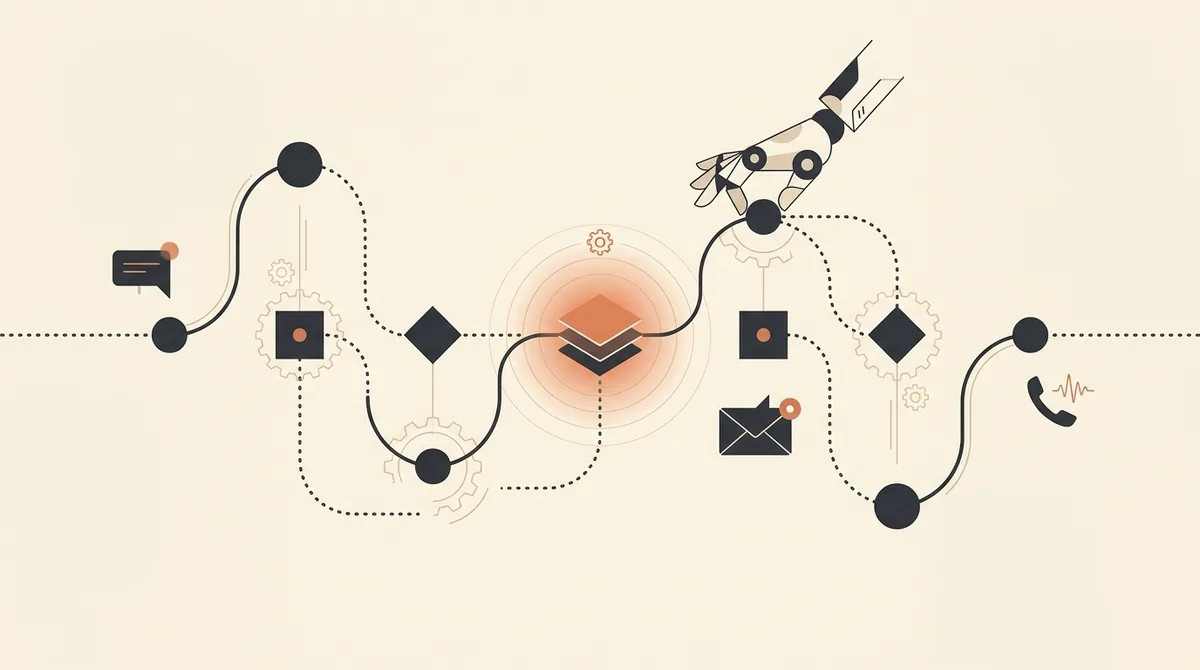
Speed solves the first moment. The second, a lead that's already gone cold, needs something else entirely: a nurture sequence, a scheduled series of contacts over time that keeps the relationship alive without being pushy.
Where AI changes the rules isn't so much "sending messages automatically" (any email marketing platform already did that), but personalizing content and timing to the individual lead. A smart sequence decides what to write based on how the contact behaved: whether they opened the message but didn't reply, whether they clicked a link, whether they'd asked about a specific product.
What a typical sequence looks like
A well-built reactivation sequence isn't "seven identical emails two days apart". It's a rhythm that alternates channels, tone and goals:
- Day 0, immediate contact: a fast reply with qualification. If the lead goes quiet, the sequence kicks in.
- Day 2, value, not a pitch: useful content tied to their problem (a guide, a real case, a comparison), not "so, have you decided?".
- Day 5, channel switch: if there's no reply by email, a short WhatsApp message. Different channel, same person, more direct tone.
- Day 9, a concrete lever: a real deadline, limited availability, an offer tied to their specific case.
- Day 14, a polite close: the "break-up" message, essentially "I'm closing this out, let me know if you still need this". Counterintuitive, but it's often the one that gets the most replies, because it puts the lead face to face with the loss.
AI handles this orchestration without forgetting anyone, stops automatically the moment the lead replies, and hands things back to the human at the right moment. The rep no longer has to remember who to call back and when: they only step in on conversations that have come back to life.
When the issue isn't a single lead but an entire database that's gone quiet for months (customers who bought once and disappeared), the conversation widens to reactivating dormant customers in your database, which is the same logic applied at scale to people who already know you. And upstream of that, so you don't fill the funnel with contacts who will never buy, it also matters to know how to qualify leads coming in.
Want to see how many leads you're letting go cold every month, and how many you could win back? Request a free assessment of your sales process: we'll look at your real numbers together.
What it takes technically (explained without the jargon)
You don't need an IT department. You need to connect three things: the channels leads come from, a brain that decides, and the CRM where the data ends up.
The most widely used tool today for building these flows in SMBs is n8n, a no-code automation platform that has become the de facto standard. It has a native AI Agent node and can be self-hosted on your own servers, which matters when you're handling real contact data and need to comply with GDPR. It's the self-hosted alternative to tools like Make and Zapier, and in our comparison n8n vs Make vs Zapier we break down when each one makes sense.
Inside the flow, the language model (Claude, ChatGPT or similar) is what writes the replies and makes the micro-decisions. Thanks to protocols like MCP, now integrable into n8n, the agent can read your price list, the customer's history and your company knowledge base before replying, so it doesn't make things up and stays consistent with your actual offer.
Build vs. buy: the honest question
You have two paths, and the right answer depends on your volumes.
| Aspect | Ready-made SaaS (from ~€49/month) | Custom agent (from a few thousand € up) |
|---|---|---|
| Time to launch | Days | Weeks |
| Customization | Limited to what the tool offers | Full, tailored to your process |
| Cost over time | Fixed fee, grows with volume | Upfront investment, then marginal |
| Best for | Validating the idea or low volumes | Established flows and high lead volume |
The practical rule: start with the SaaS to validate that automated follow-up actually gets you results, then consider going custom once the numbers justify the investment. Anyone who pushes you straight into a project worth tens of thousands of euros without looking at your volumes first is selling you something, not advising you.
The numbers: what ROI to expect
Automated follow-up affects two measurable levers: how many leads you can actually work, and how many of them you convert. On qualification and nurturing processes, the documented improvements from well-built automations sit in a 200-400% range in handling capacity with the same headcount, with typical payback between 6 and 14 months depending on volume and setup cost.
One caveat: these are orders of magnitude, not promises. The real return depends on your average customer value and how many leads you're currently letting go cold. If you have 500 stalled contacts in the CRM and a high average ticket, recovering even 5% of them with an automated sequence pays back the project in a few weeks. If you get ten leads a month, the math is different. To run these numbers properly for your business, our article on how to measure AI ROI gives you the step-by-step method.
After launch: maintenance and rules to follow
A follow-up agent isn't something you switch on and forget. It needs monitoring: conversations should be spot-checked, tone corrected when it slips register, off-script replies caught. Anyone who only talks to you about setup and never about post-launch management is telling you half the story.
On the regulatory front, from August 2, 2026 the obligations of the AI Act (EU Regulation 2024/1689) become fully applicable, alongside Italy's Law 132/2025. For a commercial use case like this, there are two practical points: transparency (the lead must be able to tell when they're talking to an automated system) and proper handling of personal data under GDPR, with particular care around consent to be contacted. This isn't something to treat lightly, nor as an obstacle: it's manageable, but it needs to be set up correctly from day one. You'll find an SMB-friendly rundown in our piece on the AI Act 2026 obligations for SMBs. For anything not yet settled, always check the official sources (the Italian Data Protection Authority for GDPR, the AI Act texts published by the European Commission).
Where to start
You don't need to automate everything on day one. The smart move is to start with whatever is costing you the most money right now, usually first-response speed, measure it, then extend to nurture sequences. A good automated follow-up doesn't replace the sales rep: it strips away the repetitive work and leaves them only the conversations that matter, the ones where their skill actually makes the difference. The rest (remembering who to call back, rewriting the same message for the twentieth time, never letting anyone fall through the cracks) gets done by the machine, better, every time.
Frequently asked questions
What is AI sales follow-up automation?
It's a system that autonomously manages contacts after a lead's first sign of interest: it replies within seconds, qualifies them, sends scheduled follow-up sequences over time, and hands off to the sales rep only the contacts that are already warm. The AI decides what to write and when based on each lead's individual behavior, and stops as soon as the contact replies.
Why is response speed so important in follow-up?
Because a lead's attention peaks in the first few minutes after they reach out. Replying within minutes instead of hours or days keeps the contact from messaging competitors in the meantime. It's the lever an SMB can use to beat bigger but slower companies, and an AI agent covers it around the clock, weekends and nights included.
How do you win back a lead that's already gone cold?
With a nurture sequence: a scheduled series of contacts that alternates channels (email, WhatsApp), tone and goals over about two weeks, leading with value before any sales ask. The last message is often a polite close, which paradoxically generates a lot of replies because it puts the lead face to face with the loss.
How much does it cost to automate sales follow-up?
It depends on the path. Ready-made SaaS solutions start at around 49 euros a month but are less customizable. A custom agent built around your process requires a higher upfront investment but is tailored to your exact flows. The practical rule is to start with SaaS to validate results and move to custom only once volumes justify it.
Do you need an IT department to automate follow-up?
No. You need no-code tools like n8n that connect your lead channels, an AI model and the CRM without writing code. n8n can also be self-hosted on your own servers, which helps with GDPR compliance when handling real contact data. The part not to underestimate is post-launch management: ongoing monitoring and fixes.
Does AI-driven follow-up comply with the AI Act and GDPR?
It can and it must. From August 2, 2026, the AI Act (EU Regulation 2024/1689) and, in Italy, Law 132/2025 require transparency, meaning the lead must be able to tell when they're talking to an automated system, plus proper handling of data and consent under GDPR. It's manageable by setting the system up correctly from the start; for details, refer to official sources such as the Italian Data Protection Authority.
If you want to set up automated follow-up built around your process, no fluff and with a clear return from the start, talk to us: we'll look at your case and tell you exactly where it makes sense to start.