Custom CRM with an integrated acquisition funnel: how the single system works
8 min read · AstraLoop Studio
The same scene plays out in countless companies. On one side sits the acquisition funnel: campaigns, landing pages, forms collecting contacts. On the other sits the CRM, where sales is supposed to manage those contacts. The problem is the two pieces don't talk to each other. Someone exports a spreadsheet, someone else pastes it back in, and in the meantime leads go cold, get lost, or land on a rep's desk without a shred of context.
A custom CRM with an integrated acquisition funnel exists precisely to close that gap. It's not a CRM sitting next to a funnel: it's a single system, where acquisition and contact management are the same object, built around your actual sales process. In this article we'll look at what that means in practice, how the two pieces merge, and what changes in a company once they stop being separate tools.
Why the funnel and CRM usually stay two separate worlds
In most SMBs, the funnel and the CRM live on different tracks. The funnel is usually a set of marketing tools (ads, landing pages, forms) run by whoever handles acquisition. The CRM is software in the hands of sales, often a standard package adopted years ago. Two systems that share exactly one piece of data that actually matters, the contact, but don't share it in real time.
We covered the core difference between the two tools in detail in this guide on the difference between a funnel and a CRM. In short: the funnel brings new people in, the CRM manages relationships over time. They're complementary, not alternatives. The trouble starts when they stay disconnected.
Here's what happens when the two pieces aren't integrated:
- Manual handoffs that lose data. A lead fills out a form, but sales only sees it once someone exports and re-imports it. A day, or a week, can slip by in the meantime.
- Lost context. The rep gets a name and a number, but has no idea which campaign it came from, what the lead has read, or how warm they are. Every call starts from zero.
- No automatic qualification. Every lead lands in the same pile. Sales burns time on contacts who will never buy, while the ones who are ready sit waiting.
- Broken reporting. Marketing measures leads generated, sales measures deals closed, but nobody sees the full funnel from first click to sale.
The result is a system that works on paper (leads come in, the CRM files them) but bleeds value at every handoff. It's why so many people ask why their funnel isn't converting even when it generates contacts: often the bottleneck isn't the top of the funnel, it's the joint between acquisition and management.
What "integrated" actually means
Integrated doesn't mean "connected with a Zap." It means the funnel and CRM share the same data and the same logic from the very start. When a contact enters through the funnel, it isn't copied into the CRM: it's already inside the CRM from the first instant. Every interaction that follows (an email open, a click, a reply, a call) piles onto the same record.
In a well-built single system:
- The landing page that captures leads writes straight into the CRM, with no middleman.
- The lead is born already tagged: where it came from, which campaign, what interest it declared.
- Follow-up automations fire on their own, based on the contact's behavior, not a manual trigger.
- Qualification happens along the way: the system assigns a score and moves the lead forward when it's ready.
- Sales only sees contacts worth a call, with the full history right in front of them.
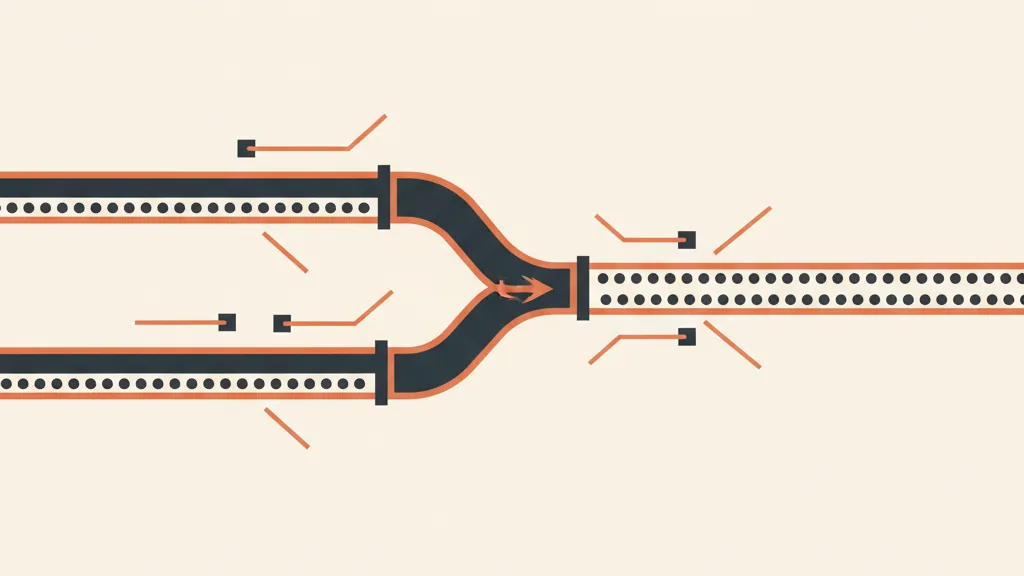
The difference is between two pipes joined by a funnel, where something always spills out, and a single pipe. We dug into this idea in how to integrate a CRM and sales funnel, but the core point is this: integration isn't a bridge between two systems, it's the absence of two systems.
The stages of the single system, step by step
Let's look at how a contact moves through a custom CRM with an integrated funnel. I'll use the classic three stages of the journey (TOFU, MOFU and BOFU), applied to a single system.
1. Entry (top of funnel)
The contact arrives from a campaign, an organic search, a referral. They fill out a form or leave a detail. At that moment the CRM creates the record and logs the source. There's no second step: the lead is already tracked, with the campaign that brought it in correctly attributed.
2. Automatic qualification (middle of funnel)
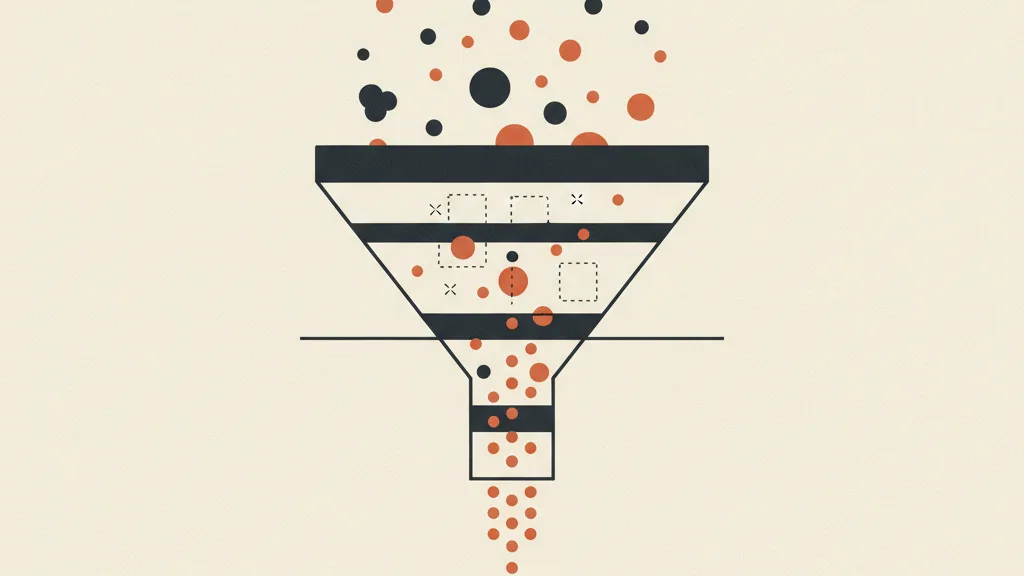
This is where separate systems fall completely short. The system watches behavior and assigns a score through lead scoring: does it open emails? click links? reply to a WhatsApp message? download content? Every action raises or lowers the score. The contact moves from MQL to SQL automatically, once it crosses the threshold you've set.
AI agents that qualify leads can also work at this stage: an assistant that asks the first questions over chat or WhatsApp, figures out whether the contact fits your target, and books a call only when it makes sense. Sales never touches a lead until it's ripe.
3. Close (bottom of funnel)
Once a lead is qualified, the system hands it to sales with the full context: where it came from, what it's done, what interests it, its score. The rep doesn't start from zero, they start with 60% of the work already done. The call is shorter, more targeted, with a higher close rate. That clean handoff is at the heart of what an acquisition system that feeds sales is meant to deliver.
Why "custom-built" changes the results
You might ask: software already exists that connects marketing and CRM, so why build one from scratch? The answer is that your sales process isn't the one in the template. A standard CRM forces you to bend how you work to fit the software. A custom CRM does the opposite: it shapes the system around your actual funnel, your stages, your qualification thresholds.
Here are some concrete examples of what customization changes:
| Aspect | Standard CRM + external funnel | Custom-built single system |
|---|---|---|
| Lead entry | Manual import or fragile Zap | Direct write, automatic attribution |
| Qualification | Manual, at the rep's discretion | Automatic scoring on your criteria |
| Funnel stages | Fixed, dictated by the software | Modeled on your actual process |
| Follow-up | Left to memory | Automatic sequences based on behavior |
| Reporting | Two separate dashboards | One funnel, measurable end-to-end |
The choice between custom and standard isn't always obvious, and it depends on your volume and the complexity of your process. If you want to know when one beats the other, we dedicated a full piece to custom vs. standard CRM: which one to choose. The practical rule: the more specific your sales approach and the higher your volume, the more a custom single system pays off.
Another advantage of customization is that the system grows with you. Add a new channel? It plugs in. Change your qualification criteria? It updates. You're never boxed in by the limits of a product built for the average of a thousand companies that aren't yours.
If you've got a funnel and a CRM that don't talk to each other, we can design the single system you need together. Request a free analysis of your acquisition process.
How much it costs and how long it takes
These are the two questions that always come up. On cost, a custom single system isn't a monthly software subscription: it's a development project. The range depends on how complex your funnel is, how many integrations you need, and how much automation you want. We laid out real numbers in how much it costs to develop a custom CRM, so you have a ballpark before you even talk to a vendor.
On timing, the common mistake is expecting months and months before seeing anything. A well-structured project rolls out in phases: first the entry flow and basic qualification, then the advanced automations. You'll see leads flowing into the system well before the whole thing is finished. For a realistic timeline, we cover it in how long it takes to implement a CRM.
The right way to weigh the cost isn't "how much do I spend," it's "what is not having this costing me today": leads slipping through the cracks, reps chasing cold contacts, campaigns nobody can tell are working. These are the hidden costs of a broken system, and they almost always outweigh the investment in a single one.
How to tell if you need a single system
Not every company needs to build a custom CRM with an integrated funnel. But a few signals make it clear the moment has come:
- You generate leads but can't say which campaign is driving the sales.
- Sales spends more time chasing cold contacts than closing warm ones.
- You have more than one tool "managing" contacts and none of them is the single source of truth.
- Follow-ups rely on people remembering, so they get missed.
- Marketing and sales argue over "the leads are weak" versus "sales isn't working them."
That last point is telling. When marketing and sales point fingers at each other, the problem is almost never either department: it's the missing joint between them. A single system removes the finger-pointing because it makes the entire journey visible and assigns clear ownership at every stage. If you want to understand the roots of that conflict first, it's also worth reading how inbound and outbound intertwine in B2B, because that's often where the two teams lose each other along the way.
The full picture
To recap: a custom CRM with an integrated acquisition funnel isn't the sum of two tools, it's a single system where a contact comes in, qualifies itself, and reaches sales already sorted and warm. The keyword is "integrated" in its strongest sense: not two systems swapping data, but one system built around your process.
The advantage isn't technological, it's economic. Fewer lost leads, less time wasted by sales, more closed deals, and for the first time a funnel that's measurable from start to finish. It's the difference between "generating contacts" and "acquiring customers predictably." If you want to see how the whole cluster around this topic is structured, the starting point is how to integrate a CRM and sales funnel, and from there you can dig into the verticals that apply to you.
Frequently asked questions
What's the difference between connecting a CRM and funnel and actually integrating them?
Connecting means having two separate systems swap data, usually through fragile automations that lose context along the way. Integrated means a single system: the lead is born inside the CRM from the very first click, and every interaction piles onto the same record with no intermediate steps.
Does a custom CRM with an integrated funnel make sense for a small business too?
It depends on your volume and how complex your sales process is. If you generate few leads and manage them by hand without issues, a standard tool might be enough. If you lose contacts along the way or can't tell where your sales are coming from, a single system pays off even for an SMB.
How much does it cost to build something like this?
It's not a subscription, it's a development project, so the cost depends on how complex your funnel is, how many integrations you need, and how much automation you want. The right way to evaluate it is to weigh it against the cost of not having it: lost leads and wasted sales time.
How long before it's up and running?
A well-structured project rolls out in phases. The entry flow and basic qualification can be live within a few weeks, while the advanced automations come later. You'll see leads flowing into the system well before the whole thing is complete.
Is lead qualification really automatic?
Yes, through lead scoring: the system watches the contact's behavior (opens, clicks, replies) and assigns a score based on criteria you define. The lead moves from MQL to SQL on its own, and sales only receives mature contacts, complete with full history.
What changes for the sales team?
Reps stop chasing cold contacts and starting from zero on every call. They only receive qualified leads, with the source, history and score right in front of them. Calls become shorter, more targeted, and close at a higher rate.
Want to see what a custom CRM built around your funnel would look like? Talk to us and get a clear quote for building your system.