How to Build a Customer Acquisition Funnel for Your Business (2026 Guide)
8 min read · AstraLoop Studio
Most companies that claim to "have a funnel" actually have a landing page with a contact form and a spreadsheet where the leads end up. That's not a funnel. It's a funnel with no walls, where contacts come in and then scatter because no one follows up on them systematically.
A serious customer acquisition funnel is a system: a structured path that takes a stranger from "doesn't know you exist" to "has bought," with defined stages, measurable metrics at every step, and a CRM that collects and works the contacts. In this guide we'll look at how to build it step by step, which numbers to watch, and where most projects go wrong. No abstract theory: we'll focus on what it actually takes to generate customers predictably in 2026.
What an acquisition funnel really is (and isn't)
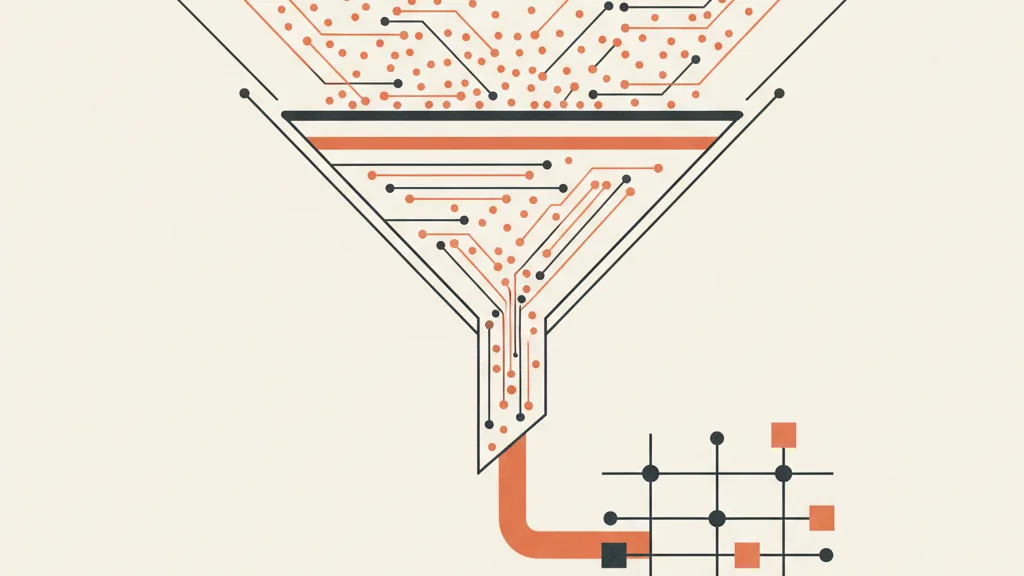
A funnel is the representation of the path a person takes from first contact with your brand all the way to purchase. It's called a "funnel" because a lot of contacts go in at the top, and as they move down the number shrinks: not everyone who sees an ad clicks, not everyone who clicks hands over their details, not everyone who hands over their details buys.
The important thing to grasp right away: the funnel and the CRM are two separate but inseparable things. The funnel generates and qualifies the contact; the CRM receives, tracks, and works it over time. If you have a funnel without a CRM, leads get lost. If you have a CRM without a funnel, nothing comes in to work. If this distinction isn't clear, it's worth first reading the difference between a funnel and a CRM, because it's the source of 90% of the confusion around this topic.
A funnel, then, is not a single tool or a single page. It's the orchestration of several pieces (traffic, conversion page, follow-up sequences, qualification) toward a commercial goal. For a general overview of the concept you can start with what an acquisition funnel is; here we go straight into "how it's built."
The stages of the funnel: TOFU, MOFU, BOFU
Every funnel, however complex, breaks down into three levels. Knowing them helps you figure out what content and offer to place at each point, because a contact at the top isn't ready to buy the way one at the bottom is.
- TOFU (Top of Funnel) - awareness. The person has a problem but doesn't know you and maybe doesn't even know a solution exists. Here the goal isn't to sell: it's to get found and grab attention. Useful content, articles, videos, ads that catch the need.
- MOFU (Middle of Funnel) - consideration. The person is weighing how to solve the problem and comparing options. Here you offer something more substantial in exchange for their contact details: a guide, a webinar, a configurator, a demo. This is the moment you turn an anonymous visitor into a lead with a name and email.
- BOFU (Bottom of Funnel) - decision. The person is ready to pick a supplier. Here you need social proof, case studies, a quote, a sales call. This is where deals close.
If you want to dig deeper into this segmentation, see what TOFU, MOFU, and BOFU mean. The practical takeaway: don't propose marriage on the first date. A classic mistake is making a "request a quote" button the only goal for a cold audience that doesn't even know who you are yet. It converts almost nothing.
Building the funnel step by step
Let's walk through the operational sequence. Follow this order: skipping a step is the fastest way to end up with a leaky funnel.
1. Define your ideal customer and your goal
Before any tool, you need to know who you want to attract and what you want them to do. A B2B funnel selling a 15,000-euro consulting engagement has nothing in common with a B2C funnel for a 40-euro product. Define: who your ideal customer is, what their main problem is, what final action counts as a "conversion" (a booked call? a purchase? a requested quote?), and what a customer is worth on average. Without that number, you'll never be able to tell if the funnel is sustainable.
2. Choose your traffic source
No funnel works without someone coming in. The main sources:
- Paid traffic: Google Ads catches people actively searching, while Facebook and Instagram Ads create demand with an audience that isn't looking for you. Fast results, but they cost as long as you're paying.
- Organic traffic: SEO, content, LinkedIn. Slower to get going but compounds value over time and doesn't vanish when you cut the budget.
- Outbound: cold email and direct outreach, typical of high-value B2B.
The choice depends on margins, sales cycle, and urgency. A common mistake is mixing inbound and outbound without any logic: if you want clarity on when to use one or the other, read inbound vs. outbound in B2B.
3. Build the conversion page
This is where the visitor becomes a lead. In B2B it's almost always a dedicated landing page, not the homepage: one goal, one message, one form. The landing page needs a clear promise above the fold, concrete proof (numbers, case studies, client logos), zero distractions, and a form that asks only for essential data. Every extra field lowers conversion. For the operational details, see how to build a landing page for lead generation.
4. Set up follow-up sequences
This is where 90% of companies fall down. The lead submits their details and then... silence, or a single confirmation email. The data is unforgiving: most contacts don't buy on the first touch and need to be contacted multiple times. You need an automatic follow-up sequence (email, SMS, WhatsApp) that nurtures the contact, handles objections, and pushes them toward action. Sales follow-up automation is what separates a funnel that generates customers from one that just generates lists of dead emails.
5. Qualify leads before handing them to sales
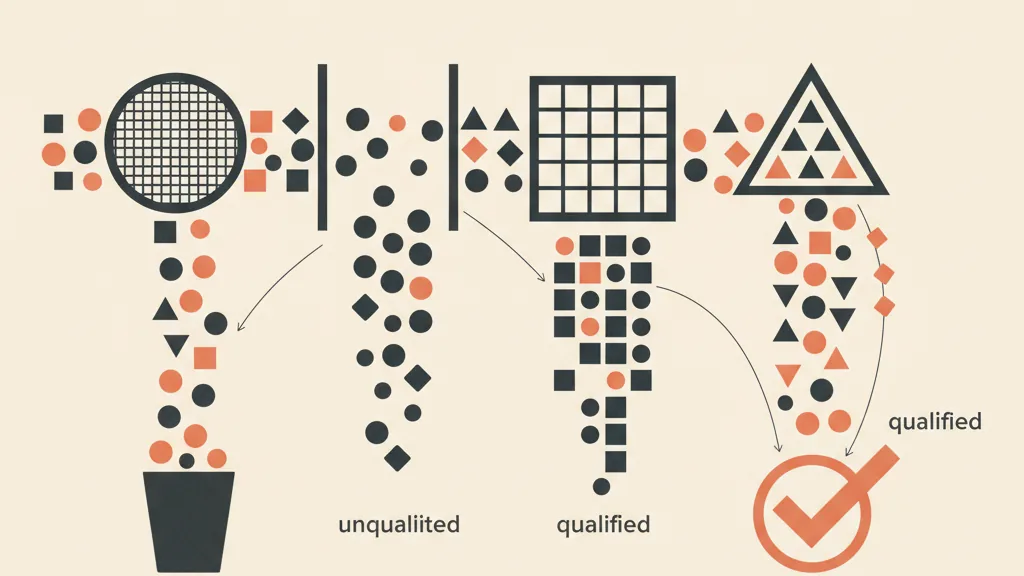
Not all leads are equal. Passing cold or off-target contacts to the sales team burns time and morale. You need to filter: distinguish an interested-but-not-ready contact (MQL) from one ready to talk (SQL). The difference between MQL and SQL and how to qualify leads in practice can help here. In 2026 this stage is increasingly automated: chatbots and AI agents handle conversational pre-qualification and only book an appointment with contacts who meet the right criteria.
6. Connect everything to the CRM
Every contact that enters the funnel needs to end up in the CRM, tagged by source, stage, and qualification level. The CRM is what lets you know where each lead stands, who needs a follow-up, what's converting and what isn't. A funnel disconnected from the CRM is a bucket with a hole in it: the leads are there, but no one manages them. You can see how to set up this integration in how to integrate a CRM with a sales funnel, while the concept of a funnel that feeds the CRM explains why the two systems need to be designed together, not one after the other.
The metrics that matter (and how to read them)
A funnel without numbers is a hope, not a system. You need to measure conversion at every stage to see where you're losing contacts and where to step in. Here are the fundamental metrics.
| Metric | What it measures | Reference range |
|---|---|---|
| Landing page conversion rate | Visitors who become leads | 2-10% (often 3-5% in B2B) |
| CPL (cost per lead) | How much you spend to acquire a contact | Highly variable: €5-150 depending on industry |
| Lead → SQL | Contacts that become qualified | 10-30% |
| SQL → customer | Qualified leads who buy | 15-40% in B2B |
| CAC (customer acquisition cost) | Total cost per customer | Should be < LTV, ideally 1/3 |
The golden rule is the ratio between CAC and LTV (customer lifetime value): if you spend more to acquire a customer than that customer will ever earn you, the funnel is running at a loss, no matter how "nice" the conversion rates look. To build a solid economic model, read acquisition KPIs and unit economics (CAC, CPL, LTV). A second number worth watching is cost per lead compared across channels: often a channel with a higher CPL but more qualified leads ends up costing less per acquired customer.
Why so many funnels don't convert
If you've already tried building a funnel and it didn't deliver, it probably fell into one of these traps:
- Wrong traffic: you're bringing in off-target people. The funnel works, but on an audience that will never buy.
- No follow-up: you collect leads and don't systematically follow up. It's the most common and most costly waste.
- Too aggressive an offer on a cold audience: you ask for the sale before the person even knows who you are.
- Funnel disconnected from the CRM: leads come in but no one works them, and they pile up and go stale.
- No measurement: without stage-by-stage data you don't know where to intervene, and you're navigating blind.
We dedicated a full breakdown to this in why your funnel isn't converting: if results aren't coming, the problem is almost always one of these five, not "the wrong channel."
Want a funnel that actually feeds your CRM instead of losing leads along the way? Tell us how you're acquiring customers today and we'll show you where to step in, with a free analysis of your system.
Build it yourself or bring in a partner
You can put together a basic funnel yourself with no-code tools, decent copy, and patience. That makes sense if you have the time, in-house skills, and a simple sales cycle. But once multiple channels, multi-touch follow-up automations, AI-based qualification, and a custom CRM come into play, complexity grows fast and mistakes cost you real leads.
The practical difference between DIY and a well-built system comes down to three things: data consistency (everything in the CRM, correctly tagged), automation that doesn't break (sequences that actually fire when they should), and ongoing measurement to optimize. A funnel isn't a "build it once and forget it" project — it's a living system that needs to be tuned against real data.
If you're considering having the system built for you, it's worth thinking in terms of a complete customer acquisition system, not a single campaign: that's the mindset of someone who wants a predictable flow rather than occasional spikes. And if your context is B2B, the approach of a B2B customer acquisition agency starts precisely from integrating funnel, qualification, and CRM, not from a single ad. For the more "systemic" side, the CRM-funnel integration covered earlier will also be useful.
The funnel in 2026: what changes with AI
The funnel structure stays the same, but in 2026 some pieces are being automated in ways that were unthinkable two years ago. Conversational qualification through AI chatbots that qualify leads and book appointments lets you filter contacts 24/7 without a salesperson on the line. AI agents for lead generation handle outreach and nurturing at scale. And the CRM itself is getting smarter, with automatic lead scoring that ranks contacts by likelihood to close.
The practical advice: don't automate for the sake of it. First build the manual funnel and verify it converts, then automate the bottlenecks. A funnel that doesn't work by hand won't work automated either — it'll just waste leads faster.
Where to start
To recap, the sequence is: define your ideal customer and goal, choose your traffic source, build the conversion page, set up follow-up sequences, qualify leads, connect everything to the CRM, and measure every stage. You don't need to get everything perfect on day one: you need to close the loop, so that every contact that comes in gets worked and no one falls through the cracks.
The real step up happens when you stop thinking in terms of single campaigns and start thinking in terms of a system: a funnel that feeds a custom-built CRM, tuned to your sales process and your numbers. That's when acquisition becomes predictable instead of depending on how lucky the month is.
Frequently asked questions
What's the difference between a funnel and a CRM?
The funnel is the path that turns a stranger into a customer: it generates and qualifies contacts. The CRM is the system that receives those contacts, tracks them, and works them over time. The funnel produces leads, the CRM manages them. They need to be designed together: a funnel without a CRM loses leads, a CRM without a funnel stays empty.
How much does it cost to build a customer acquisition funnel?
It depends on complexity. A basic DIY funnel can cost just your time and a few tools. A complete system with automations, qualification, and an integrated CRM requires a larger investment. What matters isn't the absolute cost but the ratio between customer acquisition cost (CAC) and customer lifetime value (LTV): as long as CAC is a fraction of LTV, the funnel is sustainable.
How long does it take to see results from a funnel?
With paid traffic the first leads arrive within days, but you need a few weeks of data to optimize conversion and cost per lead. With organic channels (SEO, content) the timeline is longer, often months, but the value compounds and doesn't vanish when you stop paying. Either way, the funnel needs to be tuned on real data — it won't work perfectly from day one.
Which metrics should I track in a funnel?
The fundamentals are: landing page conversion rate, cost per lead (CPL), the rate at which leads become qualified (SQL), the close rate from SQL to customer, and customer acquisition cost (CAC) compared against LTV. Measuring conversion at every stage tells you exactly where you're losing contacts and where to step in.
Can I build a funnel myself, or do I need an agency?
You can build a basic funnel yourself with no-code tools, time, and copywriting skills. It makes sense to bring in a partner once multiple channels, multi-touch follow-up automations, AI-based qualification, and a custom CRM enter the picture: that's where complexity and the risk of mistakes grow, and every mistake costs you real leads.
Why isn't my funnel converting?
In the vast majority of cases the problem is one of these: off-target traffic, no systematic follow-up, an offer that's too aggressive for a cold audience, a funnel disconnected from the CRM, or no stage-by-stage measurement. It's rarely the channel itself — it's almost always a missing link in the chain.
If you want to move from occasional campaigns to a predictable acquisition system, let's talk: we'll analyze your process and propose a funnel integrated with a CRM built around your business.