Lead Generation: What It Is, How It Works, and Why Your Business Needs It
8 min read · AstraLoop Studio
You're trying to figure out what lead generation is, and everywhere you look you find the same recycled definition: "the process of attracting potential customers." True, but useless. It doesn't tell you how it works, what it costs, or why most companies get it wrong.
Here we take a different approach. We explain the real mechanics, with the numbers almost nobody publishes for Italy. And we tell you the uncomfortable truth: generating contacts is worthless if you don't know how to qualify them and follow up.
Whether you sell to other businesses or directly to consumers, if you want a predictable flow of customers, this is the foundation to start from.

Lead Generation: What It Is, in One Honest Sentence
Lead generation is the set of activities that turn an interested stranger into an identifiable contact, one your business can start a sales conversation with.
In plain terms: a user hands over their details (name, email, company, phone number) because you gave them a reason to. From that moment on, they're no longer anonymous traffic. They're a lead.
Watch out for a common mistake. Lead generation is not "collecting emails." Collecting emails is the easy, useless part. The value lies in collecting the right contacts: people who have a problem you solve, the budget to fix it, and, in B2B, the authority to decide. In B2C the logic is similar but more immediate: whoever hands over their details is already considering the purchase, like someone asking for a quote at a car dealership or booking a trial session at the gym.
A thousand random emails are worth less than ten contacts from people looking for exactly what you sell.
What a Lead Really Is
A lead is a contact who has taken a voluntary action: filled out a form, downloaded a guide, requested a quote, booked a call or a visit. The action is proof of interest.
Without action, all you have is a name on a purchased list. And that's not a lead — it's an address that never asked you for anything and isn't waiting for your email.
How Lead Generation Works, Step by Step
The process always follows the same logic, from the first click to the qualified contact. The channels change, not the structure.
- Attraction. You reach people in your target audience through content, ads, SEO, cold email, or LinkedIn. The goal is relevant traffic, not just traffic.
- Value offer (lead magnet). You give something in exchange for the contact: a guide, a template, a demo, a free consultation, a discount on the first purchase. It has to be worth the trade.
- Conversion. The user fills out a form or a landing page and becomes a contact. The fewer fields you ask for, the more contacts you get, but at lower quality. It's a trade-off you need to calibrate.
- Qualification. You check whether that contact is really a potential customer. This is where the curious get separated from the buyers.
- Follow-up and nurturing. You follow up with the lead through emails, calls, or content until they're ready to buy. Most leads don't buy right away.
The critical point is steps 4 and 5. Most companies stop at step 3, admire the number of contacts they've collected, and then wonder why they aren't billing anything. A real estate agency that collects a hundred inquiries and calls back only twenty is throwing away the other eighty. If you want to understand the stages better, we've dedicated a guide to the lead generation funnel and the numbers that actually matter.
Inbound, Outbound, and Demand Generation: Not All the Same
Lead generation runs on two tracks, often combined.
- Inbound. The customer finds you. SEO, blog, content, social media. It takes time to pay off, but the leads are warmer and the cost drops over time. Think of an e-commerce store that ranks on Google and gets orders while it sleeps.
- Outbound. You go to the customer. Cold email, cold calls, LinkedIn, paid advertising. It pays off immediately, but the leads are colder and you need volume.
Then there's a distinction almost nobody explains: lead generation ≠ demand generation. Demand generation creates demand — it makes the market aware that your type of solution exists. Lead generation captures demand that already exists.
If you're selling something nobody knows they want, lead generation alone isn't enough: you first need to build awareness. Picking just one out of stubbornness is the classic mistake. For a practical comparison between the two most-used outbound channels, read cold email vs LinkedIn for B2B lead generation.
Lead, Prospect, MQL, SQL: The Quality Ladder
Not all contacts are created equal. Mixing up these terms is exactly why marketing and sales keep blaming each other.
| Term | What It Means |
|---|---|
| Lead | Has shown interest. Full stop. Still lukewarm. |
| Prospect | A lead who matches your ideal customer profile (budget, role, need). |
| MQL | Marketing Qualified Lead: ready to be worked by marketing. |
| SQL | Sales Qualified Lead: ready for a real sales conversation. |
A qualified lead is worth ten times a generic one, because it doesn't waste the sales rep's time. If this ladder confuses you, we've written a guide on MQL, SQL, and how to spot a contact that actually buys.
Want to know how many qualified leads you could generate in your industry, and at what cost? Let's talk: we'll give you real numbers, not promises.
How Much Does a Lead Cost? Real Numbers for B2B in Italy
Here's the information other articles won't give you. Everyone talks about lead generation as if it were free. It isn't. Every contact has a cost per lead (CPL), and it changes drastically depending on the channel.
Indicative ranges for the Italian B2B market:
- Paid advertising: typical CPL of €80-200. Immediate results, but leads stop the moment you stop spending.
- Content marketing / SEO: typical CPL of €40-120. Pays off in 30-45 days, then the cost drops because the content works on its own.
- Referrals and partnerships: typical CPL of €50-150. Warmer leads, but less predictable volume.
And the cost of acquiring a customer, not just a lead, climbs to €200-800 for an average deal size and can exceed €2,000 for enterprise contracts. In B2C the figures are lower per single lead, but the logic doesn't change: what matters is how many of those contacts turn into sales. These are numbers that change the math of any marketing budget.
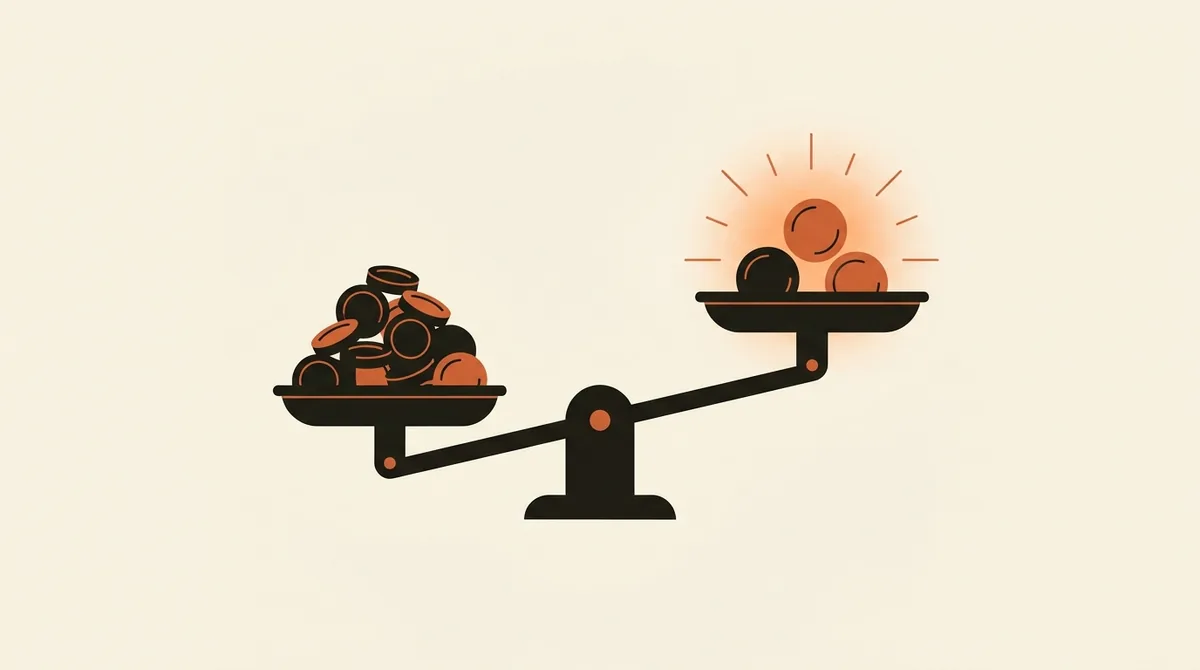
The lesson: a low CPL means nothing if those leads never close. It's better to pay €150 for one contact that becomes a customer than €20 for a hundred contacts that vanish. We go deeper in our guide to cost per lead by industry in Italy.
Why Your Business Needs Lead Generation
Without a contact generation system, growth depends on word of mouth and luck. With a system, it becomes predictable.
The concrete benefits:
- Predictable pipeline. You know how many contacts come in every month and how many turn into customers. You can plan.
- More efficient sales cycle. Sales reps talk only to people who are already interested, not cold strangers.
- Controllable acquisition cost. You measure how much you pay per customer and optimize over time.
- Less dependence on any single channel. You're not held hostage by one traffic source.
At AstraLoop we combine AI and automation with lead generation: that's what allowed us to generate over 370,000 qualified leads for more than 60 companies, both B2B and B2C. The point isn't generating a lot of contacts, it's generating the right ones and not losing them along the way. The difference between the two is your entire revenue.
The Mistakes That Make Lead Generation Useless
The truth motivational teasers won't tell you: you can spend thousands of euros and close nothing. Here's how it happens.
- No qualification. You collect contacts at random and treat them all the same way. Your sales rep burns hours on the merely curious. See how to qualify leads without wasting time.
- Missing or slow follow-up. A lead contacted again days later is nearly dead. Response speed is everything: someone asking about a car or a property who doesn't get an answer within an hour has often already messaged your competitor.
- Obsession with volume. A thousand bad leads are worth less than twenty good ones. The number to watch is the one that turns into revenue.
- No measurement. If you're not tracking CPL, conversion rate, and cost per customer, you're deciding by gut feeling. And gut feeling loses.
Often the problem isn't the channels, but the wrong tools, or too many tools that don't talk to each other. If this sounds like you, check out which lead generation tools are actually enough before you buy yet another piece of software.
How to Get Started, Concretely
You don't need to start with ten channels. You need to start right.
- Define your ideal customer. Who buys from you? Industry, role, company size, problem. If you sell to consumers: age range, location, need, budget. Without this, every lead is a shot in the dark.
- Pick one channel, not five. Better to dominate LinkedIn or SEO than to do everything badly. You'll find practical tips in how to generate qualified B2B leads.
- Create an offer worth the contact. A weak lead magnet brings in weak leads.
- Set up follow-up before you generate traffic. Following up matters more than attracting.
- Measure and optimize. Every month look at the numbers and cut what isn't working.
Today, much of this work can be automated. AI qualifies contacts, personalizes messages, and follows up at the right moment, without growing the team. That's the core of AI-powered lead generation.
In Summary
Lead generation is the system that turns strangers into business contacts, and contacts into customers. It's not about collecting emails: it's about collecting the right contacts, qualifying them, and following up with a method.
If you want the full picture for B2B — channels, strategies, tools, and numbers — start with our pillar guide: B2B lead generation, how to acquire qualified customers. And when you're ready to move from theory to a system that actually generates customers, you know where to find us.
Frequently asked questions
What does lead generation mean?
Literally, "contact generation." It's the set of activities that turn an interested stranger into an identifiable contact (with a name, email, company) that a business can start a sales conversation with. It's not about collecting emails at random, it's about reaching the right people.
What's the difference between a lead and a prospect?
A lead is a contact who has shown interest, but is still "lukewarm": there's no guarantee they want to buy. A prospect is a lead who has already been qualified, matches the ideal customer profile, and has the conditions to buy — meaning budget, decision-making authority, and a concrete need.
How much does a lead cost in B2B in Italy?
It depends on the channel. With paid advertising, cost per lead (CPL) is typically €80-200; with content marketing and SEO, €40-120; with referrals and partnerships, €50-150. Acquiring an actual customer, not just a lead, costs from €200 to over €2,000 depending on the deal size.
Does lead generation work for small businesses and B2C companies?
Yes, in fact it's often even more useful for small businesses and B2C activities, because it makes growth predictable and reduces dependence on word of mouth. The key is starting with a single channel, clearly defining the ideal customer, and taking care of follow-up, instead of spreading yourself thin across too many fronts.
Why am I generating leads but not closing customers?
Almost always for three reasons: there's no qualification (you treat all contacts the same way), follow-up is slow or missing, or you're chasing volume instead of quality. A thousand poor leads are worth less than twenty good ones followed properly and contacted quickly.
If you want to stop collecting contacts at random and build a system that brings in real customers, write to us at astraloopstudio@gmail.com: we'll analyze your case and tell you what actually works for you.