The Funnel That Feeds the CRM: From Lead to Customer, Step by Step
9 min read · AstraLoop Studio
The funnel doesn't end when the lead arrives — it starts there
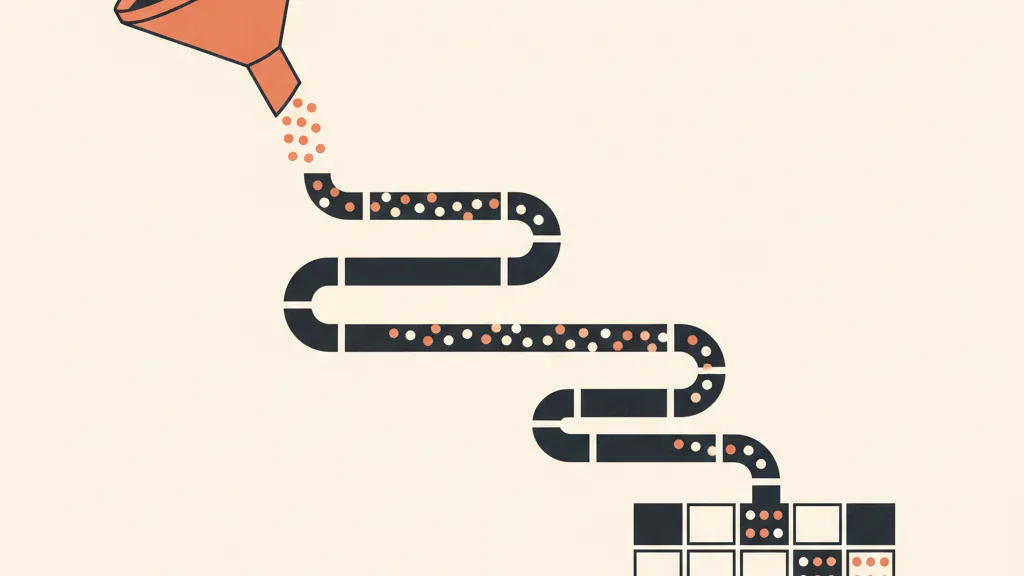
There's a misunderstanding that costs many companies real customers. People picture the funnel as a machine that "produces contacts" and the CRM as an archive where those contacts go to rest. Two separate worlds: marketing fills the top, sales fish from the bottom, and in between there's a grey zone where leads get lost without anyone noticing.
The reality is different. The funnel and the CRM are one single system. The funnel captures and warms up, the CRM collects, organizes and converts. If the handoff between the two isn't clean, you've spent ad budget generating contacts that then die in a spreadsheet or a clogged inbox. It's not a lead-volume problem. It's a continuity-of-journey problem.
In this article we'll walk through the full operational flow, step by step: how the lead is captured, how it enters the CRM without friction, how it's nurtured, and how it reaches the close. No slideware theory — the real path a contact takes from the first click to the signature, with the exact points where things usually break.
Funnel and CRM: who does what (and why it matters)
Before connecting them, you need clarity on the roles. Confusing the two systems is the number-one cause of funnels that look like they're working but don't convert. For the full distinction, see the difference between a funnel and a CRM. Here's the operational summary.
- The funnel is the journey. It's the sequence of steps a stranger goes through to become a customer: ad, landing page, form, content sequence, offer. It's made of stages and the conversion rates between them.
- The CRM is the memory and the engine. It's where every contact lives as a record: who they are, where they came from, what they've done, what stage they're at, who's following up. It's where you decide the next action and where you measure what's actually happening.
Put bluntly: a funnel without a CRM produces contacts nobody works systematically. A CRM without a funnel is an empty container that fills up at random, on word-of-mouth and luck. Together — and only if they talk to each other — they become a customer acquisition system that runs without depending on a single salesperson's heroics.
The operational flow in 4 stages
Let's walk through the full journey. Each stage has a precise goal, an output that hands off to the next stage, and a typical breaking point to watch.
Stage 1. Lead capture: the moment of contact
Everything starts with an action from the contact: filling out a form, booking a call, downloading a guide, writing on WhatsApp, calling a number. This is the most delicate moment in the whole journey, because attention is at its peak and the window of opportunity is shortest.
What needs to happen here:
- Full data capture. Not just name and email, but also the source (which ad, which campaign), the context (which page, which offer) and the answers to any qualifying questions. This data determines everything that comes after.
- No leakage. The lead must enter the CRM the instant they submit the form. Not at the end of the day, not "whenever someone copies it over by hand." The speed of entry is directly proportional to the probability of closing.
The most underrated capture channel today is WhatsApp: people reply to a message within minutes, to an email in hours or never. Connecting the WhatsApp-CRM integration means bringing the lead into the system while they're still "hot." The structure of the entry page matters just as much as the channel: a landing page built for lead generation with a single goal converts far better than a page that asks for too much or distracts.
Typical breaking point: the form dumps into a generic inbox (info@) that nobody checks in real time, or the data ends up in a spreadsheet that then has to be "imported." Every hour of delay between capture and pickup erodes conversion.
Stage 2. Sync and qualification: the lead enters the CRM
The contact is in. Now the CRM has to do two things right away: enrich the record and qualify it, so sales doesn't waste time on people who aren't ready.
Enriching means completing the profile with everything the funnel collected: source, campaign, behavior, answers. Qualifying means understanding what stage the lead is at and what priority it should be treated with. Not all contacts are equal: someone who requested a quote is worth something different from someone who downloaded an ebook. This is the MQL vs. SQL logic: a marketing-qualified lead isn't yet ready for sales, and treating it as if it were burns the relationship.
This is where automation makes a huge difference. A lead scoring system assigns a score based on who the contact is and what they've done, so the CRM sorts the queue on its own: the most promising leads rise to the top, lukewarm ones go into nurturing, out-of-target ones get filtered out. The salesperson opens the CRM in the morning and already finds a prioritized list, not an undifferentiated pile to sift through.
Typical breaking point: every lead gets assigned to the same queue with the same priority. The result is salespeople calling in random order, the best leads waiting behind the weak ones, while the prospect buys from the competitor who called back first.
Stage 3. Nurturing: cultivating those who aren't ready yet
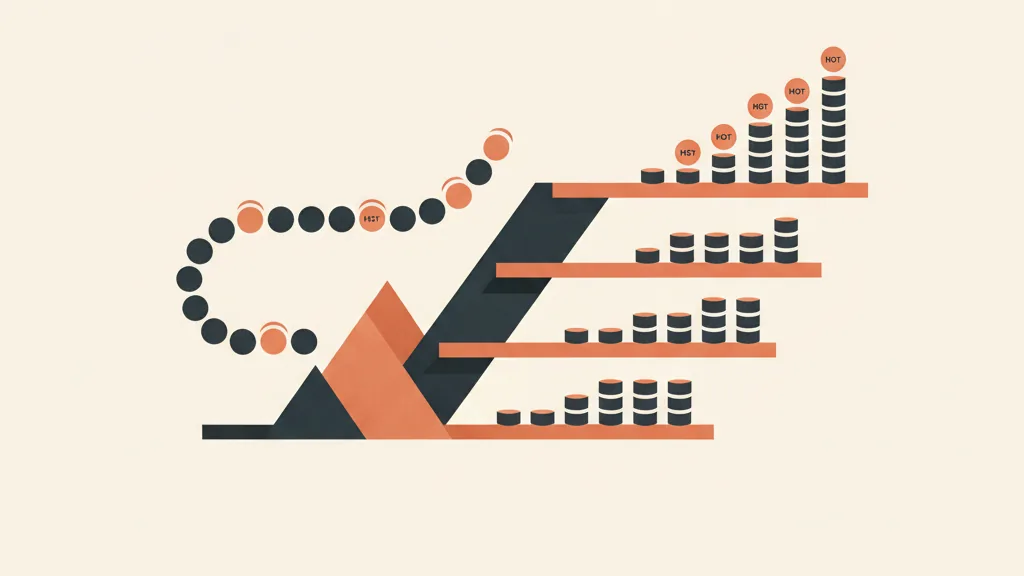
This is the stage that separates systems that work from those that waste leads. Most contacts who come in aren't ready to buy today. In B2B, the share of leads ready for an immediate purchase is a minority: most are still evaluating or simply filled out the form out of curiosity. If your process discards anyone who doesn't buy right away, you're throwing away most of what you paid for.
Nurturing is the cultivation work: you keep the contact alive, give them value, walk with them until they're ready. Concretely, inside the CRM this means triggering automated sequences that adapt to where the lead is in the journey — the TOFU MOFU BOFU logic:
- Someone who just came in receives educational content that builds trust, with no pressure to buy.
- Someone who's shown concrete interest receives case studies, proof and comparisons that answer objections.
- Someone close to deciding receives the offer, the call, the final push.
The key is that no one does this by hand — the CRM does it based on behavior. A lead opens three emails, clicks through to the pricing page, comes back to the site: the system recognizes it, raises their score and puts them back in the salesperson's "hot" queue. This is where AI-driven sales follow-up automation changes the numbers. The follow-up no salesperson has time to do by hand, the machine does consistently, for months, without ever forgetting anyone.
Typical breaking point: the well-known funnel that doesn't convert almost always breaks here. Leads come in, maybe get a welcome email, then silence. After two weeks they've gone cold, after a month they've forgotten you. Nobody followed up because "they were just curious." They were future customers left to rot.
If your funnel collects contacts but loses some between capture and close, the gap is at a specific handoff. Request a free analysis: we'll map your flow together and show you exactly where leads are evaporating.
Stage 4. Closing: from hot lead to customer
Nurturing has done its job: the lead is ready. Now the ball passes to sales, and the CRM has to make that handoff invisible and instant. The salesperson doesn't have to rebuild the contact's story from scratch: they open the record and see everything — where the lead came from, what they've read, what objections they've raised, when they last came back. They walk into the call prepared, not blind.
In practice, the closing stage inside the CRM means three things:
- Clean handoff. The hot lead gets assigned to the right salesperson with an immediate notification, not dropped into a list to check "whenever there's time."
- Full context. The entire history is in the record. The salesperson talks to a person they know, not an anonymous phone number.
- Tracked closing follow-up. Quote sent, second call, reminder: every step lives in the CRM, with automatic reminders. Unclosed quotes don't get lost — they enter a recovery sequence.
Even after a "no" or a quote left pending, the system doesn't let go: the lead goes back into an automatic quote-recovery flow, because a "not now" is often just a matter of timing. And this is where the loop closes. The signed customer stays in the CRM, with their full history, ready for upsell, renewal and future reactivation. The funnel has fed the CRM, the CRM has produced a customer, and that customer becomes an asset that keeps paying off.
Why, without integration, the funnel "loses" leads
The value of this system lies entirely in a clean handoff between stages. Every point where data gets copied by hand, a lead sits waiting, or a follow-up gets skipped is a point where you're losing money. Here's where the disconnect usually happens:
| Stage | What passes to the next stage | Where it usually breaks |
|---|---|---|
| Lead capture | Contact + source + answers | Data ends up in an email nobody reads |
| Sync and qualification | Enriched record + priority | Everyone in the same queue, no priority |
| Nurturing | "Warmed-up" lead + updated score | Silence after the first contact |
| Closing | Customer + full history | Salesperson with no context, forgotten follow-ups |
The cost of this disconnect doesn't show up on a chart: it hides in the leads you could have closed and didn't. If you generate a hundred contacts a month and lose half of them somewhere between stages, you don't have a traffic problem. You have a plumbing problem: the pipes between funnel and CRM leak. And the fix isn't buying more leads, it's properly integrating what's already coming in. That's exactly the reasoning behind how to integrate your CRM and sales funnel so the journey has no gaps.
Building it with a custom-made tool
An off-the-shelf CRM gives you the building blocks, but the specific flow of your company — your channels, your qualifying questions, your sequences, your way of closing — has to be built. It's the difference between adapting your company to the software and adapting the software to your company. As volumes grow and the process gets more specific, a custom CRM with an integrated funnel stops being a luxury and becomes the difference between a system that scales and one that clogs up.
This doesn't mean months of development before seeing results. It means starting from the flow, not the tool: mapping the four stages onto your real process, spotting where you're losing leads today, and closing those gaps one at a time. The funnel that feeds the CRM isn't an IT project — it's a way of working where no paid contact gets left behind.
If you want the full picture of the cluster, from building the journey to running it on autopilot, start with the guide on what an acquisition funnel is and how to build a customer acquisition funnel.
Frequently asked questions
What's the difference between a funnel and a CRM?
The funnel is the journey a contact takes to become a customer (ad, landing page, form, offer). The CRM is the system where every contact lives as a record and gets worked: who they are, what they've done, what stage they're at, who's following up. The funnel captures and warms up, the CRM organizes and converts. They only work if they're connected and pass data without friction.
How does the funnel actually feed the CRM in practice?
The moment a contact fills out a form, books a call or writes in, their data (name, source, qualifying answers) enters the CRM automatically as a new record, with no manual copying. From there the CRM enriches it, assigns a priority score, kicks off the right nurturing sequences, and once it's ready, hands it to a salesperson with the full history attached.
Why am I losing leads even though my funnel works?
Almost always the problem isn't lead generation, it's the handoff between stages. Typical breaking points: data landing in an unmonitored inbox, every lead in the same queue with the same priority, silence after the first contact (no nurturing), salespeople closing without context. Every gap between funnel and CRM is a paid lead evaporating.
What is nurturing and why is it the most critical stage?
Nurturing is the cultivation of contacts who aren't ready to buy yet — which is most of them. It's automated sequences that add value and keep the relationship alive until the lead matures. It's critical because most contacts don't buy today: without nurturing, you throw away most of what you paid for in advertising.
Do I need a custom CRM, or is a standard one enough to connect to the funnel?
For low volumes and linear processes, a standard tool can be enough. When you have many channels, specific qualifying questions and custom sequences, a custom CRM with an integrated funnel keeps you from bending your company to fit the software. The choice depends on process complexity and lead volume, not company size itself.
How fast does the handoff from form to CRM need to be?
Instant. The lead has to enter the CRM the moment they submit the form, not at the end of the day and not through a manual import. The speed of pickup is directly tied to the probability of closing: in the minutes after the request, the contact's attention is at its peak, and every hour of delay lowers conversion rates.
Want a funnel that actually feeds your CRM, with no leads lost in between? Talk to us: we design the system tailored to your process, from capture to close.