AI Lead Scoring for SMBs: Prioritize the Leads That Convert
9 min read · AstraLoop Studio
Your salesperson has 40 leads in the queue and three hours to work them. Which ones do they call first? If the answer is "whichever came in last" or "whoever's been shouting loudest by email," you're leaving money on the table. That's exactly what AI lead scoring is for: putting the contacts most likely to buy at the top of the list, not the noisiest ones.
For years, predictive scoring was a big-company luxury: complex models, in-house data scientists, six-figure budgets. In 2026 that's no longer true. Modern CRMs and accessible AI tools have lowered the barrier enough that even an SMB with a few hundred leads a month can build a prioritization system that actually works. In this guide we'll walk through how, no fluff, from the logic to the practice, with particular attention to where scoring needs to live to make any sense at all: your CRM.
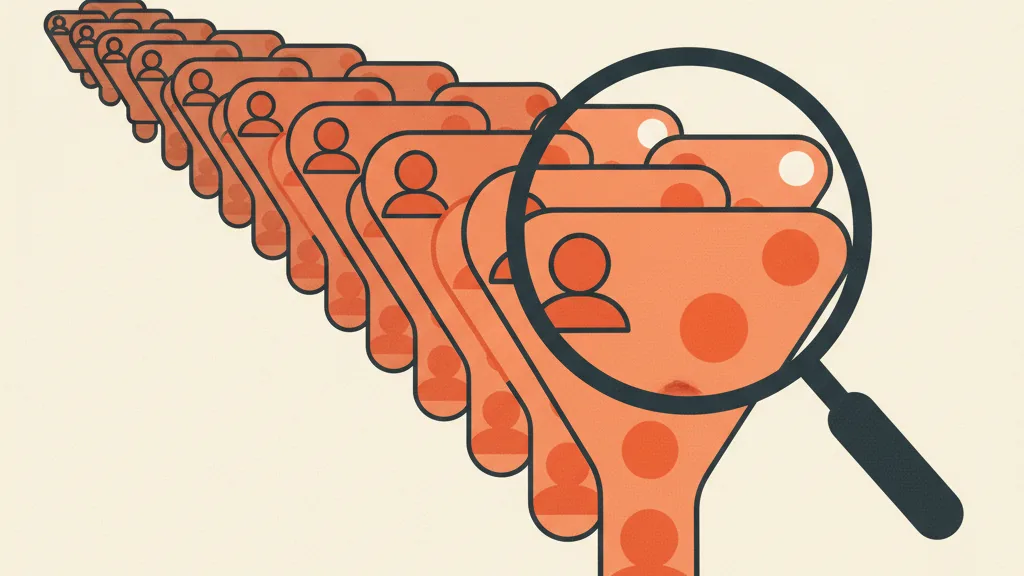
What lead scoring actually is (and why fixed-point scoring isn't enough anymore)
Lead scoring assigns each contact a score that estimates how "ready" they are to buy. Nothing new there. What makes the difference is the method behind that score. If you've never touched these concepts before, it's worth starting with the basics we cover in what lead scoring is and how a qualified lead is defined in qualified leads: MQL vs SQL.
Rule-based scoring (the old way)
The classic model is manual: you set the point rules yourself. Business email +10, "director" role +15, downloaded the PDF +5, company under 5 employees -10, and so on. It works, but it has three practical problems:
- You're the one deciding the weights, often by gut feel. Who's to say a PDF download is really worth 5 points and not 2?
- It doesn't learn. When the market shifts or your offer changes, the rules just sit there until someone manually rewrites them.
- It ignores combinations. A "director" role at a company in your target segment is worth far more than the same role at a company that never closes. Point rules add up, they don't reason.
Predictive AI scoring (the 2026 way)
Predictive lead scoring flips the logic. Instead of you deciding which signals matter, you feed the model your historical leads (the ones who bought and the ones who fell through) and let it find the patterns itself. The result is a score, often expressed as a conversion probability, based on what actually drove a sale in your business, not on your assumptions.
A predictive model notices things you'd never spot by eye: that leads arriving Friday afternoon from a certain campaign close 30% more often, that someone who visits the pricing page twice is worth more than someone who opens ten emails, that a specific combination of industry, company size and source is your goldmine. It's evidence-based qualification, not gut instinct.
Why it makes sense for an SMB (not just enterprises)
There's a reasonable objection here: "you need a lot of history to train a model, and I don't have many leads." Partly true. But for an SMB the goal isn't the perfect model, it's a better prioritization than the current chaos. And the numbers back that up.
| Scenario | Without scoring | With AI scoring |
|---|---|---|
| Lead working order | Chronological or random | By probability of closing |
| Time spent on cold leads | High (worked the same as everyone else) | Reduced (pushed down the queue) |
| Response speed on hot leads | Slow (buried in the pile) | Immediate (top of the list) |
| Decision on who to call back | Sales rep's gut feeling | Score + historical data |
The biggest advantage for a small team isn't technological, it's focus. If you have one or two salespeople, every hour spent on a lead that will never close is an hour taken away from one that would have signed. Scoring doesn't generate new leads (for that you need a proper customer acquisition system), but it squeezes far more value out of the ones you already have.
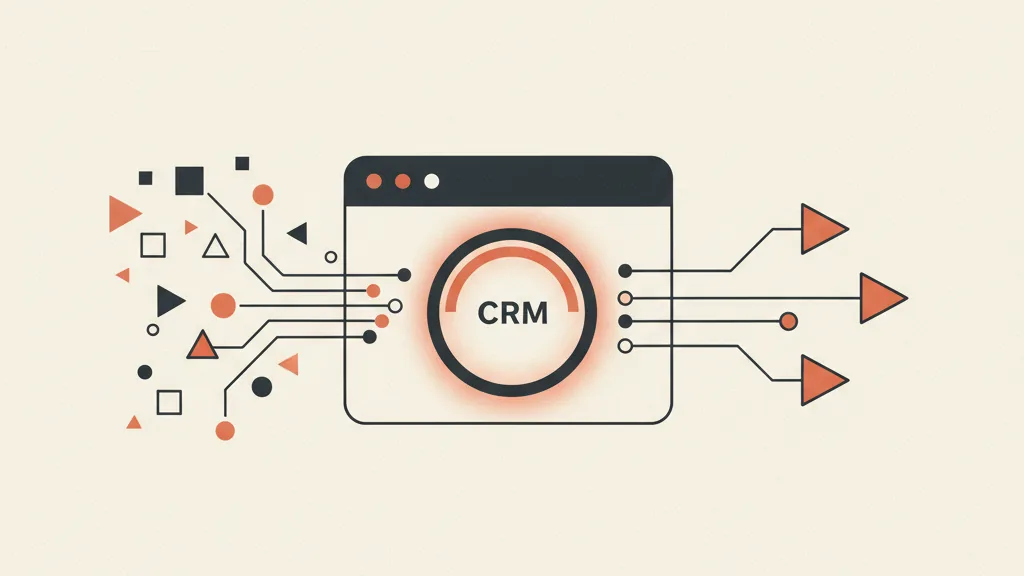
What data feeds a good score
A model is only as good as the data you feed it. For an SMB, useful signals fall into two families, and real quality comes from combining them.
Explicit data (who the lead is)
- Firmographics: industry, company size, contact role, geography. These carry a lot of weight in B2B.
- Source: which channel they came from. A referral lead and a cold-campaign lead rarely have the same value.
- Stated fit: declared budget, timeline, need expressed in the form.
Behavioral data (what the lead does)
- Website interactions: pages viewed, time on the pricing page, repeat visits.
- Engagement: email opens and clicks, replies, downloads.
- Recency and frequency: how recently and how often they're active. On this front, it's worth reading how RFM analysis works, a simple, powerful logic that pairs perfectly with scoring.
The single most underrated signal is response speed. A lead who replies within five minutes of you reaching out is worth far more than one who replies three days later. If you have an AI agent qualifying leads on WhatsApp or via chat, these micro-signals of engagement become valuable real-time input for the score.
Where scoring lives: inside the CRM, not in a separate spreadsheet
Here's the point that separates an experiment from a system that actually delivers results. A score sitting in an Excel file disconnected from everything else is useless: nobody looks at it, it goes stale in a day, and it doesn't drive any process. Scoring only has value if it lives inside the CRM, next to the contact, and triggers something automatically.
Concretely, in a well-built CRM the score should:
- Sort the sales rep's work queue, putting high-probability leads at the top.
- Change status once a threshold is crossed (e.g. above 80 becomes "hot" and triggers a notification to the salesperson).
- Trigger different automations depending on the tier: hot leads go straight to sales, warm leads enter a nurturing sequence, cold leads get long-term follow-up.
- Update itself as new behavior comes in, with nobody having to recalculate anything by hand.
And this is exactly where a standard CRM shows its limits. Many general-purpose platforms offer rigid, rule-based scoring that doesn't talk to your funnel and doesn't account for your specific business. A custom CRM built for SMBs, on the other hand, lets you model scoring on the data that actually matters for your business and tie it to the automations you need. If you're weighing the fundamental choice, this comparison will help: custom CRM vs. SaaS, when each makes sense.
The score alone still isn't enough: it has to be one piece of a bigger flow where the funnel that generates leads and the CRM that manages them are integrated. We covered that connection in how to integrate your CRM and sales funnel.
Want scoring that actually lives in your CRM and sorts your sales team's workload? Request a free analysis: we'll look at your data and tell you where to start.
How to get started, step by step (no data scientist required)
You don't need an analytics department. Here's a realistic path for an SMB.
1. Define what "converted" means
Sounds obvious, isn't. Does a lead become a customer when they sign the contract, or when they book a demo? Pick the conversion event that really matters and stay consistent. The model will learn to predict that.
2. Get your historical data in order
Even 200-300 closed leads (won and lost) with a few clean attributes are a solid starting point. You need to know, for each one, what they looked like and how it turned out. If your data is scattered across emails, spreadsheets and notes, that's the first job to tackle.
3. Start simple, then evolve
You can begin with a well-built rule-based score, measure results, and move to predictive once you have enough data. It's not all-or-nothing. Even a good rule-based system, if it lives in the CRM and sorts the queue, is a major step up from chaos.
4. Close the loop: feed back real outcomes
Every closed lead (won or lost) is a new data point that sharpens the model. A predictive system that never gets feedback on "did this lead actually buy?" stays blind. Make sure the final outcome flows back into the CRM.
5. Automate the follow-up
A high score needs to translate into action within minutes, not days. This is where AI-driven sales follow-up automation closes the loop: the hot lead gets worked while it's hot, not three days later when the salesperson finally gets to it.
Common mistakes to avoid
- Scoring nobody uses. If the sales rep doesn't trust the score or doesn't see it in their working screen, it's dead on arrival. It needs to be visible and actionable right where they already work.
- Behavioral data only. A lead who opens twenty emails could be a curious competitor. Without firmographic fit, you risk warming up contacts who will never buy.
- A static model. If you don't update it with real outcomes, within a few months it's predicting the past, not the future.
- A score disconnected from the funnel. Remember the fundamental difference between the two tools: we explain it in funnel vs. CRM: what's the difference. Scoring lives between the two and needs to keep them connected.
- Waiting for perfection. An 80%-accurate model running today beats a perfect model that never launches.
What it's really worth, in money
Let's run a rough estimate. Imagine 100 leads a month, a 10% average close rate, so 10 customers. If scoring gets you working the high-probability leads first and better, you're not creating new leads: you're recovering the ones that used to go cold in the queue while the sales rep was busy elsewhere. Even just a couple of extra closes a month, on an average B2B ticket, easily pays back the cost of the system. And the good part is the cost is almost entirely upfront setup: once the model lives in the CRM, it runs on its own.
If you want to think in terms of real metrics (cost per lead, customer value, return), our guide on acquisition KPIs and unit economics will help. Scoring improves exactly those numbers by working on efficiency, not volume.
In short
AI lead scoring isn't an enterprise-only toy. For an SMB it's one of the fastest ways to do more with the leads you're already getting: less time on cold contacts, immediate response to hot ones, decisions based on data instead of gut feeling. The key is not to treat it as a standalone exercise but as a component of your CRM, integrated with the funnel that generates leads and the automations that work them. The right score, in the right place, triggering the right action at the right time.
Frequently asked questions
How many historical leads do you need for predictive lead scoring?
There's no magic threshold, but with 200-300 already-closed leads (won and lost) and a few clean attributes, you can start getting useful patterns. With less history, it's better to start with a well-built rule-based score and move to predictive as your data grows.
Rule-based or predictive AI lead scoring: which should you choose?
If you have little history or want to start right away, a well-designed rule-based score integrated into your CRM already gives you a sensible order of priority. Predictive AI scoring pays off once you have enough historical data, because it finds the signals that actually drive conversion on its own, without you having to guess the weights.
Where does the lead score need to live to be useful?
Inside the CRM, next to the contact, on the screen where the salesperson actually works. A score in a separate spreadsheet gets ignored and goes stale immediately. It needs to sort the work queue, change status once thresholds are crossed, and trigger different automations for hot, warm and cold leads.
Does AI lead scoring generate new leads?
No, and that's the most common misunderstanding. Scoring doesn't increase the number of incoming contacts: it makes the work on the ones you already have far more efficient, by prioritizing whoever is most likely to close. Generating volume requires an acquisition system upstream, distinct from but complementary to scoring.
Which data matters most for scoring at an SMB?
The combination of explicit data (industry, company size, role, source) and behavioral data (pages viewed, email engagement, response speed). Firmographics carry a lot of weight in B2B, but the most underrated signal is how fast a lead responds: someone who replies within minutes is worth far more than someone who takes days.
Is a standard CRM enough for lead scoring, or do you need something custom?
Many standard CRMs offer rigid, rule-based scoring that doesn't adapt to your business and doesn't talk to your funnel. If your sales process has its own specifics (particular signals, thresholds, automations), a custom CRM lets you model scoring on the data that actually matters for your business and connect it to the right actions.
If you think your sales reps are wasting hours on the wrong leads, let's talk: we'll review your process together and propose a custom CRM with built-in scoring.