Funnel vs CRM: Two Different Tools That Work Together
8 min read · AstraLoop Studio
The short answer
The funnel is the path that turns a stranger into a contact and then a customer: it attracts, filters, converts. The CRM is the system where those contacts get logged, organized, and followed over time, from the first interaction all the way through the sale and beyond. Put simply: the funnel generates opportunities, the CRM manages them. They're not competing with each other, and they're not the same thing seen from two angles. They're two distinct tools that work far better when they talk to each other.
If you stop here, you already have the answer you came for. But confusing the two terms costs real money, because it leads to the wrong decisions. Companies buy a CRM hoping it will generate customers (that's not its job), or build a funnel with nowhere for the contacts to land (so they lose them). Let's look closely at where one ends and the other begins.
What a funnel actually is
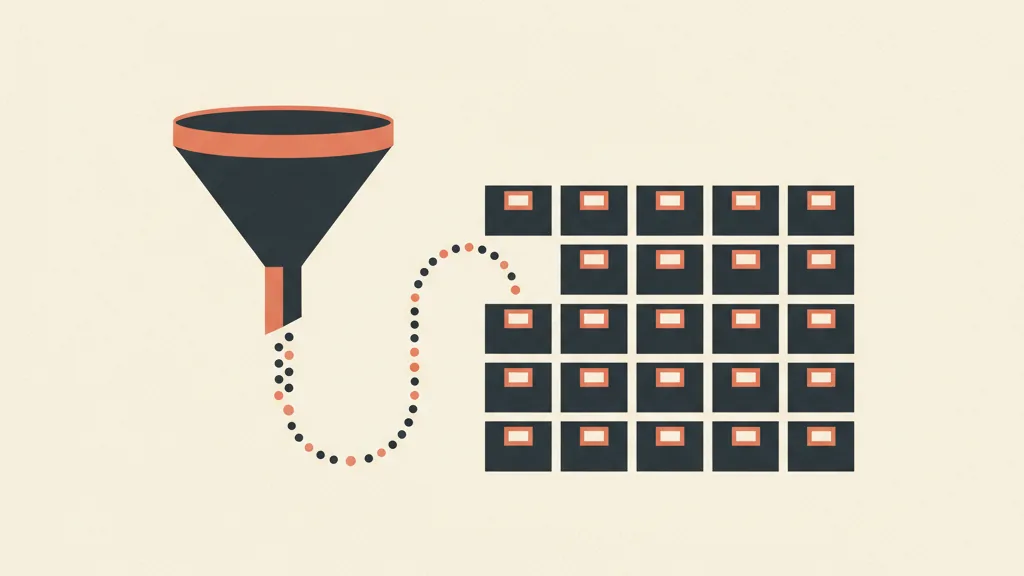
A funnel is the sequence of steps a potential customer goes through before buying. It's called a funnel because a lot of cold contacts enter at the top, and as they move down, the numbers shrink: most will never buy, some will. The funnel exists to make that path predictable instead of leaving it to chance.
A typical funnel breaks down into three main stages, often labeled with the acronyms TOFU, MOFU, and BOFU (explained in what TOFU, MOFU, and BOFU mean):
- Awareness (top of funnel): ads, content, SEO, social campaigns. Its job is to get you found by people who don't know you yet.
- Consideration (middle of funnel): landing pages, lead magnets, contact forms. This is where a stranger becomes a lead — they hand over their details.
- Conversion (bottom of funnel): quote, call, offer. The lead becomes a customer.
In other words, the funnel is an acquisition mechanism. Its output is a stream of qualified contacts. If you want to understand how it's built in detail, start with what an acquisition funnel is and the stages of a sales funnel.
One important clarification: the funnel isn't "just advertising." It includes everything that moves a contact forward, including nurture emails and follow-ups. And that's exactly where it starts to overlap with the CRM, as we'll see shortly.
What a CRM actually is
CRM stands for Customer Relationship Management. In practice, it's the software (or system) where every contact and their history end up. Each record holds who the person is, where they came from, what they asked, when you called them, what you replied, whether they bought, and when they bought again.
The CRM answers a different question than the funnel does. The funnel asks: "how do I get new contacts?" The CRM asks: "what do I do with the contacts I already have, so none of them fall through the cracks?"
The typical functions of a CRM are these:
- Centralized contact database: one single place for every contact, instead of scattered spreadsheets, inboxes, and sticky notes.
- Interaction history: every call, email, and quote stays logged and linked to the person.
- Sales pipeline: deals organized by stage (new, contacted, quote sent, closed). You always know exactly where every opportunity stands.
- Automations and reminders: scheduled follow-ups, alerts to the sales rep, email sequences.
- Reporting: how many leads come in, how many close, average time to close, value of open deals.
In short, the CRM is a management and nurturing mechanism. Its value isn't bringing in new people — it's making sure you don't lose the ones you already have. And since reactivating a contact costs far less than acquiring a new one (see how much it costs to reactivate a customer versus acquiring one), a well-kept CRM is often the investment with the fastest payback.
Funnel vs CRM: the table that clears it all up
| Aspect | Funnel | CRM |
|---|---|---|
| Goal | Generate contacts and drive them to a sale | Manage contacts and the relationship over time |
| Question it answers | How do I acquire new customers? | How do I stop losing the ones I have? |
| Nature | Process, path | System, operational record |
| Input | Cold traffic (strangers) | Contacts already acquired |
| Output | Qualified leads | Nurtured customers, history, data |
| Timing | Mostly before the sale | During and after the sale |
| Who uses it | Marketing, ads, content | Sales, support, management |
| Key metric | Cost per lead, conversion rate | Close rate, lifetime value, response time |
The "Timing" row explains everything: the funnel works mostly before a person becomes a customer, the CRM mostly during and after. But the line between them isn't sharp — and that's exactly where things get interesting.
Where the funnel ends and the CRM begins
The handoff moment is the conversion from visitor to lead. The second someone leaves their contact details (fills out a form, books a call, messages you on WhatsApp), that contact needs to enter the CRM. If it doesn't, the funnel has only done half its job: it generated an opportunity that then gets lost, because no one logs it or follows up.
This is the most common bottleneck among Italian SMEs. The funnel works, leads come in, but they end up in an inbox nobody clears out methodically, or in a spreadsheet a sales rep updates whenever they remember to. The result: warm contacts go cold, follow-ups never happen, quotes sit unanswered. The problem isn't the funnel and it isn't the CRM. It's the lack of an automatic handoff between the two.
A funnel without a CRM is like an open tap over a bucket with a hole in it. A CRM without a funnel is a tidy archive that never fills up with new names. You need both, and above all you need the first to feed the second automatically. We've dedicated an entire piece to this mechanism: the funnel that feeds the CRM.
Do you have a funnel bringing in contacts, but you're losing them because there's no CRM or automatic handoff in place? Let's talk: we'll analyze your process and show you exactly where you're leaving money on the table.
Why keeping them conceptually separate saves you money
Understanding that these are two different tools isn't a textbook exercise. It has real consequences for spending decisions.
Mistake 1: buying a CRM to "get more customers"
This happens all the time. A company subscribes to a well-known CRM, convinced it will be enough to grow sales. But a CRM doesn't generate demand — it organizes the demand you already have. If you don't have a funnel bringing in contacts, the CRM stays empty, and after three months you abandon it thinking "it doesn't work." It was working just fine — it just had no fuel.
Mistake 2: building funnel after funnel without managing the leads
The opposite mistake. Budget goes into ever-new campaigns and landing pages, but the leads generated aren't followed up methodically. So the company keeps buying traffic to make up for the contacts lost along the way. It's the most expensive way to grow: you pay top dollar for leads and then throw them away. Before scaling your ad spend, ask yourself whether you have somewhere for what comes in to land and mature. If your funnels aren't converting, the problem is often downstream: read why a funnel doesn't convert.
Mistake 3: thinking you need one or the other
The question "funnel or CRM?" is the wrong one. The right answer is "funnel and CRM, connected." Companies that grow predictably have a customer acquisition system in which the two pieces are integrated from day one, not bolted together later with makeshift fixes.
A concrete example, start to finish
Picture a consulting firm that sells B2B services. Here's how the funnel and CRM split the work on a single contact:
- Funnel, awareness: a LinkedIn ad catches the eye of a business owner looking for support. They click.
- Funnel, consideration: they land on a landing page, download a guide, and leave their email and phone number. A stranger has become a lead.
- Handoff: automatically, the lead enters the CRM tagged "guide downloaded," source "LinkedIn," with date and time. A notification goes out to the sales rep.
- CRM, management: the sales rep calls within the hour (response time is decisive), logs the outcome, and moves the deal to "first contact made."
- CRM, nurturing: the lead isn't ready yet? The CRM schedules a follow-up in 7 days and adds them to an email sequence. Nobody forgets about them.
- CRM, closing and beyond: they sign the contract. The CRM keeps the history and, six months later, flags the right moment to offer an additional service.
In this flow, steps 1 and 2 are pure funnel. From step 3 onward, it's CRM. Step 3 is the hinge: if it's missing, everything that comes after simply doesn't happen. To dig deeper into the sales side (who contacts the leads and how), check out how to qualify leads and the difference between roles in setter vs. closer.
The right question isn't "which one do I choose," but "how do I integrate them"
By this point it should be clear: you don't have to choose. You need to turn the two tools into a single system, where the contact flows without friction from first impression all the way to repeat purchase. That integration is the real multiplier. A decent funnel connected to a well-configured CRM almost always beats an excellent funnel left to fend for itself.
The most solid way to get there is to design the two pieces together, often with a custom CRM with an integrated funnel tailored to your actual sales process, instead of forcing a standard tool built for a different company to fit yours. If you want the full picture, from generating the contact to closing the deal, the place to start is the guide on how to integrate CRM and sales funnel.
In short
- The funnel acquires: it turns strangers into leads and leads into customers. It lives mostly before the sale.
- The CRM manages: it logs, organizes, and nurtures contacts over time. It lives during and after the sale.
- The handoff point is the conversion to lead: that's where the contact needs to enter the CRM automatically.
- They're not alternatives. A funnel without a CRM loses contacts; a CRM without a funnel stays empty.
- The real competitive edge lies in the integration, not in choosing one over the other.
Frequently asked questions
What's the difference between a funnel and a CRM in one sentence?
The funnel generates contacts and drives them toward a sale, the CRM logs them and manages them over time. One acquires, the other administers the relationship. They're complementary, not alternatives.
Can I use just a funnel without a CRM?
You can, but you'll lose contacts. Without a CRM, the leads your funnel generates end up in unmonitored inboxes or spreadsheets, follow-ups never happen, and warm opportunities go cold. The funnel produces; the CRM prevents waste.
Will a CRM alone bring me more customers?
No. The CRM organizes and nurtures the contacts you already have — it doesn't create new ones. Generating demand requires an acquisition funnel. Buying a CRM and hoping it will boost sales on its own is the most common mistake.
Where does the funnel end and the CRM begin?
At the moment of conversion from visitor to lead. When someone leaves their contact details, that data needs to pass automatically from the funnel into the CRM. That handoff is the hinge: if it's missing, everything that comes after simply doesn't happen.
Is a standard or a custom CRM better for connecting to your funnel?
It depends on how complex your process is. A standard CRM works fine for simple pipelines. If you have unusual workflows, distinct sales roles, or specific automations, a custom CRM with an integrated funnel reduces friction and adapts to the way you actually sell.
How much does it cost to integrate a funnel and a CRM?
It varies widely depending on tools and complexity — from light configuration on existing platforms to fully custom systems. The smartest approach is to start with an analysis of your current process and lead volumes, then size the solution accordingly. Better to request a targeted quote than to guess.
Want a system where your funnel and CRM work together, with no contacts lost along the way? Request a free analysis: we'll design the integration around your actual sales process.