Meta Ads in 2026: The Complete Strategy Guide (Advantage+, AI, and Customer Acquisition)
11 min read · AstraLoop Studio
In 2026 the right question is no longer "how much am I spending on Meta Ads", but "what happens after the click". Meta's algorithm has gotten so good at driving traffic that the bottleneck has moved elsewhere: it's no longer the ad platform, it's you and your follow-up system. You can generate 300 leads a month and close 5, because nobody calls them back in time, nobody qualifies them, nobody keeps them warm. In that case the problem isn't the campaign. It's everything after it.
This guide frames Meta Ads (Facebook and Instagram) for what it really is today: an acquisition engine inside a bigger system built on funnels, data and automation. We'll cover what's changed with Advantage+ and algorithmic automation, which KPIs still matter (and which don't), how to handle budget and scaling, and above all how to connect paid media to a process that turns clicks into customers. Because in 2026 the winner isn't whoever has the prettiest creative, but whoever has the sturdiest system around it.

What's actually changed in 2026
Three structural shifts define how Meta Ads works today. Ignore them and you'll keep optimizing levers the algorithm has already taken out of your hands.
1. Algorithmic automation has swallowed micro-targeting
For years the game was "find the perfect audience". Today Meta pushes you the other way: broad audiences, few exclusions, and let the model find the right people based on conversion signals. With the evolution of the ad engine (the project Meta code-named Andromeda), the machine processes a volume of signals impossible to replicate by hand. Your job is no longer to segment, it's to feed the algorithm the right signal to chase. We go deeper on this in Meta Ads targeting in the age of AI, but the core idea is simple: if the signal you send is "lead", you get leads; if it's "qualified customer", you get something else entirely.
2. Creative has become the real targeting variable
When the audience is broad, it's the creative that decides who actually sees the ad. A video that speaks to a construction business owner attracts construction business owners, and the algorithm picks up on that from the first seconds of watch time. That's why in 2026 creative volume and variety matter more than fine-grained targeting. You don't need the perfect creative, you need many different creatives tested fast. More on this in how to build creatives that stop the scroll and in how many creatives a month you actually need.
3. Tracking has changed for good
With the decline of third-party cookies and iOS restrictions, the Pixel alone isn't enough anymore. Meta has to model the conversions it can't see directly, and the quality of that modeling depends on the data you feed it server-side. Anyone in 2026 still relying only on the browser Pixel is literally hiding half the truth from the algorithm. We cover the fix (Conversions API and sending conversions from your CRM) further down, in the tracking section.
Advantage+: what it is and when to use it
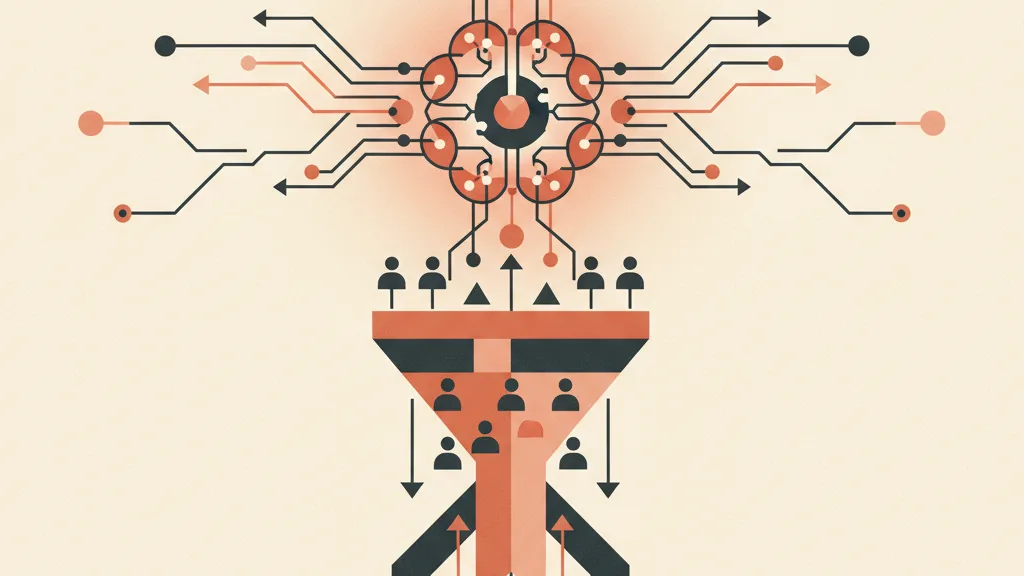
Advantage+ is Meta's automation suite. It's not a single product, it's a set of features that take decisions out of your hands and hand them to the algorithm: budget, placements, audiences, even creative tweaks. The most talked-about version is Advantage+ Shopping for e-commerce, but the principle now extends to nearly every campaign type.
We break down the underlying logic in full in how Meta's Advantage+ works. Here's the operational summary.
- When it pays off. You have a catalog, enough conversion volume (roughly 50+ per week per campaign), and you want Meta to optimize on its own. It works well for e-commerce and simple offers.
- When it needs caution. You sell high-value services, have long sales cycles, or your "lead" doesn't equal a customer. Here full automation risks optimizing for the wrong signal and flooding you with low-quality leads.
- The trap. Advantage+ optimizes for whatever you tell it counts as a conversion. If your conversion is "form filled out", you'll get forms. If it's "appointment booked" or "sale", you need to pass it that data instead. More on this in offline conversions from CRM to Meta.
Advantage+ isn't magic, and it isn't an autopilot you switch on and forget either. It's a powerful engine that needs the right fuel and the right KPIs to keep an eye on it. Feed it dirty fuel and it will still take you far — just in the wrong direction.
Funnel strategy: where Meta Ads actually earns its keep
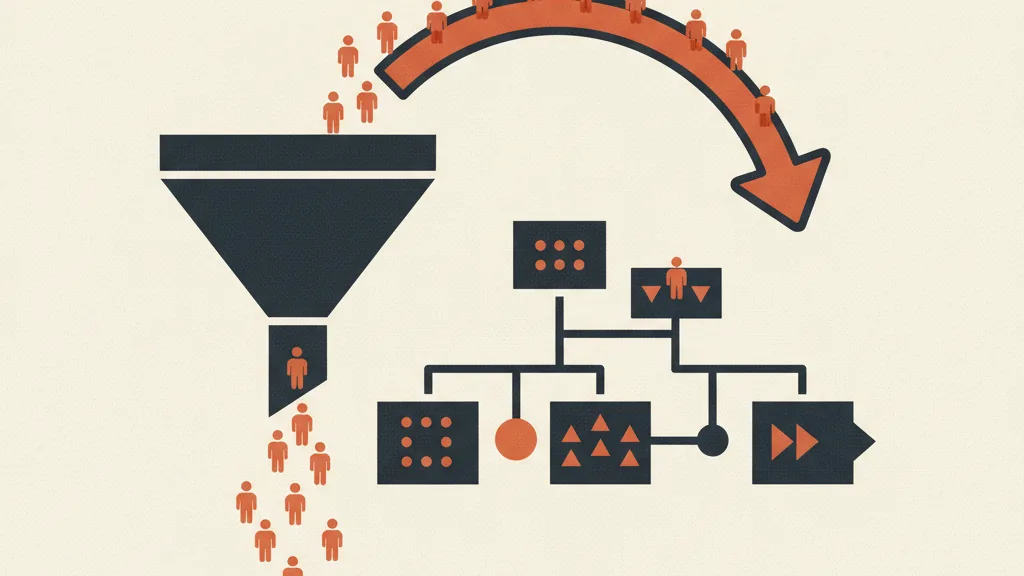
The most common mistake is treating Meta Ads like a "buy customers" button. That's not how it works. People on Facebook and Instagram aren't looking for you, they're watching cat videos. Your ad interrupts them. That's why you need a journey, not a single shot. The reference model is still the three-stage funnel, which we cover in detail in the TOFU MOFU BOFU funnel on Meta.
TOFU: getting known
At the top of the funnel you're talking to people who don't know you. Content that educates, entertains or touches on a real pain point. You're not asking for the sale, you're building attention. This is where video formats and UGC (user-generated-style content) outperform ads that look too much like ads: they read as content, not as a pitch. See why UGC ads work.
MOFU: qualifying interest
In the middle of the funnel you're talking to people who've already engaged: watched a video, visited the site, saved a post. Here you offer something concrete in exchange for their contact info: a guide, a diagnosis, a demo. This is where you turn interest into a lead. The quality of your lead magnet and your lead-gen landing page decides everything.
BOFU: closing
At the bottom of the funnel you're talking to people who are ready: they left their contact info, added to cart, asked for a quote. Here remarketing (see remarketing strategies on Meta) and, above all, follow-up make the difference. And this is exactly where most Italian companies bleed money: the lead comes in and sits for two days in an inbox before anyone calls back. By then it's cold.
The key point about the funnel in 2026 is that it doesn't end at the lead. A lead is raw data. It only becomes a customer if someone — or something — qualifies it and follows up. That's why the funnel needs to feed the CRM, not die in a spreadsheet. We cover this in how to make the funnel and CRM talk to each other.
Meta Ads isn't a standalone lever: it's an engine inside a system
This is the heart of the guide. Meta Ads generates volume at the top. But volume without a system downstream is a waste. Think of paid media as the faucet and your sales process as the plumbing: if the pipes leak, opening the faucet wider just floods the floor. A serious customer acquisition system (we cover it in the pillar piece customer acquisition system) holds four pieces together.
- Paid drives traffic and generates leads through Meta Ads (and often Google Ads in parallel — see the Google Ads 2026 strategy guide).
- The funnel converts that traffic into qualifiable contacts.
- Qualification separates real leads from the noise, ideally before a human wastes time on them.
- Follow-up chases, nurtures and re-engages the lead until it buys or says no.
This is where AI comes in — and not as a buzzword. In 2026 there are mature technologies that let you qualify leads automatically the moment they arrive (a WhatsApp AI agent asks questions, figures out if the lead is on target, and books a call), run constant follow-up with nothing falling through the cracks (see AI-driven sales follow-up automation), and score every contact so your sales team only works the right leads (AI lead scoring for SMBs).
The practical outcome is simple: the same Meta Ads spend produces more customers, because you stop losing leads you've already paid for. This is exactly where AstraLoop operates. Not "we just manage your campaigns", but we connect paid media to an automated qualification and follow-up system that turns clicks into appointments and real customers.
If you're generating leads with Meta Ads but they're not turning into customers, the problem is almost never the campaign — it's the system around it. Request a free analysis of your acquisition funnel and we'll show you where you're losing leads you've already paid for.
The KPIs that matter in 2026 (and the ones to ignore)
With algorithmic automation, many of the numbers people used to obsess over have become noise. Here's how to think about it today. The full list is in the Meta Ads KPIs that actually matter.
| KPI | What it tells you | Weight in 2026 |
|---|---|---|
| CTR | How well the creative pulls clicks | Useful for judging the creative, not the campaign |
| CPL (cost per lead) | What a contact costs you | Important but deceptive: a low CPL with bad leads costs more than a high one with good leads |
| CAC (cost per customer) | What a real customer costs you | The number that actually matters |
| ROAS / MER | Return on spend | Essential, but should be read at the account level (MER), not per single campaign |
| LTV | Customer value over time | Determines how much you can afford to spend acquiring one |
The mental shift for 2026 is to stop optimizing for CPL and start thinking in unit economics: CAC versus LTV. If a customer is worth 2,000 euros over time and you spend 300 to acquire them, a "high" CPL is irrelevant. If they're worth 50 euros and you spend 40, you're in trouble even with a "low" CPL. To understand why campaign-level ROAS often lies to you, read MER vs ROAS: which metric to use.
Budget and scaling: how not to burn money
How much to invest is the question we get asked most. The honest answer is "it depends on your numbers", but there is a method. We break it down in how much budget you need for Facebook Ads and in how to define your advertising budget. In short.
- Start from your target CAC, not from the budget. If you can afford 200 euros per customer and want 20 a month, your minimum starting budget is roughly 4,000 euros (assuming your conversion rates). Work backwards.
- Feed the algorithm enough data. Budgets split too thin across too many campaigns keep Meta from ever exiting the learning phase. Fewer, better-funded campaigns work better.
- Scale in steps, not jumps. Increases of 20-30% every few days let the algorithm readjust. Doubling the budget overnight resets learning. Go deeper in how to scale budget on Meta Ads.
- Watch out for saturation. Past a certain spend level, showing the same people the ad again stops paying off. The concept is covered in incremental reach and audience saturation.
Post-privacy tracking: without data, AI is blind
We'll repeat this point because it's the most underrated one: in 2026 the algorithm is only as good as the data you feed it. With cookie and iOS restrictions, the browser Pixel only sees a fraction of conversions. The fix is robust server-side tracking.
- Conversions API (CAPI). Sends conversions to Meta's server directly from yours, bypassing browser limits. It's now a requirement, not an option. Full guide in Meta Conversions API.
- Offline conversions from your CRM. When a lead becomes a customer offline (a call, a signature), you send that data back to Meta. That way the algorithm learns to look for people similar to your real customers, not just your leads. See offline Meta conversions from CRM.
- Event Match Quality. The quality of the data you send (email, phone number, etc.) determines how well Meta matches events. Improving it is one of the cheapest ways to squeeze more out of the same spend. See improving Event Match Quality.
The common thread is always the same: send Meta the "real customer" signal instead of "click" or "raw lead". We also cover this in Meta Ads and CRM: conversion signals. The CRM is the keeper of that signal, which is why in 2026 you can't separate paid strategy from data strategy.
Mistakes we see over and over
We'll close with the three costliest mistakes, the ones we find in almost every audit (if you want to check your own account, here's how we run a Meta Ads campaign audit).
- Optimizing for the lead instead of the customer. The classic: rock-bottom CPL, phone ringing off the hook, zero sales. Because the leads are trash. The fix is passing the right signal to the algorithm and qualifying upstream.
- No follow-up system. You pay for the leads, then let them go cold. In Italy, a lead called back after 24 hours is half as likely to close. Follow-up automation isn't a luxury, it's what saves the paid investment.
- Incomplete tracking. Browser Pixel only, no CAPI, no offline conversions. The algorithm works in the dark and you waste budget chasing the wrong signals. More common mistakes in common Meta Ads mistakes.
The common denominator is clear: none of these three mistakes is about "the campaign". They're about the system around the campaign. And that's exactly where it gets decided whether your Meta Ads in 2026 produce customers or just numbers that look nice on a dashboard.
The takeaway
Meta Ads in 2026 is more powerful than ever, but also more demanding. Automation (Advantage+, the algorithmic engine) has shifted the work from manual setup to the quality of two things: the creatives you send in, and the data you feed the system. Paid media is no longer a standalone lever to pull, it's the entry engine of a system that includes the funnel, the CRM, AI qualification and automated follow-up. Whoever treats Meta Ads as a channel on its own is spending to generate clicks. Whoever folds it into a system is spending to generate customers. In 2026, that's the entire difference.
Frequently asked questions
Do Meta Ads still work in 2026 with all the privacy restrictions?
Yes, but the game has changed. The browser Pixel alone only sees part of your conversions. Businesses that implement the Conversions API and send offline conversions from their CRM get a much more effective algorithm, because they're feeding it clean data about who actually becomes a customer. Without server-side tracking, performance drops noticeably.
Is Advantage+ better than manually configured campaigns?
It depends on the business. Advantage+ excels for e-commerce and simple offers with good conversion volume (50+ per week). For high-value services and long sales cycles you need more control, because full automation risks optimizing for the wrong signal and delivering a lot of low-quality leads. A hybrid approach is often the best choice.
How much budget do I need to start with Meta Ads in 2026?
You don't start from the budget, you start from the goals. Define how much you can spend to acquire a customer (CAC) and how many customers you want per month, then work backwards. In general you need enough data for the algorithm to exit its learning phase: fewer, well-funded campaigns beat lots of split budgets.
Why am I generating a lot of leads but few customers?
Almost always for two reasons. First: the algorithm is optimizing for the lead (form filled out) rather than the real customer, so it delivers cheap but poorly qualified contacts. Second: there's no follow-up system, and leads go cold before anyone calls them back. The fix is qualifying upstream and automating follow-up.
What's the most important KPI to watch in Meta Ads?
CAC (cost per real customer) against LTV (customer value over time), not CPL. A low cost per lead can hide poor-quality leads that never close, while a high CPL with qualified leads can be highly profitable. Read these alongside account-level MER, not just single-campaign ROAS.
How do Meta Ads connect to the CRM?
The CRM receives the leads generated by your campaigns, qualifies them (ideally with an AI agent), triggers automated follow-up, and, when a lead becomes a customer, sends that data back to Meta as an offline conversion. That way the algorithm learns to look for people similar to your real customers, improving performance over time.
Want to turn your Meta Ads spend into real customers, not just clicks? Talk to us: we'll analyze your paid media and propose a system that integrates campaigns, AI qualification and automated follow-up.