How Many Creatives Do You Need per Month for Meta Ads? The Realistic Answer
9 min read · AstraLoop Studio
It's the question I hear most often from people running Meta Ads themselves: "how many creatives do I need to produce each month?". The honest answer is that there's no single number that works for everyone. But there is a method for calculating it — and, more importantly, a technical reason why this question matters more today than it did two years ago.
The point is simple. In the age of Advantage+ and automated targeting, creative is almost the only lever you still control. The algorithm picks the audience, Meta tests the combinations, and bidding is almost always automatic. What you bring to the table is the images, the videos, and the copy. And the algorithm burns through them fast.
In this article you'll find concrete numbers, not slogans. I'll give you reference ranges based on budget, explain how audience saturation shows up before costs spike, and show you how to sustain a production pace with AI, without turning creative into a runaway cost line.
Why the algorithm "consumes" creative
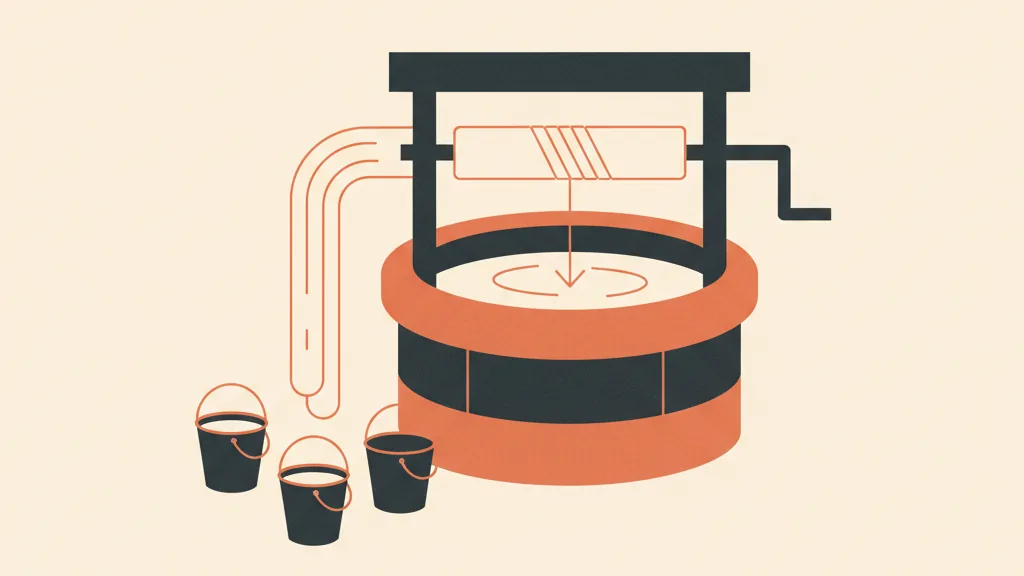
Picture your best creative as a well. At first it draws fresh water: it reaches people who've never seen it, cost per result is low, everything works. Then, as Meta keeps showing it to the same people (or to very similar profiles), frequency climbs, the novelty effect fades, and performance drops. The well runs dry.
This phenomenon has a precise name: creative fatigue. It's not an abstract theory — you see it in the data. When a creative saturates, the typical sequence looks like this:
- Average frequency climbs above 2.5 or 3 over a 7-day period.
- CTR starts dropping steadily.
- CPM tends to rise, because the algorithm struggles to find new low-cost impressions.
- As a result, cost per acquisition gets worse, even with the same budget and offer.
If you want to learn to read these signals before they become a problem, we've written a dedicated guide on how to tell if a creative is performing and a focused piece on the mistakes that kill creative performance.
The key concept to internalize is incremental reach: every creative has a ceiling of new people it can reach efficiently. Once you pass that ceiling, you keep spending, but you keep talking to the same people. The solution isn't raising the budget on a tired creative — it's already having another one ready to take over.
The short answer: reference numbers
Here are the ranges I use as a starting point with clients. They're not gospel, just a baseline to calibrate from. The variable that matters most is monthly budget: the more you spend, the more impressions you buy, and the faster you burn through each creative.
| Monthly Meta Ads Budget | New Creatives / Month | Logic |
|---|---|---|
| Up to €1,000 | 4-6 | Low volume, slow saturation: a few well-made tests |
| €1,000-3,000 | 8-12 | Needs a steady flow to feed testing |
| €3,000-8,000 | 15-25 | Fast saturation, weekly rotation |
| Over €8,000 | 30-50+ | Industrialized production, continuous batches |
If you'd rather think in rough terms, there's an alternative rule: aim for 3-5 new "live" creatives every week for an average budget. That doesn't mean producing only that many. It means having that many actually make it into your campaigns, which implies producing more, since some won't pass testing or won't deserve to scale.
Watch out for a distinction that confuses a lot of people. How many creatives you need per month (production pace) is a different question from how many creatives to put in a campaign or ad set. These are two separate questions, and we cover them separately in our guide on how many creatives to upload per campaign. Here we're talking about production pace — how much new material you need to generate so you never run dry.
How to calculate YOUR number (not someone else's)
The ranges in the table are a starting point. The precise number depends on three factors specific to your situation.
1. How fast your audience saturates
A broad audience (national, generic interests) saturates more slowly than a narrow one (local, B2B niche, tight lookalikes). If you're selling a niche product to an audience of 200,000 people, a single creative hits its ceiling in a few days. If your pool is 5 million, the same creative can last weeks. Check the frequency in your reports: if it goes above 3 in a week, you're saturating fast and need more new material.
2. Your creative "survival" rate
Not every creative you produce deserves to scale. In a healthy testing process, somewhere between 10% and 30% of tested creatives become a "winner" worth pushing. That means if you need 3 new winners a month, you have to produce and test at least 10-15. That's testing math, not pessimism. If you don't have a structured method, take a look at our creative testing method and the broader framework on how to test Meta Ads creatives.
3. Your goal: maintain or scale?
If you're simply maintaining a stable budget, the need is lower: you replace creatives as they fatigue. If instead you're scaling your budget, the need explodes, because a higher budget burns through creative faster and you need more variety to open up new audience pockets. The rule is clear: the more aggressive the scaling, the more aggressive the production needs to be.
A rough but useful formula for estimating your monthly minimum:
Creatives to produce = winners needed per month ÷ test success rate
Let's run an example. You need 4 new winners a month and your historical success rate is 20%. So: 4 ÷ 0.20 = 20 creatives to produce and test. If you don't know your success rate, start with a conservative 15-20% and adjust as you gain experience.
The real bottleneck: it's not the number, it's the variety
Here's the point most guides ignore. Producing 20 variants of the same idea is not the same as producing 20 different ideas. Meta's algorithm, and in particular systems like Andromeda and Advantage+, reward concept diversity, not the volume of tweaks.
What I mean by real diversity:
- Different angles: same product, but one concept focuses on saving time, another on status, another on fear of making the wrong choice.
- Different formats: statics, vertical Reels, carousels, UGC, testimonials.
- Different hooks: the first 3 seconds or the first line of copy change everything (see these examples of hooks that work).
A mistake I see often: producing 15 nearly identical statics, changing only the background color, then being surprised the algorithm doesn't favor any one of them. Better to have 6 genuinely different concepts than 15 carbon copies. Variety is what keeps the well full of fresh water. If you're short on ideas, our guide on how to find creative ideas for ads is a good starting point.
If your creative production pace is your bottleneck, we can help you build a custom AI-assisted workflow. Request an assessment of your situation and we'll tell you exactly how many creatives you really need.
How to sustain the pace without blowing up costs
Here's the practical crux. If the numbers above gave you a headache, you've grasped the problem: producing 15-25 quality creatives a month, with a traditional creative agency or an in-house designer, costs thousands of euros and weeks of time. This is where the math of creative collides with the budget reality of a small business.
AI-assisted production changes this equation. Not because "AI does it all by itself" (it doesn't, and anyone who tells you otherwise is selling you smoke), but because it shifts the bottleneck. With the right tools, one hour of work produces the variants that used to take ten.
Here's how the work breaks down in a well-built workflow:
- Strategy stays human: the angles, the concepts, the choice of what to test. This you don't delegate to a machine.
- Variant production gets automated: once a winning concept is defined, generating 8 variations (different formats, hooks, palettes) becomes a matter of minutes, with AI image generation and the right workflows.
- Copy speeds up: using AI for copywriting lets you churn out 5 headline versions in an instant, then a human hand picks and refines.
The result isn't "zero-cost creative" — it's low marginal-cost creative. The first concept costs something (in brainpower and time). The tenth variant of that concept costs almost nothing. That's exactly the kind of curve you need to sustain a pace of 20 creatives a month without opening a budget line worth thousands of euros.
If you want to see concretely how the AI-assisted ad workflow works, we detailed it in how to produce ad creatives with AI and, in the broader context of 2026 trends, in AI-generated UGC.
A realistic production calendar
Let's turn all this into an operational rhythm. Here's how a company with an average budget (€2,000-3,000 a month) might structure production:
- Week 1: analyze the previous week's data, identify fatiguing creatives, brainstorm 2-3 new angles.
- Week 2: batch-produce 8-10 creatives (new concepts plus variants of existing winners).
- Week 3: launch the new tests, monitor them, take the first readings.
- Week 4: scale up the new winners, kill the losers, prepare the next batch.
The point isn't to follow this schedule to the letter, but to grasp the principle: creative production isn't an event, it's a recurring process. Anyone who treats creatives as a "one-off" project ends up, three weeks later, with sky-high frequency and doubled CPA. Anyone who treats it as a continuous flow keeps performance stable.
This ties directly into how you build your entire strategic approach to Meta Ads in 2026: creative is no longer an accessory, it's the variable that anyone who has already delegated everything else to the algorithm competes on. And it intertwines with the customer journey, because you need different creatives for people discovering you for the first time versus people you still need to convince to buy.
The most common mistakes in production pace
To wrap up, the three mistakes I see repeated over and over:
- Producing too little: 2-3 creatives a month on a €3,000 budget. The audience saturates, CPA rises, and people blame the algorithm or the targeting. The real problem was the supply.
- Producing a lot but all the same: 20 variants of the same concept. High volume, zero diversity. The algorithm has no real material to work with.
- Ignoring the data: producing blindly, without checking which angles work. The pace should be guided by the KPIs that actually matter, not by gut feeling.
The takeaway is simple: the right number of creatives per month is whatever keeps your frequency under control and your tests continuously fed. For most small and medium businesses, with budgets between €1,000 and €5,000 a month, this means producing and testing between 8 and 25 creatives monthly, with genuine concept diversity. A pace that, without AI, was out of reach for anyone without an in-house creative team. With AI-assisted production, it's within reach of anyone with a method.
Frequently asked questions
How many creatives do you need per month for Meta Ads?
It depends on your budget. As a reference: 4-6 a month under €1,000, 8-12 between €1,000 and €3,000, 15-25 between €3,000 and €8,000, and 30-50+ above €8,000. But concept diversity matters more than the raw number.
How do I know if a creative is saturated?
Watch three signals together: weekly frequency above 2.5 or 3, a steadily declining CTR, and a rising CPM. When all three show up together, the creative has exhausted the fresh audience and needs to be replaced.
Is it better to have many similar variants or a few different concepts?
A few genuinely different concepts. Meta's algorithm rewards variety in angles, formats, and hooks, not carbon copies with a different background. Better to have 6 distinct ideas than 15 identical variants.
How much does it cost to produce that many creatives per month?
With a traditional agency or designer, thousands of euros. With AI-assisted production, the cost of the first concept remains, but subsequent variants have a very low marginal cost — making a pace of 20+ creatives a month sustainable even for a small business.
What's the difference between creatives per month and creatives per campaign?
They're two different things. Creatives per month is your total production pace — how much new material you generate. Creatives per campaign is how many you upload into a single ad set or campaign. The first feeds the second.
Can AI completely replace creative work?
No. AI speeds up the production of variants and copy, but strategy, choosing angles, and selecting winning concepts remain human work. AI shifts the bottleneck — it doesn't remove the brain from the process.
Want a creative production workflow that sustains your Meta Ads without blowing up your costs? Talk to us: we'll analyze your budget and your needs, and propose a concrete system.