UGC ads: what they are and why they convert more than branded content
9 min read · AstraLoop Studio
Open Instagram or TikTok and try to tell, in the first three seconds, a post from a random person apart from an ad. More often than not, you can't. And that's exactly the point: creative that pretends not to be advertising works better than advertising that announces itself as such. UGC ads start right here.
If you run marketing for an e-commerce store or a local business, you've probably already noticed the pattern: the glossy studio-shot video costs more, looks more professional, and converts less than a vertical clip filmed on a phone in someone's kitchen. It's not a hunch. It's a trend with precise numbers in 2026, and this article walks through all of them, plus how to use them without torching your budget.
UGC ads: what they actually are
UGC stands for User Generated Content. It originally referred to reviews, photos, and videos customers created spontaneously about a product. UGC ads are the advertising evolution of that format: creative built to look like authentic content from a real user, but run as paid ads on Meta, TikTok, YouTube, and similar platforms.
In practice, a UGC ad has these recognizable traits:
- Vertical format, shot on a phone, not with a crew and studio lighting.
- A real person talking to camera, often in a tone closer to advice for a friend than a commercial.
- "Imperfect" aesthetics: home backgrounds, natural light, home-made cuts and captions.
- Testimonial or demo structure: "I tried it, here's what happened," "watch how it works."
Watch out for a common mix-up: UGC doesn't necessarily mean free, spontaneous content. The vast majority of UGC ads are made by paid creators hired specifically to produce that material, which the brand then runs as an ad. In Italy, the average cost of a single UGC video starts at around €180, and rises with the creator's experience, usage rights, and platform. It's not "free content": it's a low-cost production format with a disproportionate return in advertising.
Why they convert more than branded content: the data
The difference isn't a matter of taste, it's measurable results. Here are the key numbers circulating in 2026, drawn from the most-cited industry reports.
Conversions: from 4x to nearly 7x
Pages and purchase experiences that include UGC content generate markedly higher conversion rates than those built solely on brand-produced material. The latest data points to a jump from 4.27x to 6.73x in Q1 2026. On product pages, adding UGC is linked to conversions up to 161% higher. These are order-of-magnitude gains, not a few percentage points.
Trust: the real engine
The underlying reason is trust. About 92% of consumers say they trust recommendations from other people (even strangers) more than content produced by brands. Users perceive UGC content as authentic 2.5 times more often than content created by the company. And according to Edelman's Trust Barometer, 80% of consumers consider real customers and peers the most credible source of information about a brand.
This ties into a principle that holds across the whole funnel: people buy from those they trust. If you want to understand how this trust dynamic plays out well before the sale, it's worth looking at the five levels of customer awareness, because UGC ads work best precisely in the stages where a potential customer doesn't know you yet and needs social proof.
Ad metrics: cheaper clicks
In actual paid advertising, UGC-format ads show concrete numbers on the metrics that hit your budget:
| Metric | UGC ads vs. traditional content |
|---|---|
| Click-through rate (CTR) | Up to 4x higher (2-4x for UGC video) |
| Cost per click (CPC) | Up to 50% lower |
| Conversion rate | +20-40% versus standard video |
Translation: for the same budget you get more clicks, pay less for them, and convert a higher share. If your problem right now is that cost-per-click on Meta is too high, the creative lever is often more effective than a thousand targeting tweaks. We covered this in detail in our guide on how to lower CPL on Facebook Ads: nine times out of ten, the bottleneck is the creative, not the audience.
Why "raw" aesthetics beat polished production
There's a precise psychological reason behind these numbers. The TikTok and Instagram feed was built for organic content. Users' brains have learned to instantly spot "ad language" (perfect production, promotional claims, commercial-style music) and raise their guard. Content that speaks that language gets dismissed before it's even evaluated.
A UGC ad does the opposite: it speaks the platform's native language. It looks like one of the many videos the user scrolls through every day, so it doesn't trigger that mental defense. The message lands as advice, not a sales pitch. It's the same reason a well-made hook in the first seconds of a creative stops the scroll: it doesn't promise, it intrigues.
This also changes how campaigns need to be planned. With Meta pushing harder toward targeting automation (the Andromeda era, where the algorithm decides who sees what), the variable you actually control is the creative. In practice, creative is the new audience today: the content itself "finds" the right people. If you want to go deeper on this strategic shift, our complete guide to ad creative covers it in depth.
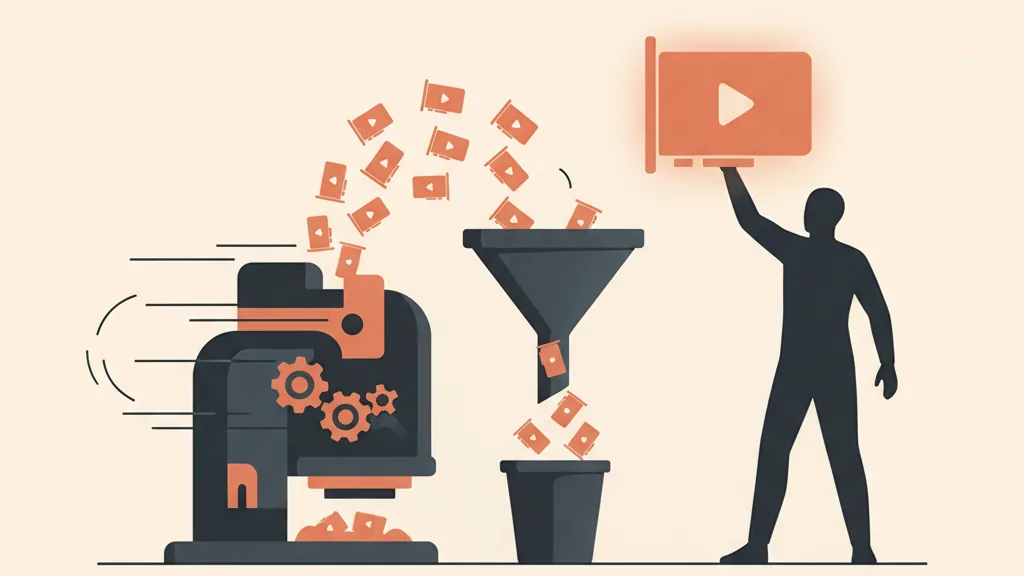
How to fold UGC ads into your strategy
UGC ads aren't an on/off format. They perform best inside a system. Here's how to set them up without improvising.
1. Start from the problem, not the product
A UGC ad that converts doesn't list features. It tells a situation the customer recognizes and shows how the product solves it. Typical structure: hook on the problem in the first 2 seconds, demonstration, result, natural call to action. It's the same logic as the structure of video ads that convert, applied to content that looks spontaneous.
2. Produce in volume, not for perfection
UGC's strength is that it's cheap to produce, so you can afford to test many variants. One perfect video is a bet. Ten "good enough" videos with different hooks, formats, and angles are a testing system. On Meta, the algorithm rewards accounts that keep feeding it fresh material: refreshing your creative every 7-10 days tends to lower CPMs and raise ROAS compared with changing ads once a month.
3. Give your testing a structure
Producing a lot without a method is just expensive chaos. You need a process to know what to keep and what to kill: which hooks hold attention longer, which angles convert, which formats hold up. A structured approach to creative ad testing is what turns a pile of videos into a learning machine.
4. Connect the UGC ad to the rest of the funnel
A UGC ad drives traffic and attention, but the work doesn't stop there. A click that lands on a weak landing page or no follow-up at all is wasted budget. The creative needs to be hooked into a path that captures the lead and nurtures it: that's the whole point of building a real customer acquisition system, where the ad is the first piece, not the entire mechanism.
Want to know if UGC ads (human or AI) make sense for your product and how to hook them into a funnel that actually converts? Request a free analysis: we'll look at your numbers together and tell you where to focus.
AI-UGC: the 2026 evolution
Here's the most interesting new development of the year. Alongside UGC ads shot by real creators, AI-UGC is exploding: user-style creative generated entirely with artificial intelligence (realistic avatars, synthetic voices, prompt-produced video) that mimics the look of authentic content.
Why it's exploding
The driver is economics, and it's brutal. An AI-produced UGC asset today can cost less than $5, versus €180-500 (and up) for a video shot by a human creator. That's close to a 98% cost reduction per creative, with turnaround dropping from weeks to hours. This radically changes what "testing at volume" means: you can generate dozens of variants in an afternoon.
If this production side interests you, we've dedicated a whole piece to it in AI-UGC and creative in 2026, and a more hands-on one on producing ad creative with AI.
The limits you need to know (no wishful thinking)
AI-UGC isn't a magic wand. Three concrete caveats:
- Trust remains the Achilles' heel. When users perceive that content is AI-generated, credibility drops. A synthetic avatar still doesn't carry the same conversion power as a real person putting their face on it.
- The uncanny valley effect is real. 2026 data shows European audiences (France and Germany especially) are more sensitive to artificiality: an avatar dubbed into a language other than the original often "breaks" trust. Worth keeping in mind for the Italian market too.
- There's a regulatory angle. EU Regulation 2024/1689 (the AI Act), now fully in force on its transparency provisions, requires synthetic content and deepfakes to be disclosed as such. Anyone using AI avatars and voices in ads needs to operate with transparency in mind, not hide it. This is informational only: for the specific obligations that apply to your business, check official sources and, if needed, get legal advice.
The approach that works: AI to test, humans to scale
The most effective strategy in 2026 isn't "AI or human," it's both, with different roles. AI-UGC becomes the testing layer: it generates many ideas and angles at near-zero cost, you run them in campaigns, and measure which ones win. Human UGC becomes the scaling layer: on the angles that have proven to work, you invest in a real creator, who brings the trust and conversion an avatar alone can't sustain. Test fast and cheap with AI, scale with humans on what's already shown signal. If you want to see concrete tools for the generative side, the overview on AI image generation for marketing is a good place to start.
In short: when (and why) to use them
UGC ads aren't a passing trend, they're advertising adapting to how people consume content today. They convert more because they look less like ads and more like advice: more trust, higher CTR, cheaper clicks. AI-UGC amplifies the testing side, cutting costs and time, but trust (and the best conversions) still hinge on real human presence, at least for now.
Your practical rule: use UGC ads as the top-of-funnel attention engine, produce in volume with a testing method, use AI to multiply your tests, and reserve the investment in human creators for the angles you've already validated. And remember: the ad is only the start. Without a path that captures and nurtures leads, even the best creative leaves money on the table.
Frequently asked questions
What does UGC ads mean?
UGC stands for User Generated Content. UGC ads are paid ads built to look like authentic content from a real person (vertical videos, shot on a phone, in an advice-like tone) rather than a polished commercial. Most are made by creators paid specifically for the job.
How much better do UGC ads convert than brand content?
2026 data shows conversion increases ranging from about 4x to nearly 7x when UGC content is included, with product pages seeing up to 161% more conversions. In paid media, UGC formats show CTR up to 4 times higher and cost per click up to 50% lower.
Why do UGC ads outperform professional video?
Because they speak the native language of social feeds. Overly polished content triggers users' mental defenses against advertising, while a UGC ad looks like just another video in the feed and lands as advice. About 92% of consumers trust real people more than brands.
What is AI-UGC?
It's the evolution of UGC ads generated entirely with artificial intelligence: realistic avatars, synthetic voices, and prompt-produced video that mimic the style of authentic content. The advantage is cost (under $5 per asset versus €180-500 for a human creator) and speed, from weeks to hours.
Can AI-UGC replace real creators?
Not entirely, not in 2026. When users perceive content as AI-made, credibility drops and conversion suffers. The most effective approach is hybrid: use AI-UGC as a cheap testing layer and human creators as the scaling layer for angles that have already worked.
Do AI-generated UGC ads need to be disclosed?
Yes. EU Regulation 2024/1689 (the AI Act) sets transparency obligations for synthetic content and deepfakes, which must be flagged as such. This is informational only: for the exact obligations that apply to your business, check official sources and consider legal advice.
If you want to turn UGC ads into a real acquisition system, from creative testing to lead follow-up, let's talk: we'll build the path tailored to your business.