Meta Remarketing: Strategies to Win Back Visitors Who Didn't Convert
9 min read · AstraLoop Studio
Most of the traffic you pay to bring to your site doesn't convert on the first contact. That's normal: people arriving from a Meta campaign often don't know you yet, aren't in a hurry, and have ten other things on their mind. The problem isn't the first click. The problem is that without a way to bring those people back, you've paid for a lead and let it evaporate.
Remarketing (or retargeting) is the obvious answer: show ads to people who have already interacted with you. Except in 2026, "doing remarketing on Facebook" has become more complicated than it was a few years ago. The signal loss caused by Apple's ATT, third-party cookie blocking, and consent choices has made the old 180-day audiences much thinner. Anyone still setting up campaigns the way they did in 2020 ends up with audiences that are small, overlapping, and expensive.
Here we look at how to build remarketing audiences that actually work today. And, more importantly, how not to stop at the platform: your lukewarm contacts also live in your CRM, your inbox, and on WhatsApp — and you can reactivate them there with AI automations at close to zero cost compared to a paid impression.
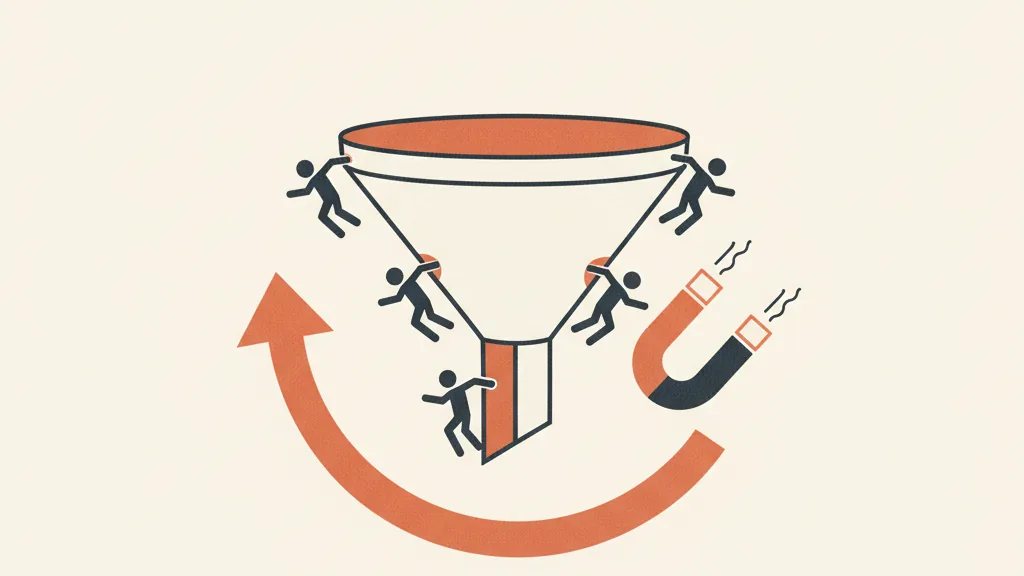
Why classic remarketing delivers less today
Retargeting has always been the highest-return activity in an ad account. You're talking to people who already know you, so the conversion rate is higher and the cost per acquisition lower. That's still true. What has changed is the quality and size of the signals feeding those audiences.
Three things have eroded this mechanism:
- Apple's App Tracking Transparency. A significant share of iOS users have opted out of tracking, so many on-site actions no longer make it back to Meta linked to the right person. The browser-side pixel sees less.
- Consent and cookies. With Consent Mode and cookie banners, if the user doesn't consent, the event never fires. Your "visitors, last 30 days" audience only captures a slice of your actual visitors.
- Shorter attribution windows. The standard window has shrunk to 7-day click and 1-day view, so the system "remembers" who interacted for a shorter time.
The practical result is simple: if you rely only on browser-side pixel events, you're building undersized audiences without realizing it. The solution isn't to give up — it's to change the signal infrastructure. Before you think through audience strategy, it's worth getting your tracking in order, which is why today the Meta Conversions API isn't optional — it's the foundation everything else sits on.
The foundation: server-side tracking and first-party data
The Conversions API (CAPI) sends conversion events from your server directly to Meta, instead of relying solely on the browser. This recovers a substantial share of the events lost to ATT and cookie blocking, and feeds more complete remarketing audiences. It's not a technical shortcut for tinkerers: it's what lets your "visited the product page" audience actually contain the people who visited it.
Two levers make CAPI effective:
- Match quality. The more identifying data (email, phone, hashed) you send with each event, the better Meta can match the action to a real profile. It's worth monitoring and improving your Event Match Quality, because a low score means poor audiences downstream.
- First-party data. The information you collect directly (contacts, orders, CRM behavior) is the one asset no privacy update can take from you. Building a first-party data strategy isn't just for today — it's insurance against the next rule change.
Put simply, without server-side tracking your remarketing runs on half a tank. With the foundation in place, we move to the more strategic part: how to segment your audiences.
How to build audiences: from hottest to coldest
The most common mistake is having a single "all site visitors, 30 days" audience with one ad. But people aren't all at the same point in their journey: someone who abandoned their cart is one step from converting, while someone who only glanced at the homepage has just entered the customer journey. They need different messages.
A segmentation structure that works, ordered by temperature:
| Segment | How Hot | Recommended Message |
|---|---|---|
| Abandoned cart or checkout | Scorching | Objection handling, soft urgency, social proof, possible incentive |
| Viewed product/service page, no purchase | Very hot | Specific benefit of the viewed product, reviews, guarantee |
| Added to wishlist or partially filled a form | Hot | Remind them what they were doing, reduce friction |
| Watched 50-75% of a video or engaged with the page | Warm | Deeper content, brand story, move them toward consideration |
| Generic site visitors, 30-90 days | Cool-warm | Value content, not direct selling |
Some practical principles to get this right:
- Exclude people who already converted. It sounds obvious, but burning budget showing "buy now" to someone who just bought is one of the most common wastes. Remove recent buyers from every audience except the ones built for upsell and cross-sell.
- Use engagement-based audiences, not just pixel-based ones. Lists of people who watched your videos, opened a lead form, or engaged with your Instagram and Facebook profile live inside Meta and don't depend on your site's cookie consent. In a post-privacy world, they're gold.
- Don't over-fragment. Tiny segments never exit the learning phase and cost more. If an audience drops below a few thousand people, merge it with the adjacent one.
Creative sequencing: don't repeat the same ad
Showing the same banner twenty times to someone who hasn't bought only creates saturation and annoyance. Advanced remarketing uses a sequence: a first touch that reminds them of the product, a second that addresses the most likely objection (price, shipping, trust), a third that brings social proof or a final incentive. If you get your scroll-stopping creative right, remarketing becomes a conversation instead of a hammering. Keep an eye on frequency: once it consistently exceeds 3-4 impressions per week on the same audience, it's time to rotate your creatives.
Dynamic remarketing for e-commerce
If you sell many products, dynamic remarketing is close to mandatory. Meta automatically shows the user exactly the products they viewed or added to cart, pulling them from your catalog. It requires a clean product feed and the right events (ViewContent, AddToCart, Purchase) linked to the catalog. It's the same principle as dynamic remarketing on Google Ads, applied to Meta's feed.
The most profitable use case remains the abandoned cart. But an important distinction needs to be made here, one that leads straight to the central point of this article: the dynamic ad only reaches the person when they go back to Facebook or Instagram. If they don't reopen the apps, they never see it. And this is exactly where advertising alone leaves money on the table.
Want to turn Meta leads that don't convert on the first click into an automatic recovery system via CRM and AI? Request a free audit of your ad and reactivation setup.
Beyond the platform: recovering lukewarm contacts with CRM and AI
Let's think through what actually happens. Someone abandons a cart or fills out a lead form and doesn't follow through. With Meta remarketing alone, you catch them if and when they come back to scroll, and you pay for an impression every time. But that person, very often, has already left you an email or a phone number. And that contact is worth far more than a cookie, because you can reach them directly, with no middleman and no platform fee.
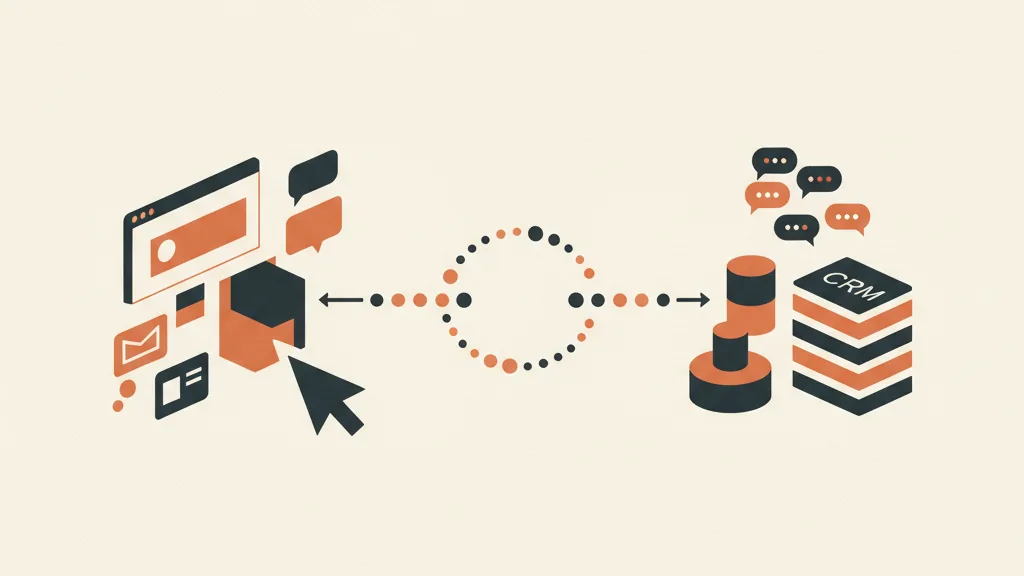
This is where the difference shows between treating Meta as an isolated channel and treating it as a data source that feeds a system. Meta lead forms and abandoned carts shouldn't end up in a spreadsheet: they should flow into the CRM and trigger an automatic recovery sequence.
A well-built reactivation flow combines multiple touches across different channels:
- Recovery emails. A win-back sequence for anyone who abandoned a cart or didn't reply: a first reminder within an hour, a second addressing the objection after 24 hours, a third with an incentive. That's the blueprint of a well-designed cart recovery automation.
- WhatsApp and messaging. For service leads, a personalized message has far higher open rates than email. An AI agent that qualifies leads on WhatsApp can engage the lukewarm contact, understand the objection, and book a call, without anyone having to type a hundred messages by hand.
- Automated sales follow-up. For B2B and quotes that didn't close, AI-driven follow-up automation keeps the contact warm with messages that read as if a person wrote them, instead of letting it go cold until they forget about you.
The advantage is twofold. On one hand, you recover people that Meta remarketing would never have caught, because they don't come back to the apps often enough. On the other, every contact you reactivate via CRM costs a fraction of a paid impression: that's exactly the logic behind AI outbound for contact reactivation — squeezing value out of leads you've already paid for instead of always buying new ones.
Closing the loop: offline conversions feeding back to Meta
There's one last piece that raises the bar. When a lukewarm contact converts thanks to the CRM (buys, books, signs), that conversion can be sent back to Meta through offline conversions. That way the algorithm learns that profile was a good one and optimizes to find more like it. The system becomes a loop: Meta brings the traffic, the CRM recovers whoever doesn't convert right away, and the result flows back to Meta to improve future acquisition. This dialogue between Meta and CRM signals is what separates a mature ad account from one that's living day to day.
Mistakes to avoid in Meta remarketing
- A single, undifferentiated audience. Without segmentation by temperature, you treat someone who abandoned checkout the same as someone who glanced at the homepage for three seconds.
- Not excluding buyers. You pay to say "buy" to someone who already bought.
- Frequency out of control. The same ad repeated to saturation, with no creative rotation.
- Audiences that are too small. Segments that never exit the learning phase and waste budget.
- Stopping at the platform. Ignoring that a contact's email and phone number are worth more than a cookie, and letting lukewarm leads go cold in a spreadsheet.
- Browser-side tracking and nothing else. Without CAPI your audiences are undersized, and you don't even notice.
If you're setting up or reviewing your entire ad account, read this piece within the broader framework of Meta Ads strategy and how to build effective audiences in the age of AI targeting. Remarketing isn't an island: it's the part of the funnel where you turn traffic you've already paid for into customers, and it deserves more care than any other part.
In summary
Remarketing on Meta still works, but in 2026 it requires three things. A solid technical foundation (CAPI, first-party data, good match quality). Audiences segmented by temperature, with different creative sequences. And, above all, the awareness that the platform alone isn't enough. The lukewarm contacts who left you an email or a phone number are worth more than a cookie: recover them with CRM and AI automations on email and WhatsApp, then feed the conversions back to Meta to close the loop. That's how a campaign stops being a leaking faucet and becomes a system that compounds value.
Frequently asked questions
Does Facebook remarketing still work after the privacy changes?
Yes, but it needs to be set up differently. Signal loss from ATT and cookies has shrunk audiences based only on the browser-side pixel. With server-side Conversions API, engagement-based audiences inside Meta (video, lead forms, profile), and integration with CRM data, remarketing remains the highest-return activity in an ad account.
What's the difference between remarketing and retargeting?
In practice the two terms are used interchangeably. Both mean showing ads to people who have already interacted with you. Historically, "retargeting" referred to ads based on on-site behavior, while "remarketing" also included re-contacting via email. Today the distinction has blurred, and in common usage the terms are interchangeable.
How many days should I set for a remarketing audience?
It depends on the segment. For abandoned carts and product pages, short windows (7-14 days) catch intent while it's hot. For colder audiences or longer purchase cycles you can go up to 30-90 days. Avoid very long, undifferentiated windows: they collect people who have already gone cold and dilute performance.
Do I need the Conversions API to do remarketing?
It's not mandatory to launch campaigns, but it's strongly recommended. Without server-side tracking, a substantial share of events is lost to ATT and cookie consent, so your remarketing audiences capture only a fraction of your actual visitors. CAPI recovers those signals and makes your audiences far more complete.
How do I recover people who never come back to Facebook or Instagram?
On-platform remarketing only reaches them when they reopen the apps. If they've left you an email or a phone number (lead form, abandoned cart), you can reach them directly via email and WhatsApp with automated reactivation sequences. It costs a fraction of a paid impression and recovers contacts that Meta remarketing would never see.
Should I exclude people who already bought from remarketing audiences?
Yes, from most audiences. Showing "buy now" to someone who just purchased is a waste of budget. The exception is audiences built for upsell and cross-sell, where it makes sense to offer complementary products to recent buyers.
If your remarketing stops at the platform, you're leaving value on the table. Let's talk: together we'll build the bridge between your Meta campaigns and CRM contact reactivation.