Meta Ads Targeting in 2026: From Manual Audiences to AI Signals
11 min read · AstraLoop Studio
For years, targeting on Meta was a job of fine detail: pick the age range, the gender, three or four interests, maybe a purchase behavior, tighten it with a few exclusions, and off you go. The narrower the audience, the more in control you felt. In 2026, that logic barely works anymore, and in many cases it's actively costing you results.
The reason is simple. Meta's algorithm today finds your customer better than you can describe them with a list of interests. Your job has changed: you no longer hand-pick the audience, you feed the algorithm the right signals and let it work. Advertisers who've grasped this shift spend more efficiently. Those still slicing audiences into 50,000-person buckets often pay more to get worse results.
In this guide we'll look at what this actually means in practice: how to set up audiences in the Advantage+ era, the cases where manual targeting still earns its keep (yes, they exist), and why your CRM data has become the competitive edge rivals can't copy. Straight to the point, no AI buzzwords.

What has actually changed in Meta targeting
Let's take a step back to understand where we are now. Old-school interest targeting came from a specific need: the algorithm was immature, it didn't know who to show your ads to, so you told it. "Men, 25-45, interested in fitness and supplements." You gave it a starting point.
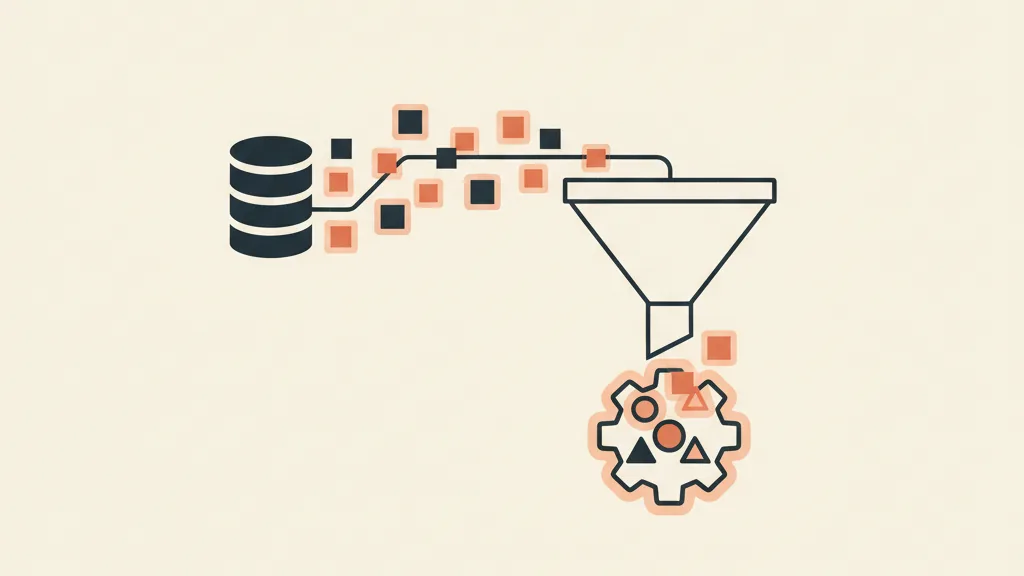
Today the situation is reversed. Meta processes a volume of per-user behavioral signals no advertiser can replicate by hand: what they watch, for how many seconds, what they buy elsewhere, what patterns precede a conversion. When you set "interested in fitness," you're taking information away from the algorithm, not adding to it. You're telling it to ignore everyone who would convert but whom Meta hasn't tagged with that interest.
Two forces accelerated this shift. The first is technical. After Apple's privacy update (ATT) and the gradual end of third-party cookies, Meta lost signal on individual users. It responded by doubling down on predictive models that work best with broad audiences and large volumes of conversion data. The second is a product decision: Meta pushed Advantage+ as the default setting, making broad targeting the main road and narrow targeting the exception.
Translated for you: the lever you control is no longer "how much do I narrow the audience," but "how many, and how clean, are the conversion signals I hand the algorithm." If the underlying logic isn't clear yet, it's worth starting with our strategic guide to Meta Ads in 2026 before getting into the operational details.
Advantage+ Audience: how to set up targeting today
Advantage+ Audience is the system Meta uses to automatically decide who sees your ads. You no longer tell it "these people and only these": you give it pointers and it explores. The difference is crucial, and a lot of people get it wrong.
Hints, not cages
When you enter interests or demographics into Advantage+, you're not drawing an impassable boundary. You're giving a hint. Meta starts from there, but it stays free to step outside that perimeter if it finds better conversions elsewhere. That's the opposite of classic targeting, where anyone outside the audience never saw the ad at all.
This changes how you should think about the whole process. You no longer need to build the perfect audience: you need to give the algorithm a sensible starting point and, above all, the data to understand who actually converted. Here's the practical rule for 2026.
- Start broad. In most cases, leave Advantage+ without heavy restrictions. The more room it has to explore, the faster it finds your real customer.
- Use hints only when you have a concrete reason. A seasonal product, a tight geographic constraint, a very specific professional target. Not "because it makes me feel safer."
- Don't split into ten micro-targeted ad sets. You fragment the conversion data, the algorithm never exits the learning phase, and performance collapses. Fewer ad sets, more budget on each, more signal.
If you want the full picture of how the system works, we've dedicated an entire piece to Advantage+ and how it operates in practice. Here we're focused on the targeting logic.
The most common mistake of 2026
We see it in almost every account we audit. The advertiser used to the old method who "doesn't trust" broad targeting and keeps narrowing. Adding exclusions, stacking interests, cutting age brackets. The result is an audience so narrow the algorithm has no material to learn from, cost per result climbs, and Advantage+ gets the blame.
It's not that Advantage+ doesn't work. It's that someone pulled the handbrake on it. Targeting in the AI era is an act of informed trust: you give the algorithm the room and the signals, then you judge by results, not by the feeling of being in control. If you want to see which mistakes burn budget most often, we've collected them in our guide to the most common Meta Ads mistakes.
When manual audiences still earn their keep
A word of caution, though, because plenty of articles swing too far the other way: "manual targeting is dead, always go broad." False. There are specific cases where manual control beats automation, and knowing them is what separates someone who actually manages an account from someone who just follows trends.
1. Small budgets and narrow niches
If you sell a hyper-specific product to a genuinely narrow audience (say, professional equipment for a niche trade) and your budget is limited, letting the algorithm explore freely means burning money showing the ad to irrelevant people before it figures things out. In these cases, a well-built manual audience, or a tight lookalike, saves you the exploration phase.
2. Non-negotiable business constraints
Some limits the algorithm doesn't know about, and it's on you to set them: the geographic areas you actually deliver to, age requirements for regulated sectors, excluding existing customers when you're running pure acquisition. These aren't "targeting" in the classic sense — they're business guardrails. Always set them manually.
3. Retargeting and warm audiences
Retargeting remains territory where control matters. People who visited the site in the last 7 days, who abandoned a cart, who opened but didn't buy: these are audiences you define yourself, based on your own data, with a message different from acquisition. Remarketing strategies on Meta live on precise segmentation, not exploration.
4. Structured tests
When you want to isolate a single variable (an offer, a messaging angle, a format), sometimes you need a level of control automation doesn't give you. It's not the rule, but it's a tool that has to stay in the toolbox.
The honest summary is this: the default is broad with Advantage+, but manual audiences aren't archaeology. They're the right tool for specific cases. Whoever uses manual always is wrong, and so is whoever never uses it at all.
CRM data: the real competitive advantage
Here's where we get to the point that separates accounts that scale from accounts that struggle. If Meta's algorithm is the same black box for everyone, and interest-based targeting is available to anyone, what makes you different from competitors pushing ads to the same people?
There's only one answer: your proprietary data. The contacts in your CRM, the list of who bought, how much they spent, who came back a second time. This is your first-party data, and it's the one thing competitors can't replicate. In a post-privacy world, where Meta has less signal than before, your data isn't a side detail — it's the quality fuel that lifts performance across the whole account.
How CRM data feeds into targeting
Concretely, your CRM data becomes targeting in three ways, in increasing order of value.
- Custom Audience from a list. You upload your customer list (respecting GDPR and consent) and Meta uses it for retargeting or exclusion. Basic, but essential.
- Quality lookalikes. Here the difference is enormous. A lookalike built on "anyone who left an email" is weak. One built on "the customers who are worth the most," using customer lifetime value, tells the algorithm who to actually look for. Lookalikes still work in 2026, but only if the seed is clean.
- Offline conversions and real value. The most advanced level. You feed Meta not just "this converted," but "this converted and is worth €2,000, not €50." The algorithm stops optimizing for lead volume and starts optimizing for actual revenue. This step — connecting the CRM to offline conversion signals — changes the math for the whole account.
Garbage in, garbage out
There's one caveat that matters more than everything else. The algorithm learns from whatever you send it. If you send it dirty signals (fake leads, duplicate conversions, wrong values), it learns the wrong thing and brings you more junk leads. A messy CRM isn't just an internal problem: it's a problem that flows straight into the quality of your targeting.
That's why, more and more often, serious advertising work starts with the CRM rather than with the campaigns. A CRM built to fit your SME, keeping a clean record of who buys, how much they're worth, and where they are in the journey, is the foundation everything else sits on. Without it, you're optimizing on data that's lying to you.
If you suspect your Meta campaigns are optimizing on dirty data or incomplete tracking, request an analysis: we'll look together at how you connect the CRM to conversion signals and what it changes in performance.
The new mindset: feeding the algorithm, not steering it
Let's put the pieces together, because the shift is more mental than technical. The old-school advertiser thought: "I define the right audience and show the ad to them." The new advertiser thinks: "I give the algorithm the best signals I can and let it find the right people."
This changes where you put your energy. Before, you put it all upfront, building the audience. Today the audience builds itself almost on its own, and your energy needs to shift to three levers that actually matter.
| Lever | Old approach | 2026 approach |
|---|---|---|
| Targeting | Narrow interests, many ad sets | Broad with Advantage+, few ad sets |
| Where the work goes | Building the audience | Creative, offer, and conversion data |
| Main signal | Declared interests | Behavior and real value from the CRM |
| What you optimize for | Lead volume | Customer value (revenue) |
The three new levers are clear. Creative, because when targeting is broad, the ad itself does the filtering: it speaks to the right people and ignores the wrong ones. The quality of conversion signals, which comes down to tracking and the CRM. And the offer, because no algorithm can save a weak proposition.
It's no coincidence that serious advertising work today intertwines with automating business processes with AI. Qualifying leads automatically, keeping the CRM clean, feeding the right signals back to Meta — these aren't things you do well by hand. When the ad algorithm and your internal systems speak the same language, targeting stops being a box to check and becomes an advantage that compounds over time.
Tracking: without this, nothing works
This is worth spelling out, because it's where the most accounts sabotage themselves. Everything we've covered — Advantage+, quality lookalikes, value-based conversions — depends on one thing: Meta receiving reliable conversion data. If tracking is broken, the algorithm is blind, and a blind algorithm finds no one.
In 2026, the browser Pixel alone is no longer enough. Blocked by privacy restrictions, it loses a significant share of events. You need to pair it with the Conversions API, server-side tracking that sends conversions straight from your systems to Meta, without going through the browser. It's the difference between giving the algorithm 60% of the picture and giving it 95%.
The logic closes the loop: the more clean signals you pass along, the better the algorithm profiles who to look for, the more your broad targeting becomes precise without you touching a single interest. Targeting in the AI era isn't set in the interests panel. It's built in tracking and in the CRM.
In practice: what to do starting Monday
Let's sum it up in concrete actions, no theory.
- Stop splitting audiences. Consolidate ad sets, give each enough budget to exit the learning phase, let Advantage+ explore.
- Use manual only where it makes sense: narrow niches with small budgets, business constraints, retargeting, isolated tests.
- Build lookalikes on high-value customers, not on anyone who ever left a contact. The seed matters more than the size.
- Connect the CRM to Meta. Custom audiences for exclusions and retargeting, offline conversions with real value to optimize for revenue.
- Fix your tracking. Pixel plus Conversions API, clean events, correct values. It's the foundation, not an extra.
- Shift your energy to creative and offer. With broad targeting, those are what make the difference.
Targeting is no longer a set of interests to tick off. It's the quality of the signals you feed to a system that's better than you at finding people. Whoever understands this stops fighting the algorithm and starts feeding it the right data. And that's exactly where the advantage competitors can't buy at any price is hiding: in a clean CRM and solid tracking.
Frequently asked questions
Is interest-based targeting on Meta dead in 2026?
Not entirely dead, but its role has changed. In Advantage+, interests work as hints, not hard boundaries: Meta starts from them but stays free to step outside that perimeter if it finds better conversions elsewhere. Narrowing too much with interests today often removes information from the algorithm instead of adding to it, so the default is to start broad and use interests only with a concrete reason.
Is Advantage+ Audience better than manual targeting?
In most cases, broad Advantage+ is the right path, because it gives the algorithm room to find your real customers. Manual audiences remain better in specific cases: narrow niches with small budgets, non-negotiable business constraints (geography, age, exclusions), retargeting on warm audiences, and structured tests. The default is broad, but manual isn't archaeology.
Why does CRM data matter for Meta campaigns?
Because it's the one thing competitors can't copy. Uploading customer lists lets you build custom audiences and lookalikes, and connecting offline conversions lets the algorithm optimize for real customer value (revenue) instead of just lead volume. In a post-privacy world, where Meta has less signal, your first-party data lifts performance across the whole account.
Do you still need to split campaigns into lots of ad sets?
No, and it's one of the most common mistakes of 2026. Splitting into many micro-targeted ad sets fragments the conversion data, keeps the algorithm stuck in the learning phase, and drives up cost per result. It's better to run fewer ad sets, with sufficient budget on each, so the algorithm has enough signal to exit learning and optimize.
What does Meta's broad targeting need to work well?
Reliable conversion signals. The browser Pixel alone is no longer enough, since privacy blocks intercept a chunk of events: it needs to be paired with the Conversions API, i.e. server-side tracking. The more clean events and correct values you pass to Meta, the better it profiles who to look for, and the more precise your broad targeting becomes without touching a single interest.
Do lookalike audiences still work in 2026?
Yes, but the quality of the seed matters more than its size. A lookalike built on anyone who ever left an email is weak; one built on your highest-value customers, using customer lifetime value from the CRM, tells the algorithm exactly who to look for. With a clean seed, lookalikes remain one of the most effective levers for acquisition.
Want to turn your CRM data into the advantage competitors can't copy, with solid tracking and targeting that feeds the algorithm instead of fighting it? Talk to us: we'll tell you clearly where to start.