Marketing Automation: What It Is, How It Works, and How AI Is Changing It
10 min read · AstraLoop Studio
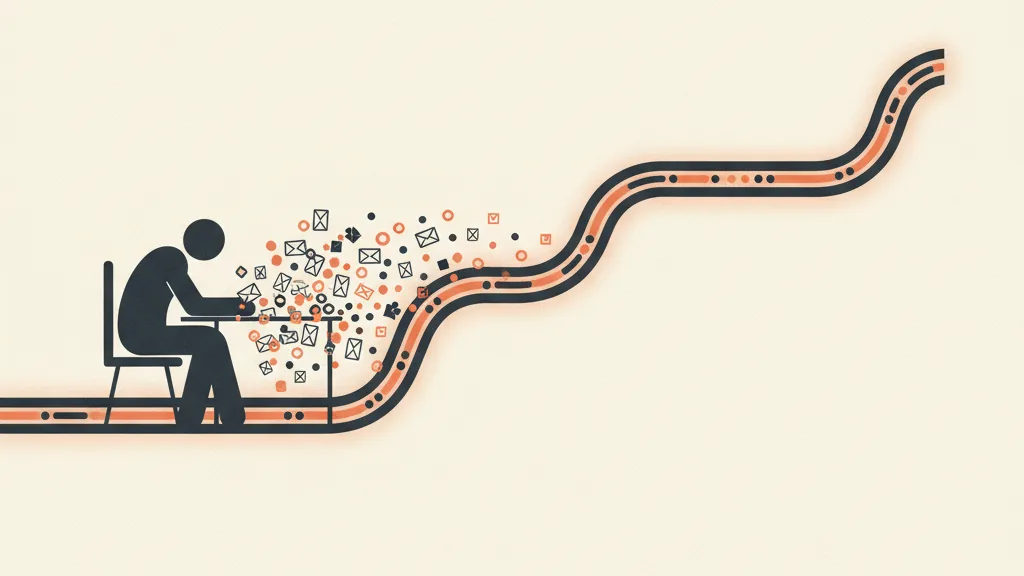
Marketing automation is how a business stops doing repetitive marketing tasks by hand (sending emails, segmenting contacts, scoring leads, sending reminders) and hands them to a system that runs them on its own, at the right moment, for the right person. That's the textbook definition. What's actually interesting in 2026 is something else: for twenty years, marketing automation meant "write a rule, the software executes it." That story is changing now that AI agents have entered the picture: they don't wait for a rule to execute, they decide for themselves what to do, who to write to, and with what message.
This article is the reference guide: what marketing automation is, how it works under the hood, what concrete results it delivers, and what changes now that artificial intelligence is in the mix. It's written for anyone running an SME or a marketing team who wants to know where to invest without getting lost in the acronyms. From here you'll also find links to deep dives on email, lead nurturing, CRM, and customer acquisition.
What marketing automation is (in plain terms)
Marketing automation refers to the software and workflows that automatically execute marketing and communication actions, triggered by an event or a condition. The classic formula is "trigger, condition, action": something happens (a contact signs up, abandons a cart, hasn't opened an email in 90 days), the system checks a condition, and fires off an action (an email, a message, a status change in the CRM, a notification to sales).
Historically, the heart of it all has been email marketing: welcome sequences, newsletters, reminders. Today the scope is much wider and includes WhatsApp, SMS, notifications, CRM updates, and even calls handled by voice assistants. The principle, though, doesn't change: take a repetitive, predictable task and take it out of a person's hands.
The three basic ingredients
- Data: contact records, behavior, purchases. Without clean data, automation sends messages at random.
- Triggers: the events that kick off a flow (sign-up, purchase, inactivity, birthday, a page visit).
- Content: the messages sent, with fixed parts and variable parts (name, product, city).
What it's really for: the business goals
Marketing automation isn't an end in itself, it's a lever. Cutting manual work is just the most visible side effect. The real goals are business goals.
- Acquiring more customers from the same traffic: a contact who lands on the site and doesn't buy right away isn't lost — they get nurtured with a sequence until they're ready.
- Shortening the sales cycle: lead scoring flags hot contacts for sales at the right moment, instead of having reps cold-call everyone.
- Increasing the value of every customer: upsells, cross-sells, and repeat purchases kick off on their own based on what a person has already bought.
- Not losing people who go cold: inactive customers get caught before they disappear for good.
In numbers: the same list of 5,000 contacts can be worth double or half, depending on how well you nurture it. Automation is what makes nurturing it sustainable without hiring three more people.
How it works: the four pillars of a system
Underneath every marketing automation system, from the simplest to the most sophisticated, there are four pillars. Miss one, and the system limps along.
1. Data and the CRM (the foundation)
A custom-built CRM is the system's memory: who the contact is, what they've done, where they are in the journey. Automation is only as good as the data feeding it. That's why projects that start from dirty lists or disconnected spreadsheets deliver disappointing results: the engine runs, but on the wrong fuel.
2. Triggers and events
These are the system's sensors. Every user action (or its absence) can become a trigger. The most profitable triggers are often the simplest: an abandoned cart, a first purchase, prolonged inactivity.
3. Content and personalization
This is where the difference between an email that reads like it was written by a robot and one that feels written for you plays out. AI-driven personalization isn't putting a name in the subject line: it's tailoring the message, the offer, and the timing to the individual contact.
4. Multichannel orchestration
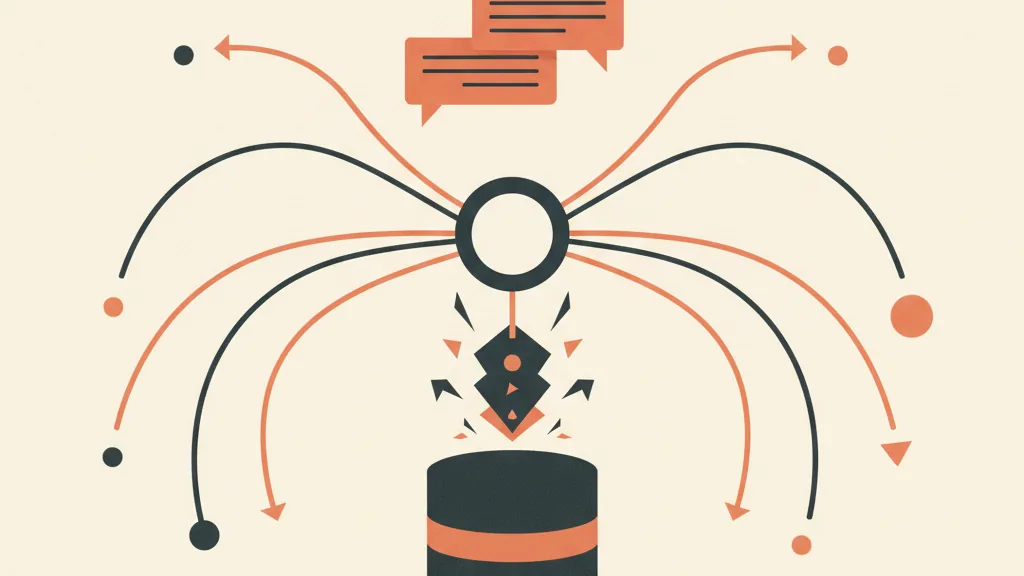
A contact doesn't live only in their inbox. Orchestration decides which channel to reach them on and when, coordinating email, WhatsApp Business, SMS, and notifications without bombarding them on every front at once.
Concrete use cases (the ones that make money)
Theory is boring, examples aren't. Here are the flows almost every business should have running, ranked by return relative to effort.
- Welcome flow: the welcome sequence that greets a new subscriber and turns curiosity into a first purchase.
- Lead nurturing: a series of messages that educates and warms up contacts who aren't ready yet. More in the guide to B2B lead nurturing.
- Abandoned cart recovery: one of the highest-ROI flows in ecommerce, period. See how to set up automatic cart recovery.
- Win-back: bringing back people who haven't bought in months with targeted win-back sequences.
- Reactivating a dormant database: often a company's most underrated asset is the contact database it already has.
| Flow | Trigger | Goal | Where it performs best |
|---|---|---|---|
| Welcome | New sign-up | First purchase | Ecommerce, services |
| Nurturing | Lead not ready yet | Warm up the contact | B2B, high ticket |
| Cart recovery | Abandoned cart | Recover the sale | Ecommerce |
| Win-back | 60-90 days inactive | Repeat purchase | All industries |
| Lead scoring | Contact behavior | Hand hot leads to sales | B2B |
The AI-first leap: from automation flows to agents that decide
So far we've described classic, rule-based marketing automation: you write the rules, the software executes them. It works, but it has a structural limit — it only handles what you've already anticipated. Every exception, every nuance, every "it depends" needs a new rule written by hand. The smarter the system gets, the more it turns into a maze of if/then branches to maintain.
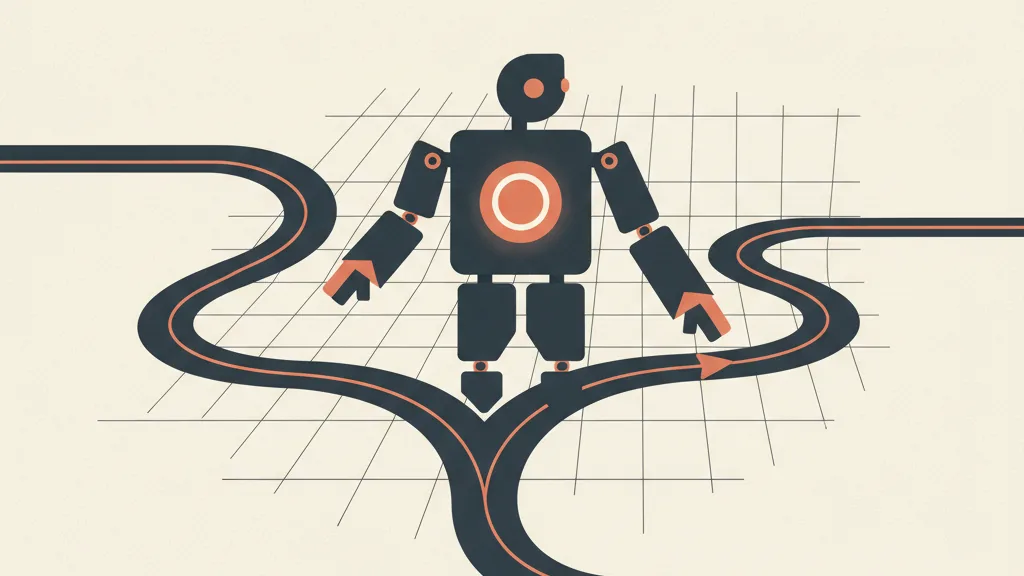
AI-first automation flips that logic. Instead of writing out every step, you give an AI agent a goal and the tools to reach it. The agent reads the contact's context, decides on the message, picks the channel and the moment, and adapts based on the response. It doesn't execute a rule — it makes a decision.
| Aspect | Classic automation (rule-based) | AI-first automation (agents) |
|---|---|---|
| Logic | Hand-written if/then rules | A goal is assigned, the agent decides the steps |
| Segmentation | Static lists and filters | Dynamic segments recalculated in real time |
| Content | Fixed templates with variable fields | Text generated and tailored to each contact |
| Channel | Usually one per flow | Orchestrated across email, WhatsApp, and voice |
| Maintenance | You update every branch yourself | The agent re-adapts based on results |
What actually changes
An example. In the rule-based version, to handle a lead who downloads an ebook, you'd write: if they download it, send email A after 1 day, email B after 3 days, email C after 7. If they open but don't click, different branch. If they click but don't book a call, yet another branch. Every "if" is another piece of machinery to build and maintain.
In the AI-first version, the agent has a goal (get the lead to book a call), knows the context (what they downloaded, which industry they're from, how they've responded so far), and writes the right message for that contact, on the right channel, rephrasing it if the first attempt doesn't land. You define the goal and the boundaries, not the hundred branches in between. Careful not to read this as "autonomous magic": a serious agent operates within precise guardrails (tone of voice, allowed offers, frequency caps) and under supervision. Control doesn't disappear — the burden of maintaining a thousand branches does. It's the same principle driving agentic CRMs, where the system stops being an archive and starts acting on the data it collects.
Marketing automation and CRM: the engine of customer acquisition
This is the point many people miss. Marketing automation isn't a toy for sending pretty emails: it's the engine that powers customer acquisition. On its own, it moves messages. Connected to a CRM and a funnel, it moves revenue.
The loop works like this: the funnel brings in contacts, the CRM logs and qualifies them, automation nurtures and warms them up, and contacts who are ready go back to sales or buy on their own. It's a customer acquisition system where automation is the drive belt. Without it, every contact who doesn't convert on the first touch goes to waste.
For B2B in particular, where cycles are long and decisions are shared, this loop is the difference between B2B lead generation that fills the CRM with dead names and one that produces meetings. And it fits into the broader theme of automating business processes with AI, of which marketing is just the first piece.
Want to know which flows to automate first in your business? Tell us how you're acquiring customers today and we'll show you where automation delivers the most results.
How to choose the tools
Tools aren't the starting point, but sooner or later the question comes up. To simplify, there are three levels.
- Email and CRM platforms (Brevo, Mailchimp, HubSpot, and similar): cover email, sequences, and segmentation. Good for starting out, with costs that grow as your contact count does.
- Flow orchestrators (Make, n8n, Zapier): connect different tools to each other and handle the logic. Useful when you have a lot of pieces to coordinate.
- The AI layer: the agents that generate content, decide, and personalize on top of the other two levels.
The right choice depends on where you're starting from: those just getting going often need less than they think. If you're weighing your options, we've put together the best marketing automation software for the Italian market. The golden rule stays the same: choose the tool after you've mapped out the flows, not before.
Where to start: a five-step roadmap
- Get your data in order. A CRM, or at least a clean, connected contact base. No serious automation runs on scattered spreadsheets.
- Pick a single high-ROI flow. Usually welcome or abandoned carts. One flow that works beats ten left half-finished.
- Write content that sounds human. Even the smartest flow dies with robotic emails.
- Measure and cut. Look at the real numbers (conversions, not opens) and turn off what isn't paying off.
- Add AI where a decision is needed, not where a rule is enough. AI isn't the first thing to buy — it's what scales the system once rules stop being enough.
If you want to move forward in an orderly way, the guide on automating marketing for an SME goes into the operational detail step by step.
The mistakes that waste automation
- Automating chaos: if the manual process is a mess, automating it just makes it faster at causing damage. Fix it first, automate second.
- Starting from the tool: buying the platform before knowing which flows you need is like buying tools before knowing what you're building.
- Confusing activity with results: a thousand emails sent isn't a result. Sales are.
- Writing for the system, not the person: automation amplifies both great content and terrible content.
- Forgetting deliverability: if emails land in spam, the best-designed flow in the world is worthless.
The KPIs that actually matter
Marketing automation generates mountains of metrics, but only a few tell you if it's making money. Watch out for falling in love with vanity numbers (opens, clicks) and look at the business ones instead.
| KPI | What it measures | Why it matters |
|---|---|---|
| Flow conversion rate | Contacts who complete the target action | The real measure of ROI |
| Revenue attributed to flows | Sales generated by automations | Translates automation into euros |
| Reactivation rate | Dormant contacts back to active | Recovers value you've already paid for |
| CAC | Customer acquisition cost | Drops when automation is working well |
| LTV | Customer value over time | Rises with nurturing and retention |
| Deliverability | Emails that actually arrive | Without it, everything else is pointless |
Opens and clicks stay useful for diagnostics, but they don't pay the bills. The real indicator is how much extra revenue the system generates compared to before.
In summary
Marketing automation has gone from being "emails sent automatically" to becoming the infrastructure that nurtures and acquires customers on your behalf. The leap underway is from rigid automation flows to AI agents that decide within clear rules. Whoever understands this now builds an advantage that compounds over time: every contact collected keeps working, instead of sleeping in a list.
The practical advice stays simple: start from the data, automate one flow at a time, measure the revenue, and add AI where a decision is needed, not where a rule is enough.
Frequently asked questions
What's the difference between marketing automation and email marketing?
Email marketing is a channel; marketing automation is the system that governs it (and goes beyond email). You can do email marketing without automation, sending newsletters by hand. Marketing automation adds triggers, conditions, and more channels (email, WhatsApp, SMS, CRM) that fire on their own based on the contact's behavior.
Is marketing automation only for large companies?
No, quite the opposite. SMEs often get the biggest benefit because their teams are small: automating a welcome flow or cart recovery frees up time you don't have. You can start with a handful of essential flows and an affordable platform, then grow from there. The real bottleneck isn't company size — it's having your data in order.
How much does a marketing automation system cost?
It depends on the level. Basic email/CRM platforms start at a few tens of euros a month and scale with your contact count. Add flow orchestrators and an AI layer and the cost rises, but so does the return. Usually the biggest expense isn't the software — it's the time spent setting up the flows initially and cleaning the data.
Are marketing automation and AI the same thing?
No. Classic marketing automation executes rules you write yourself (rule-based). AI adds the ability to decide: agents that read the context, generate the content, and choose the channel and timing for each individual contact. AI is an evolution of marketing automation, not a synonym — you can have automation without AI, but AI makes it far more scalable.
Where do you start with marketing automation?
With the data, and with a single flow. First get your contact base in order (ideally in a CRM), then activate one high-return flow, typically welcome or cart recovery. Measure the real conversions, refine it, and only then add more flows. Starting ten automations at once is the recipe for finishing none of them.
Does marketing automation replace the marketing team?
No, it lightens the repetitive workload and multiplies the team's output. People remain essential for strategy, content, offers, and supervising the AI agents. Automation removes the manual execution (sending, reminders, CRM updates) so the team can focus on what a machine can't do: understanding the customer and building the right offer.
If you want to turn your marketing automation into an AI-first system that acquires and nurtures customers on its own, let's talk: we start with an analysis of your current funnel and CRM.