Abandoned Cart Recovery: Automations That Win Back Sales
9 min read · AstraLoop Studio
Out of every 10 people who add a product to your store's cart, about 7 leave without buying. It's not your fault: it's the industry average, confirmed by years of Baymard Institute data, with an abandonment rate hovering around 70%. But here's the thing. Those 7 people have already shown a precise purchase intent: they chose, clicked, evaluated. They're the warmest leads you'll ever get your hands on, and most ecommerce stores simply let them evaporate.
Abandoned cart recovery is the highest-ROI lever in all of ecommerce marketing, for a simple reason: you don't need to acquire anyone, you just need to bring back someone who was already one step from checkout. A well-built automation recovers, on average, between 5% and 15% of lost carts. On a store doing 30,000 euro a month with an average cart of 60 euro, that's several thousand euro recovered every month, at close to zero cost once the system is set up.
In this guide we'll look at how to build modern recovery sequences. Not the single reminder email from ten years ago, but multichannel flows (email plus WhatsApp) orchestrated by AI, with smart triggers and calibrated timing. With concrete examples you can copy as they are.
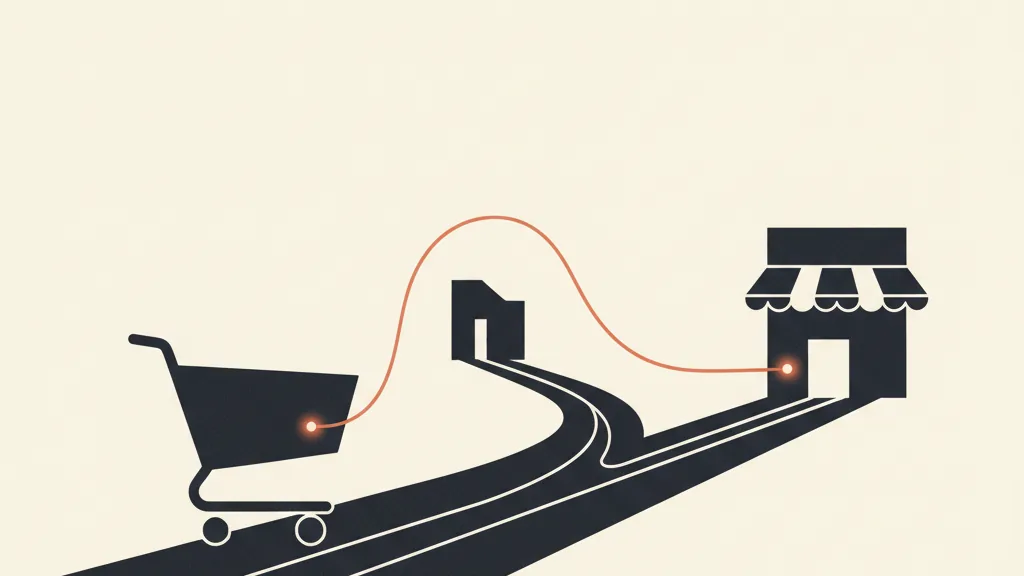
Why people abandon carts (and why they almost always come back)
Before you automate anything, you need to understand what you're actually solving for. Cart abandonment rarely means "I'm not interested anymore." In the vast majority of cases, one of these reasons is behind it:
- Surprise shipping costs: the number one reason. The user reaches checkout, sees an unexpected 7.90 euro shipping fee, and closes the tab.
- Just comparing: uses the cart as a wishlist, to compare prices or models elsewhere at their own pace.
- Distraction: the phone rings, a colleague walks in, the kid starts crying. They wanted to buy, but life got in the way.
- Checkout too long or account required: too much friction, too many fields, forced registration.
- Unresolved doubts: sizing, returns, delivery times, warranty. Missing that last bit of reassurance to click "pay".
Note that almost none of these is "I don't want the product." They're obstacles, not refusals. And that's exactly why recovery works so well. You don't need to convince, you need to remove friction and remind. Your message needs to speak to these specific objections, not just say "you left something in your cart."
The technical starting point: capture the email (or number) before checkout
Here's the trap half of stores fall into. You can't recover a cart you don't have a contact for. If the user abandons before entering an email or phone number, they're invisible to you: no sequence will ever start, no matter how well it's written.
The solution is to capture the contact as early as possible along the journey, without waiting for the last step of checkout. Three approaches that work:
- Email as the first checkout field: put it before everything else, so it gets recorded even if the user drops off at later steps (address, payment). Many platforms save the value as soon as the field loses focus.
- Entry popup with an incentive: a welcome discount in exchange for an email captures the contact well before the cart. We go deeper on the mechanics in our article on using popups to capture leads without annoying visitors.
- WhatsApp opt-in: more and more stores offer order updates via WhatsApp with an explicit checkbox. Whoever accepts hands you a channel with open rates email can only dream of.
Without this piece, everything else stays theoretical. The first fix to make on any recovery flow is always raising the percentage of "identified" carts.
Why email plus WhatsApp beats email alone
For years, cart recovery meant "email." It still works, sure, but on its own it leaves a lot on the table. Look at the typical open rates for the two channels:
| Channel | Average open rate | Typical read time | Note |
|---|---|---|---|
| 25-35% (cart recovery performs better than average) | Minutes to hours | Great for rich messages, images, details | |
| 80-95% | Within a few minutes | Immediate, personal, high response rate | |
| SMS | Over 90% open rate, but perceived as cold | A few minutes | Useful as a fallback, less conversational |
The difference is huge. WhatsApp gets opened almost every time and almost instantly, and it's a two-way channel: the user can reply "is size M available?" and get an answer on the spot. Email, on the other hand, remains irreplaceable when you need to show the product, list the benefits, include reviews. The winning move isn't choosing one, it's orchestrating them together: WhatsApp for immediacy and conversation, email for depth. If you're weighing which channel to prioritize, we've compared the pros and cons in WhatsApp vs SMS in marketing.
There's a regulatory constraint to respect here, and it's not a minor one: WhatsApp Business requires explicit opt-in and, for proactive promotional messages, the use of Meta-approved templates. You can't send marketing messages to anyone who left you their number for other reasons. Treat the channel with respect, because here deliverability is a privilege, not a right.
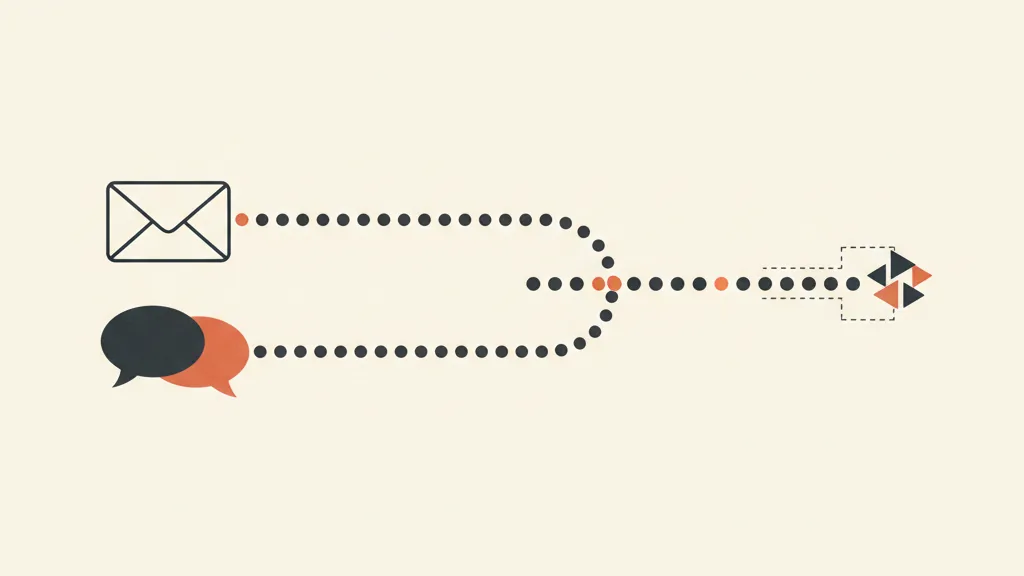
The recovery sequence: triggers and timing, step by step
Here's the core of the guide. A well-calibrated multichannel sequence follows a precise logic: step in early, while the memory is still fresh, then space out the messages while adding progressively stronger motivations. This is a proven template you can adapt to your store.
Message 1: WhatsApp, after 30-60 minutes
Trigger: cart inactive for 30-60 minutes, WhatsApp contact available and opted in.
This is the most effective move, and almost nobody makes it. Within an hour, the person still remembers exactly what they wanted. Light tone, almost like an attentive assistant, no discount yet.
Example: "Hi Marco! I noticed you left the [Runner Sneakers] in your cart. I'm keeping them aside for you 😊 Want to complete the order, or do you have questions about sizing or shipping? Just message me here."
Notice the detail: it opens up conversation. If the person replies with a real objection, you've solved it and recovered the sale without spending a cent of margin on discounts.
Message 2: Email, after 3-4 hours
Trigger: cart still open, no conversion from the first message.
Here you leverage the richness of email. Product image, cart summary, and above all, the antidote to typical objections: free shipping above a certain threshold, easy returns, warranty. Still no discount, so you preserve margin.
Effective subject line: "Your cart is waiting for you (free shipping over 49 euro)". The subject line does half the work: if you want to go deeper, we have a dedicated guide on subject lines that work.
Message 3: WhatsApp or Email, after 24 hours
Trigger: 24 hours since abandonment, no action taken.
Now scarcity or social proof comes into play, still ahead of any discount. "Only 2 left in your size" (if true) or "Over 800 customers have chosen this model, here's what they say." Social proof often converts better than a discount code, and it doesn't erode your margin.
Message 4: Email, after 48-72 hours (the final incentive)
Trigger: 48-72 hours, contact still cold.
Only now, as a last resort, do you pull out the economic incentive: 10% off or free shipping for a limited time. "We really want you to have it: here's 10% off, valid for 24 hours to complete your order." The deadline creates real urgency. If it doesn't convert here, the person exits the recovery flow and, potentially, enters a longer nurturing flow.
Why does the discount only show up at the end? Because if you offer it right away, you "train" your customers to abandon carts on purpose to get the code. Half of all recoveries happen in the first two messages, with no discount at all: offering it earlier just means losing margin on people who would have bought anyway.
Where AI actually comes in (it's not marketing, it's orchestration)
So far you have a "rules-based" sequence, already excellent on its own. But it's static: same timing, same messages for everyone. AI turns it from a rigid flow into a system that adapts. Here's where it makes a concrete difference, not just on paper:
- Dynamic timing: instead of "always after 3 hours," the model learns when that specific user usually opens messages (morning? evening?) and sends within the right window for them.
- Channel choice based on behavior: if the user opens your WhatsApp messages but ignores emails, the system shifts the sequence's weight toward WhatsApp. And vice versa.
- Content personalized on the fly: the message is built around the specific cart, purchase history, category. A repeat customer gets a different tone than a first-time buyer. We've written a dedicated guide on personalizing emails with AI on this.
- Discount modulation: AI decides whether to offer the incentive and how much, based on cart value and product margin. No 15% off on an item that's already on sale.
- Conversational agent on WhatsApp: when the user replies "do you have size 42?", an AI agent on WhatsApp Business responds in real time, checks availability, and closes the order, without keeping someone who was already ready to buy waiting.
This is the leap: from a series of scheduled messages to a system that treats every cart as its own case. And that's where recovery goes from 5% to 12-15%.
Want to see how much you're leaving on the table in lost carts, and how to recover it with an AI-orchestrated email plus WhatsApp system? Request a free analysis of your store and we'll show you the numbers.
Connecting recovery to the CRM: the cart isn't an isolated event
A common mistake is treating cart recovery as a standalone widget, disconnected from everything else. In reality, every abandoned cart is valuable data about the customer: what they looked at, how much they were willing to spend, which category. If these signals feed into a CRM integrated with your Shopify store, the value multiplies.
A few concrete examples of what this unlocks:
- Someone who repeatedly abandons carts above a certain threshold is a high-potential customer: they deserve different treatment, maybe a human touch.
- Someone who already bought and then abandons a second cart needs a message written for a loyal customer, not a stranger.
- Carts abandoned over out-of-stock sizes or variants tell you what to restock.
When the cart feeds the CRM, recovery stops being a patch and becomes part of the customer relationship system. It's the same principle behind the WhatsApp and CRM integration for leads: the channel captures, the CRM remembers and coordinates. If you want the full picture of how these pieces fit together, start with the overview of AI use cases for ecommerce.
What you need technically (explained without jargon)
To set up a system like this you need four components, regardless of platform:
- Cart event detection: the store needs to fire an "abandoned cart" event with the details (products, value, contact). Shopify and the main platforms do this natively.
- An automation engine: something that listens for the event and orchestrates the sequence. It can be your email marketing tool (Klaviyo, Brevo and similar) paired with an automation layer for WhatsApp and AI logic, or an orchestrator like n8n or Make that connects the pieces.
- The WhatsApp Business API channel: with approved templates and compliant opt-in management.
- The decision logic: the base rules plus, where needed, the model that personalizes timing, channel, and content.
You don't need to build everything in-house from day one. Many stores start with a rules-based sequence (email plus WhatsApp with fixed timing) and add adaptive intelligence later, once the flow has gathered enough data. What matters is designing contact capture and CRM integration from the start, because going back to fix those two points later is expensive.
The numbers: what results to expect
Let's set realistic expectations, without inflating anything. On a well-optimized average store:
- Recovery rate: 5-10% with email alone, 10-15% adding WhatsApp and AI personalization.
- First WhatsApp message within an hour: this generates the largest share of recoveries, often more than half of the total.
- Margin preserved: with the discount only at the last step, most recoveries happen at full price.
Let's run the numbers. A store with 500 carts a month, 350 of them abandoned, average value 60 euro. Recovering 12% means 42 extra orders a month, roughly 2,500 euro in additional monthly revenue that used to just vanish. The system pays for itself within a few weeks, and after that it's almost pure margin.
Cart recovery is rarely the flashiest lever in marketing, but it's almost always the one with the fastest return. You're not buying new traffic: you're collecting what you already had halfway in your pocket. And if you connect it well to the rest (CRM, reactivation, nurturing) it becomes the first link in a system that raises the value of every single visitor. To zoom out on growing overall store conversions, this guide on how to increase your ecommerce conversion rate is a great next step.
Where to actually start
If you're not recovering carts today, or you're doing it with a single lukewarm email, here's the order of priorities:
- Make sure you're capturing email (and ideally a WhatsApp number) as early as possible along the journey.
- Turn on a basic sequence right away: WhatsApp within an hour, email at 4 hours, email at 48 hours with a final incentive.
- Measure for a month: recovery rate, by channel and by message.
- Only then, add the AI layer (dynamic timing, channel selection, personalization, WhatsApp agent) on the points the data flags as weak.
Done in this order, you see results within the first week and keep improving one step at a time, without over-engineering anything before you know what's actually needed.
Frequently asked questions
How many carts do you actually recover with automation?
An email-only sequence recovers on average 5-10% of abandoned carts. Adding WhatsApp and AI personalization realistically gets you to 10-15%. The single most effective move is a first WhatsApp message within an hour of abandonment, which often generates over half of all recoveries.
Is email or WhatsApp better for cart recovery?
It's not a strict either/or: the two levers combine. WhatsApp has 80-95% open rates and is immediate and conversational, ideal for a quick first contact. Email handles rich messages with images, reviews, and details. The best sequence alternates WhatsApp for immediacy and email for depth, with the discount saved for the last step.
When should I send the first recovery message?
Within 30-60 minutes of abandonment, ideally via WhatsApp. In that window the person still remembers exactly what they wanted and purchase intent is still hot. Waiting 24 hours, as many stores do, means speaking to a memory that's already faded, and recovering a lot less.
Is it worth offering a discount right away?
No, it backfires. If you offer the code on the first message, you train customers to abandon carts on purpose to get it, eating into margin on sales you'd have closed anyway. The discount should be your last card, after trying reminders, removing objections (shipping, returns), and social proof. Half of all recoveries happen with no discount at all.
Can I send recovery WhatsApp messages to anyone?
No. WhatsApp Business requires explicit user opt-in and, for proactive promotional messages, the use of Meta-approved templates. You can't use a number left for other purposes (like shipping updates) to do marketing without consent. Respecting these rules is also essential to avoid losing access to the channel.
Do I need AI, or is a rules-based automation enough?
You can start perfectly well with a rules-based sequence on fixed timing: it's already far better than nothing. AI adds value afterward, optimizing timing per user, channel selection, content personalization, and conversational handling of WhatsApp replies. It makes sense to introduce it once the base flow has gathered enough data to show you where to act.
If you're ready to move from a single lukewarm email to a real multichannel recovery system built around your store, let's talk: we'll design the sequence, the triggers, and the integrations for you.