B2B Lead Nurturing with AI: How to Build Sequences That Convert
7 min read · AstraLoop Studio
In B2B, when a contact hands over their email, they're almost never ready to buy. Weeks, sometimes months, pass between the first download and the signed contract, and more than one person is involved in the decision. Lead nurturing exists precisely to cover that gap: keeping the contact warm, educating them, moving them from "I want to understand this" to "I want a quote."
The problem is that most companies still handle it with sequences written once and never touched again: five identical emails sent to everyone at fixed intervals. Someone who opened and clicked on everything and someone who opened nothing get the same message on the same day. AI agents break that logic. Nurturing stops being a conveyor belt and becomes a system that watches each contact's behavior, recalculates how ready they are after every interaction, and decides what to say next. Let's look at how it works and how to build a sequence that reacts to the contact, instead of running the same for everyone.

What we mean by B2B lead nurturing
Lead nurturing is the set of communications that guide a contact from first interest to the point where they're ready for a sales conversation. In B2B it has specific traits that set it apart from B2C:
- The cycle is long: weeks or months, not minutes.
- Multiple people decide (the so-called buying committee): whoever uses the product, whoever pays, whoever signs.
- The purchase is rational, but not only that: ROI, perceived risk, and trust in the vendor all matter.
- Lead volume is lower, and each contact is worth more.
Each of these differences has a practical consequence. Burning a B2B lead with poorly timed or generic messages is costly, because few contacts come in and re-acquiring them is expensive. Before nurturing even comes into play, you need a B2B lead generation flow that brings in contacts with at least some fit. Nurturing works on what comes in: it qualifies it over time and prepares it for the sale.
Why static sequences don't convert anymore
The classic drip campaign works like this: the contact enters, email 1 goes out on day 0, email 2 on day 3, and so on through email 5. The rules are time-based and apply the same way to everyone. The limitation becomes obvious the moment you look at real data:
- A contact who opened every email, clicked the case study, and visited the pricing page three times gets the same message as someone who never opened anything.
- Someone ready to talk today is made to wait because "it's email 3's turn."
- Someone not yet ready gets pushed toward a sale too soon and cools off.
If-then rules help a little (if they open it, send them content X), but they stay rigid: you write them once, they cover few cases, and they age fast. Meanwhile, a contact's real behavior is far richer than any rule tree can anticipate. What's needed is something that reads that behavior continuously, not in fits and starts.
Dynamic lead scoring: the heart of AI nurturing
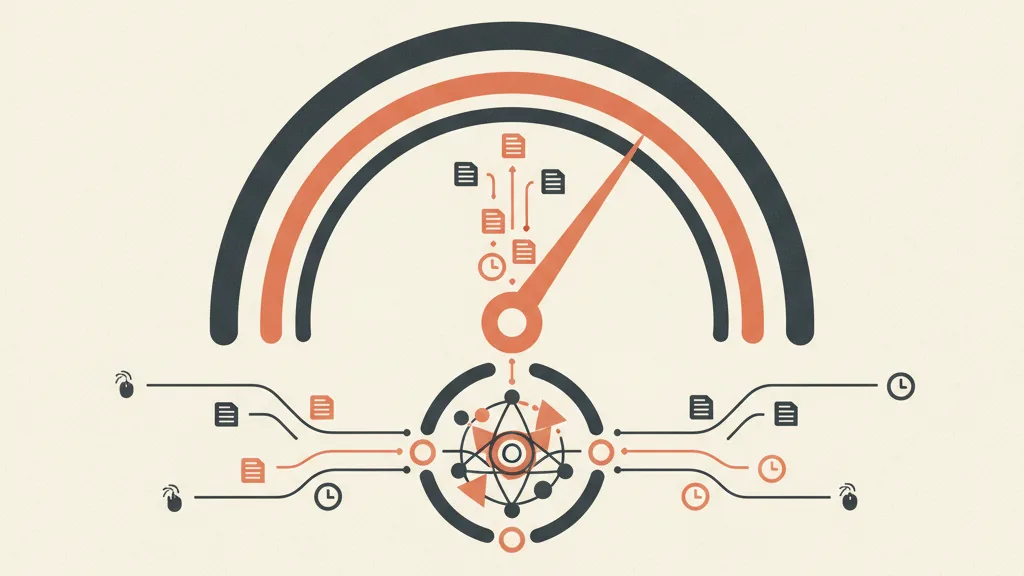
This is where the real shift happens. In the classic model, lead scoring is a table: +10 for an open, +20 for a click, +50 for a form fill. Fixed numbers, added up once. An AI agent flips the approach: it recalculates the score after every interaction, weighing three dimensions together.
Fit, behavior, and time
- Fit (who they are): industry, company size, role, market. Tells you whether they're really a potential customer for you.
- Behavior (what they do): which content they open, what they click, which pages they visit, how often, which topics they engage with.
- Time (decay): interest fades. A click today is worth more than a click from a month ago, and the score drops on its own if the contact goes quiet.
The difference from the static table is that AI weighs these signals in relation to one another. Three visits to the pricing page in 48 hours count differently than three visits spread over two months. Someone downloading advanced technical content signals a different intent than someone downloading an introductory guide. This is where AI-driven lead scoring outperforms hand-written rules: it catches combinations you wouldn't have anticipated and updates them in real time.
From score to action
A score only matters if it triggers something. The threshold that matters most is the handoff from MQL to SQL: once the score crosses a certain level, the lead stops being nurtured and gets passed to sales (or to an agent that books the meeting). Below the threshold, it stays in nurturing, but with content chosen based on its behavior. That way you avoid the two worst mistakes: pushing too early and letting someone who was already ready go cold.
How the AI agent personalizes the message
Lead scoring decides when. Personalization decides what. An AI agent doesn't pull from a library of five fixed emails: it chooses and tailors the message based on what the contact has actually done.
A few concrete examples:
- They've read two articles about "cost reduction" but none about implementation speed: the next message leads with savings, not speed.
- They visited a specific service's page: the follow-up brings a case study for that service, not a generic one.
- They've stopped opening emails for three weeks: the tone changes, the subject line gets more direct, the content gets shorter, maybe a different channel altogether.
This isn't about dropping a first name into the subject line. It's behavior-based personalization: topic, tone, example, even send time all adapt to the individual contact. Even sales follow-up stops being a one-size-fits-all reminder and becomes a message that's relevant to each person.
| Element | Static nurturing | AI-agent nurturing |
|---|---|---|
| Trigger | Fixed time (day 0, 3, 7) | Behavior and score threshold |
| Lead scoring | Fixed points, added once | Recalculated after every interaction, with decay |
| Content | Same for everyone | Chosen based on interests and stage |
| Channel | Email only | Email, WhatsApp, handoff to sales |
| Maintenance | Manual rewriting | The system learns and adapts |
Want to turn your nurturing sequences into a system that reads behavior and only passes truly ready leads to sales? Request an analysis of your current flow.
Multichannel orchestration: beyond email
B2B nurturing doesn't live in the inbox alone. A contact might barely open emails and then reply on WhatsApp within two minutes. An AI agent orchestrates the channels: it uses email for long-form content, switches to a WhatsApp message when a quick reply is needed or the lead is hot, and triggers sales once the score crosses the threshold. The rule isn't "send everything everywhere," but choosing the right channel for that contact at that moment.
For this to work, everything needs to flow into one place. The CRM is the system's memory: it logs every interaction, holds the updated score, and lets the agent decide the next move knowing the contact's full history. Without a single source of truth, personalization breaks down: each channel only sees a fragment.
How to build the sequence, in practice
A realistic path to get started without building an unmanageable system:
- Define your ideal fit. Before behaviors, establish who's a good lead for you (industry, size, role). This is what lets you weigh the score correctly.
- Map the signals that matter. List the actions that signal real intent: pricing page, demo request, bottom-of-funnel content. Not every click is worth the same.
- Set the MQL/SQL threshold. The score above which a lead leaves nurturing and moves to sales.
- Prepare content by stage, not by day. Educational material for those just starting out, proof points and case studies for those further along, objection handling for those close to a decision.
- Connect channels and CRM. Email and WhatsApp writing to the same CRM, so there's only one score.
- Let the agent adapt. Set goals and boundaries, then let it choose content, channel, and timing based on real behavior.
This flow is one piece of a broader customer acquisition system: generation brings in contacts, nurturing matures them, the CRM holds the memory, and sales closes. If one piece is missing, the others deliver less.
The metrics that tell you it's working
Don't stop at open rate. In B2B nurturing, what matters most is:
- MQL-to-SQL conversion: how many nurtured leads become real opportunities.
- Cycle length: good nurturing shortens the time between first contact and deal.
- Reply and booking rate: how many real conversations you generate, not how many emails get opened.
- Cost per opportunity: how much it costs you to carry a lead through to the sale.
If the score is well calibrated, you pass fewer leads to sales, but higher-quality ones, and the close rate goes up. That's the sign you've stopped wasting sales' time on contacts who weren't ready.
Where to start
You don't need to redo everything tomorrow. The first step is replacing time-based triggers with at least one strong behavioral signal (repeated visits to the pricing page, for example) and introducing a score that updates itself. From there, add content personalization and then multichannel orchestration. AI-first logic isn't a switch, it's a direction: every static piece you replace with one that can read behavior improves the result. If you want to see how it fits with the rest, start with the marketing automation fundamentals and then apply it to your own sales process.
Frequently asked questions
What is B2B lead nurturing?
It's the set of communications that guide a contact from first interest to the point where they're ready for a sales conversation. In B2B it spans long cycles (weeks or months) and multiple decision-makers, so it aims to educate and build trust, not sell immediately.
What's the difference between static and dynamic lead scoring?
Static scoring assigns fixed points to each action and adds them up once. Dynamic scoring, run by an AI agent, recalculates the score after every interaction, weighs signals against each other, and lets them decay over time if the contact goes cold.
Do you need AI to do B2B nurturing?
No, nurturing existed before AI. AI matters when you want to move past one-size-fits-all sequences: personalizing the message based on real behavior, updating the score instantly, and orchestrating multiple channels without hand-writing hundreds of rules.
How often should you send emails in a B2B nurturing sequence?
There's no fixed interval that works for everyone, and that's exactly the limitation of time-based sequences. The right cadence depends on behavior: active contacts can receive more, cooling ones need less frequency and a different tone.
How do you know when to hand a lead from marketing to sales?
With a score threshold at the MQL-to-SQL handoff. Once the score, which combines fit and behavior, crosses that level, the lead leaves nurturing and moves to sales or to an agent that books the meeting.
Which metrics measure whether B2B nurturing is working?
Beyond open rate, what matters is MQL-to-SQL conversion, sales cycle length, reply and booking rate, and cost per opportunity. Good nurturing passes fewer leads to sales, but more qualified ones.
If you want to design B2B nurturing driven by AI agents, from dynamic lead scoring to multichannel personalization, let's talk: we'll figure out together where to start.