Dormant Customer Reactivation: The Complete Guide to Monetizing Your Database with AI (2026)
9 min read · AstraLoop Studio
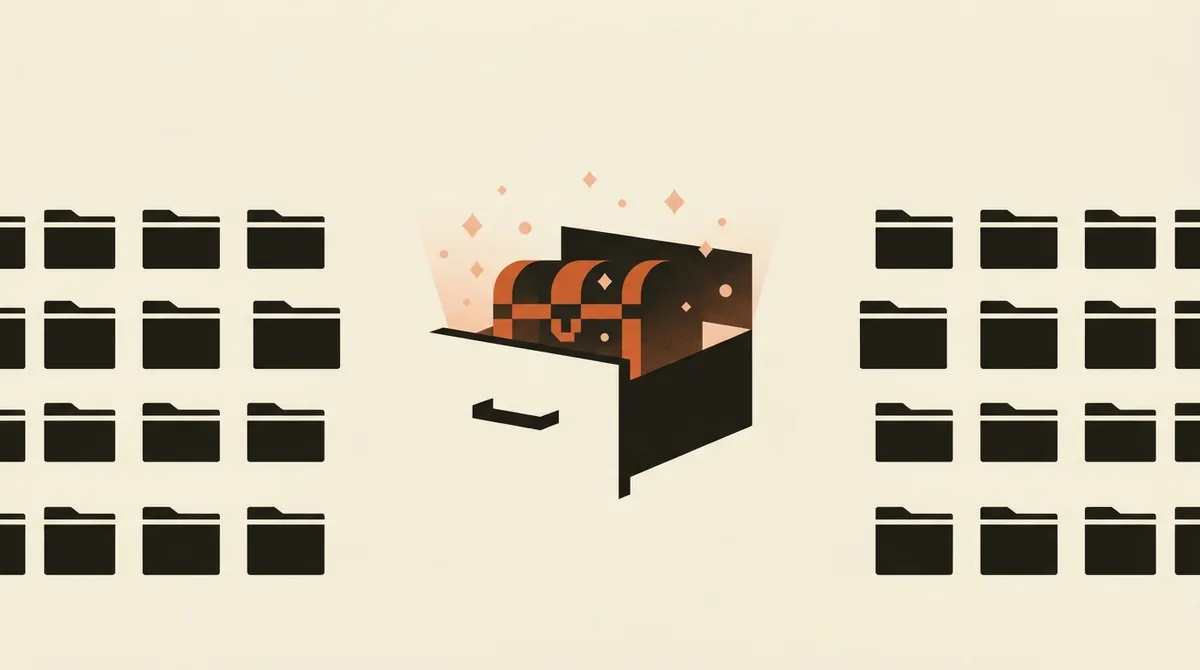
You have a database. Contacts collected over years of activity: customers who bought once and never came back, leads who left their email and then vanished, newsletter subscribers who haven't opened a message in months. For most Italian companies this list is a forgotten file in the CRM, treated as background noise. Yet it's the single most underrated asset you have.
The rule of thumb we see repeated across projects is blunt: roughly 40% of a mature business's revenue comes from people already on the list, not from new acquisition. And yet almost the entire marketing budget goes toward advertising aimed at strangers. In this guide I'll walk you through, step by step, how to reactivate a database of dormant customers with AI. Who these contacts really are, why the timing of your outreach matters more than you'd think, which channels to orchestrate, and how to do it without burning your domain or risking a fine from the data protection authority.
This is the flagship article of a broader series: every section links to a deeper dive if you want to go further on the operational details.
Who dormant customers are (and why they aren't lost)
A dormant customer isn't a lost customer. It's someone who knows you, who has already trusted you at least once, but has stopped interacting. That difference matters enormously: you don't need to build trust from scratch, you just need to remind them you exist and give them a reason to come back.
In practice, we split the database into layers:
- Active customers: purchased or engaged recently. Not the target of this work.
- At-risk customers ("about to sleep"): they're slowing down. They used to open your emails, now less. They used to buy every couple of months, now it's been longer. These are the easiest to win back, because they're still lukewarm.
- Dormant customers ("hibernating"): silent for months. They need a stronger incentive, but there's still a prior relationship to draw on.
- Cold or lost contacts: no interaction for over a year, sometimes two. Partially recoverable, but this is where regulatory constraints come into play, which we cover further down.
Understanding these thresholds is the first step. A dormant customer for a fast-moving ecommerce brand and one for a dental practice don't have the same shelf life, and defining that threshold operationally for your industry is part of the job. If you're still setting up how you collect and manage contacts, it's worth first understanding how to qualify leads in a structured way.
Why a customer stops buying
In most cases it's not because they're unhappy. It's because they forgot. They changed routine, received a competitor's offer at the right moment, or your communications simply stopped reaching them (landed in spam, changed email, silently unsubscribed). Only a minority leave because of an actual problem with the product or service. That changes everything: if 70-80% of your dormant contacts are simply distracted, the job isn't "persuading" them, it's "reminding them well".
The economics: why reactivation beats acquisition
Here's the heart of the matter, and the reason you should stop treating reactivation as "an occasional promotion" and start treating it as a financial lever.
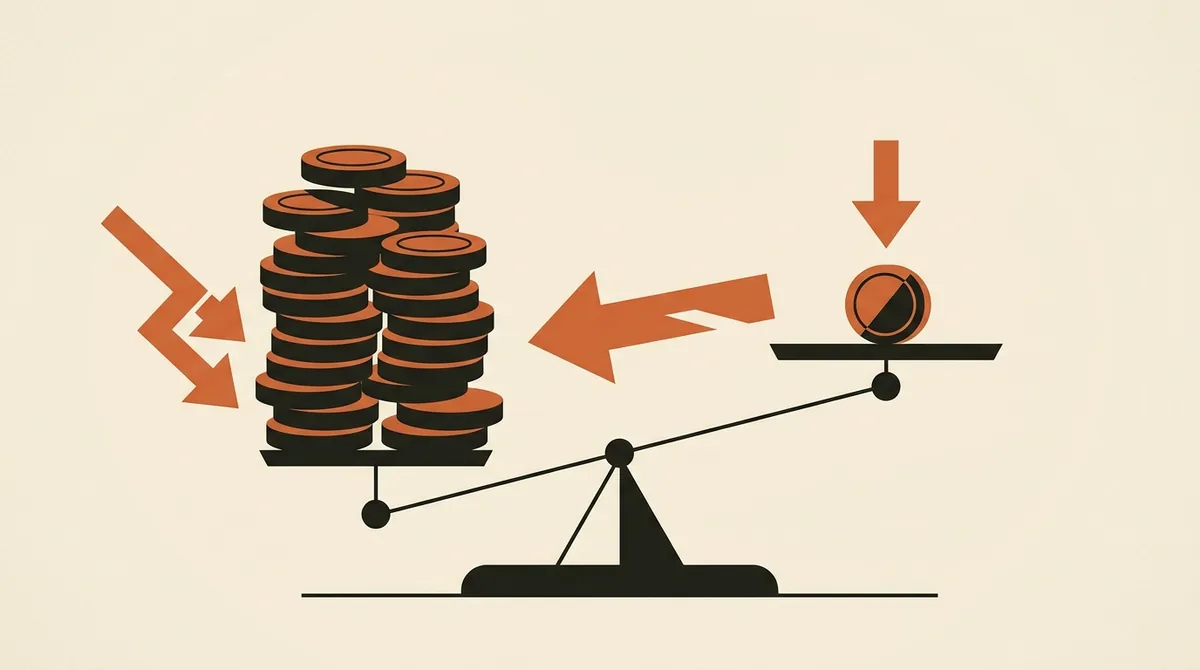
Reactivating a dormant customer costs, on average, 5-7 times less than acquiring a new one. The reason is simple: you've already paid the steepest cost, the one of getting known and earning that first bit of trust. The contact is already yours, the email is already on your list, consent (where required) has already been collected. You're not paying advertising to reach them.
| Item | New customer | Reactivated customer |
|---|---|---|
| Cost per contact reached | €7-12 (ads and staff time) | roughly €0.01-0.40 |
| Trust to build | From zero | Already there |
| Typical conversion rate | 1-3% | 10-25% on warm segments |
| Time to first revenue | Weeks | Days |
Let's run real numbers. On a database of 10,000 dormant contacts, a 10% recovery rate means 1,000 sales opportunities generated at essentially zero advertising cost. Even if only a fraction of those convert, the impact on revenue is immediate and the margin extremely high, because there's no acquisition spend behind it.
Here's the point almost nobody connects: reactivation lowers your average customer acquisition cost (CAC). When you recover revenue from people already on your list, the average cost of generating revenue drops and the ratio between customer lifetime value (LTV) and acquisition cost improves. This isn't marketing, it's finance. We go deeper on the numbers in what a lead really costs and in our comparison of customer acquisition strategies, because reactivation deserves a line in the budget right next to Google Ads and social, not an afterthought.
The method: from a messy list to an action plan
Reactivating doesn't mean blasting "we miss you!" to the entire list. Done that way, this approach burns your domain and annoys people. The serious method starts with segmentation and prediction.
RFM segmentation: knowing who to talk to
RFM stands for Recency, Frequency, Monetary: how long since a customer last bought, how often they used to buy, how much they've spent in total. Cross-referencing these three dimensions gives you actionable segments. The "loyal champion who's slowing down" deserves a very different message from the "occasional low-value buyer who's been dormant for a year".
Automated RFM segmentation lets you catch the about to sleep and hibernating groups before they become unrecoverable. It's the difference between acting in time and doing archaeology on a dead list. There are tools that do this automatically on your order history: if you want to know which ones, start from our overview of lead generation tools.
Churn prediction: talk only to who matters
The next step, finally made accessible by AI, is churn prediction. Machine learning models (typically Random Forest or Gradient Boosting) analyze past behavior and estimate the likelihood that a given contact is about to churn. That way you don't waste incentives and messages on everyone: you concentrate the most aggressive offer on high-churn-probability contacts and leave alone the ones who'd come back anyway.
You don't need to be a data scientist. The logic for a business owner is this: instead of firing blindly into the crowd, you send the right discount to the right person at the right time. This raises ROI and reduces deliverability risk, because you send fewer useless emails. If you want to see where AI fits into sales processes more broadly, our piece on business process automation with AI is worth a read.
The 60-90 day window
Timing is an underrated factor. There's an optimal window, roughly between 60 and 90 days of inactivity (it varies by industry), where the contact is still "warm" enough to respond but already cool enough to need a nudge. Wait too long and you're working uphill. Move too early and you annoy people who would have come back on their own. Defining your own window for your vertical is one of the first practical tasks.
Orchestrated channels: email, SMS, WhatsApp, AI voice
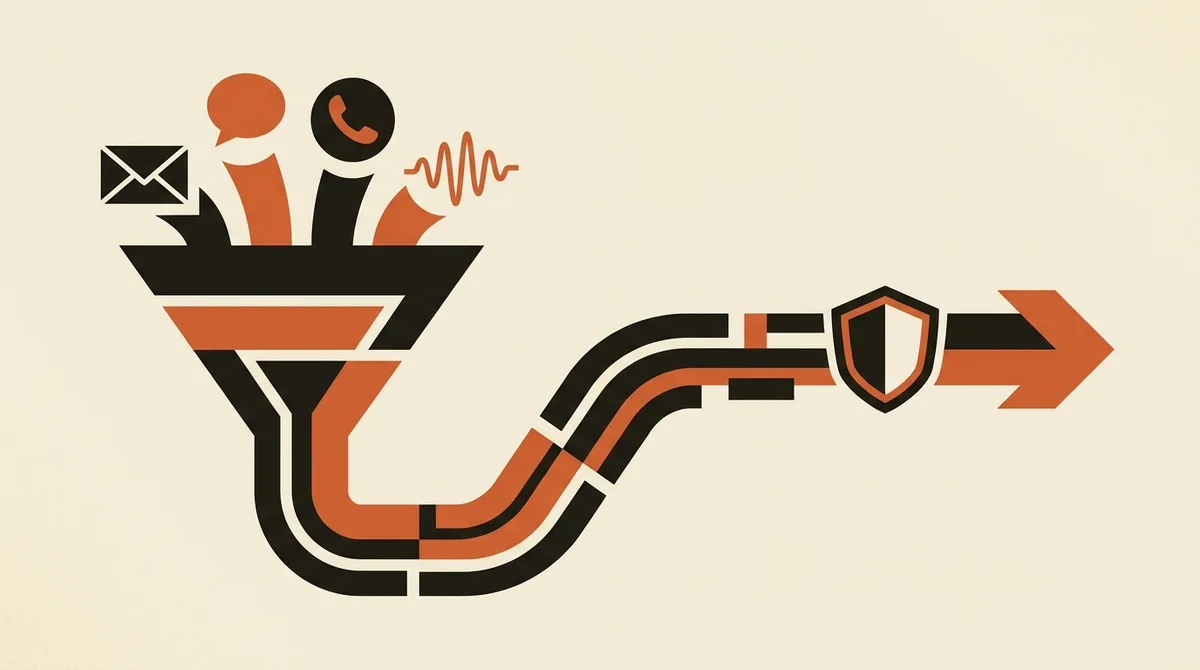
Here's the real step change in 2026, and the gap almost nobody closes: most content out there talks about one channel at a time. Effective reactivation, instead, orchestrates multiple channels into a single funnel, escalating intensity only toward those who don't respond.
Win-back email: the baseline
Automated "Are you still with us?" sequences remain the workhorse. One figure worth keeping in mind: automated sequences can generate up to 320% more revenue than a single broadcast blast, because they hit each contact at the right point of their cooling-off period instead of blasting everyone at once. The typical structure: a gentle reminder, social proof or news, an offer with an incentive, a final call with a deadline. To build the landing page that captures whoever responds, take a look at how to set up a lead generation landing page that converts.
SMS: near-guaranteed open rates
SMS has an open rate above 98%, a number no digital channel comes close to. Used well (short, with a clear incentive, with a direct link) on a dormant database it can produce triple-digit ROI. It should be used sparingly and only with valid consent, but as a sharp, focused strike on a selected segment it's one of the most powerful tools you have.
WhatsApp Business: the conversation
WhatsApp turns reactivation into a dialogue. Integrated with your CRM and landing pages, it enables automated conversations that qualify the contact and can go all the way to booking an appointment without human intervention. It's especially strong for services and local businesses, where the next step is a booking or a quote request rather than an immediate purchase.
AI voice agents: outbound calling that doesn't cost a fortune
The development that changes the math is the AI voice agent for outbound calling. An automated call costs around €0.40 versus €7-12 for a human agent, and on cold databases it registers positive response rates between 15% and 35%. That means you can call 10,000 dormant contacts at a cost that would be unsustainable with human agents. If you want to understand the technology behind it, read about AI agents for lead generation and how an AI voice assistant is structured.
The key is orchestration: start with the cheapest channel (email), then move only the non-openers to SMS or WhatsApp, and reserve the AI call for high-value segments who haven't responded. That way every contact gets the right level of intensity and you optimize spend. This logic ties directly into the principles of a good lead generation funnel.
Do you have a stagnant database that could generate revenue this month? Request an analysis of your list: we'll tell you how many contacts are recoverable and what the potential is.
GDPR compliance and deliverability: don't burn it all down
This is the section almost everyone skips, and it's the one that can wreck the entire effort. Reactivating badly isn't just ineffective: it can cost you a fine and the health of your domain.
The legal side, in practice
Preliminary note: the following is informational, not legal advice. For your specific situation, consult a professional. That said, here are the key points to know about EU Regulation 2016/679 (GDPR):
- Legal basis: to re-contact old contacts you need valid consent or a well-documented legitimate interest. Consent must be current, not collected years ago for a different purpose.
- Time window: as a rule of prudence, many practitioners consider a window of around 24 months since the last interaction reasonable for contacting someone without fresh consent. The reuse of data is touched on by EDPB (European Data Protection Board) guidelines; in Italy the relevant authority is the Garante per la protezione dei dati personali. Contacts that have been "dead" for 3-4 years should be handled with caution.
- Right to object: every communication must allow for simple, immediate unsubscribing.
This isn't just a matter for lawyers: it needs to be built into the marketing plan. The difference between a campaign that brings in revenue and one that brings trouble often comes down to these operational details. If you work in a regulated industry, this also connects to the 2026 AI Act and its obligations for SMEs.
2026 deliverability: the risk of burning your domain
Here's the other gap nobody connects to reactivation. When you take a list of dormant contacts and flood it with emails, many land on inactive mailboxes, in spam, or trigger complaints. The result: providers penalize your domain, and from that point on even emails to active customers stop arriving. You've burned the asset to recover a fraction of it.
The technical rules for 2026 you need to follow:
- DMARC authentication (alongside SPF and DKIM) properly configured on your domain. Without it, major providers filter or reject your mail.
- Spam rate under 0.3%: the threshold beyond which penalties kick in. It needs to be monitored.
- One-click unsubscribe that works and is honored quickly.
- Clean the list before sending: remove non-existent mailboxes and toxic contacts. Warm up sending gradually instead of starting with a blast to everyone.
The correct sequence is: clean the list, warm up the domain, send in growing segments starting with the warmest ones. Doing the opposite, a cold mass blast to the whole list, is the fastest way to destroy deliverability. It's also why churn prediction isn't a luxury: by sending only to the right contacts you automatically reduce technical risk.
Verticals: the method stays the same, the calibration doesn't
The method is the same, the calibration isn't. An ecommerce business has short repurchase cycles and high volumes: here automation and email matter most. A local business like a gym or a dental practice has fewer contacts but of higher value, and an AI call or WhatsApp with integrated booking pays off more. B2B and services work on long cycles and personal relationships: reactivation here looks more like a structured sales follow-up than a promotion.
If you want to see how these principles apply in specific contexts, our deep dives on lead generation for ecommerce, B2B lead generation, and real estate lead generation are useful, since database logic and follow-up intertwine with reactivation here too.
Where to actually start
If I had to boil the whole path down to five moves:
- Export and clean the database: gather orders, interactions, dates. Remove toxic contacts and dead mailboxes.
- Segment with RFM: identify the about to sleep and hibernating groups, the most recoverable ones.
- Apply churn prediction: focus incentives and effort on the contacts with the highest churn probability.
- Orchestrate the channels: start with win-back email, escalate to SMS, WhatsApp, or AI voice only for non-responders.
- Stay on top of compliance and deliverability: legal basis, time window, DMARC, spam rate, one-click unsubscribe.
None of these moves require an advertising budget. What they require is method, the right tools, and above all, orderly execution. And it's exactly that orderly execution where AI makes the difference: it automates the segmentation, prediction, and multichannel orchestration that would be impossible to do by hand across tens of thousands of contacts.
Database reactivation is the fastest, highest-margin way to grow revenue without increasing acquisition spend. The treasure is already sitting in your house. All you need is the method to open it.
Frequently asked questions
How much does it cost to reactivate a dormant customer compared to acquiring a new one?
On average 5-7 times less. With acquisition you pay advertising to reach strangers and have to build trust from zero; with reactivation the contact is already yours and already knows you. An AI voice agent call costs around €0.40 versus €7-12 for a human agent, and an email to a contact already on your list costs a few cents.
After how long is a customer considered dormant?
It depends on the industry, but the useful window to act is roughly between 60 and 90 days of inactivity. A fast-moving ecommerce brand has shorter thresholds, while a professional practice or a long-cycle business has wider ones. What matters is acting before the contact goes cold and becomes hard to recover.
Can I re-contact old contacts without risking GDPR fines?
You need a valid legal basis: current consent or a well-documented legitimate interest. As a rule of prudence, many practitioners consider a window of around 24 months since the last interaction reasonable; older contacts should be handled with caution. Every communication must allow for immediate unsubscribing. In Italy the relevant authority is the Garante Privacy. This is general information, not legal advice.
What is RFM segmentation and why does it matter?
RFM stands for Recency, Frequency, Monetary: how long since a customer last bought, how often they used to buy, and how much they've spent. Cross-referencing these dimensions gives you segments like 'about to sleep' and 'hibernating', so you send the right message to the right group instead of treating the whole list the same way. It's the first step to avoid wasting sends and incentives.
Can reactivating badly damage my emails to active customers too?
Yes, and it's the most underrated risk. A cold mass blast to the whole list generates spam complaints: providers penalize the domain, and from that point on even emails to active customers land in spam. You need to respect DMARC authentication, a spam rate under 0.3%, one-click unsubscribe, and cleaning the list before sending.
Which channels work best for reactivation?
None on its own: the key is orchestrating them. Start with win-back email (automated sequences generate up to 320% more than a broadcast blast), then escalate to SMS (open rate above 98%) and WhatsApp for non-responders, reserving the AI voice agent call for high-value segments. That way every contact gets the right level of intensity and you optimize spend.
Want to turn your dormant customers into revenue without spending on advertising? Let's talk: we'll build your AI reactivation funnel together, from segmentation to compliance.