Win-Back Email Sequences: 12 Examples That Reconvert Dormant Customers
9 min read · AstraLoop Studio
You have thousands of contacts who used to open your emails, click, maybe even buy. Then silence. They didn't unsubscribe, they just stopped thinking about you. And that's exactly where the cheapest revenue you can recover is hiding: reactivating a dormant contact costs 5-7 times less than acquiring a new customer, and it doesn't cost a cent in advertising.
The problem is that almost everyone handles these contacts in the worst possible way: a single mass send (the classic broadcast) with a generic discount, something like "we miss you, come back". It barely works and, done badly, can even burn your domain's reputation. Automated win-back sequences, the ones that trigger on their own based on each contact's behavior, generate up to 320% more revenue than a flat broadcast. It's not magic: it's the difference between talking to everyone the same way and talking to the right person at the right moment.
In this guide you'll find 12 concrete win-back email examples and a "Still with us?" 3-4 step sequence with a scaling incentive, the one that converts best in our experience. Ready-to-use copy, timing, and the technical precautions to keep you out of spam.
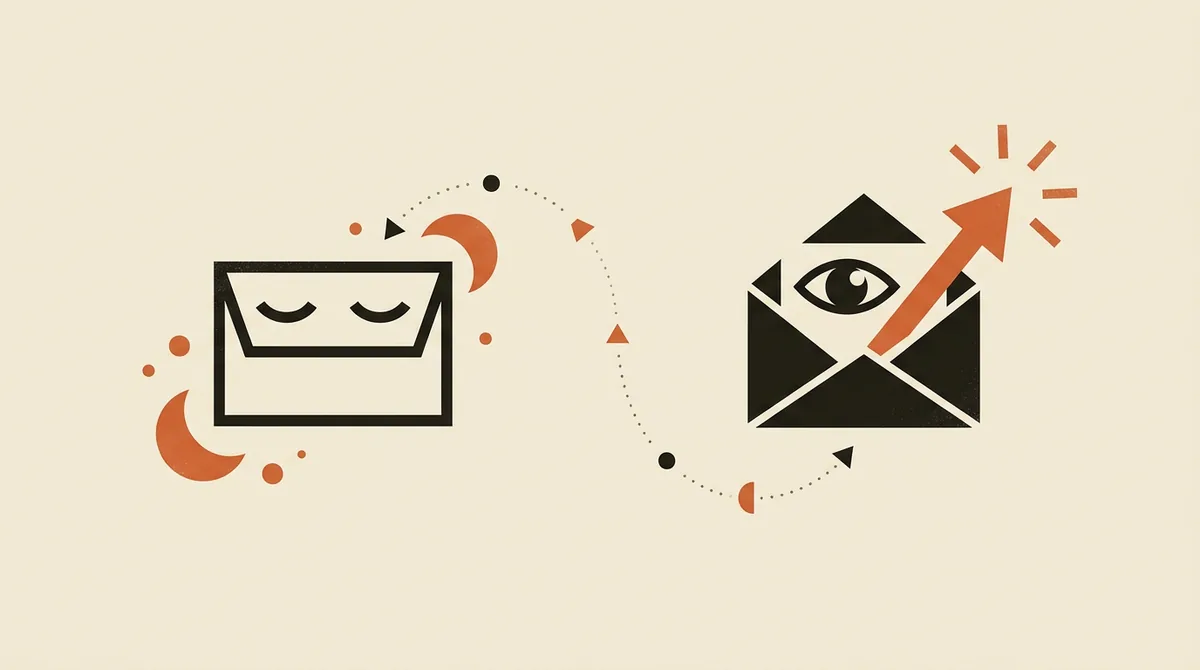
What a win-back email actually is (and isn't)
A win-back email is a message, or rather a series of messages, sent to contacts who used to be active and stopped being so. We're not talking about someone who just signed up, or someone who buys every week. We're talking about the segment RFM analysis calls "About to Sleep" and "Hibernating": people sliding toward the point of no return who need to be caught before they get there. If you want to start from the definition, we covered what a win-back email actually means in a dedicated piece.
The key difference is between broadcast and automation:
- Broadcast: you manually pick out the "dormant" contacts, write one email, send it to everyone at the same time. Simple, but blind. It ignores how long it's been since the last purchase, how valuable that customer was, what they looked at.
- Automation: you set a rule ("if a contact hasn't opened in 90 days, start this sequence") and the system sends the right messages at the right time, for every single person, forever. Zero recurring manual work.
That +320% comes from exactly this: automation reaches every contact at their peak reactivation window, not whenever it's convenient for you to hit "send".
The "Still with us?" 3-4 step sequence
This is the backbone we recommend in most cases. The idea is a scaling incentive: you don't fire off the biggest discount right away, you only raise it if the contact keeps ignoring you. That way you don't give away margin to people who would have come back anyway, and you keep a strong card in hand for the die-hards.
Step 1 (Day 0): the emotional reminder, zero discount
First email, no offer. Just an "are you still there?" that leans on the relationship and the value you provide. Plenty of people come back simply because they're reminded why they chose you in the first place.
Subject: "We miss you (really)" or "Everything okay? Haven't seen you in a while"
Body (example): "Hi [Name], we noticed it's been a while since your last visit. We just wanted to let you know that you're still at the center of what we do. In the meantime we've improved [concrete update: new collection, faster shipping, new service]. If you're up for it, take a look at what's new." Plus a single clear button.
Step 2 (Day 3-4): the first light incentive
If they haven't opened or clicked, the incentive comes in, but a modest one. A small discount, free shipping, a piece of valuable content (for B2B, a free consultation or audit works better than a discount).
Subject: "A little welcome back: -10%" or "Pick up where we left off?"
Body: a short reminder plus a 10-15% incentive with a clear deadline (7 days). The time pressure here is honest, and it works.
Step 3 (Day 8-10): the strong incentive plus real urgency
Whoever reaches this point is colder. Raise the stakes: your best discount, a bundle, or the strongest offer you're willing to make. With a real countdown.
Subject: "Last thing we'll ask: -25%, expires tomorrow"
Body: direct tone, a more generous offer, a real and near deadline. One single CTA.
Step 4 (Day 14): the "goodbye" and the list clean-up
This is the most underrated and most effective email. You tell them that if they don't respond, you'll stop writing to them. Paradoxically it reactivates plenty of people (nobody wants to lose something), and above all it's how you clean the list: whoever stays silent should be suspended from sends, because continuing to write to them damages your deliverability.
Subject: "Should we stop bothering you?" or "This is the last one, promise"
Body: "We don't want to clog up your inbox. If you're not into this anymore, that's totally fine: after this email we'll stop writing to you. But if you ever change your mind, we're here." Plus a clearly visible "Keep me subscribed" link.
Whoever doesn't react even to step 4 should be segmented and suspended. Not necessarily deleted, but removed from regular sends. That's the step that protects your domain, which we'll get to shortly.
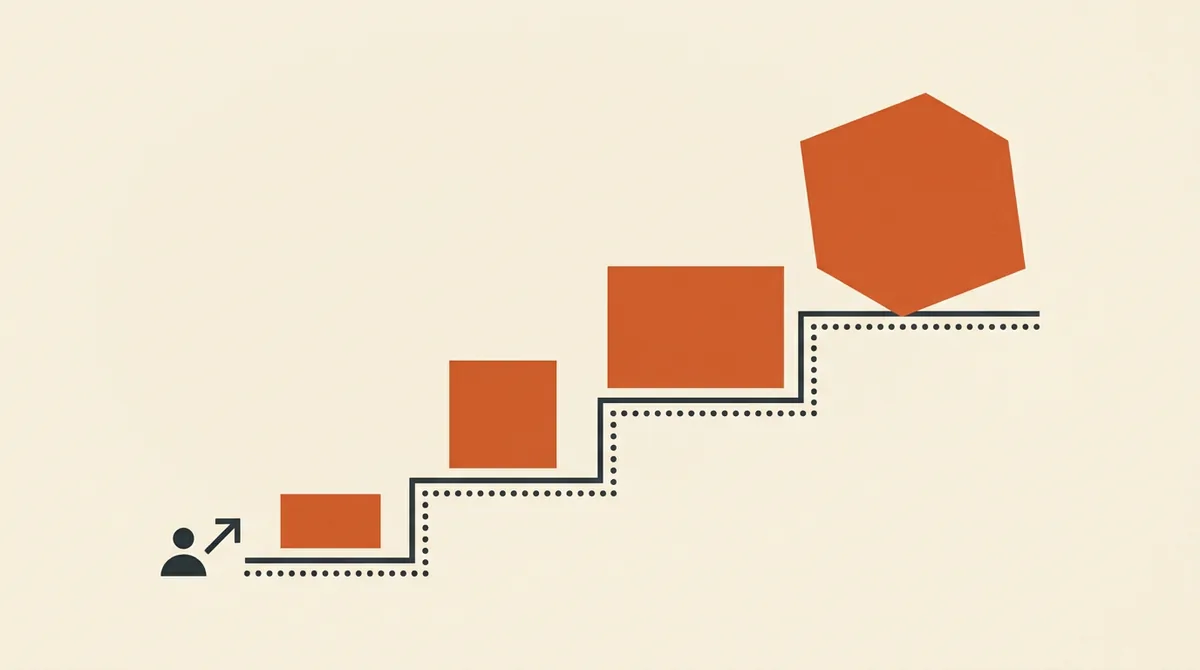
12 win-back email examples by context
The sequence above is the skeleton. Here are concrete angles and subject lines you can adapt, grouped by type of lever.
Emotional and relationship lever
- "We miss you": simple, human, zero discount. A photo of the team or the product, personal tone.
- "Is it something we did?": flips the perspective and asks for feedback. Great because it generates replies and reopens the conversation.
- "So much has changed since we last talked": lists 3 concrete updates. Works if you've genuinely improved something.
Incentive lever
- "A welcome-back voucher worth [X]": a personalized credit, not a generic percentage. A fixed credit converts better than an abstract discount.
- "Free shipping, just for you, this week": often the obstacle isn't the price but the shipping cost.
- "Unlock your -20%": gamification. The incentive "activates" with a click and boosts engagement.
Urgency and scarcity lever
- "Your cart is about to empty": for people who left products pending months ago.
- "Last day for the welcome-back offer": a real countdown, not a fake one.
- "We're about to remove your inactive account": the loss-aversion lever, powerful and honest if it's true.
Value and B2B lever
- "We've prepared a free audit for you": in B2B a discount barely matters, consultative value matters a lot. See how it works for reactivating dormant customers in B2B.
- "The case study you were waiting for": relevant content that reminds them why they followed you.
- "Shall we pick the project back up?": for leads who stalled mid-funnel. Direct, personal, often sent from a human address rather than a marketing one.
If you want to start from ready-made copy you can just paste in, we've put together a library of win-back email templates in Italian adaptable to your industry.
The number that changes your priorities: automated vs. broadcast
Let's line up the numbers, because this is where you decide where to invest your time.
| Aspect | Manual broadcast | Automated sequence |
|---|---|---|
| Revenue generated | Baseline | Up to +320% |
| Recurring work | High (redo it every time) | Zero (set it up once) |
| Timing per contact | Same for everyone | Personalized to behavior |
| Incentive | Fixed, wasted on the already-active | Scaling, dosed per contact |
| Deliverability risk | High (mass send to cold contacts) | Controlled (upfront segmentation) |
The +320% doesn't come from prettier emails. It comes from the fact that every contact gets the right message at their moment, and the incentive isn't wasted on people who would have come back for free anyway. It's also why reactivation is a financial lever, not a promotion: it lowers your average acquisition cost by recovering revenue you'd already paid for. You'll find the cost breakdown in reactivation cost vs. acquisition cost.
Want a win-back sequence that recovers revenue instead of burning your domain? Request an analysis of your dormant database: we'll tell you how many contacts are genuinely recoverable and at what estimated return.
Deliverability: don't burn your domain by reactivating badly
Here's the part almost nobody connects to reactivation, and it can turn a profitable campaign into a disaster. When you mass-email cold contacts, plenty won't open, some will mark it as spam, others have addresses that are long dead. Providers (Gmail, Outlook) read these signals and downgrade your domain. The result: even emails to your active customers end up in spam.
The rules have gotten stricter in recent years. Here are the technical requirements to meet:
- SPF, DKIM, and DMARC authentication configured correctly. Without it, bulk sends get penalized. If you don't know what these are, start with SPF, DKIM and DMARC explained.
- Spam rate under 0.3%. Above this threshold, providers punish you. This is exactly why step 4, the "clean-up" step, is essential.
- One-click unsubscribe, now mandatory for anyone sending at volume.
- Gradual warm-up: don't go from 0 to 10,000 emails in a day. Ramp up volume progressively.
This is exactly where the automated sequence protects you: it segments upfront, doses out sends, and suspends the silent contacts before they cause damage. If you're already having deliverability issues, read why emails end up in spam before launching any campaign.
GDPR: reactivating without risking penalties
You can't email anyone who's ever left you an address. European regulation (GDPR, EU Regulation 2016/679) and guidance from data protection authorities set real limits on contacting old contacts. In practical terms, without claiming to be legal advice:
- You need a valid legal basis: properly collected consent, or well-documented legitimate interest for existing customers.
- There's a reasonable time window: marketing to someone after roughly 24 months of total inactivity becomes hard to justify. Better to act before the contact has gone cold for years.
- Unsubscribing must always be simple and immediate.
This is something to build into the method, not hand off to legal at the last minute. We've written an operational guide on how to reactivate old customers while staying GDPR-compliant. For the regulatory details, the official source remains your national data protection authority.
How to get all this running without losing your mind
The technical side shouldn't hold you back. In practice, the flow looks like this:
- Segment your database with an RFM analysis to isolate recoverable dormant contacts. Start with what RFM analysis is if the term is new to you.
- Set up the sequence as 3-4 steps in your marketing automation tool. If you're still choosing a tool, compare options in marketing automation software in Italy.
- Connect other channels for contacts who don't open emails: an SMS has over 98% open rates, and more and more companies now orchestrate email, SMS, WhatsApp, and AI voice into a single reactivation funnel.
Email is the starting point, but modern reactivation is multichannel. This article is one piece of a bigger picture: if you want to see the whole system, from segmentation to channels to the economics, start with the complete guide to reactivating dormant customers in your database.
The "Still with us?" sequence is the simplest one to start with, and often the one with the highest ROI because it works on contacts you've already paid for. Set it up once, keep the technical side in good shape, and it will keep recovering revenue while you focus on everything else.
Frequently asked questions
How many emails should a win-back sequence have?
3 to 4 emails in most cases. One emotional step with no discount, one or two with a scaling incentive (from 10% up to 25%), and a final "goodbye" email that reactivates people through loss aversion and helps clean the list of contacts who are permanently inactive.
Is a single email better, or an automated sequence?
The automated sequence, without question. Automated sequences generate up to 320% more revenue than a single broadcast, because they reach every contact at their peak reactivation window and dose out the incentive instead of giving it away to everyone.
What discount should I offer in a win-back email?
Start low and only raise it if the contact doesn't react. Typically: no discount in the first email, 10-15% in the second, up to 20-25% in the third. In B2B, consultative value (a free audit or consultation) often works better than a discount.
Am I risking spam by emailing dormant contacts?
Yes, if you do it in bulk without precautions. You need SPF, DKIM, and DMARC configured, your spam rate kept under 0.3%, one-click unsubscribe, and suspension of contacts who stay silent after the final email. An automated sequence reduces this risk by segmenting upfront.
Can I legally email contacts who've been inactive for years?
With caution. GDPR and data protection authorities require a valid legal basis (consent or documented legitimate interest) and a reasonable time window: beyond roughly 24 months of total inactivity, sending becomes hard to justify. Better to act before the contact goes cold for too long.
How often should I send the sequence's emails?
A proven cadence is: day 0, day 3-4, day 8-10, day 14. This gives the contact room to breathe without disappearing, and concentrates the strongest incentive toward the end, when it's actually needed to move whoever hasn't reacted yet.
We'll set up the automated sequence for you end-to-end, from RFM segmentation to deliverability. Talk to us and let's assess the hidden potential in your list together.