Ad Creative Strategy in 2026: The Complete Guide to Formats, AI and Performance
8 min read · AstraLoop Studio
For years, creative was treated as the last step of a campaign: define the audience, set the budget, pick the placement, and finally, add "the image." The designer would hand over a nice file and the conversation ended there. In 2026 that sequence has flipped. Creative is no longer the campaign's outfit: it's the engine that decides who sees your ad, at what cost, and with what return.
The shift isn't philosophical, it's technical. With the full rollout of Meta's Andromeda system (live across most objectives and placements since October 2025), the platform has stopped targeting by interests and lookalikes and started reading the ad's actual content to figure out who to show it to. In practice: the creative has become the new audience. Anyone still thinking in terms of "interest stacks" and "3% lookalike audiences" is pulling levers the algorithm has stopped listening to.
This guide is the hub for our creative strategy cluster. Use it to get the full picture (why creative matters this much today, which formats to use, how to test them, how to produce them with AI at scale, and how to optimize them) and to navigate to the deep dives. The AstraLoop angle isn't "make prettier designs" — it's building a system that produces high-performing creative at scale, to drive real leads and customers into a measurable funnel.
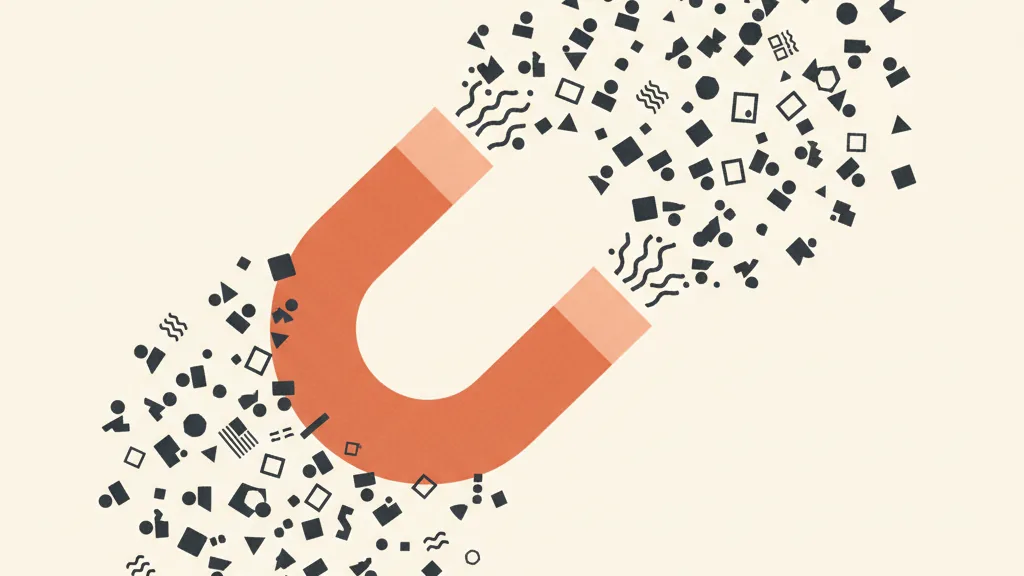
Why creative is the new audience
Until 2024, the competitive edge on Meta lived in targeting: whoever built the right audiences won. Then privacy changes (iOS, Consent Mode, the end of granular signals) eroded that edge, and Meta responded by moving the intelligence from targeting to delivery. Andromeda is a deep-neural-network retrieval engine that uses computer vision and semantic analysis to read what's inside your creative — who's on screen, the context, the message, the tone — and match it in real time to the individual user based on their behavioral signals.
The practical consequence is stark: the creative does the targeting. Interest layers and lookalikes no longer move performance the way they used to. According to a 1ClickReport analysis from April 2026, accounts that have internalized this shift are seeing ROAS 20-35% higher than those still running on legacy structures. Not because "the algorithm rewards them," but because they're feeding a signal-hungry engine enough distinct creative material to work with.
Here's the point that matters if you're a business owner or marketing lead: if the creative decides who you reach, then creative is an acquisition problem, not an aesthetic one. A "pretty" ad that's indistinguishable from ten others gives Andromeda nothing to latch onto. An ad that communicates a clear angle — price, quality, speed, a specific problem solved — becomes a strong signal the system can route to the right people. It's the same principle behind a good customer acquisition system: a single tactic isn't enough, you need a structured flow that feeds measurable results.
For the technical detail of what's changing under the hood, see our deep dive on what Meta Andromeda changes for creative. Here we stay at the strategic level.
Reframe creative: from aesthetic cost to acquisition lever
The right question is no longer "is this design nice?" but "does this creative bring me customers at a sustainable cost?" Those are two different worlds.
A creative judged as an aesthetic object gets evaluated on taste: colors, composition, brand consistency. A creative judged as an acquisition lever gets evaluated on numbers: how many people stop scrolling (thumb-stop rate), how many click (CTR), how many convert (CVR), and at what cost per result. Taste still matters — a sloppy design loses credibility — but it's a prerequisite, not the goal.
This reframe has three operational implications:
- Creative should be measured like a channel. Every concept is a hypothesis ("people buy for fast delivery") that the data confirms or disproves. Worth reading how to tell if a creative is performing instead of relying on gut feel.
- Volume matters more than the perfection of any single piece. Andromeda learns faster when you feed it many different angles. More on the numbers shortly.
- Creative is connected to the rest of the funnel. An ad that promises one thing and a landing page that tells a different story burns budget. Creative is the first link in a chain that runs all the way to the CRM.
This is where the "isolated design" approach fails and the systems approach wins. You don't need the best creative in the world: you need a flow that continuously produces, tests, and optimizes creative, feeding a funnel that turns clicks into qualified leads and then into customers.
The formats that work in 2026
There's no universal "winning format." There's the right format for a given product, audience, and stage of awareness. But some format families structurally outperform today, because they speak the language of the feed and give Andromeda clear signals.
UGC and UGC-style content
"User-generated" style content — a real person, a home setting, a spontaneous tone — remains the highest-performing format in paid social, because it doesn't look like advertising. It works because it breaks the scroll pattern: the eye recognizes a real person, not a photo studio. If you don't know where to start, what UGC ads are and why they work is the entry point.
Video with a hook in the first 3 seconds
In the feed you have a fraction of a second to stop the thumb. The structure of a converting video is almost always the same: strong hook, tension (the problem), solution, proof, call to action. Ad creative hook examples and the structure of video ads that convert give you ready-made templates.
Statics that communicate an angle at a glance
Static images aren't dead — far from it. A collage, a before/after, a visual comparison, or a card with clear-cut benefits communicate the angle instantly and are cheap to produce in many variants. Simple creatives that convert often beat elaborate productions precisely because the message lands faster.
Comparison and proof
The "us vs. them" format, featured reviews, numbers, and guarantees work because they reduce perceived risk. You don't need to invent a competitor: just honestly show why your solution solves the reader's problem better.
The cross-cutting rule: every format is a container for an angle. The format decides the shape, the angle decides the why. A good system keeps the two levels separate, so you can combine N angles with M formats and generate dozens of variants to test. For an overview of which format to use and when, see which Meta ad format to choose.
How many creatives you actually need (and why volume is strategic)
This is the part that surprises anyone coming from the old playbook. In 2026, the number of creatives isn't an operational detail: it's a performance lever in its own right.
The data is explicit. To properly feed the retrieval engine, experts recommend launching 10 to 15 conceptually distinct assets per Advantage+ campaign. Not 10-15 variants of the same ad: 10-15 different ideas, with different messages, different visual styles, different emotional triggers, different people on screen, different contexts and value propositions (price vs. quality vs. speed). It's conceptual diversity that gives Andromeda room to maneuver.
On testing cadence, the numbers are clear: brands that test more than 20 new ads per month see ROAS 65% higher than those testing fewer than 10 (2026 analysis). And there's a structural gap between winners and laggards: according to a 2026 Scaledon analysis, the top third of advertisers keep an average of roughly 395 ads live at once, versus 296 for the bottom third — a 33% gap.
To grasp the scale the system runs at: over a million advertisers used Meta's generative AI tools to produce 15 million ads in a single month. Andromeda was designed to handle exactly this volume. Anyone producing a handful of creatives is playing a different game from the one the platform is tuned for.
The uncomfortable conclusion for anyone producing by hand: at these volumes, artisanal production doesn't hold up. You can't commission 20 UGC videos a month from external creators without costs and timelines exploding. You need a production system. To size the numbers to your case, start from how many creatives per month you need on Meta and how many creatives per campaign on Meta.
Producing creative at scale with AI
Here the picture has changed radically in 18 months, and it's the core of the AstraLoop approach. AI production has made the volume Andromeda requires economically sustainable.
The numbers for traditional versus AI production are stark. A traditional UGC video typically costs between $200 and $2,000 per creator per video, with 1-3 week turnaround. AI-produced UGC costs from zero to roughly $50-100 a month in tool subscriptions, and a single person can produce 20-30 AI creatives a day. Quality has closed almost the entire gap: well-made AI UGC performs within 10-20% of the best real UGC, and with current tools most consumers can't tell a well-made AI UGC from a real one.
On the image side, generation models (Google's Nano Banana family, GPT Image and similar) produce product shots, lifestyle scenes, and format variants in seconds from a prompt or a photo. Text rendering on products, long the Achilles' heel, has become reliable in most cases. A typical workflow today: start from an ad that's performing, recreate it with your product, your colors, your fonts, and within minutes you have a new variant ready to test. To find your way around the models, see AI image generation tools for marketing and the deep dive on Nano Banana 2 for creative advertising.
But here's the warning we always give: AI multiplies volume, it doesn't replace strategy. Generating 30 random images a day just produces noise. The difference between a flow that brings customers and one that burns budget lies upstream — in the angles chosen, the brand voice, the link to the funnel. The value isn't "using AI," it's building a system that takes your strategic angles, turns them into dozens of on-brand creatives, sends them to test, and learns from the results. That's production at scale, not random generation. The difference between the two approaches is the same one that separates a well-built automation from a script that just spits out output: see how to produce ad creative with AI for the method, not just the tools.
Whoever combines AI production, a codified brand voice, and CRM integration stops thinking campaign by campaign and starts thinking in terms of an engine: a system that produces high-performing creative at scale and connects it directly to acquisition. It's exactly the kind of infrastructure we build, on the same logic as business process automation with AI.
Want an engine that produces high-performing creative at scale and connects it directly to customer acquisition, not one-off designs? Request an analysis of your case: let's map out how to set up the system together.
Testing creative: the method that separates the winners
Producing at scale without a testing method is like firing into the dark with more ammunition. Volume only helps if you can read which creatives work and why. With CPMs rising, creative is the highest-ROI variable on Meta in 2026 — it has to be tested systematically, not by gut feel.
The basic framework separates two things too many people conflate:
- Concept testing: tells you whether an angle works at all ("do people respond to the speed message?"). You test ideas against each other.
- Variation testing: tells you which version of an already-validated angle performs best. You test variants of the same concept (headline, hook, opening).
They need to run separately, with even budgets per variant (ABO structure), otherwise results get mixed together and you learn nothing. The full method is in the creative testing method for ads and how to test creative on Meta ads.
The numbers behind the decisions
To reach statistical significance on a conversion metric, each variant needs roughly 50 conversions. Don't make important decisions below 80% confidence, and for major budget calls push toward 95%. Below those thresholds you're reading noise, not signal.
The metrics that matter, in order
Engagement metrics anticipate conversion metrics. In practice, read the signals in this sequence:
- Thumb-stop rate: does the creative stop the scroll? It's the first filter. If it doesn't stop the thumb, nothing else matters.
- Hook retention: how many people make it past the video's first 3 seconds.
- CTR: does interest translate into clicks?
- CVR and cost per result: does the click become a customer at a sustainable cost?
Engagement signals (thumb-stop, hook retention, CTR) arrive within days; conversion results typically take 1-2 weeks, the time the algorithm needs to optimize delivery. A creative test needs at least 7 days, ideally 10-14. For the full metrics picture, see the Meta ads KPIs that really matter.
Spotting creative fatigue
A winning creative doesn't stay a winner forever. The classic warning sign: when frequency climbs above 2-3 on cold audiences and CTR drops at the same time, you're watching creative fatigue happen in real time. Replace a creative once frequency exceeds 4.0 or CTR drops more than 20% over two weeks. Watch out: ROAS is often the last metric to show fatigue. By the time ROAS drops, you'd already been losing efficiency for days. That's why monitoring the leading indicators — not just the final result — is what separates people who optimize from people who chase.
Scaling and optimizing without breaking what works
Once you've found a winning creative, the instinct is to pump budget. That's the most common mistake. Scale incrementally: 20-30% increases every 3-5 days, never double overnight. Too sharp an increase throws the ad set back into the learning phase and disrupts delivery.
Campaign structure, in the Andromeda era, runs opposite to the old playbook: fewer ad sets, more creatives per ad set. Fragmenting budget across many campaigns slows the algorithm's learning. Simplifying the structure and concentrating the budget, letting creative diversity do the work, almost always beats complicated architectures. If you're losing budget and can't tell where, start with common Meta ads mistakes and the creative mistakes that kill performance.
Optimization, though, doesn't end in Business Manager. A creative can drive plenty of clicks and few customers: the problem isn't the creative, it's what happens after. The landing page, lead qualification, follow-up speed, and the CRM determine how many of those clicks turn into revenue. This is where the loop closes: creative is the first link in a customer acquisition funnel that has to hold up all the way through. Optimizing only the creative while ignoring the rest is like putting better fuel in an engine that's leaking oil.
Putting it all together: from creative to acquisition
Let's recap the picture, because it's the whole point of this hub. In 2026, ad creative is a system with five interlocking components:
- Angle strategy. Before aesthetics comes the why: what problems you solve, for whom, with which levers (price, quality, speed, status). This is where ad creative ideas come from.
- The right formats. The container that gives the angle its best shape for the feed (UGC, hook-driven video, comparison statics).
- AI production at scale. The engine that turns angles into dozens of on-brand creatives at sustainable cost, feeding the volume Andromeda requires.
- Systematic testing. The method that separates winners from losers on numbers (thumb-stop, CTR, CVR, 50 conversions per variant), not gut feel.
- Optimization and funnel integration. Scaling winners, managing fatigue, and connecting clicks to the CRM so they become customers.
There's one common thread: creative isn't an isolated output, it's the entry point of an acquisition system. Whoever treats it as "nice design" keeps judging it on taste and falls behind. Whoever treats it as an acquisition lever measures it, produces it at scale, and connects it to the funnel — turning ad spend into a predictable flow of leads and customers.
If you want to see how creative fits into a complete journey, from attraction all the way to the sale, the reference hub is B2B lead generation. From there the natural next step is custom CRM for SMBs, where the leads your creative generates become customers managed in a structured way. Creative opens the door; the system brings people in and walks them through to the signature.
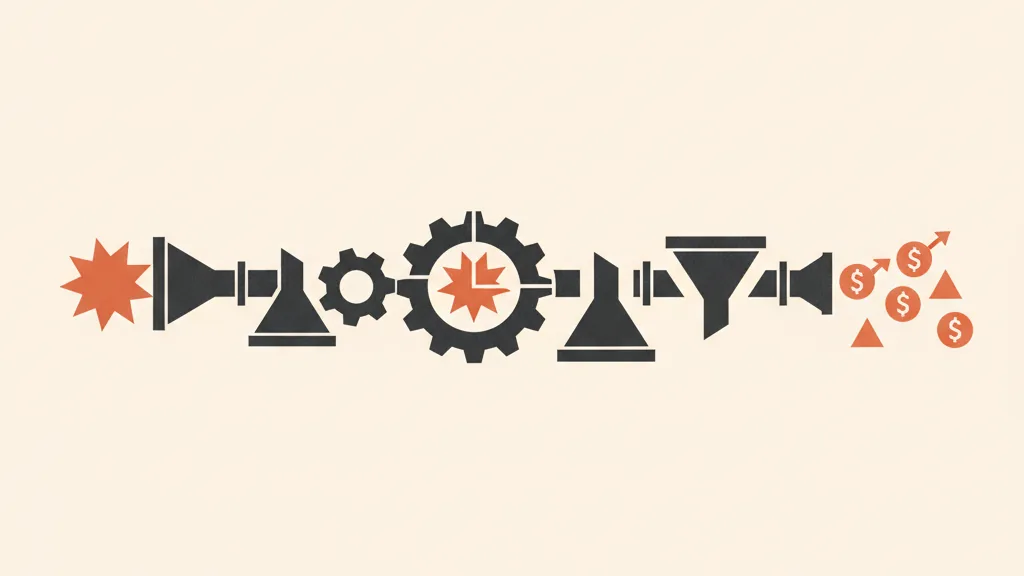
This article is the map. Every section has its own deep dive in the cluster: use them to go deeper on whatever piece you need right now, whether that's choosing a format, setting up your first test, or building the production engine. The principle, though, holds at every level: in 2026, the winners are the ones who stop producing designs and start building a system that generates high-performing creative at scale.
Frequently asked questions
What does it mean that creative is the new audience?
It means Meta's Andromeda system no longer targets by interests or lookalikes — it reads the content of your creative (people, context, message, tone) and matches it to the right users in real time. The ad itself determines who you reach: that's why creative, not audience, is now the primary acquisition lever.
How many creatives should I be producing per month for Meta in 2026?
Experts recommend 10-15 conceptually distinct assets per Advantage+ campaign and a testing pace of more than 20 new ads per month: brands that clear this threshold see ROAS up to 65% higher than those testing fewer than 10. The exact number depends on budget and industry, but the logic is clear: you need conceptual diversity, not minor variants of the same ad.
Can AI really replace creators for UGC?
Almost. AI-produced UGC performs within 10-20% of the best real UGC, and most consumers can't tell the difference. It costs from zero to about $100 a month versus $200-2,000 per video for a creator, and one person can produce 20-30 a day. But AI multiplies volume: the strategy (angles, brand voice, funnel connection) stays human and upstream.
How do I know if a creative is actually working?
Read the metrics in sequence: first thumb-stop rate (does it stop the scroll?), then hook retention and CTR, finally CVR and cost per result. Engagement signals arrive within days; conversion takes 1-2 weeks. To decide with confidence you need roughly 50 conversions per variant and at least 80% statistical confidence.
When should I replace a creative?
When frequency exceeds 4.0, or when CTR drops more than 20% over two weeks. An earlier warning sign: frequency climbing above 2-3 on cold audiences while CTR falls. Don't wait for ROAS to crash — it's the last metric to signal fatigue, so by the time it drops you've already been losing efficiency for days.
Is creative alone enough to bring in customers?
No. Creative is the first link: it drives clicks, but how many become customers depends on the landing page, lead qualification, follow-up speed, and the CRM. Optimizing only the creative while ignoring the rest of the funnel wastes budget. Results come when creative is integrated into an acquisition system that carries the contact all the way to the sale.
If you're spending on ads but the creative isn't bringing in real customers, let's talk: we'll analyze your funnel from creative to CRM and tell you exactly where to step in.