Creative Testing: How to Test Ad Creatives Without Burning Budget
8 min read · AstraLoop Studio
Budget doesn't get burned when you test too many creatives. It gets burned when you test them without a method. You launch five variants at once, kill three of them after a day because "they're not performing," scale the one with the highest CTR, and two weeks later your cost per acquisition has doubled. Lots of spend, zero learning.
In the Andromeda era (the engine Meta uses to decide who sees what) creative has become the real targeting lever. You no longer choose the audience in fine detail — you hand the algorithm a set of creatives and it finds the right people for each one. That flips the rules of testing. You still need volume, sure, but volume without structure teaches you nothing. Here's a repeatable method for isolating the variables that matter, setting objective thresholds, and reading the data in the right order, without setting your money on fire.
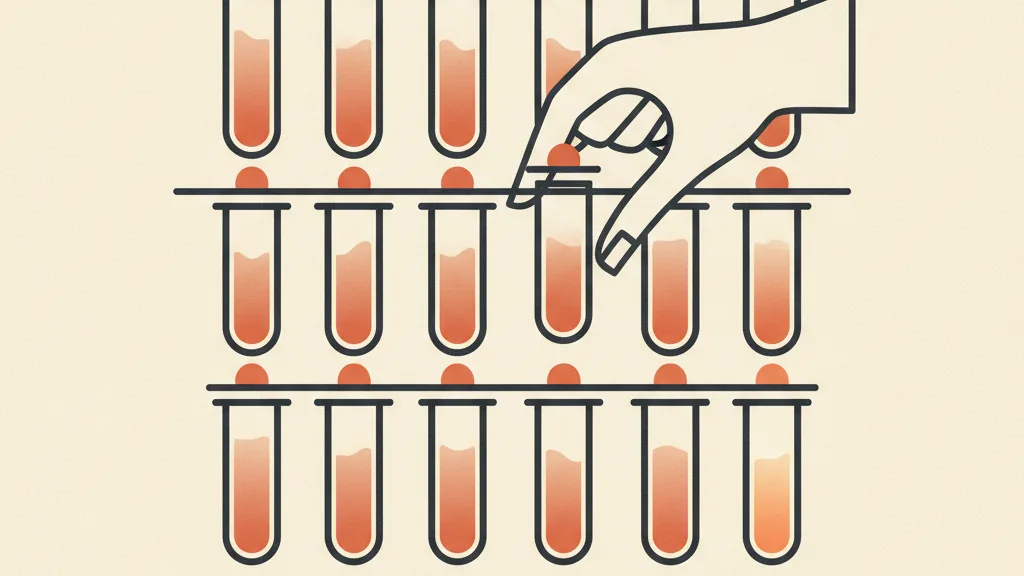
Why creative testing has changed
For years, creative testing was a textbook A/B split: two near-identical ads, two small separate audiences, wait for the winner. That worked when you set the targeting yourself. Today the machine sets it, and the machine performs better when you give it many different creatives to choose from. If you try to cage everything into micro-tests with tiny budgets, the algorithm never leaves the learning phase and your data stays noise.
Then there's the opposite temptation: throw in dozens of random creatives and "let the algorithm decide." Maybe some sales come in that way, but you don't know why. You don't know which angle, which hook, or which format worked, so you can't replicate it. That's exactly what the method is for: generating volume while still bringing home something reusable. For the bigger picture, start with our complete guide to ad creative; here we go deep on testing alone.
The three mistakes that burn budget
Before the method: the three most common ways to throw money away. Recognizing them is already half the job.
- Testing too many things at once. You change the angle, format, hook, and CTA in the same variant. If it wins, you don't know what won — attribution was lost from the start.
- Killing it too soon. You pull a creative after 24 hours because CPA is high, but it was still learning. You're reading noise, not signal.
- Watching the wrong metrics. You scale based on CTR because "it's high" and ignore that it isn't driving conversions. CTR is a clue, not a verdict.
For a longer list of pitfalls, we've rounded up the mistakes that kill creative performance.
Isolate one variable at a time (in the right hierarchy)
Testing means changing one thing at a time and attributing the difference to that thing. But not all variables carry equal weight, so it pays to move top-down, from the biggest lever to the smallest detail.
- Angle and message. The most powerful lever. Problem, benefit, social proof, price-offer, urgency: this is where a campaign is won or lost.
- Format. UGC video, static, carousel, collage. Same message, different container.
- Hook. The first three seconds of the video or the headline of the static. Change only the opening and keep everything else fixed.
- Details. CTA, colors, music, subtitles. Fine-tuning, small impact.
The golden rule is simple: don't start optimizing the button color if you haven't found the angle that works yet. Every euro spent on details before the message is validated is a wasted euro.
With mature campaigns, perfect isolation is hard — you can't launch twenty separate tests. The practical solution is to test in batches, by hypothesis. Instead of "creative A versus creative B," put three variants of the problem angle up against three variants of the social-proof angle, each with clear naming (for example angle_format_hook_version). The algorithm selects, you read which group worked and why.
Set your thresholds before you launch
The keep-or-kill decision has to be made against a number decided in advance, not on gut feel while you stare at the dashboard. Otherwise optimism keeps your losers alive and panic kills your winners. Here are the reference thresholds.
| What you want to read | Minimum threshold before deciding |
|---|---|
| Fast signals (hook rate, CTR) | roughly 1,000-2,000 impressions per creative |
| Conversions (CPA, ROAS) | spend equal to 1-2x your target CPA, or around 50 conversions to exit the learning phase |
| Time | at least 3-4 days, never judge within the first 24-48 hours |
The 50 conversions per ad set per week is the threshold Meta itself points to for delivery to stabilize. Below that number, costs swing too much to draw conclusions. If your volume doesn't let you get there on every variant, test fewer creatives at a time with sufficient budget each, rather than more with crumbs. On this point we have a deep dive on how many creatives to produce and test each month.
One last word of caution: even once you hit the threshold, small differences can just be down to chance. If two creatives land at a CPA of 18 and 19 euros, you don't have a winner, you have a tie. Before declaring one variant better than another, look for a clear gap (say 20-30% or more) and always be wary of samples that are too small.
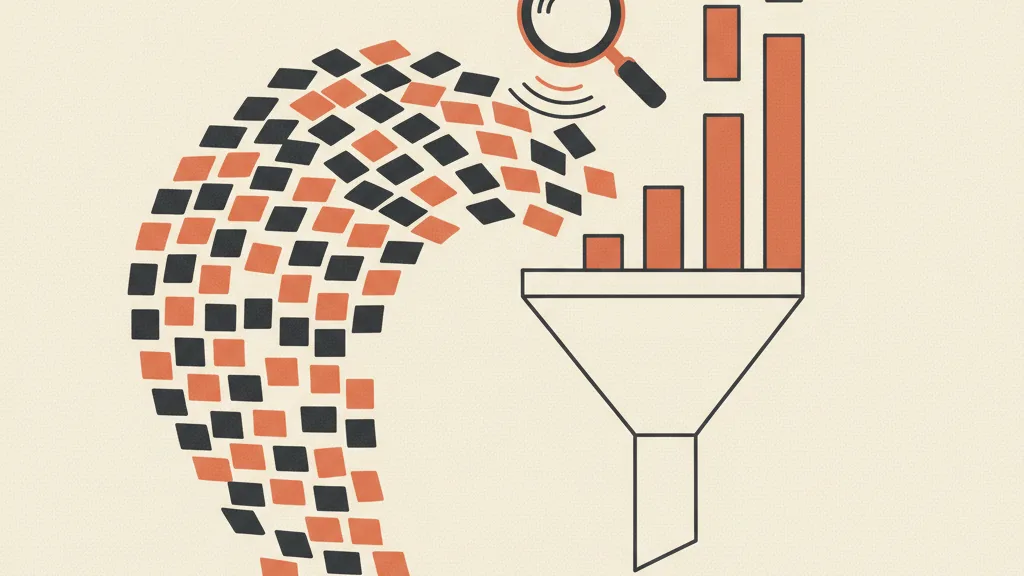
Read the data in the right order: fast signals and slow signals
Not every metric matters at the same moment. Split them into two groups.
Fast signals (leading). They show up after a few thousand impressions and tell you whether the creative grabs attention: hook rate (3-second views divided by impressions), hold rate (who makes it to 15 seconds or to thruplay), outbound CTR, thumbstop ratio. As rough benchmarks, a hook rate above 25-30% and an outbound CTR above 1% (ideally over 2% on cold traffic) are good starting points, though they vary a lot by industry.
Slow signals (lagging). They need conversions and tell you whether the creative actually sells: CPA, ROAS, conversion rate. They're the final verdict, but they arrive late.
The logic is simple: fast signals tell you whether the creative grabs attention, slow ones tell you whether it converts. A creative can have a great hook rate and a terrible CPA (it grabs attention but doesn't sell), and in that case the problem usually isn't the creative but the offer or the landing page. We've dedicated a guide to how to really tell if a creative is performing and another to the Meta metrics that actually matter, so you don't drown in useless numbers.
Cross the two dimensions and you get a decision matrix that removes all ambiguity.
| Low CPA | High CPA | |
|---|---|---|
| High CTR | Winner: scale it | Strong hook, weak conversion: fix the offer and the landing page |
| Low CTR | Efficient but niche: keep and monitor | Loser: kill it |
Want a system that produces the volume of creative Andromeda demands and puts it to the test with a real method? Talk to us: we'll analyze your account and set up your first test cycle together.
Turn testing into a repeatable loop
A single test is useless if it doesn't feed the next one. Creative testing works as a cycle, which is exactly why it's worth treating as a system rather than a series of disconnected attempts.
- Hypothesis. What you believe works, and why. For example: "the problem angle beats the benefit angle because our audience doesn't yet know it has that problem."
- Production. You generate the variants needed to test that hypothesis, not every idea that crosses your mind.
- Structured test. You launch in batches, with naming and thresholds set in advance.
- Reading. Once the threshold is hit, read the fast signals first, then the slow ones.
- Documentation. Write down what you learned in a playbook: winning angles, hooks, and formats become reusable assets.
- Scale and relaunch. You scale the winners and shape the next hypotheses.
This is what it means to treat creative as a loop: every round starts more informed than the last. Whoever documents the learnings stops starting from zero on every campaign, and cost per acquisition drops because new creatives are already built on validated ground.
Volume and method: the knot at the heart of the Andromeda era
There's a tension to resolve here. Andromeda rewards volume: many creatives, refreshed often, because the algorithm needs fresh material to find new audiences. We explain exactly what changes in what Andromeda changes for creative. The method you just read, though, demands rigor, and rigor seems to slow production down.
The bottleneck today isn't distribution (the algorithm handles that) or analysis (thresholds simplify that for you): it's production. You need to generate enough variants on defined angles and hooks to keep the engine fed without dropping quality. This is where AI and automation make the difference: you can produce creatives with AI starting from already-validated hooks and angles, and connect everything into a flow that generates, names, and organizes the variants on its own. It's the same principle we apply when helping a company automate its processes with AI: strip out the repetitive work and leave only the decisions to the human.
Volume without method is waste. Method without volume is too slow for Andromeda. The sweet spot is a system that produces a lot but tests with structure, so that every batch of creatives is both fuel for the algorithm and an experiment that teaches you something.
In short
Testing without burning budget doesn't take more money, it takes more method: isolate one variable at a time starting with the angle, set thresholds before you launch, read fast signals before slow ones, and close the loop by documenting what you learned. Run the loop enough times and cost of acquisition drops on its own, because you stop guessing and start knowing.
Frequently asked questions
How much budget do I need to test a creative?
For fast signals alone (hook rate, CTR), roughly 1,000-2,000 impressions are enough. For a verdict on conversions you need more: spend equal to 1-2x your target CPA, or enough to get close to the 50 conversions that take the ad set out of the learning phase. Below that threshold, the data swings too much.
How many creatives should I test together?
It depends on the budget available. The practical rule is 3-5 at a time, organized into batches by hypothesis, with enough budget for each to exit the learning phase. Better to test a few creatives well than many funded with crumbs, because in that case you learn nothing reliable.
How long before I can kill a creative?
Never within the first 24-48 hours: you'd be reading noise. Wait at least 3-4 days and until you hit the spend or conversion threshold you set beforehand. Killing a creative still in the learning phase skews the test and makes you throw away potential winners.
Which metrics should I look at first?
First the fast signals (hook rate, hold rate, CTR) to see if the creative grabs attention. Then the slow signals (CPA, ROAS) to see if it actually sells. Never decide on CTR alone: a high click rate without conversions often signals an offer or landing page problem, not a winning creative.
In the Andromeda era, does an isolated A/B test still make sense?
Perfect isolation is hard with mature campaigns, where the algorithm distributes on its own. The modern approach is to test in batches by hypothesis (for example three variants of one angle against three of another), labeled with clear naming. You leave the selection to the algorithm, but you stay able to attribute the learnings.
How do I produce enough creatives to sustain the volume?
The bottleneck today is production, not distribution. The solution is a process (often AI-assisted) that generates variants from already-validated angles and hooks and organizes them automatically. That way you feed the volume Andromeda demands without giving up method and quality.
Tired of burning budget on disorganized tests? Request an analysis of your account: together we'll build the creative production and testing loop that fits your case.