How Many Creatives Does a Meta Campaign Need in 2026
8 min read · AstraLoop Studio
The old rule was convenient: three ads per ad set, let them run, Meta picks the winner. It worked because targeting did the heavy lifting, and creative was just a detail. In 2026 that logic is dead. With Advantage+ now the default structure and the Andromeda retrieval engine running the show, it's the creative that decides which audience you reach — not your targeting panel anymore.
That raises a very concrete question we hear almost every week: how many creatives does a Meta campaign actually need today? The short answer is 10-15 distinct concepts per campaign, refreshed at a steady pace. The long answer — the one you need to plan without blowing your budget or your hours — is this whole article.
Below: the right number based on spend, the difference between a "concept" and a "variation" (where almost everyone gets it wrong), and how to produce that volume with AI while keeping quality and brand consistency.
Why the number changed: from targeting to creative
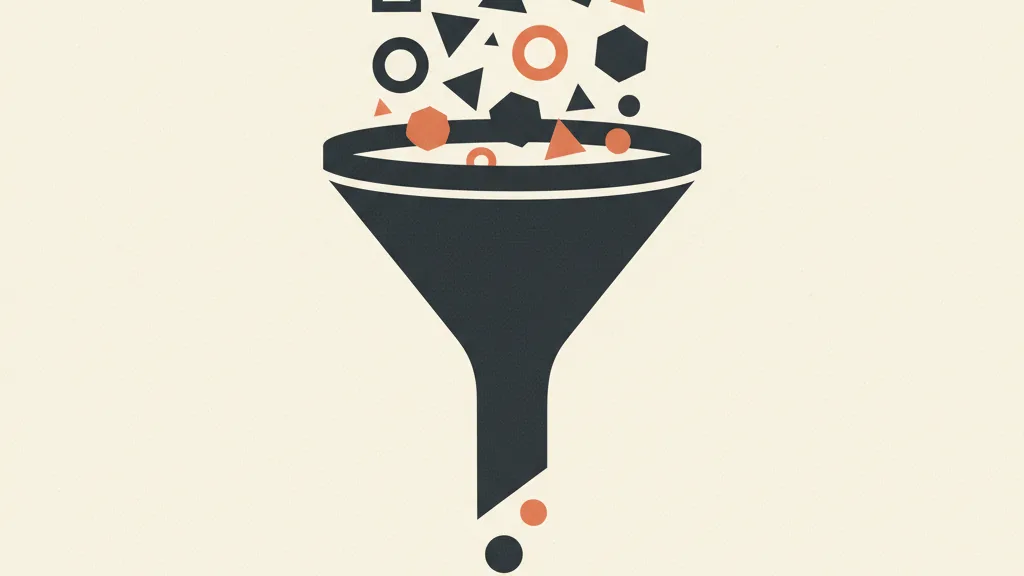
To understand the number, you first need to understand what Andromeda does. It's the retrieval engine Meta introduced in late 2024 and that in 2026 runs Advantage+. Simplifying Meta's own engineering documentation: when an auction fires, Meta has tens of millions of candidate ads. Andromeda is the first stage — the one that filters that entire mass down to a few thousand relevant ads, before the ranking models decide what to actually show you.
The practical consequence is huge. Andromeda doesn't just look at your targeting settings — it reads the content of the creative (image, hook, format, context) to decide which user it makes sense to show it to. In practice, the creative has become your new audience. An ad with a "save time" hook and one with a "status" hook get pushed toward different people, even if the product is identical. If you only have one, you're talking to a single slice of the market.
That's why volume matters. The more different concepts you upload, the more "hypotheses" you give the system to test, and the more audience segments it can explore. It's the same principle behind how Advantage+ works: less manual control, more creative material for the algorithm to chew on. For the full picture of this shift, we covered it in what changes with Andromeda for creative.
Concept vs. variation: the distinction worth your money
This is where 90% of campaigns trip up. Before we get to the numbers, you need to internalize this difference — otherwise you'll read them backwards.
Andromeda organizes ads into a hierarchical index and groups them by semantic similarity. Ads that look alike land in the same cluster and get a single internal identifier (what practitioners call an "Entity ID"). Here's the brutal part: 50 nearly identical ads can end up with just one ticket to the auction.
What does "nearly identical" mean to the algorithm? If you only change the headline color, swap one word in the copy, or change the background music, Andromeda treats it as the exact same concept. It merges them and treats you as if you'd only uploaded a single ad.
A distinct concept, on the other hand, meaningfully changes at least one of these levers:
- Angle / pain point: saving time, fear of getting it wrong, desire for status.
- Persona: the new parent, the 45-year-old professional, the student.
- Format: talking-head UGC, product still life, educational carousel, meme.
- Setting and visual context: home, office, urban outdoor, clean studio.
- Emotional lever: humor, urgency, social proof, authority.
When you change setting, storytelling, and visual language together, you generate a new Entity ID: fresh learning and access to new pockets of audience. Your real goal, then, isn't "how many files do I upload" but how many distinct Entity IDs can I generate. It's a mindset shift that flows downstream into your entire creative production process.
In one sentence: 15 cosmetic variants of the same ad are worth less than 5 genuinely different concepts.
The numbers: how many concepts based on budget
There's no single number that works for everyone, because the volume worth maintaining depends on how much you spend. With higher budgets, the algorithm burns through (saturates) concepts faster, and at that point you need to resupply it. Here are the ranges we use as a benchmark, drawn from 2026 industry data and our own experience managing accounts.
| Monthly Meta budget | Distinct concepts / month | Active in campaign | Refresh pace |
|---|---|---|---|
| Under €5,000 | 8-12 | 6-10 | every 2-3 weeks |
| €5,000 - €20,000 | 12-20 | 10-15 | every 2 weeks |
| €20,000 - €50,000 | 20-30 | 15-20 | weekly |
| Over €50,000 | 30-40+ | 20-25+ | weekly or more |
If you only remember one number, make it this one: 10-15 conceptually distinct concepts per Advantage+ campaign, keeping 10-20 active at a time with different hooks and formats. That's the sweet spot where most companies in the Italian market (e-commerce and services alike) find returns without wasting spend.
One figure circulating in the industry — take it as a directional signal rather than a guarantee: brands that test more than 20 new ads a month show higher ROAS than those testing fewer than 10. It's not magic in the number itself. It's that more diverse concepts mean more segments reached and less dependence on a single winning ad, which eventually wears out. For how to tell the winners from the flops, it's worth reading how to tell if a creative is performing.
Don't flip the logic
"More is better" has a ceiling. Uploading 40 mediocre, generic ads gets you nowhere: if they're variants of the same concept, Andromeda merges them and you've burned production time for nothing. And if they're 40 different concepts but all weak, you're just diluting budget across material that doesn't convert. The right sequence is: conceptual diversity first, volume second, never the other way around. We've rounded up the mistakes that kill creative performance, and over-producing clones is near the top of the list.
How to plan volume without blowing up: the angle-by-format matrix
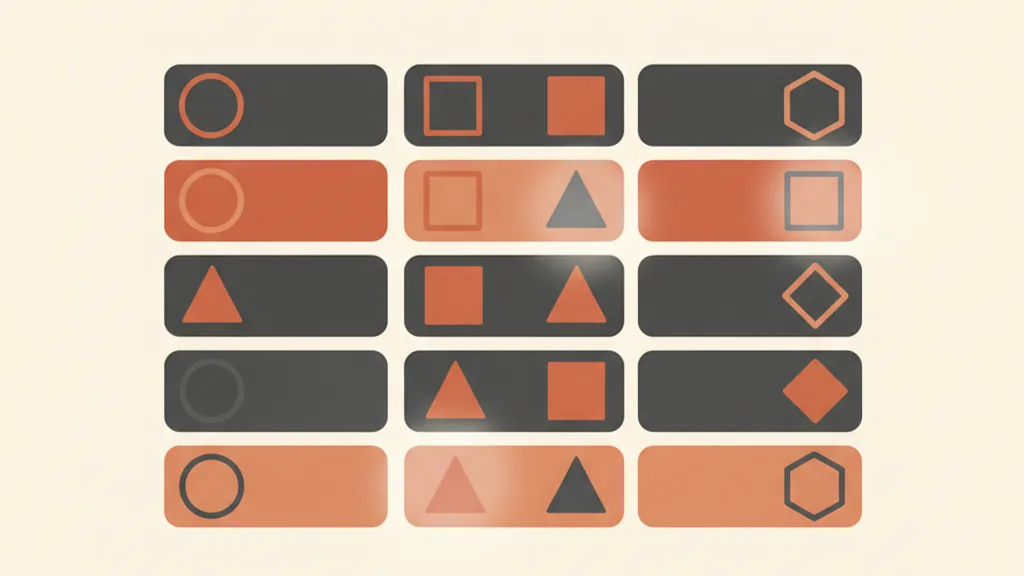
The simplest way to generate 12-15 genuinely distinct concepts, without having to invent everything from scratch every time, is to build a matrix. Put your angles in the rows and your formats in the columns. Each cell is a concept.
A practical example, a supplements e-commerce brand:
- Angles (4-5): daily energy, post-workout recovery, immune support, routine convenience, scientific proof.
- Formats (3-4): UGC testimonial, before/after, product still life, educational carousel.
Five angles times three formats gives you 15 distinct concepts on paper alone, each with a potentially different Entity ID. You don't need to produce them all in month one: start with 8-10, measure, and fill in the matrix where you see traction. This structured approach is also what makes testing creative on Meta legible: you know exactly which angle and which format you're validating in each cell.
The matrix also solves the opposite problem: blank-page paralysis. When you already know you need 15 cells, the exercise becomes "fill in the boxes" instead of "have brilliant ideas," and production starts flowing. If you're short on angles, start with how to find creative ideas for ads.
Want to know exactly how many concepts your budget really needs, and how to produce them without a new shoot every week? Tell us about your situation and we'll put together a custom creative volume plan for you.
The real bottleneck: production (and how AI solves it)
Here comes the honest objection: "Great, but I don't have a creative department cranking out 15 concepts a month, let alone every week." And that's exactly the breaking point of the old model: with the timelines and costs of a traditional shoot, 15 new concepts a month are economically unsustainable for most small and mid-sized businesses. A photo shoot, video editing, copy, revisions — weeks and thousands of euros for a handful of assets.
AI production flips the equation. Not because "AI does it all by itself" (it doesn't), but because it compresses the marginal cost of every conceptual variant. Once you've defined your angles and brand voice, generating the twelfth image or the thirteenth hook costs a fraction of the first. Here's concretely where it steps in:
- Product images and scenes: still life, different settings, seasonal backgrounds generated by an image generation tool for marketing, without re-shooting for every context.
- Synthetic UGC: credible faces and testimonials covering different personas, a trend that exploded in 2026 (we cover it in AI UGC creative).
- Copy and hooks: 5 angle variants for the same product in a few minutes, then human selection.
- Format adaptation: from the same concept, versions for feed, reels, and stories that respect safe zones.
The key is brand consistency: a well-configured model (palette, tone, recurring elements) produces 15 different concepts that all look like they came from the same brand, not 15 disconnected experiments. This is exactly the infrastructure we build for clients when Meta needs to be fed without ever stopping. For the operational detail of designing for the algorithm, see how to design creative for Andromeda.
Pace and refresh: volume isn't an event, it's a flow
A common mistake is to think of volume as a one-time launch: "I produce 15 creatives, upload them, and I'm done." No. Andromeda saturates concepts over time: what performs today generates audience fatigue (creative fatigue) within three weeks, and cost per result climbs.
Correct volume, then, is a pace. Every 2-3 weeks (weekly above €20,000 in spend) you introduce new concepts and retire the tired ones. You don't need to reinvent everything: often it's enough to take the winning angle and adapt it into a new format or setting, generating a fresh Entity ID. This is where having a production pipeline — human or AI — makes the difference between a campaign that fizzles out and one that scales. If you want the detail on monthly pace, we dedicated a whole piece to how many creatives per month you need on Meta.
Read all of this through the right metrics — not like counts, but CPA, ROAS, and frequency per concept. Check the Meta Ads KPIs that actually matter to know when a concept has run its course and needs replacing. And if you want to push optimization further, AI also helps upstream, in reading the data: we cover that in how to use AI to optimize Meta campaigns.
In short: the right number is a system, not a figure
To sum it all up in a few operational points:
- 10-15 distinct concepts per Advantage+ campaign is the baseline, scaling with budget (up to 30-40+ above €50,000/month).
- What counts is the concept (angle, persona, format, setting), not the cosmetic variant. 5 different concepts beat 15 clones.
- Plan with the angle-by-format matrix to generate variety systematically.
- Keep them in flow: refresh every 2-3 weeks, replacing saturated concepts.
- AI production is what makes this volume sustainable for a small or mid-sized business, provided you maintain brand consistency.
The number alone won't save you. What saves you is a system that produces conceptual diversity repeatably and feeds it into your campaigns at the right pace. That's the real work of creative in 2026 — and thankfully, it no longer requires a ten-person department.
Frequently asked questions
How many creatives does a Meta campaign need in 2026?
The benchmark is 10-15 conceptually distinct concepts per Advantage+ campaign, keeping 10-20 active at a time. The number rises with budget: under €5,000/month, 8-12 concepts are enough; above €50,000, you reach 30-40+. What matters is that they're different concepts, not variants of the same ad.
What's the difference between a concept and a variation on Meta?
A variation changes cosmetic details (headline color, one word, the music): Andromeda treats it as identical to the original and merges it into a single Entity ID. A concept meaningfully changes the angle, persona, format, or setting, generating a new Entity ID and access to new audiences. Andromeda rewards concepts, not variations.
What is Andromeda, and why does it change the number of creatives needed?
Andromeda is the retrieval engine Meta introduced in late 2024 that now runs Advantage+. It filters tens of millions of candidate ads down to a few thousand relevant ones by reading the content of the creative, not just the targeting. That's why creative has become the new audience: the more different concepts you upload, the more audience segments the system can explore.
Does uploading more creatives always guarantee better results?
No. If they're similar variants, Andromeda groups them and they count as one. And if you have many different concepts that are all weak, you're just diluting your budget. The right sequence is conceptual diversity first, then volume. 5 genuinely different concepts outperform 40 generic clones.
How often should creatives be refreshed on Meta?
Every 2-3 weeks for mid-sized budgets, weekly above €20,000/month. Andromeda saturates concepts over time, and frequency on the audience builds fatigue: cost per result rises. Volume should be managed as a continuous flow — introducing fresh concepts and retiring tired ones — not as a one-time launch.
How do you produce 15 concepts a month without a creative department?
AI production compresses the marginal cost of each concept: product images in different settings, synthetic UGC for different personas, copy and hook variants, adaptation across feed, reel, and story formats. The requirement is setting up brand voice and palette well so the 15 concepts stay consistent with each other and recognizable as the same brand.
If feeding Meta 10-15 new concepts a month sounds unsustainable, that's because it is with the old methods. Request an analysis: let's work out together how to build an on-brand AI production pipeline for your campaigns.