Meta Andromeda: why creative matters more than targeting in 2026
11 min read · AstraLoop Studio
Meta Andromeda is the new retrieval engine that, since its global rollout began in the fall of 2025, decides which of your ads get pulled from the library and who sees them. This isn't a technical detail to leave to the media team. It's why, in 2026, the right question is no longer "who do I show the ad to" but "how many good, different ads can I feed the system."
For years, the control lever on Meta was targeting: interests, behaviors, custom audiences, ever-finer lookalikes. That world has shrunk. Advantage+ moved distribution decisions inside the algorithm, and Andromeda is the piece that picks, among thousands of ad-person-context combinations, the one with the highest conversion probability. The practical result: manual targeting matters less and less, and the variety of your creative library matters more and more.
This is the substance behind the slogan that's been circulating for months, "creative is the new audience." In this article we look at what Andromeda actually does, why it shifts value toward assets, and above all how to organize production at volume (10-15 distinct creatives per campaign) without turning your team into a manual assembly line. This is written from the producer's perspective, not just the theorist's.
What Andromeda is and where it sits in the Meta machine
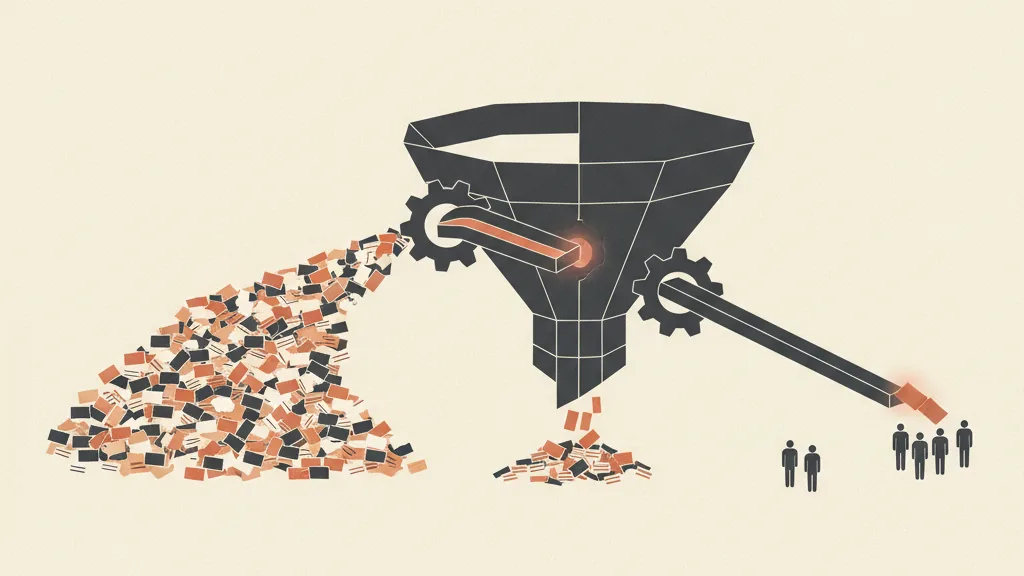
Every time an ad slot opens up on Facebook or Instagram, Meta has to choose one ad among an enormous number of candidates. This process has two stages. The first is retrieval: from a potentially huge catalog of ads, the system selects a narrow shortlist of promising candidates for that specific impression. The second is ranking: among the retrieved candidates, it estimates which one will deliver the best result and assigns the auction position.
Andromeda is the engine that runs the first stage, retrieval. Meta built it in partnership with NVIDIA to run much larger, deeper machine learning models directly on dedicated hardware, evaluating in milliseconds a volume of combinations that used to be unthinkable. In plain terms: the system fishes better, and fishes from a much larger pool of ads.
Why does this matter to you directly? Because a more powerful retrieval system rewards whoever has many valid variants. If you give the engine three similar creatives, you're offering it few paths to find the right match with the right person. If you give it twelve, differing in angle, format and message, you increase the surface area for interception. The system does the rest: it identifies which asset works for which micro-segment, without you having to build that segment by hand.
Andromeda, Advantage+, and the end of hand-crafted targeting
Andromeda doesn't live in isolation. It fits into Meta's push toward total automation of distribution, the same push you see in campaigns like Advantage+ Shopping and in the "broad" targeting suggested everywhere. If you've already read how Advantage+ and its automation logic work, the picture is consistent: Meta is asking you to give up control over who and where, and focus on what you show.
This shifts the center of gravity of the work. Time you once spent building and testing twenty different audiences now pays off much less. The same time invested in twenty different creative ideas pays off much more. Not because targeting is "dead" (first-party signals remain essential, and we'll come back to that), but because the marginal lever has moved. If you're still thinking in terms of Meta targeting in the age of AI, the first mental adjustment is this: stop optimizing the audience, start multiplying the creative inputs.
"Creative is the new audience": what it means in practice
The slogan is catchy but vague. Translated into day-to-day operations, it means three concrete things.
First: segmentation happens inside the creative, not inside the targeting panel. You used to separate the "price-sensitive" audience from the "premium" one with two distinct ad sets. Today you put both angles in the library (one creative pushing the offer, one pushing status) and let the system match them to the right people. It's the asset that "finds" the segment, not the other way around.
Second: variety beats perfection. A single, beautiful but unique creative gives the engine only one handle. Ten good, different creatives give it ten handles. In a retrieval system, the diversity of your creative inventory is itself a competitive advantage, because it increases the odds that at least one variant will intercept every type of user.
Third: the bottleneck shifts to production. If the system rewards whoever has 12-15 distinct assets per campaign and renews them frequently, the problem is no longer "how do I target" but "how do I produce at that pace without burning out." And this is where most Italian companies get stuck: they know they need more creatives, but the manual process can't handle the volume.
How many creatives you actually need
There's no universal magic number, but a few practical benchmarks help set the pace. The topic of volume deserves its own deep dive, which you'll find in the dedicated guide on how many creatives to produce per month on Meta. In operational summary:
| Campaign context | Recommended distinct assets | Renewal cadence |
|---|---|---|
| Initial test for a new product/offer | 8-12 variants | Single batch, then observe for 7-14 days |
| Scaling campaign (at pace) | 10-15 active assets | 3-5 new assets every 1-2 weeks |
| Countering creative fatigue (ad fatigue) | Continuous rotation | Replace declining assets as soon as frequency rises |
The logic behind the table is simple: give retrieval abundant, varied material at the start, then keep feeding it so it doesn't keep consuming the same two winning creatives until they burn out. To set up a serious testing method instead of swapping assets at random, it's worth studying how to structure creative ad testing in a repeatable way.
What counts as a "distinct asset" (and what doesn't)
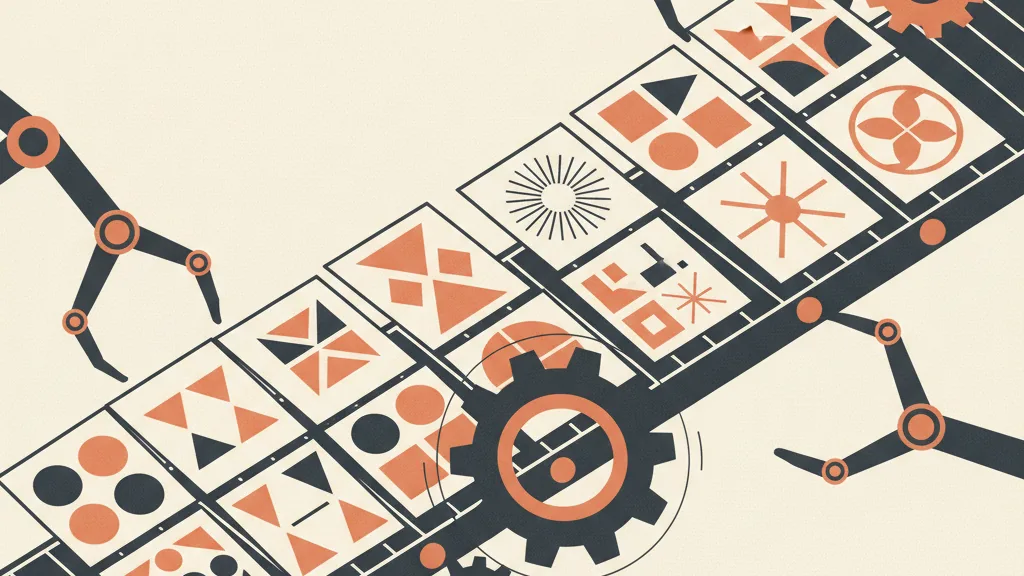
This is where the most common mistake hides. Many people think they have "twelve creatives" when in reality they have the same creative cropped into twelve different formats. Changing only the aspect ratio (square feed, vertical stories, reels) doesn't produce diversity from Andromeda's point of view: the perceived content stays the same. These are necessary technical adaptations, not conceptual variants.
An asset is truly distinct when at least one of these substantial dimensions changes:
- Message angle. Functional benefit vs. status, savings vs. quality, urgency vs. reassurance. This is the most powerful lever.
- Narrative format. Product static, UGC-style testimonial, before/after, usage demo, comparison. Each speaks to a different sensibility.
- Opening hook. The first two seconds (video) or the first visual block (static) are decisive. You can keep the same body and vary only the opening to generate valid variants.
- Awareness level. An ad for someone who doesn't know the problem exists is different from one for someone already comparing solutions. Covering multiple customer awareness levels is a structured way to multiply angles without inventing them at random.
The consequence is liberating: you don't need to start from twelve brilliant ideas. Three or four solid angles are enough, each turned into three or four different executions (format, hook, visual cut). Three angles times four executions already gives you twelve genuinely distinct assets. Creative work becomes a grid to fill, not a stroke of genius to wait for.
The angle x execution grid
This is the mental model that unlocks volume. Picture a table: rows are message angles, columns are executions. Each cell is a creative. Filling a 4x4 grid means sixteen assets starting from just four angles. It's systematic, repeatable work, and above all, partly delegable to a machine. If you want a structured method for generating starting angles, the guide on how to find creative ideas for ads gives you a starting point.
The real bottleneck: producing at volume without drowning
Knowing you need 12-15 assets and actually producing them are two different things. The manual way (brief to the designer, revisions, exports, one-by-one format adaptations) doesn't scale. Time per creative is too high, and the work queue keeps growing until the renewal pace Andromeda rewards becomes unsustainable. This is where AI comes in, but with method, not as a magic shortcut.
The approach that works isn't "ask AI for twelve ads and publish them." It's building a hybrid production flow where artificial intelligence cuts down the time spent on repetitive parts and the human eye stays on quality control and strategy. In practice, it breaks down into three levels.
- Visual base generation. Image generation models produce background variants, settings, product mockups and lifestyle scenes in a fraction of the time of a photo shoot. To get oriented among the options, the overview of AI image generation tools for marketing helps you choose based on your use case.
- Angle and copy variations. An assistant trained on your brand voice churns out headline, hook and copy variants for each angle, keeping tone and claims consistent. It's the fastest way to go from four angles to sixteen text executions. See how to set up producing ad creatives with AI in an organized way.
- Assembly automation. The piece almost nobody automates, and the one that makes the difference on volume: composing finished assets, adapting formats, versioning files and organizing them in a library. An automated flow takes copy and visuals, assembles them according to approved templates, and produces the entire batch ready for upload.
The third point is where the volume battle is won. Automating assembly means turning a grid of angles and executions into dozens of ready-to-use files without repetitive manual work, applying the same logic as business process automation with AI that applies to any high-volume, low-variance job. The designer stops exporting by hand and goes back to being a designer: deciding visual direction and quality, not cropping PNGs.
Want to go from a handful of hand-made creatives to a library of 10-15 distinct assets renewed continuously? Tell us about your situation and we'll show you how to set up a production flow with AI and automation.
Targeting isn't dead: first-party signals remain the fuel
Careful not to throw the baby out with the bathwater. Saying "creative matters more than targeting" doesn't mean data doesn't matter. It means your control shifts: from manually defining audiences to feeding the algorithm quality signals. And this is where first-party data in marketing becomes decisive.
Andromeda and Meta's ranking systems optimize on whatever you report as a conversion. If the signals you send are dirty or incomplete, the engine learns poorly, no matter how good the creative is. That's why, alongside volume production, you need to take care of:
- Server-side tracking and the Conversions API, to return reliable events even with cookie limitations.
- The quality of conversion events (event match quality), which tells Meta how trustworthy the data you send is.
- Feeding real value signals back from your CRM to Meta as a conversion signal, so the system learns to look not for just any lead, but for the customer who actually buys and stays.
The correct mental model for 2026 is therefore two parallel tracks: on one side a broad, living creative library, on the other clean, value-rich conversion signals. Andromeda cross-references the two. Neglecting either track cripples the whole machine. It's the same principle behind a serious customer acquisition system: a single active channel isn't enough, data and content need to feed each other.
How to get started: a four-step plan
If you want to align your campaigns with Andromeda's logic without getting overwhelmed, here's a pragmatic sequence.
- Map your angles. Write down the 4-5 different ways your product solves a problem or creates desire. This is strategy, not design, and it's the foundation of everything.
- Build the grid. For each angle, define 3-4 executions (format, hook, cut). You get your target of 12-16 distinct assets on paper.
- Set up the production flow. Decide what AI generates (visuals, copy), what you automate (assembly, formats, versioning), and where human control stays (approval, brand voice, quality).
- Feed and measure. Publish the batch, let retrieval work, then renew declining assets and reinvest in winning angles. Repeat the cycle.
The difference between those who suffer through Andromeda and those who exploit it isn't budget or a targeting trick. It lies in the ability to produce creative variety industrially, while keeping quality and brand consistency. It's a process problem, and process problems are solved with method and automation, not with more overtime hours.
In summary
With Meta Andromeda, value has shifted from targeting to creative: the retrieval engine finds the match between asset and person on its own, but only if you give it enough different assets to choose from. "Creative is the new audience" means, concretely, building a library of 10-15 genuinely distinct creatives per campaign and renewing it continuously. The bottleneck is no longer the idea or the audience: it's production. Whoever sets up a hybrid flow, AI for generation and variation, automation for assembly, human eye for quality, produces that volume without drowning. And whoever keeps first-party signals clean in parallel runs the machine at full capacity. The rest is execution.
Frequently asked questions
What is Meta Andromeda in simple terms?
It's Meta's ad retrieval engine, in global rollout since fall 2025, built with NVIDIA. Its job is to select, from a huge catalog of ads, the shortlist of most promising candidates for each single impression, before ranking picks the winner. In practice, it decides which of your ads get pulled and for whom.
Why does targeting matter less with Andromeda?
Because the system matches the right creative to the right person on its own, making it far less useful to hand-build dozens of audiences. Your control shifts: instead of segmenting the audience in the panel, you offer more creative variants and let the engine find the segment. First-party data still matters, though, as a quality signal.
How many creatives does a Meta campaign need in 2026?
As a practical benchmark, 10-15 genuinely distinct assets for a campaign at pace, with 8-12 variants during initial testing and a renewal of 3-5 new assets every one to two weeks. There's no universal number: what counts is the variety of angles and formats, not the raw file count.
What does "creative is the new audience" mean?
It means segmentation happens inside the creative rather than in targeting. You put different message angles in the library and the system matches them to different types of users. The competitive lever becomes the richness and variety of the creative library, not the precision of a manually set audience.
Does changing only the format count as a distinct creative?
No. Adapting the same creative to square feed, stories and reels is a necessary technical adaptation, but for Andromeda the perceived content stays the same. An asset is distinct when the message angle, narrative format, hook, or awareness level it speaks to changes.
How do you produce at volume without drowning in work?
With a hybrid flow: AI generates visuals and varies copy and angles, automation assembles the finished assets, adapts formats and versions them, while human control stays on quality, brand voice and strategy. Starting from 4 angles with 4 executions each gets you 16 distinct assets in a systematic, largely automatable way.
If you want to understand where your creative process is losing time and how to make it scalable for the Andromeda era, request an analysis: we start from your real numbers and your real angles.