Second Brain for Sales Teams: Never Lose Knowledge Again
9 min read · AstraLoop Studio
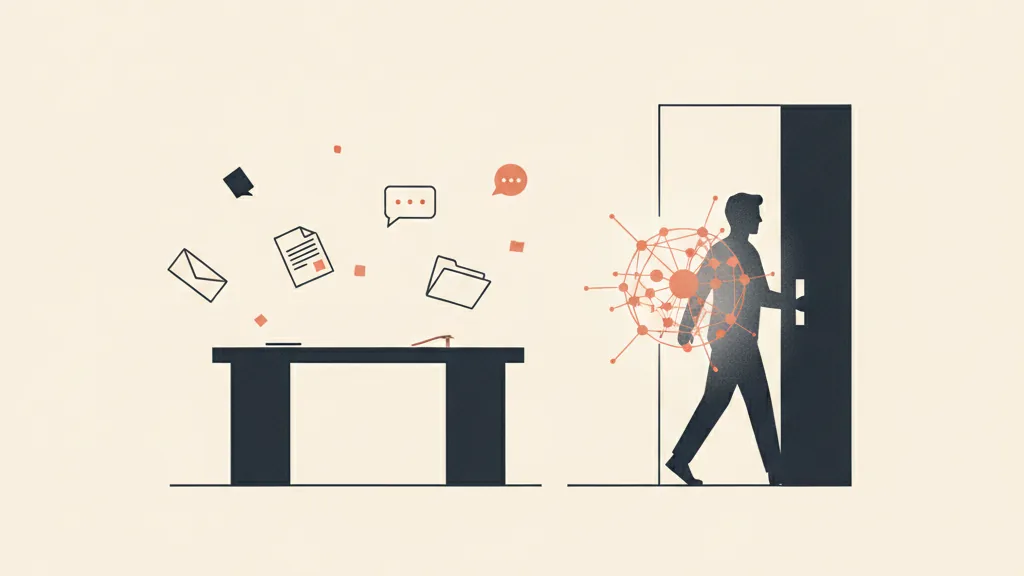
There's a moment every owner or sales director knows all too well: your best salesperson hands in their resignation. That letter doesn't just take one person away. It takes the connections with long-standing clients, the unwritten knowledge of who actually makes the decisions inside each company, the reason that 40,000-euro deal stalled back in March, the special terms promised verbally to a loyal client. None of it is written down anywhere. It lives in their head. And now it lives in someone else's head — maybe a competitor's.
This is exactly the problem a company second brain solves for the sales department. It's not another CRM full of fields to fill in, and it's not a wiki nobody updates. It's a digital brain that gathers the company's commercial knowledge and makes it queryable, so it no longer depends on one person staying at that desk.
Where sales knowledge lives (and gets lost)
Stop and think about it: your sales team's knowledge is scattered across three places, and none of them are safe.
- In chats, emails, and scattered documents. The Slack thread where the salesperson described how a meeting went. The email where a client asked for a specific discount. The quote saved in a folder only they know the location of. Valuable material, but effectively unrecoverable for the rest of the team.
- In people's heads. This is where most of it sits. A top performer is worth their weight in gold precisely because they've built a mental map of clients, relationships, and recurring objections over time. But that map is invisible and non-transferable. If they leave, you lose it. And even while they're still there, it becomes a bottleneck: every question has to go through them.
- Scattered across dozens of tools. The CRM on one side, the revenue spreadsheet on another, PDFs of commercial terms, supplier emails, notes in Notion. Nobody uses them in a coordinated way, and piecing together the full picture of a client takes half a day of treasure hunting.
The cost of this fragmentation isn't abstract. According to a McKinsey estimate, a knowledge worker spends roughly 19% of the workweek — nearly one day out of five — searching for information. For a salesperson, that's time not spent selling. If you want to see just how much this fragmentation really costs, we covered it in detail in our article on the cost of scattered knowledge in a company.
The biggest risk: knowledge walks out the door with whoever leaves
Turnover is a fact of life in sales. People switch companies, get promoted, change territory. Every time it happens, without a system in place, you start from zero on that client portfolio.
Let's be honest about it, using industry-standard estimates. A new hire takes on average between 8 and 12 months to become truly productive. The curve varies a lot: a top performer takes 3-6 months, an average profile 8-12, a slower one 14-18. These are estimates, not absolute truths, but they give you the idea. And behind this curve there's a logic worth understanding: in the first stretch the employee "costs" you (they absorb information, make mistakes, learn on your dime); in the second, they start paying the company back. The shorter the ramp, the sooner you move from the investment phase to the return phase.
Now imagine a new salesperson who, from day one, can ask the second brain: "What do we know about this client?", "What did we agree with this client back in March?", "Which objections have come up most often for this product, and how did we handle them?" They don't start from a blank page. They start from the department's complete history. This is what we mean when we talk about reducing onboarding time with AI: not a static manual, but a system that actually answers.
There's a knock-on benefit that's often underrated. Shortening ramp-up time doesn't just lower the cost of every new hire: it makes job rotation possible (you can move people around without paralyzing a whole area) and it reduces churn, i.e. the attrition rate. A salesperson who feels supported by a system, instead of left alone to rebuild everything from scratch, is more likely to stay. We dedicated a full piece to how to reduce turnover with an AI knowledge base.
Why a wiki or a CRM alone aren't enough
The fair question is: "But I already have a CRM, and a shared folder too. Isn't that enough?" The short answer is no, and it's worth understanding why.
The CRM records structured data (contact details, deal status, amounts), but it doesn't capture the reasoning: why a decision was made, the context of a relationship, the nuance of a conversation. Wikis and folders are static: you fill them in once and they go stale. The point of a second brain is that it's built to be read and navigated by an AI, not just by a human. The practical difference is enormous, and we laid it out in black and white comparing second brain, wiki, and Notion.
This is where the real competitive edge lies, and it's the heart of the matter: your AI is only as smart as what it can read about your business. If you and your competitor both use ChatGPT the same way, with no company context, you get the same generic answers. That's ground level, no advantage. A slightly better-written prompt won't save you. The advantage comes when the AI works on your data: your deals, your clients, your recurring objections. On this topic, the go-to piece is the one on the competitive advantage that comes from company data.
How it works, at a high level
You don't need to understand the engineering to understand the value. But a few key concepts help distinguish a well-built system from a patchwork.
Knowledge broken into atomic notes
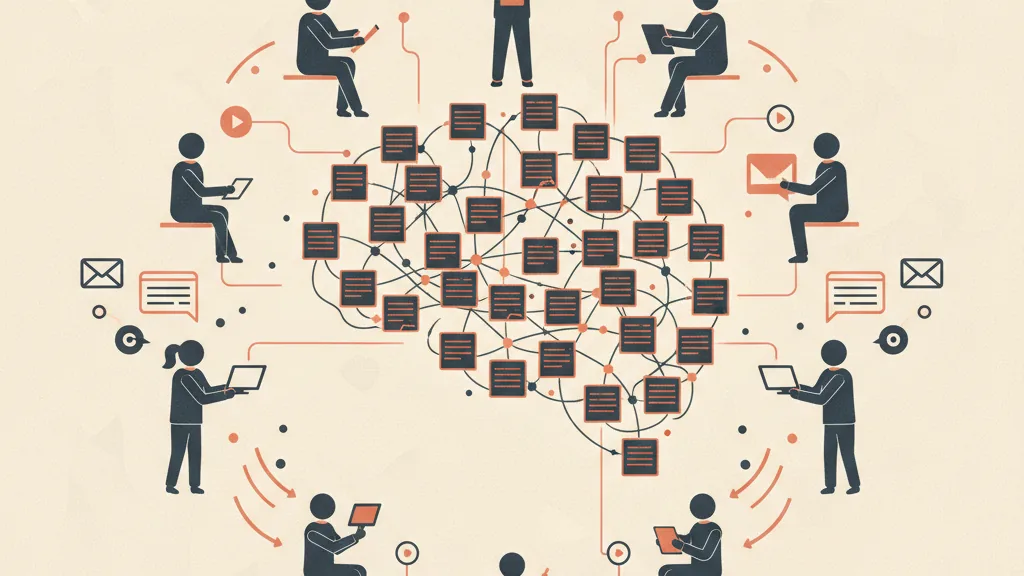
Instead of monolithic documents, knowledge is split into many small notes — one idea per note — all interconnected. It's the same principle sociologist Niklas Luhmann used with roughly 90,000 linked index cards (the Zettelkasten method) to write dozens of books. Breaking knowledge down into atomic notes makes it reusable across different contexts and, crucially, navigable by an AI moving between the links.
One single company truth
The system is built on a single source of truth. The AI doesn't invent anything, it only reports what actually exists in the company's knowledge. This drastically cuts down on hallucinations, which in sales would mean promising a client something that doesn't exist.
A memory that grows
The most underrated value is the living memory: the system updates itself with daily conversations and sessions. Every deal recounted, every call summarized, becomes part of the asset base. The more the team uses it, the more the brain knows about the business, the better the answers get, the more the team uses it. It's a self-reinforcing cycle — what we call the compound returns of a second brain.
When the data starts to pile up
As long as there are only a handful of notes, good indexing is enough. Once they grow into the thousands (think years of deals, across hundreds of clients), RAG comes into play — semantic search that pulls only the information relevant to each question. As a rule of thumb: under 500 notes, maps and indexes are enough; between 2,500 and 20,000 you need embeddings and RAG; beyond 20,000 you need a full pipeline. If you want the technical and business picture, we explained it in the article on RAG and company knowledge bases.
Want your sales department's knowledge to stop depending on individual people? Request a free analysis: let's assess together how to build your sales brain.
Why it pays to do this now
There's an open arbitrage window, and it's the part your competitors haven't grasped yet. The arbitrage is the gap between what you do today and what the market will do tomorrow. Whoever builds their sales brain now compounds an advantage over time, and this window will close as awareness spreads.
One important detail works in favor of already-established companies: if you already have years of deals, well-worn sales processes, and a client portfolio, you're exactly who stands to get the best return from AI, because you already have the raw material. Data is the new gold, and you already have a deposit of it. A startup trying to challenge you starts with a data "lag" that you keep widening every day you feed the brain. You'll find the full reasoning in the piece on why company data is the new oil and the one on why to adopt a second brain now.
"What about my data?" The right question to ask
It's the most common objection, and a healthy one. Two points.
The first, uncomfortable but true: your commercial data has very likely already ended up inside ChatGPT, pasted in by your salespeople to get an email drafted or a call summarized, with zero oversight. A governed company brain, with access rules, is in fact more secure than that situation, not less. The second: serious data management runs through signed DPAs, GDPR compliance, and version control (which gives you backups and a single up-to-date source). We have a dedicated article on GDPR and second brain security.
What actually changes for your sales department
| Situation | Without a second brain | With a second brain |
|---|---|---|
| A salesperson leaves | Knowledge of their portfolio walks out the door with them | Relationships, history, and agreements stay a team asset |
| A new hire arrives | 8-12 months to become productive, all on your dime at first | They query the history from day one, ramp-up is shorter |
| "What did we agree with this client?" | Half a day spent digging through emails, chats, and files | Immediate answer, with context |
| Recurring objections | Everyone handles them their own way, knowledge stays siloed | The best answers become shared knowledge |
There's one common thread running through all of this: knowledge stops being the private property of whoever holds it and becomes a company asset. This is true for sales but for other departments too, which is why a second brain works well in professional firms, in SMEs and agencies, and anywhere the value lies in the people.
The one thing you can't outsource
With AI you can outsource expertise (it writes your code) and even outsource thinking (it proposes an architecture). But you can't outsource the understanding of your business. No one will ever know, in your place, why your clients buy and what makes your way of selling special.
That's why a second brain done properly isn't a file you fill in, but a system with a method behind it: structure, atomic notes, a link ontology, quality checks, RAG where needed, compliance. This is exactly the work we do at AstraLoop Studio: we design, build, and manage the sales brain for your company, so you can focus on selling. If you want to know where to start, the entry point is our complete guide to AI consulting for businesses.
Frequently asked questions
What happens to a company's knowledge when a salesperson leaves?
Without a system, it leaves with them: client relationships, deal history, and verbally agreed terms disappear. A second brain keeps them as a team asset, so whoever takes over doesn't start from zero.
Does a second brain replace the CRM?
No, it complements it. The CRM records structured data (contact details, amounts, deal status); the second brain captures the context and reasoning (why a decision was made, recurring objections) and makes it queryable by an AI.
How much does it actually help with onboarding new salespeople?
A new hire takes on average 8-12 months to become fully productive. Being able to query the department's complete history from day one shortens the ramp-up, and the company recovers its investment in that person sooner.
Is my commercial data safe?
A governed company brain, with access rules, signed DPAs, and GDPR compliance, is safer than the data your salespeople already paste into ChatGPT with no oversight. Version control guarantees backups and a single up-to-date source.
How much data is worth starting with?
Even a little: the value grows over time. As a rough guide, under 500 notes, indexes and maps are enough; between 2,500 and 20,000 you need embeddings and RAG; beyond 20,000 you need a full RAG pipeline.
Who gets the best return from a sales second brain?
Already-established companies, with years of deals and a consolidated client portfolio: they have the raw material. Building your own brain now means widening the gap over competitors who use generic AI like everyone else.
We design and manage your sales team's second brain for you, with method and compliance. Talk to us and we'll show you what would change for your company.