The hidden cost of scattered knowledge in your company
9 min read · AstraLoop Studio
There's a cost that shows up in no balance sheet, that no auditor will ever flag for you, and that still eats into your company's margins every single week. It's the cost of scattered knowledge: information, decisions, know-how and experience that exist, but that nobody can find when they need them.
The paradox is that the bigger the company grows, the higher this cost climbs. Every new hire, every new tool, every project that gets closed and archived adds another piece of knowledge that ends up dispersed. And until you measure it, it looks free. It isn't.
In this article we'll look at where company knowledge actually hides, how much it costs to leave it unorganized, and why recovering it in a structured way, with a company second brain, is today one of the highest-ROI investments a structured company can make.
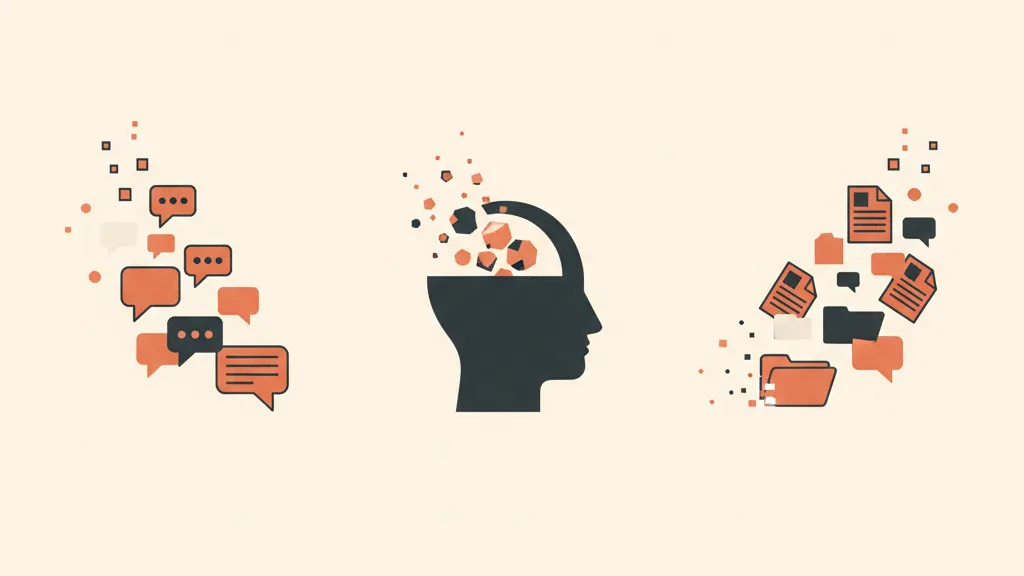
The three zones where knowledge gets lost
If you stop to observe how information actually flows through your company, you'll notice something: knowledge doesn't live in one place. It's dispersed across three distinct zones, and each one has its own particular way of making know-how disappear.
1. In chats, emails, and scattered documents
The first zone is the most obvious and, at the same time, the most underestimated. Every day your team makes decisions, solves problems, and agrees on important things inside Slack, the company WhatsApp, email threads, and document comments. It's living knowledge, but volatile.
That decision made in March with a key client, that technical workaround that saved a delivery, the reason you chose that supplier over another: all of it exists, buried in a six-month-old chat that nobody will ever dig up again. When you need it, you start from scratch. Or worse, you repeat a mistake already made, because nobody remembers why that path was ruled out.
2. In people's heads
The second zone is the most dangerous. Your top performer, the person who "knows how things get done," is worth gold. But that knowledge lives only in their head. And that's where three serious problems arise.
- Loss risk: if that person leaves, they take years of company experience with them. There's no contract that keeps knowledge in the building, and the moment they walk out the door, the value evaporates.
- Bottleneck: if only one person knows how to do something, the whole company depends on their availability. It becomes a chokepoint that slows down growth.
- Slow onboarding: without that knowledge written down and accessible, every new hire has to painstakingly extract it from colleagues, eating into everyone's time.
The risk of losing knowledge when an employee leaves isn't a theoretical scenario. It's the norm in companies where nothing is documented in a structured way.
3. Scattered across dozens of different tools
The third zone is technological fragmentation. Policies in a PDF on the server, revenue in an Excel file, supplier emails in an inbox, contracts in a management system, sales reps' notes in the CRM. Each of these silos holds a piece of the company's truth, but nobody reads them together in a coordinated way.
The result? To answer a simple question like "how much revenue have we made with this client, and what problems have they caused us?", someone has to open four different tools, cross-reference the data by hand, and hope they don't miss anything.
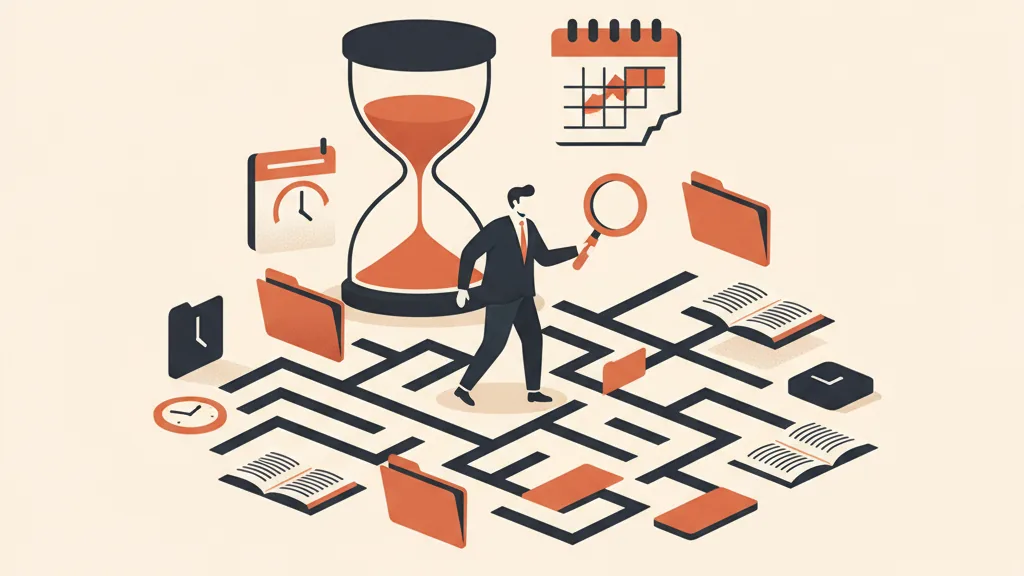
What it really costs: the numbers
Let's move from principles to numbers, because that's where the hidden cost becomes visible. These are industry estimates and orders of magnitude, not absolute truths, but they're enough to show the scale of the problem.
According to McKinsey, a knowledge worker spends on average about 19% of the workweek searching for information. Almost one day out of five. Not producing, not deciding, not selling: just searching for something the company already has, but that ended up dispersed in one of the three zones.
Do the math on your own team. If you have ten skilled people, one day a week each adds up to two full-time people whose only job is digging through chats, folders, and tools. That's the cost no balance sheet ever shows you.
The cost of onboarding
There's also a less visible but heavy cost: the ramp-up time for new hires. A new employee takes on average 8 to 12 months to become truly productive. The learning curve varies a lot depending on the person.
| Profile | Time to become productive |
|---|---|
| Top performer | 3-6 months |
| Average profile | 8-12 months |
| Slow profile | 14-18 months |
The key point is how value is distributed along this curve. In the first part, the employee "earns": they absorb knowledge, make mistakes, learn. In the second part, the company earns, once the person finally gives back more than they cost. Shortening ramp-up time maximizes returns, because it brings forward the moment the company starts earning on that person.
Organized, accessible company knowledge shortens exactly that first phase. And the benefits don't stop there: reducing onboarding time with AI also enables job rotation, meaning moving people between roles without starting from zero, and it reduces churn, the employee turnover rate, because joining the company becomes less frustrating. We've explored in depth how a smart knowledge base reduces turnover.
Why the problem has become an opportunity today
Until recently, scattered knowledge was a necessary evil. You could set up a wiki or organized folders, but they stayed static archives that someone had to update by hand and that nobody actually consulted.
Today everything changes, for one precise reason: your AI is only as smart as what it can read about your company. If you and your competitor use the same ChatGPT without giving it any context about your business, you get the exact same answers. That's the baseline, no competitive edge at all. A slightly better prompt doesn't move the needle.
The advantage comes from AI working on your data: your policies, your customer history, your past decisions. That's the logic behind why company data is the new oil. Structured companies, the ones that already have processes and accumulated knowledge, are the ones that will get the best return from AI, because they have the raw material. A startup trying to compete starts with a data gap that you, with your company brain, keep widening every day.
Want to know what scattered knowledge is costing your company today, and how much of it you could recover? Talk to us: we'll analyze your case together and tell you honestly whether a company brain makes sense for you.
How scattered knowledge turns into an asset
Recovering knowledge doesn't mean creating yet another shared folder that nobody will ever open. It means building a digital brain designed to be read and navigated by an AI. Here's a high-level look at how it works, not so you build it yourself, but so you understand why it takes method.
- Atomic notes: knowledge is broken down into many small notes, one idea per note, all linked to one another. It's the same principle sociologist Niklas Luhmann used to manage 90,000 index cards to write his books. This way, every piece of information becomes reusable in different contexts and navigable by AI. We cover this in detail in the article on atomic notes for company knowledge.
- Link structure: filing things well isn't enough (taxonomy); you also need to define how concepts connect to each other (ontology). It's this network of links that lets the AI "reason" by moving from one note to another.
- Single source of truth: one unified company canon, so the AI doesn't invent things but only reports facts already present in the company's knowledge. It's the best way to reduce hallucinations and have a true company single source of truth.
- Living memory: the system updates itself from daily conversations and work sessions. That way you can ask "what did we decide in March with that client?" and get the answer. It's the logic behind a living company memory.
- Semantic search to scale: once notes number in the thousands, RAG (retrieval-augmented generation) comes into play, efficiently finding only the relevant information. Read more in the article on RAG-powered company knowledge bases.
The compounding value comes from the fact that this system improves the more you use it: the more the brain knows about the company, the better the answers; the more it's used, the better the knowledge becomes. That's the logic behind the compounding returns of a second brain: the curve for those who have one diverges upward compared to those using generic AI like everyone else.
"What about my data?" The most common objection
Many business owners, rightly, pause at the security question. It's a legitimate concern, but one worth looking at honestly.
First: in most companies, the data has already ended up inside ChatGPT, pasted in by employees with zero oversight. A governed company brain, with clear rules on who can access what, is more secure than the current situation, not less. Second: it's managed with standard tools, signed DPAs, GDPR compliance, and version control to have backups and an up-to-date source of truth even across a team. We've dedicated a deep dive to GDPR and second brain security.
Where the return is most obvious
Some contexts feel the cost of scattered knowledge more than others, and so see a faster return from recovering it.
- Professional practices: lawyers and accountants who need every client's and every case's history at their fingertips. We cover this in second brain for professional practices.
- Sales teams: no knowledge lost when a salesperson leaves, and fast onboarding for new hires. More in second brain for sales teams.
- SMBs and agencies: from a chaos of scattered files to a single, searchable system.
The insight that changes how you think about it
There's one point worth more than any ROI calculation. With AI you can outsource expertise (it writes code for you) and even outsource thinking (it proposes architectures and solutions). But you can't outsource understanding. Understanding your business remains your job.
That's why the right structure for a company brain doesn't build itself: it requires method, ontology, quality controls, RAG, and attention to compliance. It's a design job, not another tool you install. And that's exactly what we do at AstraLoop Studio: we design, build, and manage the company brain for your business, so you can focus on what nobody else can do in your place. If you want to know where to start, also read when a company is ready for a second brain.
The cost of scattered knowledge is real, and it grows every week. The good news is that, unlike so many business costs, this one can be recovered. And the best time to do it is now, before the market does it for you.
Frequently asked questions
How much does scattered knowledge really cost a company?
According to a McKinsey estimate, a knowledge worker spends about 19% of the workweek searching for information, almost one day out of five. For a ten-person team, that's the equivalent of two full-time people whose only job is looking for things the company already has.
Where does company knowledge actually get lost?
In three zones: in chats, emails, and scattered documents (volatile and unrecoverable); in people's heads (which walk out the door when they leave); and fragmented across dozens of different tools (PDFs, Excel, CRM, management systems) that nobody consults together.
What's the difference between a company wiki and a second brain?
A wiki is a static archive meant to be read by people, and it has to be updated by hand. A second brain is designed to be read and navigated by an AI: it updates itself, links concepts together, and improves with use. The more you use it, the better it knows the company.
Does a second brain really improve new-hire onboarding?
Yes. A new hire takes on average 8-12 months to become productive. Having knowledge written down, linked, and accessible shortens the first phase of the learning curve, bringing forward the moment the company starts earning on that person, and it also reduces turnover.
Is my company data safe in a system like this?
A governed company brain is safer than the current situation, where employees are already pasting data into ChatGPT with no oversight. It's managed with signed DPAs, GDPR compliance, access rules, and version control for backups and a single source of truth.
Why build a company brain now instead of in two years?
Because there's an arbitrage window: whoever organizes their knowledge now builds an advantage that compounds over time. AI is only as smart as what it can read about your company, and every day of organized data widens the gap from those using generic AI like everyone else.
Designing and running a company brain properly takes method, not a tool downloaded in a hurry. At AstraLoop, we build it tailored to your business: request a no-commitment analysis.