Atomic Notes: Why AI Actually Understands Your Business
8 min read · AstraLoop Studio
There's a huge difference between an AI that guesses answers about your business and an AI that actually knows them. And that difference has nothing to do with which model you use, or how refined your prompt is. It comes down to how the knowledge you feed the AI is organized.
You can have every piece of information in the world about your customers, your processes, and your products. But if it all lives in a messy folder, an 80-page PDF, or the head of your best salesperson, the AI can't put it to good use. The rule is simple: your AI is only as smart as what it can actually read about your business. And getting it to truly read your business takes a precise method. That method is called the atomic note, and it predates AI by decades.

The problem: business knowledge is fragmented, but in all the wrong places
In almost every Italian company, knowledge lives in three places, and none of them is ready to be used by an AI.
- In chats, emails, and scattered documents. Decisions made on Slack, deals closed over email, notes in a Google Doc nobody can find anymore. Information that exists but is effectively unrecoverable.
- In people's heads. Your top performer is worth their weight in gold, but if they leave, they take years of knowledge that was never written down anywhere with them. It's a bottleneck that slows onboarding and holds back growth.
- Scattered across dozens of different tools. Policies in a PDF, revenue in an Excel file, supplier contacts in an email inbox. Fragments nobody uses in a coordinated way.
The cost is concrete. According to a McKinsey estimate, a worker spends about 19% of the week (nearly one day out of five) looking for information. Take it as an order of magnitude rather than gospel, but the message holds: an entire workday evaporates because of poorly organized knowledge. We covered the full scope of this problem in our article on the cost of scattered knowledge in a company.
Now, the point isn't just to gather all this stuff in one place. A well-organized wiki or shared folder is already a step forward for humans, but it remains unreadable for an AI. A long, monolithic document is, to an AI, like a book with no index: everything is in there, but finding and linking the right piece of information at the right moment becomes a massive job. Knowledge needs to be broken down into smaller, reusable units.
What is an atomic note (and what does a German sociologist have to do with it)
An atomic note is exactly what the name suggests: a note that contains a single idea. Not a chapter, not an entire procedure, not "everything we know about client X." One single, self-contained idea that explains itself and that you can call up in different contexts without ever having to rewrite it.
The most famous example comes from the German sociologist Niklas Luhmann, who wrote more than 70 books and hundreds of articles using a system of roughly 90,000 interconnected paper cards: the Zettelkasten method. Each card held a single thought, cross-referenced to other linked cards. Luhmann didn't "search" his notes — he navigated the connections. When he needed to write about a topic, he followed the threads between his notes and the ideas practically assembled themselves.
Apply the same principle to your business. Instead of a single "Sales Process" document, you have many small notes: how to qualify a lead, how to handle a price objection, what the standard delivery times are, what to do if a customer asks for a discount. Each note is a building block. And those blocks recombine.
The advantage is twofold.
- Reusability. The same note on "standard delivery times" serves sales, customer care, and whoever is drafting a quote. Written once, used everywhere.
- Navigability for AI. An AI doesn't need to digest an 80-page block to answer a question: it retrieves the few relevant notes and links them together. More precise answers, fewer errors.
Taxonomy and ontology: the difference that lets AI actually reason
Here's where the part that sounds technical but is conceptually simple comes in. There are two ways to organize notes, and they serve different purposes.
Taxonomy is how you file things. It's the structure of folders, categories, labels. "This note goes in the Sales section, Quotes subsection." It's there to bring order, to know where everything is. It's useful, but on its own it only describes where a piece of information lives, not how it connects to others.
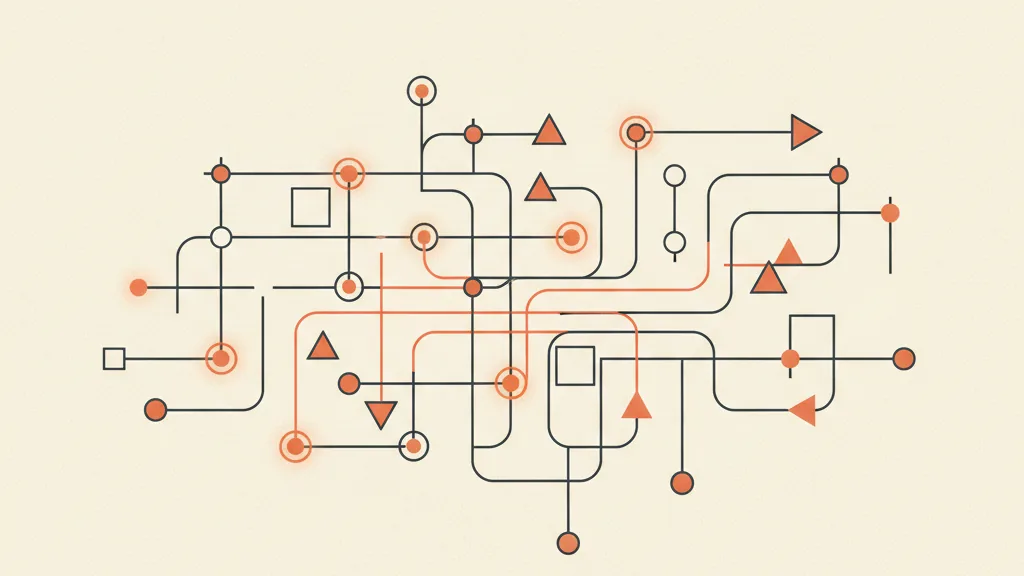
Ontology is how concepts link to each other. It's the network of relationships between notes. The note "discount above 15%" is linked to "sales manager approval," which is linked to "minimum margin per product," which is linked to "2026 price list." This web of connections is what lets AI reason: starting from a question, it moves across connected notes and reconstructs the full context, exactly the way Luhmann did by following the cross-references between his cards.
| Aspect | Taxonomy | Ontology |
|---|---|---|
| Question it answers | Where does this information live? | How does it connect to others? |
| Metaphor | The filing cabinet, the folders | The relationship map |
| What it's for | Filing and retrieving | Letting AI reason about context |
| Example | "Folder: Sales" | "Discount, approval, minimum margin" |
Without ontology, AI has a well-organized but flat filing cabinet. With ontology, it has a brain made of connections. That's the difference between an archive and a living memory.
The canon: a single company truth
There's another valuable effect of organizing knowledge this way: the canon, meaning a single source of company truth. When every fact lives in one dedicated atomic note (one note for "return policy," one note for "opening hours"), there aren't five contradictory versions scattered across five different documents.
For AI, this is decisive. An AI trained on a clean canon doesn't make things up: it only reports facts that exist in the company's knowledge base. That's how hallucinations — the number-one problem for anyone trying to seriously use AI in a business — get drastically reduced. If you want to go deeper, we cover it in our article on the company single source of truth.
Want to understand how to design the right knowledge structure for your business? Talk to us: we'll help you turn scattered documents and notes into a system that AI truly understands.
Why all this becomes a competitive advantage
Take a step back for a second and look at the bigger picture. If you and your competitor both use ChatGPT the same way, with no company context, you get the exact same answers. That's square one: no advantage for either of you. And a slightly cleverer prompt doesn't change the game.
The advantage only appears when AI reads your data, organized so it can truly understand it. Data is the new gold, but raw gold is worthless — what matters is how you refine it. Atomic notes and ontology are that refining process. That's why companies that are already structured, with processes and accumulated knowledge, are set up for the best return on AI. We've written about this at length in competitive advantage with company data and in company data as the new oil.
There's also a compounding-time effect. The more the system knows about the business, the better the answers. The better the answers, the more the team uses it. The more it's used, the more the knowledge grows. It's a cycle of compound returns: whoever starts building their company brain now accumulates an advantage that widens over time. A startup trying to catch up would start with a data gap that you, meanwhile, keep widening.
When notes pile up: from map to RAG
As long as there are only a few notes, it doesn't take much to find your way around. Once they number in the thousands, you need different tools. As a rough order of magnitude:
- Under roughly 500 notes: content maps and a well-built index are enough. AI finds what it needs without heavy infrastructure.
- Between roughly 2,500 and 20,000 notes: embeddings and semantic search come into play (so-called RAG, retrieval-augmented generation), which, instead of reading everything, retrieve only the handful of notes truly relevant to each question.
- Beyond 20,000 notes: you need a full RAG pipeline, built to scale.
You don't need to understand the engineering behind any of this. What you need to know is that the atomic-note method is what makes it possible to scale without losing quality: it's the foundation everything else rests on. We go deeper into this in RAG and company knowledge bases and in how to scale company knowledge with AI.
"What about my data?" The right question to ask
It's the most common objection, and a fair one. But it deserves an honest look. The truth is that in a great many companies, the data has already ended up in ChatGPT, pasted into chats by employees with zero oversight or traceability. A governed company brain, with defined access and clear rules, is actually more secure than that scenario, not less.
On the formal side, this is managed with signed DPAs, GDPR compliance, and version control (a full history of changes), which guarantees backups and a single up-to-date source even when a whole team is working on it. We dedicated an entire piece to security and GDPR for a second brain.
The one thing you can't outsource to AI
Let's close with the idea that matters most. With AI, you can outsource expertise (it writes code for you) and thinking (it proposes architectures and solutions). But you can't outsource understanding. Figuring out what makes your business unique, which concepts actually matter, and how they connect to each other remains a human job.
This is exactly where a well-designed structure of atomic notes and ontology makes the difference between a toy and a tool that actually moves the numbers. It's not a job to improvise: it takes method, quality checks, and precise choices about how to model the knowledge. That's why it pays to have a properly built company second brain done by people who do it for a living. And if you're wondering whether the time is right, this article on when a company is ready can help.
Frequently asked questions
What are atomic notes in a business context?
They're minimal units of knowledge: each note holds a single self-contained idea (for example, "return policy" or "standard delivery times"), all linked to one another. This makes them reusable across different contexts and easy for an AI to navigate, since it retrieves only the relevant information instead of reading whole documents.
What is the Zettelkasten method, and why does it matter for business?
It's the knowledge-organization method used by sociologist Niklas Luhmann, who wrote more than 70 books with roughly 90,000 interconnected cards. Applied to a business, it lets you break knowledge into many linked notes: instead of searching through monolithic documents, AI navigates the connections and reconstructs the context.
What's the difference between taxonomy and ontology?
Taxonomy is how you file knowledge away (folders, categories, labels) and answers the question "where does this information live?" Ontology is how concepts connect to each other: it's the web of relationships that lets AI reason, moving across connected notes and reconstructing the full context.
Why does organizing knowledge this way reduce AI hallucinations?
Because it creates a canon — a single source of company truth. If every fact lives in one dedicated note, the AI only reports information that's actually present in the company's knowledge base instead of making things up, drastically reducing the risk of wrong answers.
Do I need to understand the technical workings of RAG and embeddings?
No. As a business, all you need to know is that the atomic-note method is what makes it possible to scale to thousands of documents while keeping quality high. Under roughly 500 notes, an index and content maps are enough; between 2,500 and 20,000, you need embeddings and semantic search; beyond 20,000, a full RAG pipeline. Your technical partner designs the infrastructure.
Isn't it risky to give company data to an AI system?
In many companies, the data has already ended up in ChatGPT, pasted in by employees with no oversight. A governed company brain, with defined access, signed DPAs, and GDPR compliance, is actually more secure than that uncontrolled scenario, and version control guarantees backups and a single, always up-to-date source.
Designing atomic notes, ontology, and quality checks takes method: we build and manage it for you. Request an analysis of your company's knowledge.