Onboarding: how to cut the 8-12 months it takes to ramp up a new hire
8 min read · AstraLoop Studio
You hire someone, sign the contract, hand over a laptop and a badge. From that moment you're paying full salary. But when does that person actually start delivering value equal to what you're paying them? The honest answer, at most companies, is a single number: not before 8-12 months. For nearly a year you carry a full cost against partial output, and in the meantime you burn hours of your senior staff's time answering the same questions over and over.
Cutting onboarding time isn't an HR topic. It's a direct economic lever. Every month you shave off a new hire's ramp is a month that person generates value instead of absorbing it. In this article we look at what the learning curve actually looks like, when the company starts coming out ahead, and why making internal knowledge accessible through an AI company brain can halve the ramp. And, as a side effect, lower churn too.
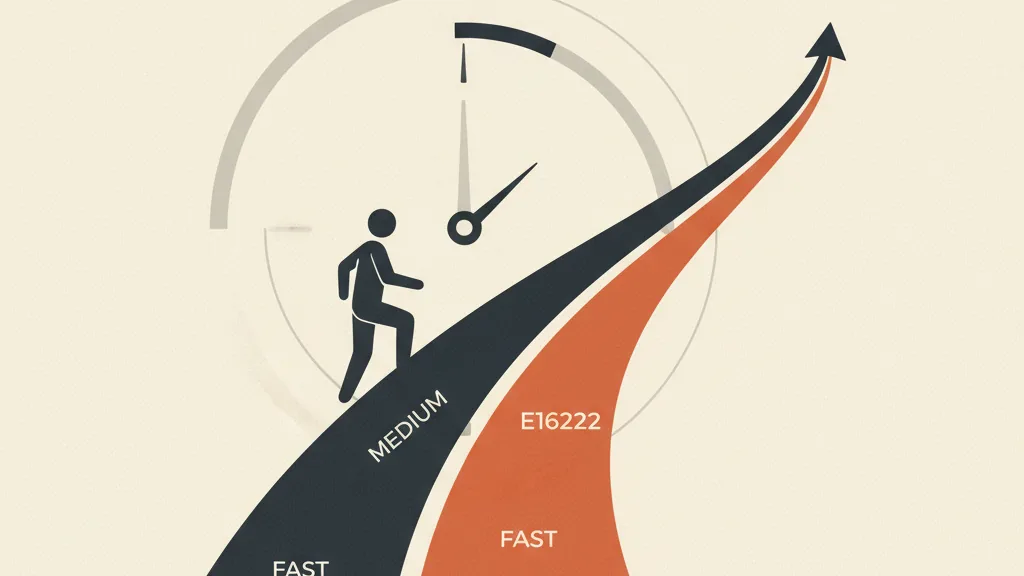
The learning curve: 3-6, 8-12, 14-18 months
Not every new hire learns at the same speed. Industry data describes a fairly wide range for the time needed to reach full productivity:
| Profile | Time to full productivity | What it means |
|---|---|---|
| Top performer | 3-6 months | Absorb information fast, dig up what they need on their own, close gaps independently. |
| Average profile | 8-12 months | The majority. Needs guidance, repetition, and access to whoever "already knows." |
| Slow profile | 14-18 months | Long ramp, heavy reliance on colleagues, higher risk of leaving before they pay off. |
These are estimates, ballpark figures to take as reference rather than absolute truth: they shift by role, industry, and business complexity. But the underlying message holds. An 8-12 month average is not a minor detail: it's nearly a year of salary paid out while the person is still climbing the curve.
When the employee gains and when the company gains
There's a useful way to read this curve. In the first stretch, the learning phase, the one "gaining" is mainly the employee: they collect a salary while building expertise they haven't paid back yet. In the second stretch, once the person is up to speed, the company gains: now that expertise produces more value than it costs.
From here the operational conclusion follows: shortening the ramp maximizes the return. Every week you shift from the "employee gains" phase to the "company gains" phase is net return. And it doesn't require reinventing people. It just requires changing how fast company knowledge reaches them.
Why onboarding is so slow: knowledge is scattered
The ramp takes months not because new hires are slow, but because company knowledge lives in three places that are hard to reach.
- In chats, emails, and scattered documents. Slack, email threads, files spread across five different folders. The decisions are there, but effectively unrecoverable: the newcomer doesn't even know where to look.
- Inside people's heads. Your top performer is worth their weight in gold, but that value is locked inside their head. That's why onboarding is slow (the only way to learn is to interrupt them), and it's also a risk: if they leave, the knowledge walks out the door with them.
- Scattered across dozens of tools. Policies in a PDF, revenue in Excel, supplier history in emails, procedures in some management system. No one uses it in a coordinated way, and the new hire least of all.
The bill is well documented: McKinsey estimates that around 19% of the work week, almost one day out of five, is spent searching for information. For a new hire that figure is even higher, because they don't know where to look and have to stop a colleague every time. We covered this in depth in what scattered knowledge really costs a company and in the parallel risk, that of knowledge walking out the door when an employee leaves.
What changes with a company brain
A company second brain is a large, interconnected digital brain that gathers all of a company's knowledge and that an AI works on top of. The difference from a wiki or a shared folder is substantial: it isn't built to be read by a human flipping through pages, but to be navigated by an AI. The more you use it, the more it knows about the company, and the better the answers get. It's a memory that grows over time.
For a new hire this changes the very nature of onboarding. Instead of interrupting a colleague to ask "how do we usually handle this type of client?" or "what did we decide back in March about that supplier?", they ask the company brain and get an answer grounded in the company's real facts. Not a generic manual: your practices, your cases, your decisions.
At a high level, the value comes from a few mechanisms.
- Atomic notes. Knowledge is broken down into many small notes, one idea per note, all interconnected. It's the same principle sociologist Niklas Luhmann used to write his books, managing roughly 90,000 interlinked cards (the Zettelkasten method). This way the same piece of information can be reused across different contexts and navigated by the AI. We go deeper on this in atomic notes for company knowledge.
- A single source of truth. One unified company canon: the AI doesn't invent, it reports the facts present in the internal knowledge base. This is the concept of a single source of truth, which removes ambiguity for someone who just joined.
- Living memory. The system updates itself with every day's conversations and work sessions, so the knowledge base isn't a stale snapshot but a living, breathing archive. How it works is explained in the living memory of company AI.
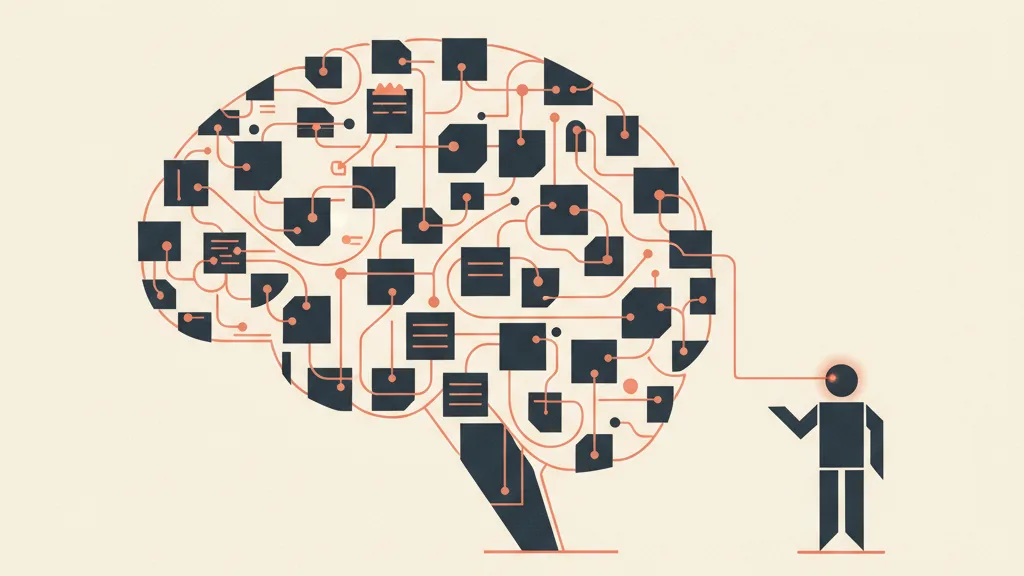
How a company brain halves the ramp
Let's put the pieces together. A new hire is slow because knowledge is scattered and lives in senior staff's heads. The company brain makes that knowledge accessible, on demand, without having to bother anyone. Three concrete effects on onboarding.
- Autonomy from day one. The person finds answers on their own that used to require an email chain or waiting for the right colleague to be free. It's the same autonomy top performers have naturally, made available to everyone.
- Less time stolen from senior staff. Your expert stops being the bottleneck. They no longer answer the same question twenty times: the answer is in the system, trained on their knowledge too.
- An accelerated curve. An average profile that used to take 8-12 months the old way can shift toward the lower end of the range, approaching a top performer's timeline, because they have access to the same context.
It's not magic: it's removing friction. The new hire still has to build technical skill, but the time lost searching, asking, and waiting (that 19% of the week, often more for someone new) shrinks dramatically.
A shorter ramp also cuts churn
There's a second, less obvious return. Faster onboarding makes a person productive sooner, and therefore satisfied sooner: people who feel competent and useful are more likely to stay. On top of that, having knowledge accessible in a system rather than only in people's heads makes job rotation possible: moving people between roles without starting from zero every time. The result is lower turnover, which can be reduced precisely with an AI knowledge base. Fewer departures mean less onboarding to redo: a virtuous circle.
Want to know how much you could shorten your new hires' ramp? Request an analysis of your company knowledge and we'll show you where to act.
The real advantage: your AI is only as smart as what it can read about you
It's worth widening the lens here, because onboarding is just the visible tip. The underlying rule is simple: your AI is only as smart as what it can read about your company. If you and your competitor both use ChatGPT the same way, with no company context, you get the same answers. That's the baseline, zero competitive advantage. A slightly better-crafted prompt isn't enough.
The advantage kicks in once the AI is trained on your data. And this is where companies that are already structured, with processes, history, and accumulated knowledge, are best positioned to get the most out of AI. As we argued in competitive advantage from AI and company data, data is the new gold: a startup trying to disrupt you starts with a data deficit that you, with your company brain, keep widening every single day.
The mechanism feeds itself: the brain knows the company better, so it gives better answers, so it gets used more, so it accumulates even more knowledge. These are compounding returns: the trajectory of a company with a company brain diverges upward from that of one using generic AI like everyone else. It's also why it pays to move now: there's an arbitrage window that will close as the market catches on.
Scale and compliance: two practical objections
As the notes pile up, search still has to stay efficient. As a rule of thumb: under 500 notes, content maps and an index are enough; between roughly 2,500 and 20,000 notes you need embeddings and semantic search; beyond 20,000 you need a full RAG (retrieval-augmented) pipeline, which retrieves only the information relevant to each question. The new hire never sees this complexity: they ask a question, they get the right answer.
On the classic objection ("what about my data?") two points matter. First, plenty of company data has already ended up in ChatGPT via employees, with zero oversight, so a governed company brain is more secure, not less. Second, it's managed through signed DPA contracts and GDPR compliance, with version control for backups and a single up-to-date source even across a team. This is covered in GDPR and security for the second brain. Disclaimer: for the specific legal aspects of your business, always get advice from someone qualified to give it.
Faster onboarding, industry by industry
Where does a long ramp hurt most? Wherever knowledge is the real asset.
- Professional firms. A new associate at a law or accounting firm needs to know clients, cases, and internal practice. With a second brain for professional firms, the history of every case is a question away, instead of locked in the partner's head.
- Sales teams. When a salesperson leaves, their knowledge of clients and deals shouldn't vanish with them. A company brain for the sales team preserves that asset and speeds up onboarding the replacement.
- SMBs and agencies. From file chaos to a single system where anyone, from day one, knows where to find things.
One last insight to guide decisions: with AI you can outsource skill (it writes code) and even outsource thinking (it proposes architectures), but you can't outsource understanding your own business. You need to understand how your company actually works to design the right structure: atomic notes, concept ontology, quality controls, RAG, compliance. That's the part that matters, and it's where an experienced partner makes the difference. For the bigger picture, start with the guide what a company second brain is; for related automations, see AI agents for businesses.
Building and maintaining a company brain properly takes method. At AstraLoop we design it, build it, and run it for your company, so your next hire becomes productive in months, not a year.
Frequently asked questions
How long does it typically take for a new hire to become productive?
Industry estimates point to an average of 8-12 months. The range runs from 3-6 months for top performers to 14-18 months for slower profiles. These are ballpark figures that vary by role and industry, not fixed values.
How does AI actually reduce onboarding time?
By making company knowledge accessible through a company brain: the new hire queries a digital brain trained on the company's own data instead of interrupting colleagues. They find answers on their own, senior staff stop being the bottleneck, and the learning curve shortens.
Why is onboarding so slow at most companies?
Because knowledge is scattered across three places: chats and emails that are hard to retrieve, uncoordinated tools, and above all people's heads. The new hire has to constantly search or ask: McKinsey estimates roughly 19% of the work week is spent searching for information, and it's even more for someone new.
Does faster onboarding also reduce turnover?
Yes. People who become productive sooner feel competent and useful sooner, so they're more likely to stay. Having knowledge in a system rather than only in people's heads also enables job rotation and makes every replacement less disruptive, lowering churn.
What's the difference between a company brain and a regular company wiki?
A wiki is built to be read by a human flipping through pages. A company brain is designed to be navigated by an AI: the more you use it, the more it knows about the company and the better the answers get. It's a memory that grows over time, while a wiki stays static.
Is company data safe in a system like this?
A governed company brain is safer than the uncontrolled use of ChatGPT by employees, which is already happening at most companies today. It's managed through signed DPA contracts, GDPR compliance, and version control for backups and a single source of truth. For specific legal questions you should still consult someone qualified.
If you're paying almost a year of salary before someone actually delivers, let's talk: we design and run the company brain that halves onboarding time.