AI Consulting for Businesses: The Complete Guide to Strategy, Roadmap, and ROI (2026)
12 min read · AstraLoop Studio
TL;DR: AI Consulting in 30 Seconds
- Don't start with the technology, start with your processes. A good AI consulting engagement first maps where you're losing time and margin, then picks the tools.
- The right roadmap has 4 phases: assessment, pilot projects (quick wins), scale-up, ongoing monitoring. Skipping the first one is why roughly 85% of pilots fail when they try to scale.
- The AI Act is already in force. New obligations kick in on August 2, 2026, and AI literacy (Art. 4) is already required for anyone using AI tools. Penalties run up to €35 million or 7% of global turnover.
- ROI is measurable: hours freed up times hourly cost, plus extra revenue, minus costs. Typical payback is 4 to 12 months on well-chosen use cases.
- The human factor decides: training and change management matter more than the model. 73% of companies rank AI upskilling as a priority, but only 22% have structured programs.
This is AstraLoop Studio's cornerstone guide to AI consulting for Italian businesses. It covers the entire journey: where to start, how to map high-return opportunities, the operational roadmap, regulatory obligations, training, use cases by industry, ROI, and real costs. Each chapter links out to deeper dives on our blog. If you're weighing whether and how to bring AI into your company without wasting budget, start here.
What AI Consulting for a Business Actually Means
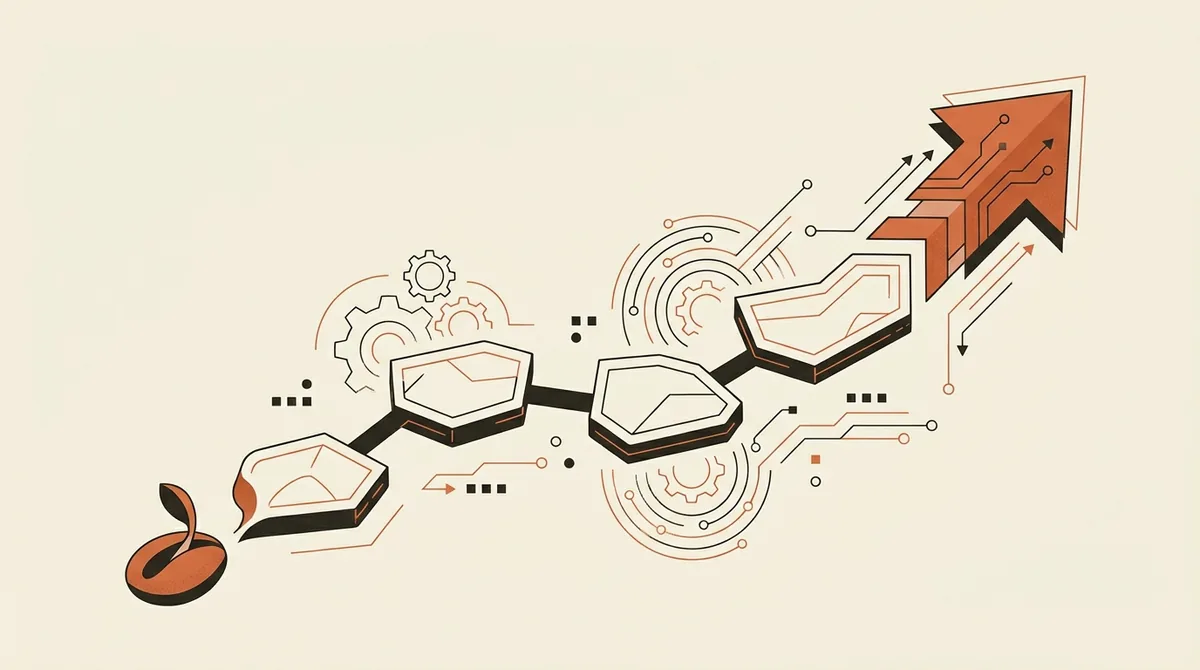
AI consulting isn't "install a chatbot and see what happens." It's work made up of three parts: understanding where AI creates measurable value in your processes, building a realistic adoption plan, and governing risk, cost, and people throughout the journey. The difference between a project that pays for itself and one that ends up shelved almost always comes down to the quality of this initial phase, not the model you picked.
A serious consultant asks uncomfortable questions before pitching solutions. What repetitive tasks tie up your team? Where are you losing customers? What data do you already have, and what shape is it in? What's an hour of your staff's time worth? Without answers to these questions, any tool is a gamble. If you're still not clear on the first step, the practical starting point is understanding where to start with AI in your company, before you even talk about platforms.
For small and medium businesses the logic is identical, just with tighter budget and time constraints. We've devoted a separate piece to AI for SMEs, where priorities shift compared to large enterprises.
Topic Index: The Complete Journey
This guide works as a hub. Each section digs into one piece of the adoption journey, and each piece has its own dedicated article. Here's the map:
- Where to start: the fundamentals, the first processes to touch.
- AI agents: from chatbots to autonomous agents that read documents and act on processes.
- AI Act and governance: obligations, deadlines, Shadow AI, internal policies.
- ROI and POC failure: how to measure returns and keep pilots from dying.
- Roadmap and assessment: the 4 phases of adoption and the initial audit.
- Training: staff upskilling and reskilling (also an AI Act obligation).
- Industry verticals: concrete use cases by niche.
- Costs and services: transparent numbers, setup, and maintenance.
- Build vs. buy and tools: build, buy, or integrate.
1. Mapping High-ROI Opportunities
The first mistake companies make is starting with whatever's trending on LinkedIn. The second is automating what's easy instead of what matters. The practical rule: look for high-volume, repetitive, rule-based or text-based processes that currently eat up hours of skilled staff time.
Examples that come up again and again, regardless of industry:
- Replying to recurring customer emails and requests (first-line customer care).
- Extracting and classifying data from documents (invoices, contracts, orders, delivery notes).
- Qualifying inbound leads and routing them to the right salesperson.
- Generating quotes, drafts, and recurring reports.
- Reactivating a dormant customer database.
Many of these tie into lead generation: if your bottleneck sits further upstream, see how business process automation with AI frees up hours, and how to recover value by reactivating dormant customers in your database. These are often the quick wins with the fastest payback, because you're working with assets you already own.
2. From Chatbots to AI Agents
2026 is the year the conversation shifts from chatbots to autonomous agents. A chatbot answers questions. An AI agent reads documents, queries your CRM or ERP, decides, and takes action on a process: it opens a ticket, updates a record, drafts a quote, sends a follow-up. The operational difference is huge, and so is the savings potential.
But there's a flip side: an agent that acts can also get it wrong in production. The question almost no vendor addresses is "what happens when the agent makes a mistake?" The right answer isn't "it never does," but an architecture with guardrails, human-in-the-loop on critical cases, and continuous monitoring. The agent operates autonomously on standard cases and hands off to a person when confidence drops or an amount crosses a threshold.
To grasp the concept without the jargon, start with what AI agents actually are. On the sales side, one concrete application is combining AI agents with lead generation, where the agent qualifies, enriches, and routes contacts before they ever reach a salesperson.
3. The AI Act and Governance: What Changes from 2026
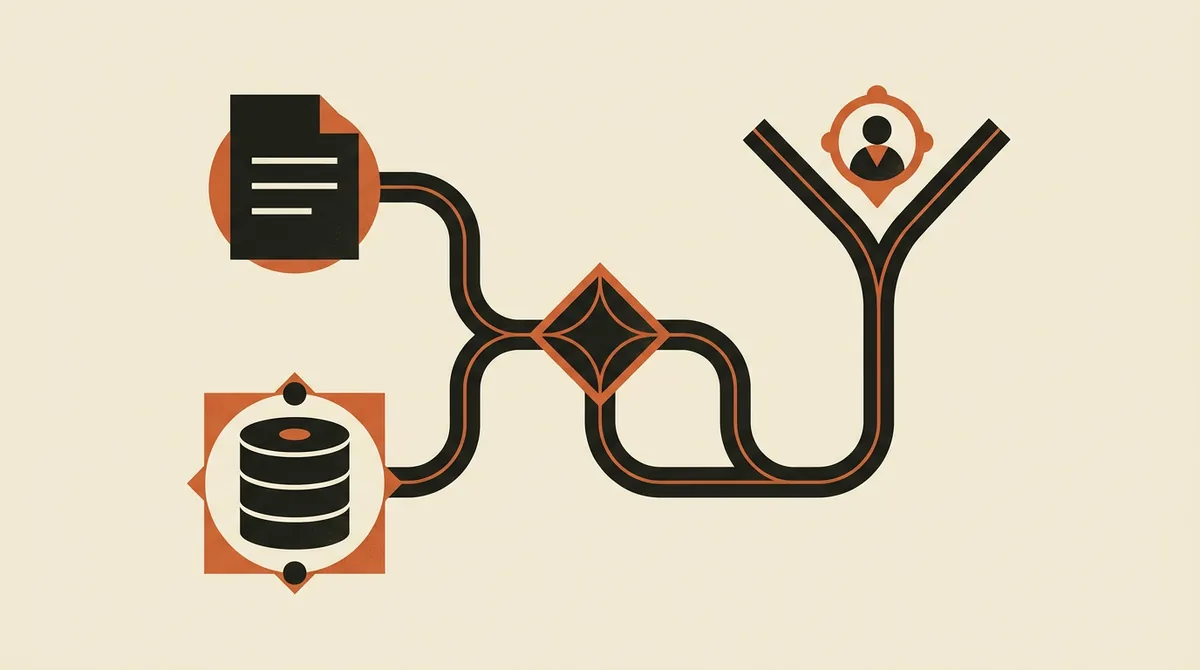
This is where precision matters, since it's a regulatory topic. The AI Act (Regulation (EU) 2024/1689) is Europe's first comprehensive law on artificial intelligence, in force since August 2024 with a staggered rollout. Two points concern every business:
- AI literacy (Art. 4), already in force since February 2025: anyone developing or using AI systems must ensure staff involved have an adequate level of AI competence. This isn't an abstract requirement — it means training the people who use these tools.
- August 2, 2026: further obligations become applicable, including rules on high-risk systems across various scenarios and the full penalty regime. Fines can reach up to €35 million or 7% of global annual turnover for the most serious violations.
The heart of the AI Act is its risk-based approach: systems are classified as prohibited, high-risk, limited-risk, and minimal-risk. Knowing which category your tools fall into is the first compliance step, and it needs to be documented. The Garante Privacy remains the reference point where this intersects with GDPR, while Italy's oversight framework also involves ACN and AgID.
The practical problem is that law firms tend to treat the AI Act almost entirely in the abstract. What companies are missing is the operational translation: auditing systems in use, classifying risk, setting internal policy, training staff. We've gathered concrete deadlines and requirements in our deep dive on 2026 AI Act obligations for SMEs. Note: this is informational, not definitive legal advice. For contractual and liability matters, always involve a lawyer.
Shadow AI: The Risk You Already Have In-House
While you're still debating whether to adopt AI, your employees are already using it. Estimates put 68-76% of staff using AI tools without authorization, pasting company data (sometimes customers' personal data) into public chatbots. That's a GDPR and AI Act risk rolled into one. The fix isn't banning it (that doesn't work), but providing approved tools and a clear policy: what can be pasted, where, and with which tools. Getting Shadow AI under control is often the first intervention that costs almost nothing and pays off immediately.
4. ROI and Why POCs Fail
Roughly 85% of generative AI pilot projects fail to make it into production. Not because the technology doesn't work, but for mundane, predictable reasons: they're tested on a toy case disconnected from real systems, there's no integration with CRM or ERP, the people who'd actually use it aren't involved, and there are no KPIs defined before starting. The pilot "works" in the demo and dies the moment it meets messy data and real processes.
How to avoid it: pick a use case that's already embedded in a value-generating process, define KPIs before you start, integrate with real systems from day one, and involve the team that will actually use it. Then measure.
The ROI Formula
AI returns aren't a gut feeling. Here's how you calculate them:
ROI = (hours freed up x hourly cost) + extra revenue generated - costs (setup + maintenance + licenses)
A concrete, deliberately conservative example:
| Line item | Monthly value |
|---|---|
| Hours freed up on customer care (40h x €25/h) | +€1,000 |
| Extra qualified leads converted (2 x €500 margin) | +€1,000 |
| Platform cost plus maintenance | -€400 |
| Net monthly benefit | +€1,600 |
With an initial setup of, say, €6,000, payback comes in under 4 months. On well-chosen cases, typical payback runs 4 to 12 months. If it takes longer than a year, either you picked the wrong use case or you underestimated the hidden costs. For the measurement method applied to lead generation, it's worth also looking at the real cost per lead before and after automation.
5. The 4-Phase Roadmap
This is the backbone of any serious AI adoption project. Four phases, in order, none skipped.
| Phase | What happens | Typical duration | Output |
|---|---|---|---|
| 1. Assessment / Audit | Process mapping, available data, AI Act risk classification, use cases prioritized by ROI | 2-4 weeks | Plan with priorities and estimates |
| 2. Pilot projects | 1-2 quick wins integrated with real systems, defined KPIs, team involved | 4-8 weeks | Working prototype plus metrics |
| 3. Scale-up | Move to production, full integrations, guardrails, broader training | 2-4 months | System in production |
| 4. Monitoring | Ongoing KPIs, model drift checks, updates, new use cases | Ongoing | Improvement and new ROI |
Phase 4 is the one everyone forgets. A model isn't a piece of furniture: it degrades. Data changes, customer behavior changes, performance drops (so-called model drift). Without monitoring, the system that worked fine in January is producing errors by March without anyone noticing, until it becomes a real problem.
6. Training: The Factor That Decides
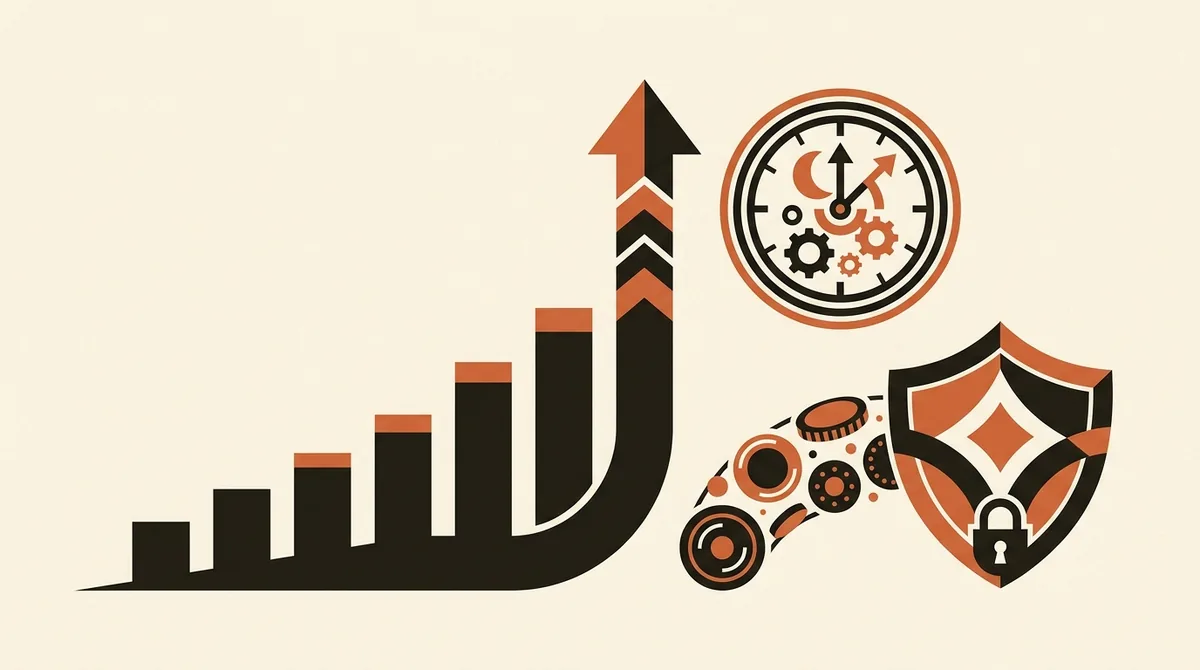
You can have the best platform on the market: if the team doesn't use it, or uses it badly, you get no return. Training is both a success factor and, since 2025, a legal obligation (Art. 4 AI Act). Italy's paradox: 73% of companies list AI upskilling among their training priorities, but only 22% have structured programs. The rest is improvisation.
Effective training isn't a generic webinar. It's role-specific: what the customer care rep needs to know how to do, what the salesperson needs, what whoever handles sensitive data needs. And it includes usage rules (the anti-Shadow-AI policy mentioned above). Change management — guiding people through the change and reducing resistance — is the number one reason pilots die, and it's exactly the part technical articles skip.
Want to know which of your company's processes would deliver the highest ROI if automated with AI? Request a free analysis: we'll map out the concrete opportunities together, no fluff.
7. Use Cases by Industry
Generic "AI for SMEs" guides don't help much when it's time to decide. What you need is the use case for your specific niche, with concrete KPIs. Here are a few verticals where the playbooks are now well-tested, many on the customer acquisition front:
- Real estate: automatic contact qualification, instant responses to inquiries, preliminary valuations. See lead generation for real estate.
- Insurance: assisted quoting, case routing, follow-up. Deep dive on lead generation for insurance.
- Car dealerships: managing multichannel inbound leads and appointments. See lead generation for dealerships.
- Solar and energy: technical qualification of contacts and site visits. See lead generation in solar.
- Professional firms: client onboarding, document management, first-line support. Dig deeper with lead generation for professional firms.
- E-commerce: pre- and post-sale support, cart recovery, recommendations. See lead generation for e-commerce.
The common thread: AI applied to generating and managing contacts is often the first use case with demonstrable ROI, because the outcome (more appointments, less time wasted on cold leads) is measurable right away.
8. Real Costs: Numbers, Not Smoke
Many vendors avoid giving numbers. We'd rather show them, because transparency on cost (setup, maintenance, drift management) is what builds trust at the decision stage. Here are some indicative ranges by scenario, to be fine-tuned for your specific case:
| Scenario | Initial setup | Monthly cost |
|---|---|---|
| Single quick win (e.g., first-line AI customer care) | €3,000-8,000 | €200-600 |
| AI agent integrated with CRM/ERP | €8,000-25,000 | €600-2,000 |
| Scaled multi-process system | €25,000+ | €2,000+ |
There are three line items companies tend to underestimate: maintenance (systems need updating), model drift (monitoring has a cost), and integration with messy data (often the heaviest work is cleaning the data, not training the model). A quote that doesn't include these items is an incomplete quote.
9. Build, Buy, or Integrate?
The decisive question at the decision stage: build a custom solution, buy a ready-made platform, or integrate existing tools? There's no one-size-fits-all answer.
- Buy (ready-made platform): fast, predictable cost, less control and possible lock-in. Ideal for standard use cases.
- Build (custom): maximum control and differentiation, higher cost and time, requires expertise to maintain.
- Integrate (combine existing tools): the most common path for SMEs, a good balance of cost and flexibility.
Independent benchmarking across vendors and solutions is rare and much sought-after, precisely because it helps you decide without commercial bias. We've put together a neutral comparison in the best AI tools for businesses. The practical rule: start with buy or integrate to validate the use case, and consider build only once ROI is proven and you need differentiation.
How an AstraLoop Consulting Engagement Works
In short, our approach follows the roadmap's 4 phases with one principle: no technology before the assessment, no scale-up before a pilot has proven its numbers. We start with high-ROI processes, integrate with the systems you already use, put guardrails and human-in-the-loop where needed, train the team, and stay on top of monitoring. The governance piece (AI Act, Shadow AI, policy) isn't an add-on: it's built in from day one, because the 2026 obligations are already here.
If you're building or rethinking your customer acquisition system, that's often exactly where AI produces its first concrete, measurable return.
Conclusion: The First Step
Adopting AI in a company isn't a leap into the void or a technology bet. It's a structured journey: map the opportunities, start with a measurable quick win, scale what works, govern both risk and people. Skip the assessment and you land in the 85% of pilots that fail. Do it right and you pay back the investment in a few months while building an advantage competitors will struggle to catch up to.
August 2, 2026 isn't a distant date, and AI literacy is already mandatory. Moving now, with method, means arriving ready on both the economic return front and the regulatory one.
Frequently asked questions
How much does AI consulting cost for a business in Italy?
It depends on the scope. An initial assessment is often fairly contained (a few weeks of work), while an integrated quick win typically starts at €3,000-8,000 in setup plus €200-600 a month. Scaled projects and agents integrated with CRM or ERP run €8,000-25,000 in setup. The line item not to forget is recurring maintenance.
Where should a business start with artificial intelligence?
Not with the technology, with your processes. Identify a high-volume, repetitive, text- or rule-based activity (first-line customer care, lead qualification, document handling) and start there with a measurable pilot. It's the quick win with the fastest payback.
What does the AI Act require of businesses, and from when?
The AI Act (Regulation (EU) 2024/1689) rolls out in stages. Since February 2025, AI literacy for staff (Art. 4) has already been required. From August 2, 2026, further obligations and the full penalty regime kick in, with fines up to €35 million or 7% of global turnover. Every company should classify its systems by risk category.
Why do most AI pilot projects fail?
Roughly 85% of generative AI pilots never make it to production. The reasons are recurring: they're tested on toy cases disconnected from real systems, there's no integration with CRM or ERP, KPIs aren't defined upfront, and the team that would actually use it isn't involved. Change management is the most underrated factor.
How do you measure the ROI of artificial intelligence?
With a concrete formula: hours freed up multiplied by hourly cost, plus extra revenue generated, minus costs (setup, licenses, maintenance). On well-chosen use cases, typical payback is 4 to 12 months. If it takes longer than a year, usually either the use case was poorly chosen or the costs were underestimated.
What's the difference between a chatbot and an AI agent?
A chatbot answers questions. An AI agent reads documents, queries your systems (CRM, ERP), decides, and takes action on a process: opening tickets, updating records, drafting quotes. In production, you need an architecture with guardrails, human-in-the-loop on critical cases, and continuous monitoring to handle errors.
Ready to build your AI roadmap with method, from assessment to measurable ROI? Talk to us and get an assessment tailored to your specific case.