How to Build a Quality Email List (Without Buying One)
9 min read · AstraLoop Studio
Sooner or later someone will offer to sell you a ready-made email list. "50,000 addresses in your industry, just upload and go live tomorrow." Don't do it. It's the fastest way I know to torch your domain reputation, land straight in spam, and end up with zero sales and a deliverability problem that follows you around for months.
A bought list (or a "swapped" one, or one scraped together with a 500-euro giveaway) is made up of people who don't know you, never asked you for anything, and have zero interest in what you sell. Open rates collapse, unsubscribes and spam complaints spike, and providers like Gmail and Outlook start flagging you as an unreliable sender. At that point even the emails going to people who do want to hear from you start landing in the wrong folder.
The truth is a small, engaged list beats a huge, dead one every time. Two thousand contacts who raised their hand because they're genuinely interested in your topic are worth more than fifty thousand anonymous addresses. In this article we'll look at how to build a quality list from scratch: which lead magnets actually work, how to design smart forms, and above all how to use every signup to collect zero-party data — the information a contact volunteers about themselves, which lets you segment and personalize starting with the very first message.
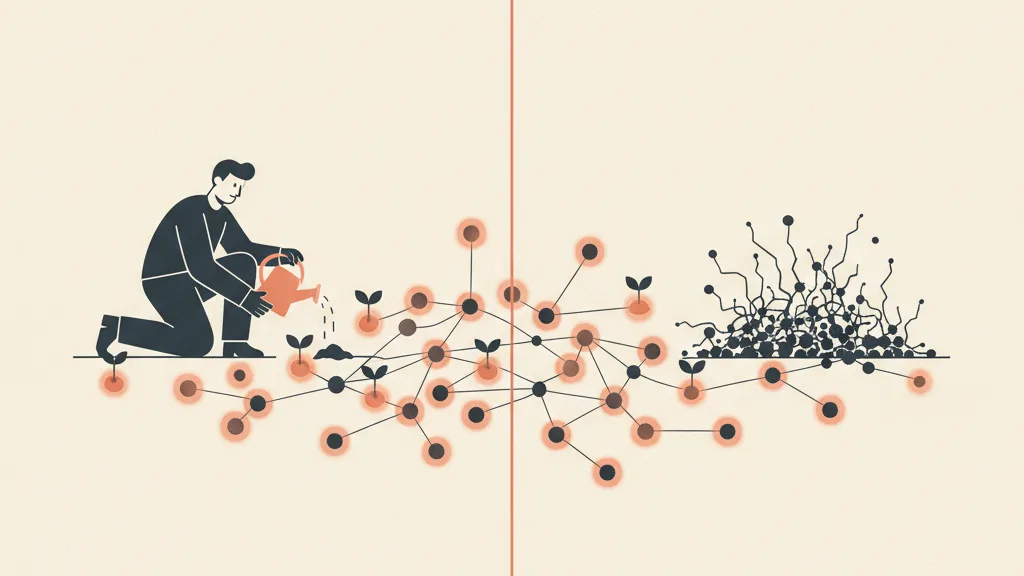
Why a bought list never works
Let's set aside the emotional argument and look at the numbers. When you send to a cold, purchased list, three things happen at once:
- Deliverability tanks. Many addresses are old, dead, or spam traps (inboxes created specifically to catch senders emailing non-consenting lists). A high bounce rate plus a handful of spam traps is enough to trigger provider filters.
- Your domain reputation takes the hit. If enough people mark you as spam, the damage doesn't stay on that one campaign — it attaches to your sending domain. Recovering it takes weeks of domain warm-up and list hygiene.
- GDPR exposure. In Italy and across the EU, sending marketing email to people who haven't given explicit consent exposes you to fines. Consent has to be freely given, specific, and provable. A bought list has none of that, by definition.
If you want the technical detail on why messages get filtered in the first place, we've written a dedicated guide on why emails end up in spam. The point here is simple: the shortcut costs more than doing it properly. Building a list organically is slower, but every contact is an asset you actually own, and it pays off over time.
Zero-party data: the real reason to build the list yourself
This is where the difference lies between someone who just accumulates addresses and someone who builds a marketing machine. You don't need an email address. You need an email address plus the context to use it well.
Zero-party data is information a person gives you voluntarily and knowingly: what problem they're trying to solve, their role at the company, how big their business is, what they actually care about. It's a different concept from first-party data, which is behavioral data you observe (pages viewed, clicks, purchases). If you've never dug into the distinction, start here: what zero-party data is in marketing.
Why does it matter so much right now? Because third-party tracking is dying: cookies get blocked, iOS limits tracking, and regulations keep tightening. In this landscape, the data people tell you directly becomes the most valuable asset you have. You don't lose it with a Safari update, and it doesn't depend on any external platform.
Concretely: if a contact tells you, at signup, "I run a clothing e-commerce store with 5 employees and my problem is abandoned cart recovery," you already know which sequence to send, which case study to show, and when to offer a call. That's the foundation for real AI-driven personalization: without declared data, personalization is just a first name in the subject line. With zero-party data, it's a message that reads like it was written just for them.
The lead magnet: what you offer in exchange for the email
Nobody hands over their email to "stay updated" anymore. That era is over. They'll give it to you if, in exchange, they get something that solves a real problem, right now. That something is the lead magnet.
A good lead magnet has four traits: it's specific (solves one precise problem, not "marketing" in general), it's immediate (usable in a few minutes), it's relevant to the customer you want to attract, and it shows a taste of how you work. Too generic and you attract curious people who'll never buy. Too broad and nobody finishes it.
Formats that work, by business type
| Format | Works best for | Concrete example |
|---|---|---|
| Downloadable checklist / template | B2B services, consultants | "12-point checklist before launching a Meta campaign" |
| Calculator / interactive tool | SaaS, agencies, finance | "Calculate your real customer acquisition cost" |
| Guide / email mini-course | Training, high-ticket services | "5 emails in 5 days to fix your funnel" |
| Discount / free trial | E-commerce, products | "10% off your first order" (only if the margin holds up) |
| Quiz with personalized result | Beauty, wellness, B2C | "What's your skin type? Find out in 6 questions" |
Notice the quiz in the last row: it's my favorite format when the goal is collecting zero-party data, because the data collection is the value you're offering. The person answers six questions, gets a tailored result, and you get six qualifying data points in one shot. Everybody wins.
Be careful with a flat discount for e-commerce: it works on volume, but it also attracts deal hunters. It's fine as a lever on your site, but it's better paired with a segmentation question. If you run an online store, this ties directly into popup strategy for capturing e-commerce leads, where the popup's timing and trigger matter as much as the offer. For a full rundown of formats and common mistakes, there's the guide on how to build an effective lead magnet.
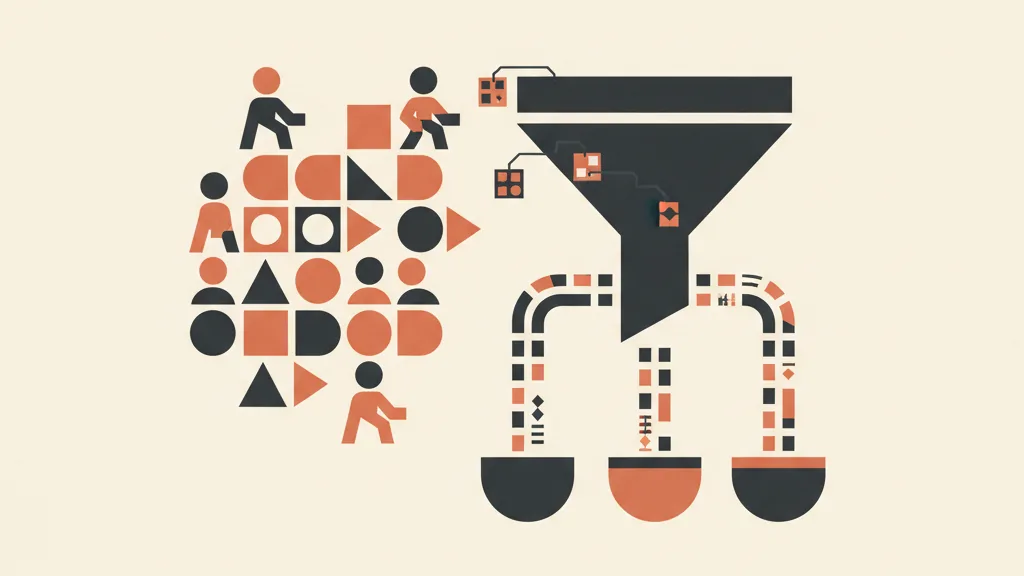
The smart form: asking the right thing at the right moment
The form is where most companies throw away the advantage. Either they ask for too much (ten required fields: conversions drop to zero), or too little (just the email: no data to segment with). The right balance depends on where and when you're asking.
The proportional friction rule
The higher the value you offer, the more fields you can ask for. An exit popup offering a 10% discount can only afford the email field: any extra field tanks the conversion rate. A landing page for a substantial lead magnet (an industry report, a free audit) can ask for name, role, and industry, because the person feels it's worth the effort.
A technique that works well is progressive profiling: on first contact you ask only for the email. Then, in later interactions (a second resource, a profile update, a reply to an email), you add one question at a time. You build the contact's profile bit by bit, without ever scaring them off with a long form. Many marketing automation tools handle this automatically.
The questions worth their weight in gold
If you can only ask one question beyond the email, ask the one that helps you segment for your specific business. A few examples:
- B2B: "How many people work at your company?" or "What's your role?" (distinguishes decision-makers from researchers).
- E-commerce: "Who are you shopping for?" or "What are you most interested in?" (segments the catalog).
- Services: "What's the most urgent challenge you want to solve?" (tells you exactly which sequence to send).
Every answer becomes a tag in your system and the foundation for building the email segments you should set up right away. An untagged contact is one who'll get the exact same message as everyone else — a mediocre message for everyone. A tagged contact gets the right message, and open and conversion rates prove it.
Want to turn your website visitors into a list of profiled contacts, with lead magnets and forms that collect the right data? Request a free analysis of your case.
Where to place your capture points (without being pushy)
A great lead magnet nobody sees is useless. Capture points need to be spread across where the traffic already flows, with a weight proportional to the person's intent at that moment:
- Exit-intent popup: appears when the visitor is about to leave. It doesn't interrupt reading — it catches people who were already on their way out. On e-commerce it's the workhorse.
- In-line boxes inside articles: halfway through a useful piece of content, when the reader is already warmed up by the value they're getting, a box offering a related resource converts very well.
- Fixed top bar or footer: discreet, always present, for people who decide at their own pace.
- Dedicated landing page: for traffic from ads or social, where the page does one thing and does it well.
- Checkout and post-purchase: someone who just bought is the best moment to ask for consent to receive updates. They're already customers.
A common-sense rule that's also good GDPR practice: marketing consent has to be separate from the main action. At checkout, the "I want to receive email offers" box shouldn't be pre-checked and shouldn't be tied to completing the order. Free consent means the person can buy without subscribing. This keeps you compliant and, paradoxically, gives you a healthier list: people who sign up do it because they want to, not because they were forced to.
What happens right after signup: the welcome flow
A new contact's peak attention window is the first five minutes after they sign up. If they get nothing in that moment, the enthusiasm evaporates, and by the time your first campaign lands two weeks later they won't even remember who you are. That's where unsubscribes and spam complaints come from.
You need an automated welcome flow: a sequence of 3-5 emails that fires instantly. The first delivers the promised lead magnet and confirms who you are. The following ones build trust, tell a concrete story, and can include one more question to enrich the profile. It's also the best moment for progressive profiling, because the contact is warm and willing to answer.
The welcome flow also serves a technical purpose: sending a few emails right after signup, when engagement is high, helps providers trust your domain. It's the exact opposite of what happens with a bought list. For how to actually write these emails, our guide to email marketing copywriting covers subject lines, structure, and calls to action in detail.
List hygiene: smaller and healthier wins
Building the list is half the job. Keeping it clean is the other half. A list that grows in numbers but fills up with inactive contacts gets worse over time: the inactives drag down your average rates, and providers read those low rates as a signal that you're sending stuff that isn't relevant.
Two practices worth putting on your calendar:
- Periodic re-engagement: every 3-6 months, isolate contacts who haven't opened in months and try to win them back with a dedicated campaign ("are you still there?"). Anyone who doesn't respond gets removed, not dragged along forever. It's part of a broader customer database segmentation strategy.
- Bounce cleanup: remove addresses that hard bounce immediately. Keeping them around is nothing but a reputation risk.
It feels counterintuitive to delete contacts you worked hard to collect, but the numbers are clear: a thousand active contacts convert better than five thousand where four thousand are dormant, and they also protect your deliverability toward the ones who actually matter.
From subscribers to customers: the list as part of a system
An email list, on its own, isn't a goal. It's one piece of a larger system. The zero-party data you collect through smart forms only has value if it ends up somewhere you can use it — ideally a CRM built for your SME that connects every contact to their tags, their behavior, and where they are in the buying journey.
That's where the real work starts: automated sequences that nurture the contact based on what they've told you, lead scoring that flags for sales who's ready to talk, and integration with your other channels. This is the logic behind AI-powered process automation: the contact enters cold through a lead magnet, and the system carries them all the way to becoming a customer without you having to chase each one by hand.
Seen this way, list building isn't an isolated marketing activity — it's the entry point of a real customer acquisition system. The list feeds the funnel, the funnel qualifies, the CRM organizes, and automation converts. Buying a list skips every one of these steps, which is exactly why it doesn't bring in customers: it gives you addresses, not relationships.
In summary
Building a quality list without buying one comes down to a few choices made well: offer a specific lead magnet that solves a real problem, use smart forms that collect useful zero-party data without adding friction, greet every new subscriber with an instant welcome flow, and keep the list clean over time. It's slower than uploading a purchased CSV, but every contact is an asset you own, that respects GDPR, and that pays off in the long run. There is no shortcut — only the path that actually works.
Frequently asked questions
Is it legal to buy an email list in Italy?
No, not for direct marketing purposes. GDPR requires explicit, freely given, specific consent from the person to receive commercial email. A bought list doesn't have this consent, so sending campaigns to it exposes you to fines on top of serious deliverability damage.
How many fields should a signup form have?
It depends on the value you offer and the moment. A quick-discount popup should ask for the email only. A landing page for a substantial lead magnet can ask for 3-4 fields (name, role, industry). Generally, fewer fields means more conversions: if you want more data, use progressive profiling and collect it bit by bit.
What is zero-party data and why does it matter for email marketing?
It's information a person gives you voluntarily and knowingly: the problem they need solved, their role, company size, preferences. Unlike tracking data, it doesn't depend on cookies or external platforms, and it lets you segment and personalize messages starting with the first email, boosting opens and conversions.
Is a small list better than a big one?
A small, active list is better. Two thousand contacts who asked to receive your emails are worth more than fifty thousand anonymous addresses. A list full of inactive contacts drags down your average rates and damages your domain reputation with providers, hurting delivery to your good contacts too.
What's the best lead magnet for collecting emails?
There's no single best format — it depends on your audience. Checklists, templates, and calculators work well for B2B; discounts paired with a segmentation question work for e-commerce; for collecting zero-party data, quizzes with a personalized result are ideal, because the data collection itself is the value being offered.
How often should you clean your contact list?
Remove hard bounces immediately, and run a re-engagement campaign every 3-6 months to isolate contacts who've been inactive for months. Anyone who doesn't respond should be removed: keeping dormant contacts around drags down your average rates and puts deliverability at risk for the people who actually open and click.
If you want to build a list that actually drives sales (not just an archive of useless addresses), write to us at astraloopstudio@gmail.com: we'll design the collection, segmentation, and automation system that fits your business.