Email Marketing Copywriting: The Structure That Sells
8 min read · AstraLoop Studio
In B2B, most emails don't fail because of the wrong words — they fail because of the wrong structure. A subject line that gives no reason to open, a body that circles the point without landing on it, three different calls to action in the same message: the reader closes it before even understanding what you're asking.
The good news is that a sales email always does the same five jobs, in the same order: subject line, hook, body, a single CTA, and a PS. Learn the structure once and you can apply it to any message, from the first touch with a lead who just came in to the win-back of someone who's gone quiet for months. If you want the bigger picture, start with our guide to copywriting for customer acquisition; here we zoom in on one specific piece — the structure of a single message — with examples ready to drop into your CRM.
Why structure matters more than "magic words"
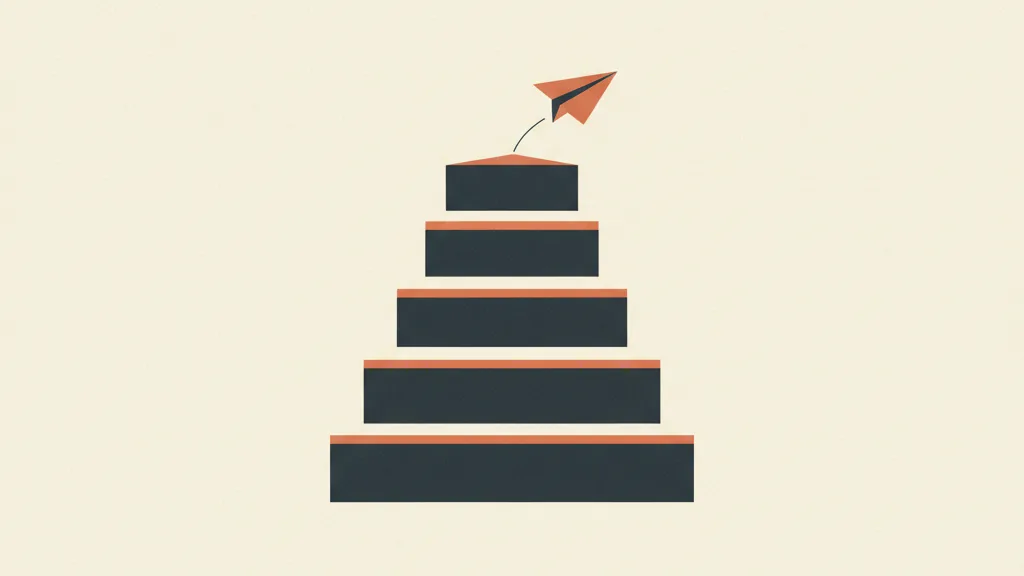
Readers decide in a few seconds whether to keep going. Structure exists to guide attention one step at a time: the subject line earns the open, the hook earns the next line, the body builds the value, the CTA says what to do, and the PS lowers the last bit of resistance. Skip a step and the reader stops right there.
Copywriting frameworks don't replace this skeleton — they fill it in. They're there to organize the body of the message, but the five-block structure underneath stays the same. If you want a refresher on the models, we have a dedicated guide to the AIDA, PAS, and BAB frameworks. And before you write a single line, keep in mind where the reader actually is: a contact who just came in and one who's been silent for six months are not at the same level of awareness, and that changes tone, length, and ask.
The five blocks of a sales email
1. Subject line: its only job is to get the open
The subject line isn't there to summarize the email — it's there to earn the open. It works when it's specific and carries a single idea: "3 quotes stuck for 60 days" beats "Update on your projects." Keep it short (4-7 words, so it still holds up in the mobile preview), skip the clickbait you'll only betray in the body, and use your CRM fields to personalize it (name, company, last purchase). If you want to work on this block on its own, read how to write subject lines that get opened.
2. Hook: the first line is worth double
The first line doubles as the preview text shown next to the subject line. Waste it on "Hope you're doing well" and you've thrown away two precious centimeters of screen. Start from the reader, a fact, or a tension: "I checked your account — your last order was back in March." The hook confirms the promise made by the subject line and creates the pull to read the next one.
3. Body: one problem, one proof, one promise
The body covers exactly one idea. If you have three things to say, that's three emails. Use a framework to give it rhythm (PAS to make the problem felt, BAB to show the before and after), short sentences, two- or three-line paragraphs, and concrete numbers instead of adjectives ("get back 6 hours a week" beats "save a ton of time"). In B2B, cut the jargon: write the way you'd talk on a call. For a refresher on this block, see our guide to emails that convert.
4. Single CTA: one email, one action
Every email asks for exactly one thing. Two different CTAs cut in half the odds that the reader completes either one. Pick the lowest-friction action that still serves the goal: often "Reply to this email with a yes and I'll send you two dates" converts better than "Book a call," because replying costs less than opening a calendar. You can repeat the same CTA twice (once midway, once at the end), but it stays a single ask.
5. PS: the second most-read block
After the subject line, the PS is what catches the eye most when an email is being scanned. Don't waste it on sign-offs: use it to restate the benefit, add a real deadline, remove an objection, or redirect ("PS. If purchasing isn't your call, could you point me to the right colleague?"). In a sequence, the PS is also the ideal spot to build a bridge to the next email.
| Block | What it needs to achieve | Practical rule |
|---|---|---|
| Subject line | Get the open | 4-7 words, one idea only, specific |
| Hook | Get the first line read | Start from the reader or a fact, never a greeting |
| Body | Build the value | One idea only, short sentences, concrete numbers |
| CTA | Get an action | One single ask, low friction |
| PS | Catch those who skip the body | Restate the benefit or remove an objection |
The structure applied to a B2B nurture sequence
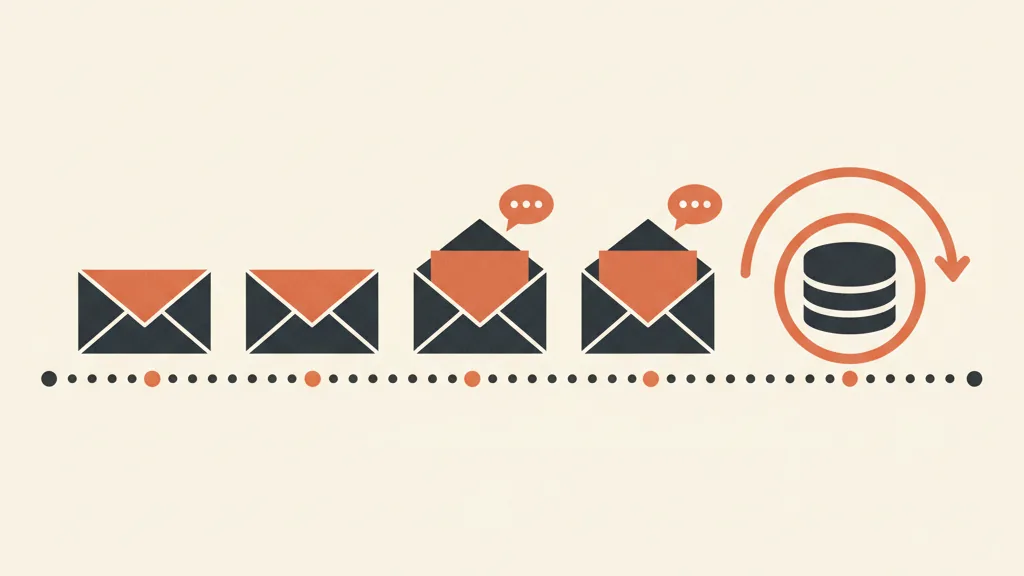
Take a lead who downloaded a guide or asked for a demo. They're not ready to buy, but they're warm. A B2B nurture sequence walks them through four or five emails, each built on the same five blocks but with a different goal.
| When | Goal | Body (framework) | |
|---|---|---|---|
| 1 | Immediately | Deliver the resource and set expectations | BAB: where you are now, where you can get to |
| 2 | Day 2 | Make the cost of the problem felt | PAS |
| 3 | Day 4 | Bring proof (case study, numbers) | Short story plus result |
| 4 | Day 7 | Remove the most common objection | Question and answer |
| 5 | Day 10 | Ask for the call | AIDA, single CTA |
Notice the rhythm: each email touches on one theme only, has a single call to action, and hands off to the next one through the PS. It's this consistency, not any single stroke of genius, that carries the lead into a conversation with sales.
Want these sequences to fire on their own from your CRM, with subject lines and hooks personalized on the data you already have? Tell us how you work today and we'll show you how to set it up.
The structure applied to a win-back
A contact who's gone quiet for months shouldn't be treated like a new lead: they already know who you are, so honesty beats enthusiasm. A short win-back sequence (three emails) works better than a long one.
- Email 1, the honest reminder. A direct subject line ("Did we lose touch?"), a hook that names the fact ("Our last contact was back in April"), a two-line body, a plain reply CTA. No offer yet.
- Email 2, the reason to come back. A concrete update or a recent result that wasn't there before. Here the body uses BAB: what's changed since you last spoke.
- Email 3, the last call. A real deadline or incentive, and an explicit choice: "If I don't hear from you by Friday, I'll remove your contact from the list." The PS leaves the door open.
The subject lines, hooks, and CTAs change — the structure doesn't. If you want to start from ready-made copy, take a look at our win-back email examples.
How to run these emails through your CRM
A sequence isn't worth much if you're sending it by hand. The real upgrade is tying it to behavior in the CRM, so it fires on its own at the right moment.
- Behavioral triggers: the nurture sequence starts when the lead magnet is downloaded, the win-back one starts after X days of inactivity or when status changes to "dormant customer."
- Fields for personalization: industry, last purchase, contact person, and assigned sales rep flow into the subject line and hook in place of generic placeholders.
- Lead scoring: opens, clicks, and replies raise the score; once a threshold is crossed, the contact gets handed to sales instead of receiving the next email.
It's the same principle behind a custom-built CRM: the data you already have decides who gets what, and when. The five parts of the email remain the building block; the CRM decides timing and recipients.
Mistakes that kill conversion
- More than one ask per email: when in doubt, the reader does nothing.
- A subject line that promises one thing and a body that delivers another: you burn trust and the next open with it.
- A wall of text with no breathing room: on mobile that's a death sentence — people scroll and close.
- Talking about yourself instead of the reader: "we're a leader in our field" doesn't open anyone's wallet.
- No PS: you're throwing away the second most-read block in the email.
Checklist before you hit send
- Does the subject line give a clear, specific reason to open?
- Does the first line hold up even read on its own in the preview?
- Does the body cover one idea only, with at least one concrete number?
- Is there a single action requested, low friction?
- Does the PS add something (a benefit, a deadline, a removed objection)?
- Are the CRM trigger and fields set up correctly?
Master these five blocks and stop writing emails "by feel": start writing ones you can replicate, test, and improve one piece at a time.
Frequently asked questions
What is the structure of a sales email?
Five blocks in order: subject line (gets the open), hook (gets the first line read), body (builds value around a single idea), a single CTA (asks for one action), and the PS (restates the benefit or removes an objection).
How many CTAs should I put in one email?
Just one ask. You can repeat the same call to action twice, midway and at the end, but two different actions split attention and lower response rates.
How long should an email subject line be?
Short and specific — roughly 4-7 words, so it still holds up in the mobile preview. One idea only, no clickbait you don't back up in the body.
Does the PS actually matter in B2B emails?
Yes. After the subject line, it's the most-read part when an email is being scanned. Use it to restate the benefit, add a real deadline, or remove an objection.
How many emails does a nurture sequence need?
Typically 4 to 6, spread over one or two weeks. The number depends on the sales cycle: the longer and more complex the purchase, the more touches it takes.
How do I connect these emails to my CRM?
With behavioral triggers (downloads, inactivity, status changes), fields that personalize the subject line and hook, and lead scoring that hands the contact to sales once a threshold is crossed.
If you'd rather start from a proven structure than a blank page, ask us for an audit of your emails: we'll pinpoint what to fix to get more replies and close more contacts.