Customer database segmentation strategies: from RFM to behavioral segments, activated by AI in your CRM
9 min read · AstraLoop Studio
Most companies treat their customer database as a single block: a list to pull from whenever there's a message to send. Same message to everyone, same timing, same offer. Then they're surprised when open rates tank and campaign revenue stays flat.
The problem is almost never the message. It's that you're talking to different people as if they were the same person. A customer who has bought three times in the last two months and one who hasn't opened your email in a year shouldn't be treated the same way. That's exactly what segmentation means: you stop talking to the crowd and start talking to groups with different needs, different value, and different timing.
This article isn't the usual list of "customer categories to create." We'll show you two concrete models that hold up in almost any context (RFM and behavioral segmentation), how to combine them, and above all how to turn them into dynamic segments that AI updates on its own inside your CRM, so no one has to redo the work by hand every week.
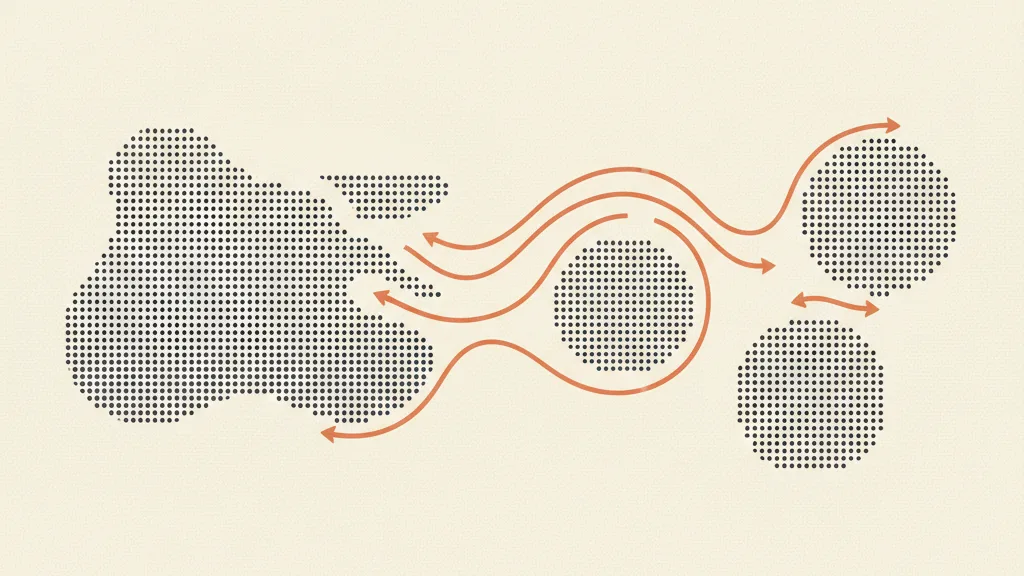
What segmentation strategies actually are (and why a fixed list isn't enough)
Segmenting a customer database means splitting it into homogeneous groups so you can trigger the right message, offer, and timing for each one. That's the textbook definition, and it's true but incomplete.
Here's the part almost nobody explains: there are two broad families of segmentation strategies, and you need both.
- Static (descriptive) segmentation: splits customers by attributes that rarely change, such as industry, company size, region, role, acquisition channel. Useful for framing, not for day-to-day action.
- Dynamic segmentation (RFM and behavioral): splits customers by how they behave over time — what they buy, when, how often, what they open and click. It keeps changing, and it's the one that actually moves the numbers.
Most companies stop at the first one. They create three or four lists (customers, prospects, former customers) and let them sit there getting stale. The real value is in the second family, precisely because it's dynamic: it catches the moment a customer is about to buy again, or about to churn, and gives you a window to act before it's too late.
The RFM model: the foundation that always works
RFM is the most solid, most underrated segmentation model out there. It's built on three variables that any transactional database already contains:
- Recency: how long ago the customer's last purchase was. The more recent, the "hotter" the customer.
- Frequency: how many times they bought in a given period. Measures habit and loyalty.
- Monetary value: how much they've spent in total. Separates the customers who barely matter from the ones who keep your revenue afloat.
The mechanics are simple: score each customer (usually 1 to 5) on each of the three variables, then cross the scores to get your segments. You don't need a fancy algorithm. You need a clear criterion. If you want the operational detail on scoring and quintiles, we walked through it step by step in our dedicated guide on RFM analysis and how the scores are built.
What matters is what you do with those scores. Here are the RFM segments that drive most of the value.
The RFM segments that matter
| Segment | RFM profile | Recommended action |
|---|---|---|
| Champions | High R, high F, high M | Loyalty programs, early access, premium upsell. This is your core base to protect. |
| Growing loyals | High R, medium F, medium M | Targeted cross-sell to raise frequency and average order value. |
| Promising newcomers | High R, low F, low M | Onboarding and second-purchase sequence. The decisive moment for turning them into loyal customers. |
| At risk | Declining R, historically high F, high M | Were good customers and are slowing down. Priority reactivation: this is where you lose the most revenue. |
| Dormant / lost | Very low R, variable F | Win-back campaign with a strong incentive or a re-engagement message. |
Notice the "at risk" segment. It's the most valuable one, and almost nobody keeps an eye on it. A customer who used to spend a lot and is now slowing down is worth infinitely more than a brand-new customer to acquire, and winning them back costs a fraction as much. On this point, it's worth reading how often a customer database sits there as an unused asset while budget keeps going toward acquiring new ones.
Behavioral segmentation: beyond the purchase
RFM looks at what a customer has bought. Behavioral segmentation looks at what a customer does, even when they're not buying: which emails they open, which links they click, which pages they visit, which products they add to cart and abandon, which webinars they sign up for.
It's the layer that RFM alone can't see, and it's often where purchase intent hides before the purchase actually happens. Some high-value behavioral signals:
- Emerging intent: a customer who has visited the pricing page or a specific product page several times in a few days. A signal of an imminent purchase.
- Topical interest: someone who consistently clicks only on content from one category. It tells you what to offer them without having to guess.
- Early disengagement: email open rate steadily declining for weeks. It's the antechamber of the dormant customer, and catching it here, not six months from now, changes everything.
- Abandoned cart or quote: declared intent that never closed. The segment with the single highest ROI to act on.
Behavioral segmentation is also the fuel behind good AI-driven email personalization: if you know what someone has looked at, the content stops being generic and becomes a response to a real interest. That's what lifts conversions, not the color of a button.
RFM plus behavioral: the combination that lifts conversions
The two models are at their best together. RFM tells you how much a customer is worth and what stage of the lifecycle they're in. Behavioral tells you what they're interested in right now, and how strongly. Crossing the two produces actionable segments that neither model can generate on its own.
A concrete example. Take the RFM "Champions" segment (high value, high frequency) and cross it with the behavioral signal "visited a premium product page three times without ever buying it." You get a tiny micro-segment with an extremely strong intent: the perfect candidate for a personal upsell offer, maybe with direct outreach from sales. This isn't a mass campaign. It's a surgical action on twenty people that's worth more than a blast to ten thousand.
Another one. The RFM "at risk" segment crossed with "stopped opening emails in the last 30 days." Here you don't need an aggressive commercial offer: you need a re-engagement message, maybe a direct question about why they've gone quiet. It's the same logic behind nurturing that warms up a contact instead of pushing them toward a sale too soon.
This crossover logic is a close cousin of AI-based lead scoring: both assign a priority score by combining multiple signals. The difference is that lead scoring looks forward (who's going to convert), while RFM plus behavioral segmentation governs the entire relationship, before and after the purchase.
The real bottleneck: keeping segments up to date
This is where things fall apart. Building segments once is easy. The problem is that a segment is only alive if it's kept current. A "champion" customer today can become "at risk" in six weeks. If your segment is a list exported in January, by March you're working off a snapshot that's flat-out wrong.
In practice, here's what happens: someone on the team exports the data, drops it into a spreadsheet, recalculates the RFM scores by hand, rebuilds the lists, and re-imports them into the sending tool. It's tedious, slow, and nobody wants to redo it every week. So it gets done once, maybe twice, then it stops. And the segments quietly die.
This is exactly where static segmentation fails and you need a different approach: dynamic segments.
Dynamic segments: AI that recalculates and activates inside the CRM
A dynamic segment isn't a list. It's a living rule. Instead of saying "these 340 customers are at risk," you say "anyone with declining recency, historically high frequency, and falling email opens belongs to the at-risk segment." The system does the rest: it evaluates every customer continuously and moves them in and out of the segment automatically, with no human intervention.
This is where AI applied to the CRM changes the game. A CRM with AI-driven sales automation can:
- Recalculate RFM scores continuously, not once a quarter. Every purchase, every interaction updates the customer's profile in real time.
- Automatically cross RFM with behavioral signals, generating the micro-segments we described above without anyone writing a query by hand.
- Trigger action the moment a customer crosses segments. When a customer slips from "loyal" to "at risk," the reactivation sequence fires on its own. When a "newcomer" completes their second purchase, they move into the loyal-customer journey. The transition itself is the trigger.
- Orchestrate the right channel. A low-value dormant customer gets an email. An at-risk champion triggers a notification for sales to make a call. Same segment, different channels depending on value.
The practical difference is enormous. In the manual model, segmentation is a project you do every once in a while. In the dynamic model, it's an engine that runs constantly and reacts to changes in customer behavior as they happen, not months later. It's the same principle behind effective automatic reactivation of dormant customers in your database: you don't wait until you notice someone's gone, you catch them the moment they start drifting away.
Want to turn your database into segments that update themselves and trigger the right actions in your CRM? Tell us how your data is organized today and let's figure out where to start.
Where to start: a realistic 4-step path
You don't need to launch straight into AI and dynamic segments on day one. You need a sensible order.
1. Get your data in order (first, before anything else)
Segmentation is only as good as the data feeding it. If your database is full of duplicates, empty fields, and untracked transactions, any model will produce garbage. The first step isn't segmenting: it's having clean, centralized data — ideally your own first-party data collected directly, not purchased lists.
2. Start with basic RFM
Build the five foundational RFM segments (champions, loyals, newcomers, at risk, lost). Even done once by hand, it immediately gives you a map you didn't have before. You'll see at a glance where the value is concentrated and where you're bleeding customers.
3. Add two or three behavioral signals
Don't try to track everything. Pick the behaviors most predictive for your business — usually abandoned cart, repeat visits to key pages, declining email opens. Three well-chosen signals are worth more than thirty tracked poorly.
4. Make the segments dynamic
Only at this point does it make sense to bring everything into a CRM that recalculates and activates on its own. That's the leap that turns segmentation from a periodic exercise into a system that works while you focus on other things. If you're weighing this move, agentic, AI-driven CRM is the direction the most advanced tools are heading toward.
The mistakes that undo segmentation
- Too many segments. Twenty micro-segments nobody has time to manage don't help anyone. Five segments actually managed beat twenty left to rot. Segmentation exists to drive action, not to fill an archive.
- Segmenting without acting. Creating the groups and then still sending everyone the same message is the most common failure. A segment exists to change something — the message, the offer, the channel, or the timing.
- Frozen segments. The case we already covered: lists exported once and never updated again. A customer's status keeps changing, and segmentation has to keep up with it.
- Ignoring current customers. Everyone focuses on acquisition and forgets that segmenting the existing base well is the cheapest lever for growth. It's the core of any good retention strategy: keep and grow the customers you already have.
In summary
Segmenting a customer database isn't about splitting a list into "customers" and "prospects." It's about using two complementary models — RFM for value and lifecycle stage, behavioral for the intent of the moment — and, above all, keeping them alive. The real leap isn't in the model itself (RFM has been around for decades); it's turning it into a dynamic system: segments that AI recalculates and activates on its own inside the CRM, so every customer gets the right message at the right moment without anyone redoing the work by hand every week.
Done right, this is one of the few marketing moves that lifts conversions without increasing acquisition spend: you simply put what you already have to better use. And to see how this fits into a broader flow, our guide on what marketing automation is and what it's actually for gives you the full picture.
Frequently asked questions
What's the difference between RFM segmentation and behavioral segmentation?
RFM segments customers based on purchases (how long ago, how often, how much they've spent) and measures value and lifecycle stage. Behavioral segmentation looks at actions beyond the purchase (emails opened, pages visited, abandoned carts) and captures the intent of the moment. Used together, they produce far more precise segments than either one alone.
How many customers do you need before it's worth segmenting your database?
There's no rigid threshold. Basic RFM already makes sense with a few hundred customers with a purchase history — that's enough to surface the main groups. With low volumes, though, micro-segments become statistically meaningless, so it's better to keep a handful of clear segments until the base grows.
What are dynamic segments, and why are they better than static lists?
A dynamic segment is a rule, not a fixed list: you define the criteria (e.g., declining recency plus high value) and the system automatically moves customers in and out as their behavior changes. Static lists go stale fast because a customer's status keeps shifting, while a dynamic segment stays current with no manual work.
Do you need AI to segment customers?
No to get started, yes to scale. You can build a basic RFM model in a spreadsheet. The problem is keeping it current: recalculating scores by hand every week isn't sustainable. AI inside the CRM recalculates continuously, crosses RFM with behavior, and triggers actions the moment a customer changes segment — something that's impractical to do by hand.
Which customer segment is worth acting on first?
The "at risk" segment: customers who used to have high value and frequency and are now slowing down their purchases. It's where you lose the most revenue, and winning them back costs a fraction of acquiring a new customer. Many companies ignore it simply because nobody's watching it, and that's the costliest mistake.
How often should customer database segments be updated?
As often as possible, ideally in real time. Customer behavior keeps changing: a quarterly update leaves you working off data that's months out of date. If updates are manual, you'll end up doing them rarely — which is why dynamic segments recalculated automatically by the CRM are the only realistic way to keep them reliable.
If you want to see how to apply RFM and behavioral segmentation to your CRM with AI, request an analysis of your database: we'll tell you exactly where you're leaving revenue on the table.