When your company is ready for a company brain
7 min read · AstraLoop Studio
The right question isn't "is a company second brain useful?". The answer to that is almost always yes. The right question is different: is my company ready right now, and would it get enough value out of this to justify the project? Because building a company brain when there are just two of you talking all day is like buying an ERP system to manage three invoices a month. Technically you can, but you're solving a problem you don't have yet.
In this article I'll give you the concrete signs that tell you the moment has arrived, and the size thresholds above and below which the reasoning changes. No generic checklists: these are the same indicators we look at when a company reaches out to us to figure out if it's worth starting.
What a company brain is, in one line
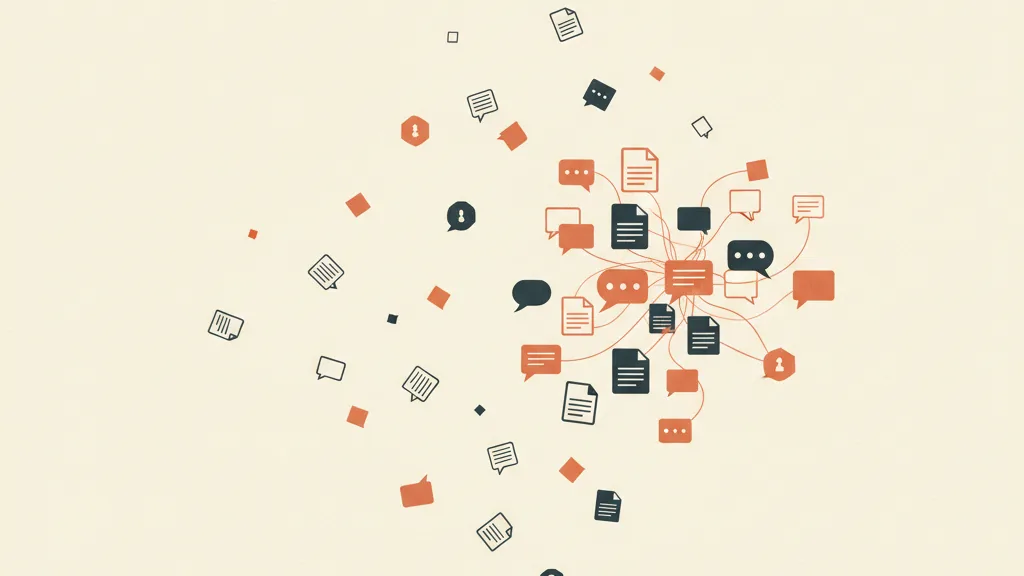
Before talking about readiness, let's get the object in focus. A company second brain is a large, interconnected digital brain that gathers all of a company's knowledge and that an AI works on top of. The difference from a wiki or a shared folder is substantial. It isn't built to be read by a human looking for a document, but to be navigated by an AI that reasons by moving between connected pieces of information. And the more you use it, the more it knows your company and the better the answers become. It's a memory that grows over time, not a static archive.
This changes how you should judge readiness. You don't need a company brain when you have "a lot of documents". You need one when the knowledge that keeps your business running has become hard to find, hard to hand off, and dangerously concentrated in a handful of heads.
The three signs that knowledge is slipping out of your hands
In every company, knowledge lives in three zones, and each generates a recognizable symptom. If you recognize one, you're already paying a hidden cost. If you recognize two or three, you're ready.
Sign 1: knowledge is scattered and no one can find it
Decisions, the reasons behind those decisions, and operational details live in chats, emails, Slack threads, comments on a file. When you need to retrieve them, either they can't be found or it costs someone half a day to reconstruct the context. The practical symptom is that phrase, "wait, where did we write that down?", that you hear several times a week.
This has a measurable price. According to a McKinsey estimate, about 19% of the work week (nearly one day out of five) goes into searching for information. It's an order of magnitude, not an absolute truth, but apply it to your own payroll hours and you quickly realize it's not background noise. It's a full day's wages a week, burned looking for things the company already knows.
Sign 2: you depend on people, not on processes
You have a top performer who "knows how things get done". Worth their weight in gold while they're there. But if they leave, they take a slice of company knowledge with them that's written down nowhere. And even while they stay, they become a bottleneck: everyone goes through them to find out how that client, that supplier, that procedure is handled. This people-dependent knowledge loss risk is perhaps the most dangerous sign, because it stays invisible until it explodes.
If the idea of one single person resigning scares you, that's not an HR problem. It's an uncoded-knowledge problem. A company brain turns the know-how of key people into a company asset that stays even when they're gone.
Sign 3: onboarding is slow and painful
A new hire takes on average 8 to 12 months to become truly productive. It's not a uniform number: a top performer gets there in 3-6 months, an average profile in 8-12, a slower one in 14-18. And here's an economic detail that often goes unnoticed. In the first part of that curve it's the employee who's "coming out ahead" (the company invests and gets little back); in the second part it's the company that recoups the investment. Every month of ramp-up you shave off shifts the break-even point in your favor.
Cutting onboarding time with AI doesn't just get people up to speed faster. It also enables job rotation (you move someone to a different role without starting from zero) and reduces churn, because someone who becomes productive sooner feels useful sooner and is more likely to stay. If every new hire on your team is a long, repetitive uphill climb, the company brain is the most direct lever you have.
The strategic reason that matters more than the symptoms
The three signs above are problems to solve. But there's a reason to build a company brain that isn't defensive, it's offensive, and it's the heart of the matter: your AI is only as smart as what it can read about your company.
Think about it. If you and your competitor both use ChatGPT the same way, with no company context fed into it, you get the exact same answers. That's the baseline: no advantage, for either of you. A slightly better-written prompt won't save you, because it's replicable in five minutes. The real advantage only appears when the AI works on your data, your history, your decisions. It's the idea that company data is the new oil: not because there's a lot of it, but because it's unique and yours alone.
This flips a common assumption. It isn't nimble startups that have the edge with AI. It's structured companies, the ones that already have processes and accumulated knowledge, that get the best return, because they have more raw material for the AI to learn from. A startup trying to compete starts with a data deficit, and with your company brain you widen that gap every single day. That's the theme behind competitive advantage built on company data.
Why "now" matters more than "better later"
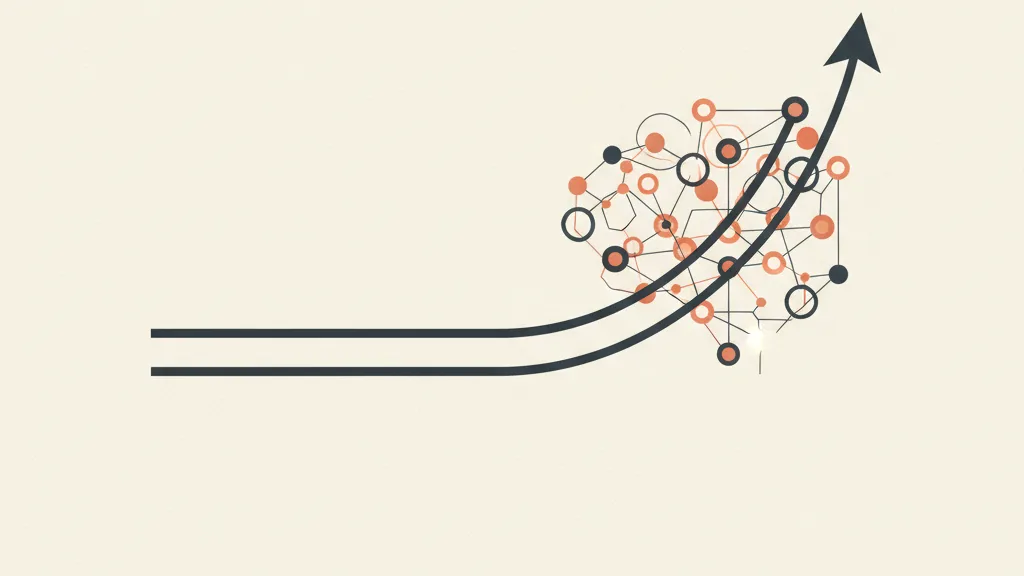
There's an arbitrage window, meaning the gap between what you do today and what the market will do tomorrow. Whoever builds their company brain now accumulates an advantage that compounds over time, and that window narrows as awareness spreads. It works on compound returns: the brain knows the company better, so it gives better answers, so it gets used more, so it accumulates even more knowledge. The curve of a company with a company brain diverges upward compared to one using generic AI like everyone else. That's why it's worth starting now, not in two years.
Not sure if your company is ready? Ask us for an analysis: we'll look at your numbers together and tell you honestly whether it makes sense to start now.
What size company it's actually worth it for
Readiness isn't just about symptoms, it's also about scale. Here's how the reasoning changes depending on size, with a rough rule of thumb for how much knowledge you're managing (the thresholds are orders of magnitude, not sacred numbers).
| Size | When it's worth it | Indicative technical level |
|---|---|---|
| Micro (1-3 people) | Usually too early, unless you literally sell knowledge (consulting, a professional practice) and want to scale from day one. | Under 500 notes, a content map and an index are enough. |
| SMBs and agencies (5-30 people) | The sweet spot. Enough complexity to have all three signs, enough agility to adopt it quickly. You move from file chaos to a single system. | Between 2,500 and 20,000 notes: you need semantic search and embeddings (RAG). |
| Structured companies (30+ people) | The highest return of all: you already have processes and accumulated knowledge, and the AI has huge amounts of raw material to learn from. | Above 20,000 notes you need a full RAG pipeline. |
The practical takeaway is simple. If you're a micro business that doesn't live off knowledge, wait. If you're an SMB or agency with the symptoms described above, this is the best moment to start. If you're a structured company, every month you go without systematizing your knowledge is advantage left on the table.
The verticals where the signal is strongest
Some types of businesses hit the readiness threshold sooner than others, because knowledge is their product.
- Professional practices (lawyers, accountants): every client and every case is a tangle of documents, deadlines, and decisions. Having it all within reach at all times changes the service itself. This is the classic case for a second brain for professional practices.
- Sales teams: when a salesperson leaves, they usually take half the client information with them. A company brain for the sales team makes sure no knowledge is lost and that the new rep gets up to speed in days, not months.
- SMBs and agencies: dozens of projects, clients, briefs and files scattered across different tools. The shift from chaos to a single system is the most visible transformation.
"What about my data?" The most common objection
It's the first thing many people ask, and it's a fair question. Two honest points. First: in practice, a lot of your company's data has already ended up inside ChatGPT, pasted in by your employees with zero oversight. A governed company brain is more secure than that free-for-all, not less. Second: the issue is managed with the right tools, signed DPAs, GDPR compliance, and version control that gives you backups and a single, up-to-date source of truth. The risk isn't having a structured system, it's not having one.
The point that decides whether it works
With AI you can outsource skill (it writes the code) and even outsource thinking (it proposes architectures). But you can't outsource understanding: someone has to genuinely understand the business to design the right structure. A well-built company brain requires method, well-written atomic notes, an ontology that links concepts so the AI can reason across them, quality checks on the company canon, and, once volume grows, a semantic search pipeline. It's not just another Notion file.
And that's exactly why a partner is worth having. The difference between an archive nobody uses and a company brain that compounds over time comes down entirely to the method behind its design. At AstraLoop Studio we design it, build it, and manage it for you, tuned to your company's size and industry.
If you recognized yourself in two or more of the signs in this article, the right moment is probably now. The simplest way to know for sure is to look at your numbers together.
Frequently asked questions
How big does my company need to be to have a second brain?
There's no rigid threshold, but the sweet spot is SMBs and agencies between 5 and 30 people: enough complexity to suffer from scattered knowledge, enough agility to adopt it quickly. Under 3 people it's usually too early, unless you literally sell knowledge (consulting, professional practices). Structured companies above 30 people get the highest return.
What are the signs that a company needs a company brain?
Three in particular: knowledge is scattered across chats, emails and files and nobody can find it; you depend on key people rather than processes (if a top performer leaves, they take the know-how with them); onboarding a new hire is slow and painful. If you recognize two or three, you're ready.
Is a second brain different from a wiki or Notion?
Yes. A wiki is built to be read by a human looking for a document. A company brain is designed to be navigated by an AI that reasons by moving between connected pieces of information, and it improves the more you use it. It's a memory that grows, not a static archive.
Why should I build it now instead of in a few years?
Because there's an arbitrage window: whoever starts first accumulates an advantage that compounds over time (more use, more knowledge, better answers). The window narrows as awareness spreads across the market, so whoever waits starts with a data gap that gets harder and harder to close.
Is my company data safe in a company brain?
A governed system is safer than the status quo, where a lot of data already ends up in ChatGPT with zero oversight, pasted in by employees. Security is handled with signed DPAs, GDPR compliance, and version control that guarantees backups and a single, up-to-date source of truth.
Should I build it myself or work with a partner?
AI can write the code and propose architectures, but it can't understand your business for you: understanding can't be delegated. An effective company brain requires method around atomic notes, an ontology, quality checks and semantic search. An experienced partner saves you from building an archive that no one ends up using.
If you recognized yourself in the signs in this article, talk to us: we design, build, and manage your company brain tailored to your business.