When an employee leaves, they take the knowledge with them
9 min read · AstraLoop Studio
There's a line you hear often in companies, usually said under someone's breath: "if he leaves, we're in trouble." That "he" (or "she") is the person who knows how that contract was negotiated three years ago, why that supplier needs to be handled a certain way, where the right file lives, how to unblock that difficult client. None of it is written down anywhere. It's all in their head.
When that person hands in their notice, the company doesn't just lose an employee. It loses a piece of operational memory with no backup copy. It's a risk almost nobody puts on the balance sheet, yet it has a real cost: measured in months of lost ramp-up, stalled negotiations, and decisions made twice because no one remembered the first time.
This article isn't a case for fear. It's a way to look a structural problem in the eye (employee knowledge loss) and understand how a company brain, a company-wide brain run by an AI, turns it from a lurking threat into a managed risk.
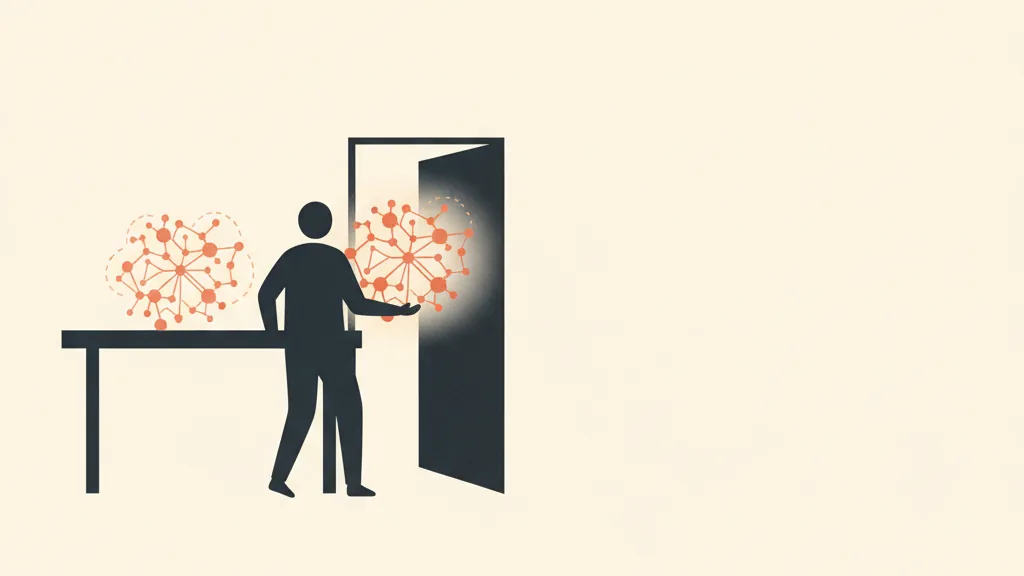
Knowledge walking out the door: why it's a business risk
In almost every company, knowledge lives in three places, and none of the three is really safe.
- Scattered across documents (chats, emails, Slack, folders): it exists, but becomes unretrievable exactly when you need it. You know the right email is "somewhere," but it takes you twenty minutes to find it, if you find it at all.
- Spread across dozens of different tools: the policy PDF, the revenue spreadsheet, supplier emails, the management software. Each one tells part of the story, none of them put it together.
- Inside people's heads: and this is where the biggest risk hides.
The third place is the most dangerous precisely because it's the most valuable. A top performer is worth gold. But that value is concentrated in a single person, and that triggers three cascading problems.
Dependence on one person
When a process only works because a specific individual is present, you have a human single point of failure. Vacation, sick leave, resignation: every absence becomes an operational hole. It's nobody's fault, it simply means that knowledge was never made shareable.
Bottleneck
The person who "knows everything" becomes the point everyone converges on. Every question goes through them, every decision waits for their sign-off. Instead of empowering the team, their expertise slows it down. It's the key-employee paradox: the better they are, the more the company leans on them, and the harder it is to grow without them.
Knowledge walking out the door
Then the day of the resignation arrives. In that moment, years of context, relationships, shortcuts, and "I know how this works" walk out the building and never come back. Whoever stays has to painstakingly rebuild, often getting it wrong, what someone else had already learned.
What it actually costs, in numbers (order of magnitude)
It's worth putting some figures on this, honestly: these are industry estimates, orders of magnitude, not absolute truths. But they're enough to frame the scale of the problem.
According to a McKinsey estimate, on average roughly 19% of the work week (nearly one day out of five) is spent searching for information. Not producing it: searching for it. That's time your team burns hunting for files, emails, and answers that someone already has, but that no system makes accessible.
Then there's the heaviest item: ramp-up time. A new hire takes on average 8-12 months to become fully productive, and the learning curve varies a lot depending on the profile.
| Profile | Time to become productive |
|---|---|
| Top performer | 3-6 months |
| Average profile | 8-12 months |
| Slow profile | 14-18 months |
There's a useful way to read this curve. In the first stretch, the employee "wins" (the company invests in them more than it gets back); in the second stretch, the company starts winning. Shortening ramp-up time means moving that break-even point forward and maximizing the return on every hire.
When a key employee leaves, you start that curve over from scratch with whoever replaces them. And if the knowledge left with them, the ramp is even slower, because the new hire has to reinvent what already existed.
The upside: shortening onboarding doesn't just cut costs. It also enables job rotation (people move between roles without starting from zero) and reduces churn: people who feel supported and productive sooner tend to stay longer. If you want the full breakdown, we dedicated a piece to the cost of scattered company knowledge.
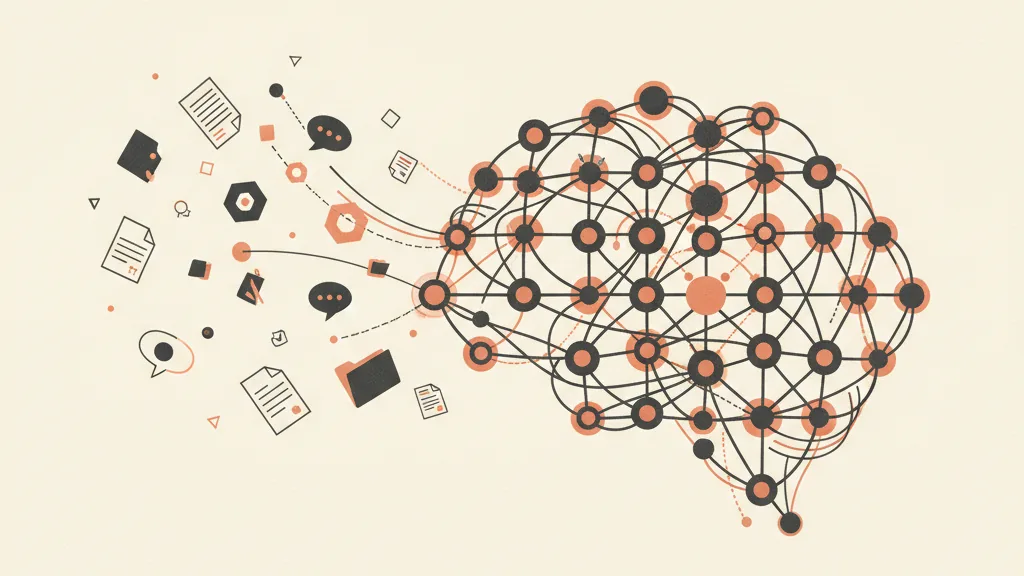
What a company brain does about this risk
A company second brain (or company brain) is a large, interconnected digital brain that gathers a company's knowledge, and that an AI operates on top of. The difference from a wiki or a folder archive is substantial: it isn't built to be browsed by a human, but to be read and navigated by an AI. The more you use it, the more it knows the company, and the better the answers become. It's a memory that grows over time instead of decaying. For the full definition, everything starts from the pillar article what a company second brain is.
Against the risk of "knowledge walking out the door," a company brain acts on three concrete levers.
1. It retains knowledge as it's produced
The know-how isn't asked of the employee on the day they resign, when it's already too late. It's captured every day, from conversations and work sessions. The system has a living memory that updates itself: so you can ask "what did we decide back in March with that client?" and get the answer, even if whoever was in that meeting is no longer there today.
2. It makes knowledge reusable, not just archived
Knowledge is broken down into many small atomic notes, one idea per note, all linked to each other. It's the same principle sociologist Niklas Luhmann used to write his books, managing roughly 90,000 interconnected cards (the Zettelkasten method). What matters isn't just how you file things (the taxonomy), but also how the concepts connect (the ontology): it's that web of connections that lets the AI reason by moving between notes and reusing the same piece of information in different contexts.
3. It creates a single source of truth
The company brain becomes the company's canon, the single source of truth. The AI doesn't make things up: it only reports facts present in the company's knowledge, which drastically reduces hallucinations. You no longer have five versions of the same policy scattered across five different folders. You have one, kept up to date, and everyone (people and AI) reads that one.
The concrete result: the person still matters, but the company stops being hostage to the person. If they leave tomorrow, the context stays. Onboarding their replacement starts from a solid base, not from a blank slate.
If your company also has someone who "knows everything" and the thought of them leaving worries you, let's talk: we'll analyze where your knowledge lives today and how to turn it into an asset that stays.
It's not just defense: it's a competitive advantage
So far we've talked about a risk to contain. But there's a more interesting flip side to this, and it's the heart of the matter.
Your AI is only as smart as what it can read about your company. If you and your competitor both use ChatGPT the same way, with no company context, you get the exact same answers. That's a level playing field: no advantage, for either of you. A slightly better prompt doesn't change that in any structural way.
The advantage appears when the AI is trained on your data: your negotiations, your procedures, your history with clients. Company data is the new oil, and businesses that are already structured (with processes and accumulated knowledge) are the ones that will get the best return from AI. A startup looking to challenge you starts with a data lag that you, with your company brain, keep widening every day.
This is where compounding returns come in: the brain knows the company better, so it gives better answers, so it gets used more, so it accumulates even more knowledge. The trajectory of a company with its own brain diverges upward compared to one using generic AI like everyone else. And there's a window of arbitrage: whoever builds now accumulates an advantage that compounds, and that window will close as awareness spreads across the market.
"What about my data?" The right question to ask
It's the most common objection, and a perfectly fair one. Two honest points.
First: your company data has, very likely, already ended up in ChatGPT, pasted in by your employees during their daily chats, with zero oversight or policy. A governed company brain doesn't add to that risk, it reduces it, because it brings order where there's currently wild shadow AI.
Second: governance is done with precise tools. Signed DPAs with vendors, GDPR compliance, version control to keep a history, backups, and a single up-to-date source even when a whole team is working on it. We dedicated a deep dive to the security and GDPR side of a second brain, because on this topic there's no room for superficiality.
Where it matters most: typical scenarios
The risk of knowledge loss bites hardest in a few specific contexts.
- Professional firms (law firms, accountants): the knowledge of every client and every case needs to stay accessible regardless of who's handling it. We cover this in detail in a company brain for professional firms.
- Sales teams: when a salesperson leaves, they usually take relationships and history with them. With a company brain for the sales team, that knowledge stays in the company and the replacement's onboarding is fast.
- SMBs and agencies: from a chaos of scattered files to a single system, where whoever joins today has the same foundation as someone who's been there five years.
The insight that changes the perspective
There's one point that matters more than all the others. With AI you can outsource competence (it writes code, drafts text) and thinking (it proposes architectures, solutions). But you cannot outsource understanding: someone needs to genuinely understand your business to design the right structure.
And that's exactly what makes a company brain different from a tool you buy and leave running. Retaining knowledge so an AI can actually use it takes method: note structure, link ontology, quality controls, RAG to scale once documents number in the thousands, compliance. It's not a weekend project, it's a real undertaking.
This is exactly the work we do at AstraLoop Studio: we design, build, and manage the company brain for your business, so that knowledge stops being tied to individual people and becomes an asset that stays. If this hits close to home, the right place to start is understanding how an AI second brain works.
Frequently asked questions
What happens to the knowledge when a key employee leaves the company?
Without a system to retain it, it leaves with them: relationships, informal procedures, the context behind decisions. Whoever stays has to painstakingly rebuild what had already been learned. A company brain captures this knowledge as it's produced every day, so it stays in the company even after they resign.
How long does it take a new hire to become productive?
8-12 months on average, but it depends on the profile: a top performer takes 3-6 months, an average profile 8-12 months, a slow one 14-18 months (industry estimates). Making knowledge accessible shortens this ramp and moves up the point where the company starts winning on the hire.
Is a company brain different from a wiki or Notion?
Yes. A wiki is built to be read by a human; a company brain is designed to be navigated by an AI. The more you use it, the more it knows the company and the better the answers become. It's a memory that grows, not a static archive that ages.
Is it risky to put company data inside an AI?
The bigger risk, in fact, already exists: many employees paste data into ChatGPT with no oversight. A governed company brain is safer, not riskier, because it introduces DPAs, GDPR compliance, version control, and backups on a single source of truth.
Why isn't it enough to use ChatGPT like everyone else?
Because without company context, you and your competitor get the exact same answers: it's a level playing field, no advantage. The advantage only appears when the AI is trained on your data. Whoever builds their own brain now accumulates an advantage that compounds over time.
Is my company big enough for a second brain?
It's less about size and more about accumulated knowledge and dependence on key people. Already-structured companies get the best return, but SMBs and agencies benefit too, turning file chaos into a single system. The right approach is to start with an analysis of your specific context.
Want to know how exposed you are to the risk of knowledge walking out the door? Request an assessment: we design and manage your company brain, so know-how stays in the business regardless of who comes and goes.