Living Memory: an AI That Remembers Every Business Decision
8 min read · AstraLoop Studio
Try answering this question: what did you decide in March with that important client? What discount you agreed on, which contractual exceptions were granted, who made the final commitment. In most companies the answer is always the same: it depends. It depends on who was on that call, on whether someone wrote an email, on whether that person still works here, on whether they remember. The decision was made, and it was valid. But the memory of that decision has evaporated.
That's exactly the problem an AI with company memory solves. We're not talking about one more archive, or yet another shared folder nobody opens. We're talking about a system that remembers decisions, updates itself from everyday conversations, and, when you ask a question, gives you an answer based on what the company has actually lived through. A memory that isn't static but alive: it grows as you work.
In this article we'll look at how it works conceptually, why it pays off for the business, and where it fits into the bigger picture of a company second brain.
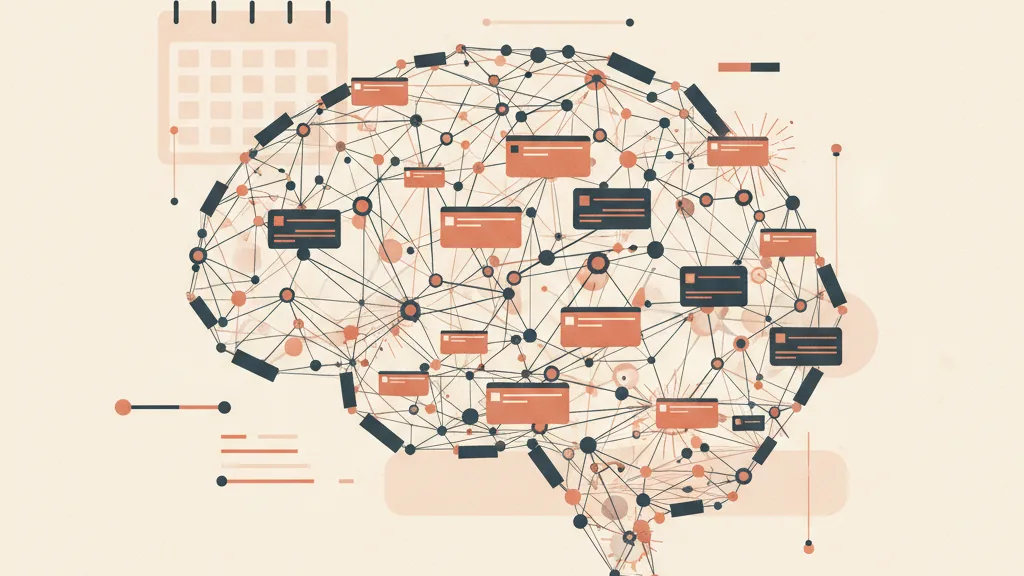
Where company knowledge ends up (and why it disappears)
Before talking about the value of living memory, it's worth framing the problem. In every company, knowledge lives in three places, and all three lose pieces along the way.
- In chats, emails, Slack threads and scattered documents. A decision made in an email thread six months ago still exists, technically. But nobody can find it again. In practice it's unrecoverable, even though no one deleted it.
- In people's heads. Your top performer is worth their weight in gold precisely because they know things that are written down nowhere. The problem is obvious: if they leave, that knowledge walks out the door with them. And in the meantime it becomes a bottleneck, because everyone has to ask them, which slows growth and makes onboarding painfully slow.
- Scattered across dozens of tools. The policy PDF, the revenue spreadsheet, supplier emails, the management software, the CRM. All separate, and none of it talks to any of the rest.
The cost of this fragmentation isn't theoretical. According to a widely cited McKinsey estimate, roughly 19% of the work week, almost one day out of five, is spent searching for information. Treat it as an order of magnitude rather than an absolute truth: but even halved, it's a figure that, multiplied by the number of people in a company, adds up fast. We go deeper on this in our article on the cost of scattered company knowledge.
What "living memory" really means
A wiki or a well-organized folder is better than chaos, but it stays static: someone updates it by hand, whenever they have time, which is to say almost never. After three months it's already outdated.
Living memory works the opposite way. The system updates itself from the day-to-day sessions and conversations. Every time the team uses it, whether asking questions, making decisions, or documenting a client, the knowledge base grows richer, with nobody needing to stop and do "archive maintenance." The decision made today automatically becomes retrievable memory tomorrow.
The concrete result is exactly the one from the opening example. Ask the system "what did we decide in March with that client?" and you get the answer, because that decision was absorbed into the company's memory instead of dissolving in the head of whoever was in the room.
How it gets there, at a high level
You don't need to go into the technical weeds to grasp the value, but three concepts help you picture how this memory is built to be read by an AI, not just by a human.
- Atomic notes. Knowledge is broken down into many small notes, one idea per note, all linked to each other. It's the same principle sociologist Niklas Luhmann used to manage his 90,000 index cards: every piece of knowledge becomes reusable in different contexts and navigable. We cover this in detail in atomic notes for company knowledge.
- Single source of truth. One company-wide truth. The AI doesn't invent: it reports facts that actually exist in the company's knowledge base. That's what reduces hallucinations and makes the answers reliable. We go deeper in the company single source of truth.
- A structure of links. What matters isn't just where you file a piece of information, but how concepts connect to each other. It's this web of links that lets the AI move between notes and "reason," going from a decision to the client it refers to, to the linked contract, to the policy that justifies it.
Once documents number in the thousands, RAG (retrieval-augmented generation) comes into play, using semantic search to fetch only the relevant information efficiently. As a rule of thumb: under 500 notes, a good index and content maps are enough; between 2,500 and 20,000 you need embeddings and RAG; beyond 20,000 you need a full RAG pipeline. These aren't textbook thresholds, but they give a sense of how the system scales as it grows.
Why living memory is a competitive advantage, not a nice-to-have
This is the heart of the matter. The line to remember is simple: your AI is only as smart as what it can read about your company.
If you and your competitor both use ChatGPT the same way, without giving it any company context, you get the same answers. That's level zero: no advantage, because you're both drawing on the same generic knowledge available to anyone. A slightly better-written prompt doesn't change the game.
The advantage comes from training the AI on your data: your decisions, your clients, your past mistakes, your way of working. Company data is the new gold, as we argued in company data, the new oil. And already-structured companies, the ones with processes and accumulated knowledge, are precisely the ones set to get the best return from AI: a startup trying to compete starts with a data gap that you, with your company brain, keep widening every day.
Compounding returns and a closing window
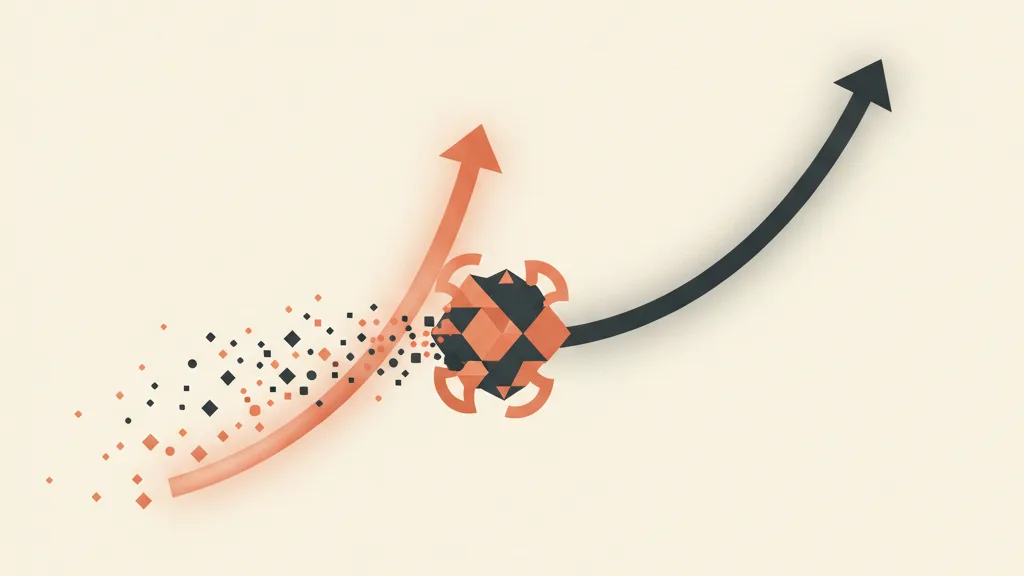
The mechanism is virtuous and self-reinforcing: the system knows the company better, so it gives better answers, so the team uses it more, so the knowledge base keeps growing. It's a compounding return. Whoever builds it now accumulates an advantage that compounds over time, and their curve diverges upward compared to those still using generic AI like everyone else. We've dedicated a piece to this effect: the compounding returns of a second brain.
There's also a timing argument. Today there's an arbitrage window, meaning the gap between what you do now and what the market will do tomorrow. This window will close as awareness grows and becomes the standard. Whoever moves now gains the most from it, which is the point of why you should adopt a second brain right now.
If you recognized yourself in that "what did we decide in March?" moment, we can design a living memory for your company that never lets decisions evaporate again. Request a no-commitment analysis.
Where it matters most: real-world cases
Living memory isn't an abstract concept. It changes day-to-day work differently depending on the context.
| Context | What living memory solves |
|---|---|
| Professional firms (lawyers, accountants) | Every client and every case always at hand: history, agreements, decisions made, without depending on any one professional's memory. |
| Sales teams | No knowledge lost when a salesperson leaves. Onboarding a new hire becomes fast because they inherit the memory instead of starting from zero. |
| SMEs and agencies | From a chaos of scattered files to one coherent system. Less time searching, more time working. |
| Customer support and operations | Consistent answers over time, past decisions reused instead of reinvented every time. |
The topic of onboarding deserves a number of its own. A new hire takes on average 8 to 12 months to become truly productive, on a curve that ranges from 3-6 months for a top performer to 14-18 for someone who struggles more. In the first part of that curve, effectively, the employee is the one gaining; in the second, the company starts to gain. Cutting the ramp-up time, by giving the new hire access to living memory instead of forcing them to ask everyone, moves that break-even point forward. As a side effect it also enables job rotation and reduces churn. We cover this in cutting onboarding time with AI and in the risk of losing knowledge when an employee leaves.
"What about my data?" The most common objection
It's the right question, and it deserves an honest answer, not one swept under the rug. Two points.
First, the starting reality. In many companies, sensitive data has already ended up inside ChatGPT, pasted in by employees in their personal chats, with zero company oversight. A governed company brain is safer than this widespread, hidden situation, not less safe. That's the subject of shadow AI.
Second, formal governance. This is handled with signed DPAs, GDPR compliance, and version control to keep backups and a single, always up-to-date source of truth. It's not an area to improvise, which is exactly why we have a dedicated deep dive on GDPR and second brain security.
The limit worth knowing: outsourcing expertise, not understanding
One honest point to close the argument. With AI you can outsource expertise (it writes your code) and even thinking (it proposes an architecture). But you cannot outsource the understanding of your own business. That stays yours, and it's what you need to design the right structure.
And this is exactly where a well-built company brain sets itself apart from an improvised one. Atomic notes, link structure, quality controls, a single canon, RAG where needed, compliance: these are methodological choices, not settings you flip on with one click. Getting them right takes experience and a view of the whole picture. If you want to understand where your company stands on this path, start with how an AI second brain works and when a company is ready for a second brain.
Living memory isn't the icing on the cake of an AI project. It's the foundation that makes everything else (agents, automations, assistants) genuinely useful, because they finally speak your company's language instead of everyone else's generic one.
Frequently asked questions
What's the difference between an AI with company memory and a regular wiki?
A wiki is static: someone updates it by hand, so it goes stale fast. An AI with living memory updates itself from everyday conversations and is structured to be navigated by an AI, not just read by a human. The more you use it, the better it knows the company, and the better the answers become.
What does it mean for memory to be 'living'?
It means the system automatically absorbs the decisions and work sessions of every day, with no need for manual archive maintenance. So you can ask 'what did we decide in March with that client?' and get the answer, because that decision was stored instead of being lost.
Doesn't the AI risk making up answers?
The risk is reduced by the single-source-of-truth principle: the AI only reports facts that actually exist in the company's knowledge base, instead of generating them freely. The structure of linked notes and quality controls exist precisely to limit hallucinations.
Is my company data safe in a system like this?
A governed company brain is safer than the typical situation, where employees already paste sensitive data into ChatGPT with no oversight. It's managed with signed DPAs, GDPR compliance, and version control for backups and a single source of truth. It still needs to be designed with compliance in mind.
Is my company too small for an AI company memory?
No, if anything the opposite. SMEs and agencies are often the ones suffering most from scattered files and dependence on a few key people. Technical complexity scales with the data: under 500 notes a good index is enough, full RAG is only needed once you're past thousands of documents.
Why build company memory now instead of in two years?
Because the advantage compounds over time: the earlier you start, the more your knowledge curve diverges from those still using generic AI like everyone else. There's an arbitrage window that will close as this practice becomes the market standard.
Building a company memory that updates itself takes method, not improvisation: structure, atomic notes, compliance, and quality controls. At AstraLoop we design and manage it for you. Talk to us about it.