Customer Journey and Meta Ads: Mapping the Path from Click to Customer
8 min read · AstraLoop Studio
Most Meta campaigns don't fail because the creative is ugly or the targeting is off. They fail because they treat a purchase journey that spans weeks as if it were a single strike: click, sale, done. In reality, between the first scroll and the wire transfer there are five, eight, sometimes fifteen steps. And at every one of those steps, you can lose the contact for good.
The customer journey is the map of those steps. Meta Ads is the tool that opens doors along the way. The CRM is what holds the contact's hand once they leave the platform and never come back on their own. If these three pieces don't talk to each other, you're paying to generate interest that then evaporates into thin air. In this article we'll look at how to map the path from click to customer, how to structure campaigns stage by stage and, above all, how to connect them to your CRM so paid opens the door and automation closes it.
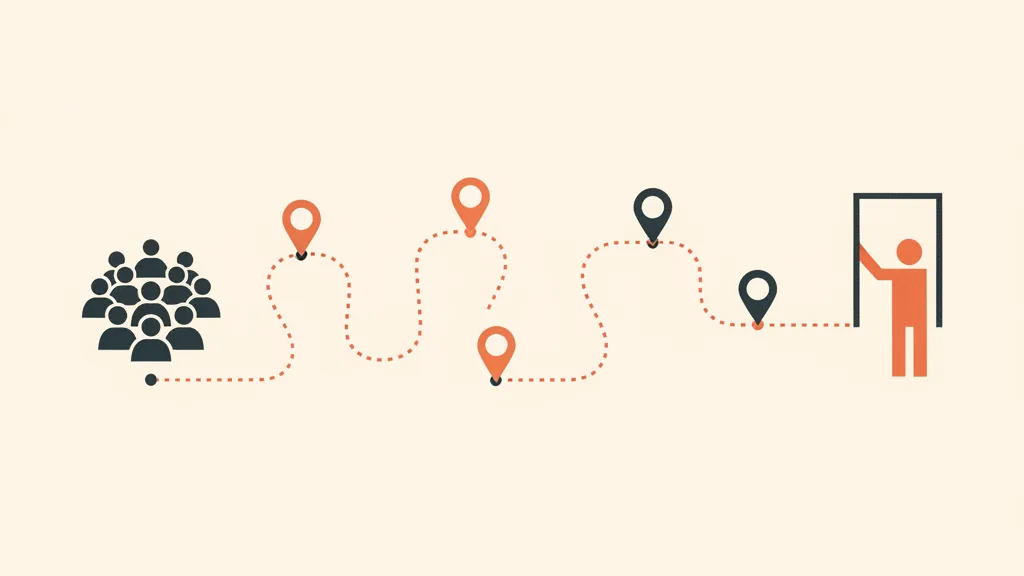
What the customer journey is (and why Meta forgets about it)
The customer journey is the sequence of interactions a person has with your brand, from the moment they don't know you exist to the moment they buy. And, if you do it right, to the moment they buy again. It isn't a straight line: it's made of approaches and second thoughts, of people who see you, disappear for two weeks, and then come back to buy through a different channel.
On Meta, this path gets systematically flattened, for a technical reason: the platform optimizes for the single conversion event you give it. Tell it "optimize for purchases" and it goes hunting for whoever is ready to buy right now. Anyone still in the discovery phase gets ignored, even if a month from now they would have become your best customer. The result? You spend your whole budget on the few who are already ready, and you build nothing for the future.
To reason about this properly, it helps to collapse the journey into the three macro-stages that govern every funnel: awareness (TOFU), consideration (MOFU), decision (BOFU). If you need the operational detail of how these translate into Meta campaigns, we've written a dedicated guide to the TOFU MOFU BOFU funnel on Meta. Here we're focusing on something different: how to connect those stages to each other and to the CRM, because that's where everything tends to break.
The stages of the journey, translated into Meta campaigns
Each stage has a different goal, a different audience, and a different conversion event. Confusing them is mistake number one. Let's look at what actually changes.
Awareness: getting found by people who aren't looking for you
Here the audience doesn't know you and has no urgent problem on their mind. The goal isn't to sell, it's to earn a spot in their consideration set. Campaigns target cold audiences (interests, lookalikes, broad audiences left to the algorithm) and formats that educate or entertain: short videos, carousels that tell a problem, content that looks like an organic post more than an ad.
The classic mistake is measuring this stage with ROAS. It doesn't work, because almost no one buys right away here. The right KPI is the cost of getting someone into your orbit: a qualified 3-second view, a profile click, a site visit. You'll collect the real value later, through retargeting.
Consideration: nurturing people who've already seen you
This is the heart of the journey and the most neglected stage. This is where the people who've seen you once but weren't ready live: they watched the video, visited a page, dropped a like. They're lukewarm contacts worth their weight in gold, and they cost a fraction of cold ones. Retargeting campaigns on Meta make the difference right here: you show social proof, case studies, your lead magnet, answers to the usual objections.
The event to optimize for still isn't the purchase, it's a micro-commitment: signing up for a webinar, downloading a guide, filling out a form. This is the moment the contact turns from anonymous to identifiable — the moment you can finally bring them into your CRM. And that's the hinge the whole article turns on.
Decision: closing the ones who are ready
In BOFU, the audience knows you, trusts you, and is weighing whether to buy now. Here, and only here, do you optimize for purchase or quote requests. Audiences are narrow: people who added to cart and didn't buy, people who visited the pricing page, people who opened checkout but didn't finish. The creative pushes the offer, real urgency, the guarantee, the "try it risk-free."
The point is that BOFU on Meta only works if MOFU has filled the tank. If you skip consideration and retarget only the hottest of the hot, you get a tiny audience you'll burn through in two weeks. Decision feeds on what you planted earlier.
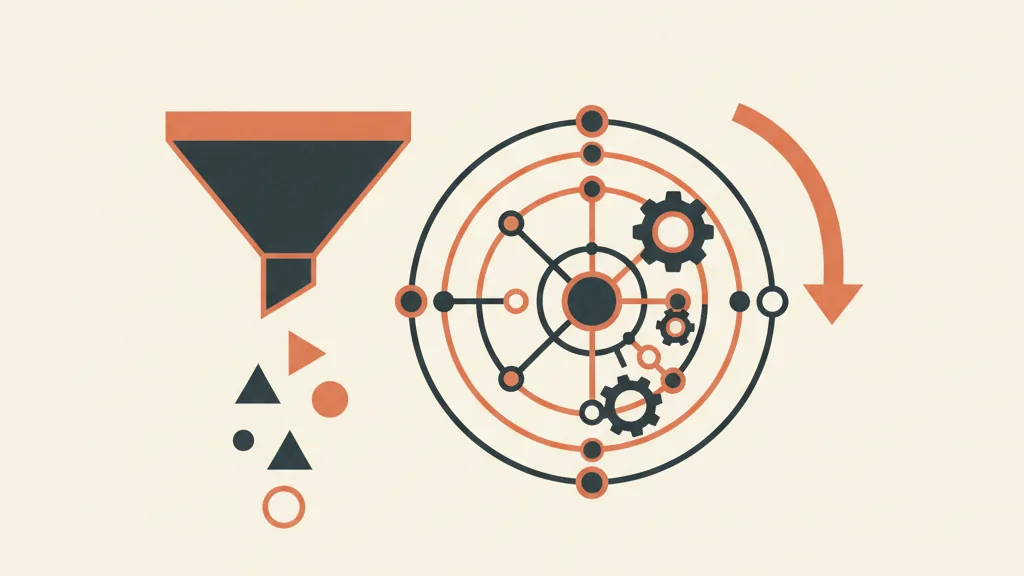
The black hole between one touchpoint and the next
This is where most contacts die. Picture the real path: someone watches your video (TOFU), two weeks later they download the guide and leave their email (MOFU), and then... silence. Meta has done its job, it brought you an identified contact. But if nothing else happens after that, that contact stays a name on a list nobody calls.
The problem is structural. Meta reasons in isolated campaigns, it doesn't know the history of a single contact between one touchpoint and the next and, by definition, it can't follow up once the person has closed Instagram. The platform opens the door, but it doesn't walk anyone inside. Who does that? The CRM and the automation behind it.
The difference between a funnel and a CRM is exactly this, and it's worth spelling out: the funnel is the path, the CRM is the memory. The funnel tells you where the contact stands, the CRM remembers who they are, what they've done, and when it's time to reach out again. Without the memory, every touchpoint starts from zero and you pay twice to talk to the same person.
Connecting Meta Ads to the CRM: how it's actually done
Connecting paid and CRM doesn't mean "exporting leads to an Excel file at the end of the week." It means building a flow where, the exact moment someone fills out a form or leaves a contact, an automatic reaction kicks off. There are three technical pieces to put in place.
1. Get the lead into the CRM in real time
A lead generated by a Meta form (Lead Ads) or a landing page has to land in the CRM within seconds, not hours. Speed of first contact is the factor that most affects your close rate: responding within five minutes radically changes the odds compared to responding the next day. From there, automated nurturing kicks in: a welcome email, a value sequence, a qualifying WhatsApp message. If the contact comes in via WhatsApp, the integration between WhatsApp and the CRM lets an AI agent qualify them right away and book the call while the interest is still hot.
2. Send conversion signals back to Meta (closing the loop)
This is the piece almost no one implements, and it's worth double. When a lead becomes a customer in the CRM (they signed, they paid, the deal closed), that information needs to go back to Meta. This is the idea behind offline conversions from the CRM to Meta: you're not just telling the platform "this person filled out the form," you're telling it "this form generated a €4,000 customer." That way the algorithm stops optimizing for lead volume and starts looking for people who resemble real customers, not the merely curious.
Technically, the channel is Meta's Conversions API, which sends events server-to-server, bypassing cookie blocking and ad blockers. In a post-privacy world, running without CAPI means giving away half your conversion data. And if match quality is low, the signals arrive incomplete: it's worth keeping an eye on Event Match Quality to understand how well Meta can actually tie your events back to real people.
3. Tell leads apart from customers in optimization
Once offline signals flow back to Meta, you can finally separate the two worlds. The logic of which signals to pass to Meta from the CRM is simple: optimize BOFU campaigns for the "customer acquired" event, not the "lead generated" event. The practical consequence is that cost per lead may even go up, but cost per real customer goes down. And that's the only number that pays the bills.
Want to see how to connect your Meta campaigns to your CRM, so no lead falls through the cracks between touchpoints? Request an analysis of your acquisition path: we'll show you where it's breaking and how to fix it.
The full map: from click to customer, stage by stage
Putting the pieces together, here's what a CRM-connected Meta journey looks like. Use this table as a checklist for your own campaigns.
| Journey stage | Meta audience | Event to optimize | What the CRM does |
|---|---|---|---|
| Awareness (TOFU) | Cold: interests, lookalikes, broad | Video view / qualified traffic | Nothing yet (anonymous contact) |
| Consideration (MOFU) | Lukewarm: people who watched or engaged | Lead, sign-up, download | Captures the contact, starts nurturing |
| Decision (BOFU) | Hot: cart, pricing page | Purchase / quote request | Alerts sales, qualifies, books the call |
| Post-sale | Customers (excluded or upsold) | Retention / customer value | Sends "customer acquired" back to Meta |
Notice that last row. When you send Meta the "customer acquired" event with the real value attached, you're not just measuring better: you're training the algorithm to find more people like your best customers. The loop closes, and every euro spent on acquisition works off real data, not a vanity metric.
Attribution: figuring out which touchpoint did the work
With a multi-step journey, the question comes up right away: who gets credit for the sale? The TOFU video seen three weeks ago, or the BOFU ad clicked yesterday? By design, Meta tends to claim credit for everything it touches, and that inflates the numbers.
You don't need a PhD thesis, you need awareness. A last-click attribution model only rewards the final touch and pushes you to cut the awareness campaigns that are actually feeding everything else. If you only look at ROAS at the individual-campaign level, you'll make the wrong calls. The metric that matters sits at the account and system level: how much it costs you to acquire a customer across all the stages combined, not how well the single BOFU ad performs while it harvests what the others have sown. We've put together the Meta Ads KPIs that actually matter if you want to know exactly what to look at.
The mistakes that break the path
- One single campaign for everything. Putting cold, lukewarm, and hot audiences into the same campaign means talking to everyone as if they were ready to buy. Only a minority is, and you waste the rest.
- Always optimizing for purchase. If your cold audience is small, asking for the purchase right away leaves the algorithm with no data. Give it intermediate events to chase in the upper stages.
- The lead that stays stuck on Meta. Contacts come in and nobody calls them back. Without a CRM and automation, paid becomes a faucet running into a sink with no plug.
- Not sending offline conversions back. If Meta doesn't know which leads became customers, it optimizes for lead volume and floods you with junk contacts. Close the loop.
- Killing TOFU campaigns because "they don't convert." They're not supposed to convert, they're supposed to fill MOFU. Turn them off and BOFU dries up within three weeks.
From click to customer: paid opens, automation closes
There's really just one thing to take away. Meta Ads is remarkable at generating attention and moving people to the right point in the journey, but it isn't built to walk a contact through weeks of decision-making, nor to follow up once the person has left the platform. That work belongs to the system behind it: the CRM that remembers, the automation that nurtures, the agents that qualify and book the call.
When the two worlds are connected — the funnel feeding the CRM in real time, and the CRM sending signals back to Meta — you stop paying for interest that evaporates and start building a customer acquisition system where every touchpoint pushes toward the next one. It's no longer "run two campaigns and hope," it's a machine where paid opens the doors and automation walks people all the way to the signature. If you want the full strategic picture for setting all of this up, the place to start is our strategic guide to Meta Ads.
Frequently asked questions
What does customer journey mean in Meta Ads?
It's the map of the steps a person takes from first contact with your brand to purchase and beyond. On Meta this translates into distinct stages (awareness, consideration, decision), each with its own audience, format, and conversion event. Treating them all the same way is the mistake that sinks campaigns.
How do you connect Meta Ads to a CRM?
You need three pieces: get the lead into the CRM in real time (via Lead Ads or a landing-page form), kick off a nurturing automation immediately, and send conversion signals from the CRM back to Meta through the Conversions API. That way, when a lead becomes a customer, Meta knows it and optimizes toward people who look like real customers, not just the curious.
Why aren't my Meta leads turning into customers?
In most cases, they're getting lost in the gap between touchpoints. Meta hands you an identified contact, but if there's no CRM picking it up and no immediate automated follow-up behind it, the lead stays a name on a list nobody calls. Paid opens the door, but you need automation to close it.
Which event should I optimize my Meta campaigns for?
It depends on the stage. In awareness you optimize for views or qualified traffic, in consideration for leads or sign-ups, in decision for purchases or quote requests. The end goal is to optimize BOFU for the 'customer acquired' event sent back from the CRM, not the generic lead — that's what brings down the cost per real customer.
What are offline conversions and why do they matter with Meta?
They're conversion data that happens off the platform (a signature, a payment, a deal closed in the CRM) and gets sent back to Meta through the Conversions API. They matter because they teach the algorithm which leads turned into real customers, so the platform stops chasing volume and starts looking for people who resemble your best customers.
Should I keep campaigns separate for each stage of the journey?
Yes. Cold, lukewarm, and hot audiences need different messages, formats, and events. Lumping them into a single campaign means talking to people who don't know you as if they were ready to buy, wasting budget. Stages should be separate but connected: TOFU fills MOFU, MOFU feeds BOFU, and the CRM holds the whole story of the contact together.
If your Meta Ads are generating contacts that then vanish, the problem isn't the campaign — it's the missing piece between the click and the customer. Talk to us and let's build the system together, the one where automation closes what paid opened.