AI Outbound for Reactivation: 10,000 Dormant Contacts at Zero Ad Spend
8 min read · AstraLoop Studio
You have a CRM, a management system, or a plain Excel sheet with thousands of names. People who bought from you in the past, asked for a quote, downloaded a guide, or left their number. Then, silence. In your head those contacts are dead, and meanwhile you keep spending on advertising to find new ones. The paradox is obvious: the cheapest leads to convert are the ones you already have, sitting idle in a file.
AI outbound for contact reactivation tackles exactly this problem. It uses automated agents (voice, email, SMS, WhatsApp) to systematically re-engage a cold database, measure who responds, and bring real opportunities to your sales team. In this article I'll walk you through a case study with concrete numbers: on 10,000 dormant contacts, a 10% recovery rate means 1,000 opportunities generated without a single euro of ad spend. I'll explain where that 10% comes from, what it actually costs, and how to build the funnel without burning your domain or risking fines.
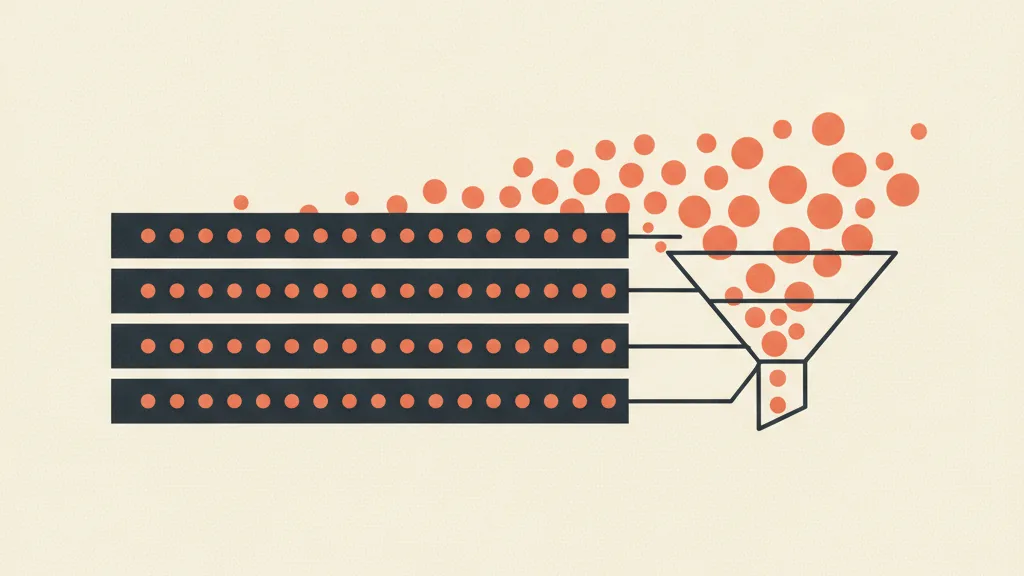
Why reactivation beats acquisition (the economics)
Before the method, the financial logic. A dormant contact has already cost you once: advertising, sales time, a discount on the first order. Bringing them back into the conversation doesn't force you to pay that entry tax again. The most-cited industry estimates put reactivation cost at 5-7 times lower than acquiring a new customer. The reason is simple: you already have permission to contact them, you already have context (they know who you are), and you often already have the data to personalize.
In money terms: if your customer acquisition cost (CAC) is €300, reactivating an existing one can cost you €40-60, most of which is automation cost rather than paid media. This isn't a seasonal promotion, it's a lever on your average acquisition cost. The more revenue you generate from an already-paid-for database, the lower the blended CAC drops across the whole company. If you want to understand how CAC, CPL, and LTV fit into a sustainable model, we've dedicated a guide to acquisition KPIs and unit economics, and a specific piece on reactivation cost versus acquisition cost.
The case study: 10,000 dormant contacts, 1,000 opportunities
Let's start from the numbers and break them down. Picture a B2B services database with 10,000 dormant contacts (no interaction in the last 12-18 months). Here's a realistic reactivation funnel, with conservative rates for a cold database.
| Stage | Volume | Rate | Result |
|---|---|---|---|
| Dormant contacts on the list | 10,000 | - | 10,000 |
| Reachable after list cleaning | - | about 85% | 8,500 |
| Reached by the multichannel sequence | - | about 90% | 7,650 |
| Positive response / interest | - | 15-20% | 1,150-1,530 |
| Qualified opportunities (net recovery) | - | about 10% of total | about 1,000 |
The 10% recovery rate isn't a brochure number. It comes from the fact that AI outbound touches every contact across multiple channels in a coordinated way, not with a single send. Cold databases re-contacted with voice agents show positive response rates between 15% and 35%, SMS has an open rate above 98%, and automated win-back sequences generate up to 320% more revenue than a single broadcast. Adding up the channels and filtering for genuine interest, a 10% qualified-opportunity rate remains a conservative target, not an optimistic one.
What 1,000 opportunities at zero ad spend actually means
"Zero ad spend" doesn't mean free. It means zero euros spent on advertising. You're not buying impressions on Meta or clicks on Google. The costs are infrastructure costs: voice agent minutes, email sends, SMS and WhatsApp messages, orchestration. Across 8,500 contacts actually worked, the technical spend runs in the range of a few thousand euros total and produces 1,000 warm conversations. Compare that to the cost of generating 1,000 new leads through advertising, and you'll see why reactivation should be done first, not last.
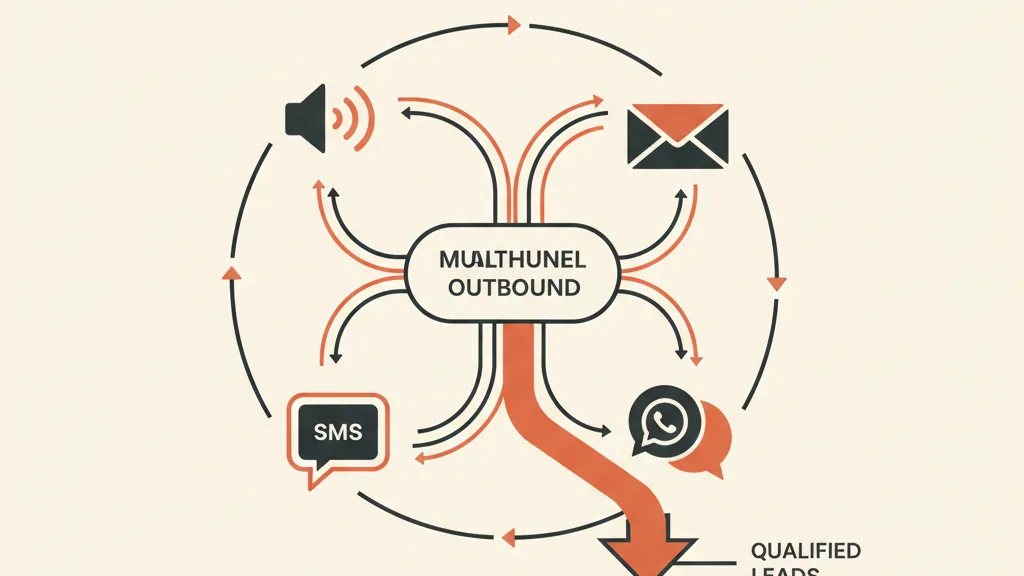
The orchestrated funnel: voice, email, SMS, and WhatsApp together
The real step-change with AI outbound isn't "a cheaper channel," it's orchestration: multiple channels coordinated around the same contact, with priority logic and an automatic stop the moment someone responds. Most content out there talks about one channel at a time. The funnel that actually works combines them.
1. RFM segmentation before touching the list
Not all dormant contacts are equal. With an RFM analysis (Recency, Frequency, Monetary) you split the database and focus effort where the return is highest. The key segments to catch are "About to Sleep" and "Hibernating": contacts who are slipping away but aren't lost yet. Adding a churn prediction model (algorithms like Random Forest or Gradient Boosting) lets you send the most aggressive offer only to those with a high probability of churning, without discounting to people who would have come back anyway.
2. AI voice agent for the first warm touch
Voice is the channel with the strongest signal. A voice agent calls, introduces itself (disclosing that it's an automated system, as required by Italian law), asks a reactivation question, and listens to the response. The cost? Around €0.40 per call, versus €7-12 for a human operator. On cold databases, positive response rates run from 15% to 35%. If you want to understand the difference versus the old-style auto-responders, we have a comparison between AI voice assistants and chatbots.
3. Win-back email with deliverability under control
"Are you still with us?" sequences with an incentive work, but this is where almost everyone trips up: reactivating badly burns your domain. Blasting 10,000 emails to addresses that have been dormant for two years spikes bounces and spam complaints, and as of late 2024 Google and Yahoo require spam rates below 0.3%, DMARC authentication, and a working one-click unsubscribe. Before sending anything you need to warm up the domain, clean the list, and start with the warmest segments. If it's not clear why, read why emails end up in spam and the guide on SPF, DKIM, and DMARC. For the copy itself, our win-back email sequence examples give you a starting point.
4. SMS and WhatsApp to close the loop
Whoever doesn't respond to voice or email, you catch on SMS (open rate above 98%, ROI on dormant contacts exceeding 1,000%) and on WhatsApp Business, where the automated conversation can go all the way to booking an appointment, integrated with your CRM and landing page. And here's the advantage of orchestration: the moment a contact responds on one channel, the sequence on the others stops. No overload, no annoyed contact.
You have a dormant database worth more than you think. Request a free analysis of your reactivation potential: let's estimate together how many opportunities you can recover at zero ad spend.
GDPR compliance: reactivating without getting fined
This is the part legal teams treat in the abstract and marketers ignore. Reactivating old contacts isn't a free-for-all. The practical rule: you can re-contact your existing customers about similar products or services for email marketing purposes by relying on legitimate interest (soft opt-in), but the reasonable window is around 24 months from the last interaction, and the EDPB's guidance (Guidelines 1/2024 on deceptive patterns and consent) demands transparency and an always-easy opt-out.
For contacts who never became customers, or who have been silent for too long, marketing consent must exist and be documented. The voice agent, in turn, must disclose its automated nature: in Italy, Law 132/2025 introduces a transparency requirement whenever an AI system is the one answering or calling. This isn't a detail to bury in the fine print, it's a requirement. We go deeper into the operational (not legal) picture in how to reactivate old customers in compliance with GDPR and on the requirement to disclose AI on the phone. Informational note: always check your specific case with your DPO or legal counsel.
How to build it in practice (a 5-step roadmap)
- Extract and clean: export the database, deduplicate, verify email and phone validity, remove anyone who has already opted out. Real reachability is almost always lower than the raw total.
- Segment with RFM: rank contacts by potential, isolate "About to Sleep" and "Hibernating," and define the incentive per segment.
- Prepare the channels: domain warm-up, win-back templates, voice agent script, SMS and WhatsApp messages. Set up email authentication before sending anything.
- Orchestrate the sequence: define the order (voice first, then email, then SMS and WhatsApp), the timing, and the stop rule the moment a response arrives. An automation tool like n8n ties the channels and the CRM together.
- Measure and hand off to sales: positive responses become opportunities with a human handoff. This is where lead qualification matters: not every response is ready to buy, and your setter needs to tell them apart.
When it makes sense (and when it doesn't)
AI outbound on dormant contacts pays off when you have volume (a few thousand contacts upward) and a valid contact detail. Below a few hundred names, targeted manual work is often the better choice. If the database is very old (over 3-4 years of total silence, with no consent basis at all), the compliance and deliverability risk outweighs the return: better to start over from the segments that are actually recoverable. Reactivation is part of a broader strategy of dormant customer database reactivation, which is worth reading as a complete guide covering all channels and verticals. And once responses start coming in, you need a method to win back lost customers without letting them slip away again.
In short
You've already paid for those 10,000 contacts. Orchestrated AI outbound lets you rework them systematically, at a cost per opportunity that's a fraction of advertising, with a 10% recovery rate (1,000 opportunities) within reach of anyone who gets segmentation, channels, and compliance right. The risk isn't trying it. The risk is continuing to buy new leads while the gold sits dormant in your CRM.
Frequently asked questions
What is AI outbound for contact reactivation?
It's the use of automated agents (voice, email, SMS, WhatsApp) to re-contact a cold or dormant contact database in a coordinated way, measure who responds, and generate sales opportunities with zero ad spend. The key is multichannel orchestration, not a single send.
Where does the 10% recovery rate on a dormant database come from?
It comes from combining multiple channels around the same contact: voice agents with a 15-35% positive response rate on cold lists, SMS with an open rate above 98%, win-back email, and WhatsApp. Adding up the touches and filtering for genuine interest, a 10% qualified-opportunity rate is a conservative target.
How much does it cost to reactivate a contact versus acquiring a new one?
Industry estimates put it at 5-7 times lower. The contact has already cost you once, and you already have context and often permission to contact them, so you don't repay the acquisition entry tax. A voice agent costs around €0.40 per call versus €7-12 for a human operator.
Is reactivating old contacts legal under GDPR?
For existing customers, you can do email marketing on similar products via legitimate interest, with a reasonable window of around 24 months and an always-easy opt-out (per EDPB guidance). For non-customers you need documented consent. The voice agent must disclose that it's automated (Law 132/2025). Always check with your DPO.
Can reactivating via email damage my domain?
Yes, if done badly. Mass-sending to addresses dormant for years spikes bounces and spam complaints. Google and Yahoo require spam rates below 0.3%, DMARC, and one-click unsubscribe. You need domain warm-up, list cleaning, and to start with the warmest segments before scaling.
How many contacts do you need for this to make sense?
Generally a few thousand upward, with valid contact data. Below a few hundred, targeted manual work is often better. If the database has been dormant for over 3-4 years with no consent basis at all, the compliance and deliverability risk can outweigh the return.
Want to turn your dormant contacts into real opportunities without spending on advertising? Talk to us and let's build your orchestrated reactivation funnel.