Marketing Funnel for Dentists, Med Spas and Gyms: More Booked Appointments
9 min read · AstraLoop Studio
If you run a dental practice, a med spa or a gym, your problem is almost never a lack of traffic. It's something else: between "someone who's interested" and "someone sitting in the chair, the treatment room, or the weight room" there are five or six steps where contacts get lost. The message that goes unanswered, the call you couldn't pick up in time, the quote you never followed up on, the appointment that was booked and then skipped.
A marketing funnel for dentists, med spas and gyms exists precisely to close these gaps. It's not "running Instagram ads." It's building a path that takes someone from "curious" to a confirmed appointment, with automatic reminders that cut no-shows and a CRM that remembers every single contact. In this article we'll look at how to build one, with realistic numbers and the points where it actually breaks in practice.
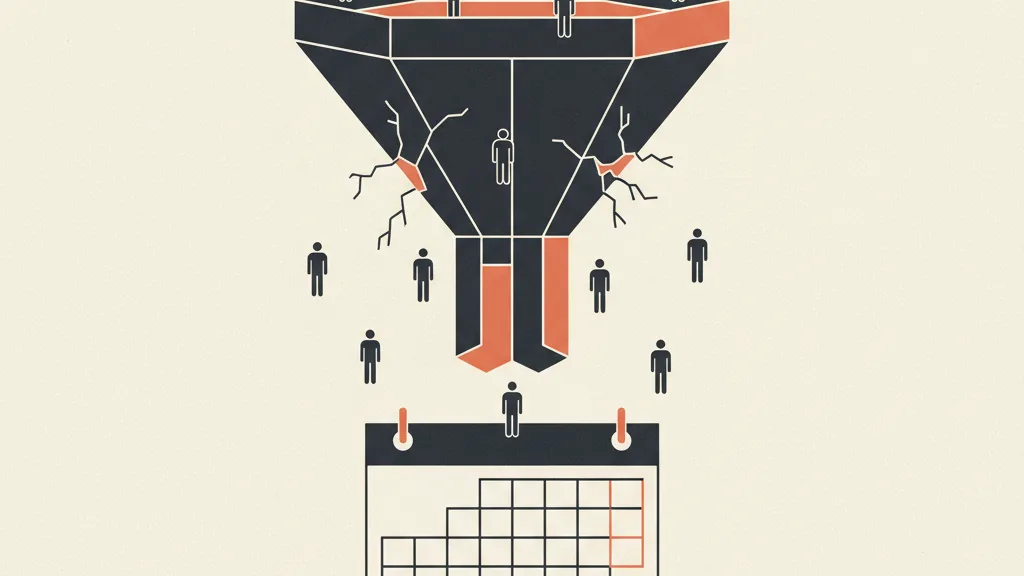
Why local service businesses lose so many customers after the first contact
The logic of a local appointment-based business is different from an e-commerce store. You're not selling a product that starts in a cart: you're selling a slot on the calendar. And that slot has three specific enemies.
- Slow response times. Someone who messages on WhatsApp or fills out a form wants an answer in minutes, not the next day. After a few hours their intent collapses, and by then they've probably already messaged a competitor.
- The gap between "interested" and "booked." Many practices collect names and numbers, but without a clear process, who calls back? Who sends the booking link? If it depends on the front-desk staff finding "a free moment," you're losing half your contacts.
- The no-show. An appointment that's booked and then skipped is worse than a lost lead: you blocked the slot, turned other people away, and still made no money. In local services, without reminders, the no-show rate can easily hit 20-30%.
A well-built funnel works on all three fronts at once. It's not "extra" marketing: it's the operating system that connects advertising to the calendar. If you want the general concept first, we've already covered what an acquisition funnel is and the difference between a funnel and a CRM, the two pieces that work together here.
The stages of the funnel for an appointment-based business
The path is the same for a dentist, a med spa and a gym. Only the "product" and the entry offer change. Here are the stages, with the concrete goal of each.
1. Attraction: get found by people who already have the need
Traffic comes from three typical sources: Google (people searching "dentist + city" or "facial + area"), paid social (Meta and TikTok, great for aesthetics and fitness) and organic local presence (reviews, maps, word of mouth). The common mistake is sending all of that traffic to the generic website. The website tells the story of the practice, but it doesn't get people to book. You need a dedicated destination.
2. Conversion: a landing page with a single entry offer
The lead-generation landing page should have exactly one goal: capture the contact with a low-friction offer. Not "discover our services," but a precise hook.
- Dentist: a free first visit plus panoramic X-ray, or an entry-priced hygiene check-up.
- Med spa: a discounted first session, a free skin consultation, a trial package.
- Gym: a trial week, a session with a personal trainer, a free posture assessment.
The form asks for the bare minimum: name, phone number, maybe a preferred slot. Every extra field lowers conversions.
3. Qualification and fast response: the part almost everyone gets wrong
This is where the game is won or lost. The contact needs to be called or messaged back within minutes, while interest is still hot. In practice this is impossible to guarantee "by hand" during business hours, when reception is busy with people who are physically there. This is where automation comes in — and increasingly, an AI chatbot that qualifies leads and books appointments or a voice AI agent connected to the CRM that answers and offers open slots in real time, even after hours.
4. Booking: from "yes, I'm interested" to a slot on the calendar
Interest without a date is worthless. The funnel has to close on the calendar: a booking link, automatic confirmation via WhatsApp or SMS, a locked-in slot. The fewer manual steps between the "yes" and the date, the more appointments actually land on the calendar.
5. Show-up: the reminders that kill the no-show
Once the appointment is set, a sequence of automatic reminders to reduce no-shows kicks in: immediate confirmation, a follow-up 24 hours before, a final reminder the morning of with a "reschedule" or "cancel" option. Simple, but it moves the numbers significantly. Going from 25% to 10% no-shows, on a full calendar, means dozens of recovered appointments a month.
Cutting no-shows: the fastest ROI you can show
If you're only going to start with one thing, start here. Cutting no-shows doesn't require new ad spend: it makes the most of appointments you already have. Let's look at the impact with realistic numbers on an average calendar.
| Scenario | Appointments/month | No-show rate | Appointments lost | Average value | Revenue lost/month |
|---|---|---|---|---|---|
| No reminders | 200 | 25% | 50 | €80 | €4,000 |
| With automatic reminders | 200 | 10% | 20 | €80 | €1,600 |
| Recovered | - | -15 points | +30 slots | - | +€2,400 |
These figures are illustrative, of course: the average value of a dental hygiene session, an aesthetic treatment or a month's gym membership varies a lot. But the logic holds across all three verticals. And the cost of an automatic reminder sequence is a fraction of that recovered revenue.
One practical and legal point to watch: sending reminders and communications requires proper consent and GDPR-compliant data handling, especially for medical and dental practices that process sensitive data. This article is informational, but the topic needs careful handling — the Italian Data Protection Authority's guidance on processing health data is the reference to follow.
The CRM: where the funnel stops leaking contacts
The funnel brings in contacts and appointments. The CRM is the memory that stops you from forgetting them. Without a central system, every contact lives in a different place: who messaged on WhatsApp, who called, who filled out the form, who walked in in person. The result: duplicates, missed follow-ups, quotes that never got a callback.
A CRM built for an appointment-based business keeps at least these things together:
- A single record and history for each contact: where they came from, what they asked for, when they last visited.
- Clear funnel stages: new contact, called back, appointment set, showed up, active customer, dormant.
- Follow-up automations: anyone who doesn't respond within X hours gets re-contacted, anyone who had a first visit gets offered the next step in their plan.
- Reactivation: patients who haven't been back in months, expired memberships, customers who only did one treatment.
This last point is worth gold in local services, because bringing back a customer who already knows you costs far less than acquiring a new one. We've written dedicated guides on how to reactivate patients at a dental practice and on how to win back gym members with expired memberships: they're the two clearest examples of an underused database turning into revenue.
Want to know how many appointments you're losing between the first contact and the calendar? Request a free analysis: we'll map your funnel and show you where to build the right CRM for your vertical.
How the funnel changes for each vertical
The structure is the same, but the details make the difference. Here's what actually changes.
Dental practice
Long purchase cycle, high value per patient, decisions often postponed (especially for orthodontics and implants). Here the funnel needs to nurture over time: the first visit is the entry point, then you need educational follow-ups and treatment-plan proposals. The topic is central enough that it deserves its own deep dive on how to increase patients at a dental practice. Compliant handling of health data, here, is not optional.
Med spa
More impulsive decisions, a strong push from visual social platforms (before/after, TikTok), a natural repeat-purchase pattern (treatment cycles, packages). The funnel needs to convert fast on the entry offer and then focus everything on frequency: reminders for the next session, upsells on packages, seasonal reactivation. Many spas now use an AI voice assistant for med spas and hair salons to handle bookings and cancellations without clogging up the front desk.
Gym and fitness center
The real business isn't the first sign-up: it's the renewal rate. The acquisition funnel brings in the free trial, but the value is built during the first 30 days of onboarding and in managing memberships as they approach expiry. A CRM that flags a membership about to expire, plus a reactivation sequence for people who've stopped coming, is worth more than half the ad budget.
Local SEO: the channel competitors barely defend
A real advantage of these verticals is that local SEO competition is often weak. Many practices and centers have an old website, few pages, zero useful content. Ranking well on Google for "service + city" takes less effort than in saturated markets, and the traffic that comes from it is red-hot: anyone searching "dentist + area" already has the need.
The funnel and local SEO feed each other: well-built pages bring in free traffic, the landing page converts it, the CRM turns it into appointments. If you want to know how to structure all of this in an organic way, the guide on lead generation for professional practices and the one on how to build a customer-acquisition funnel are the right starting points.
Where to start, concretely
You don't need to build everything at once. Here's the priority order that delivers results fastest:
- Automatic reminders on existing appointments. Immediate impact on no-shows, zero extra ad spend.
- Fast response to new contacts. Even just an automatic message within a few minutes raises the contact-to-appointment conversion rate.
- A CRM with stages and history. Stop losing contacts and quotes; always know who to call back.
- A landing page with an entry offer plus dedicated traffic. Only once the "engine" downstream is ready not to waste the contacts.
- Database reactivation. The cheapest revenue you have, almost always left on the table.
Done in this order, every step pays for itself before you move to the next one. It's the healthiest way to build a customer-acquisition system for a local business: start from the leaks that are already costing you money, not from a brand-new campaign.
Frequently asked questions
What's the difference between a funnel and a simple website with a contact form?
A website collects contacts; a funnel manages them all the way to the appointment. A funnel includes the entry offer, the fast response, the booking step, no-show reminders, and CRM follow-up. Without these stages, most contacts get lost between the first spark of interest and the actual date.
How much can automatic reminders really reduce the no-show rate?
In local services without reminders, no-shows often run at 20-30%. With an automatic sequence of confirmations and follow-ups, it's realistic to bring that under 10-15%. On a full calendar, that means dozens of recovered slots every month, without spending on advertising.
Do dentists need a specific CRM, or does a generic one work?
A generic CRM works to get started, but a system built for the vertical handles the typical stages and follow-up automations better. For dental and medical practices, GDPR-compliant handling of health data is also essential, per the guidance of the Italian Data Protection Authority.
Does the funnel work with a small ad budget too?
Yes, and it's actually the smart way to start. The first levers — automatic reminders and database reactivation — don't require new budget: they make the most of appointments and contacts you already have. Only once the downstream engine stops wasting contacts does it make sense to increase acquisition spend.
How long does it take to see the first results?
The fast-impact levers (reminders and quick response to contacts) show effects within a few weeks, because they act on volume you already have. The acquisition side, through landing pages and traffic, takes longer — typically a few months.
Can a voice assistant or an AI chatbot really book appointments on their own?
Yes, for standard cases. A voice agent or a chatbot connected to the calendar answers after hours, qualifies the request, offers open slots, and confirms the booking. Complex cases get handed off to a person, so you no longer lose the contacts that come in while reception is busy.
Let's talk: we'll design the funnel and the custom CRM for your practice, center, or gym together, starting from the leaks that are already costing you appointments.