How to Get More Dental Patients on a Predictable Basis
8 min read · AstraLoop Studio
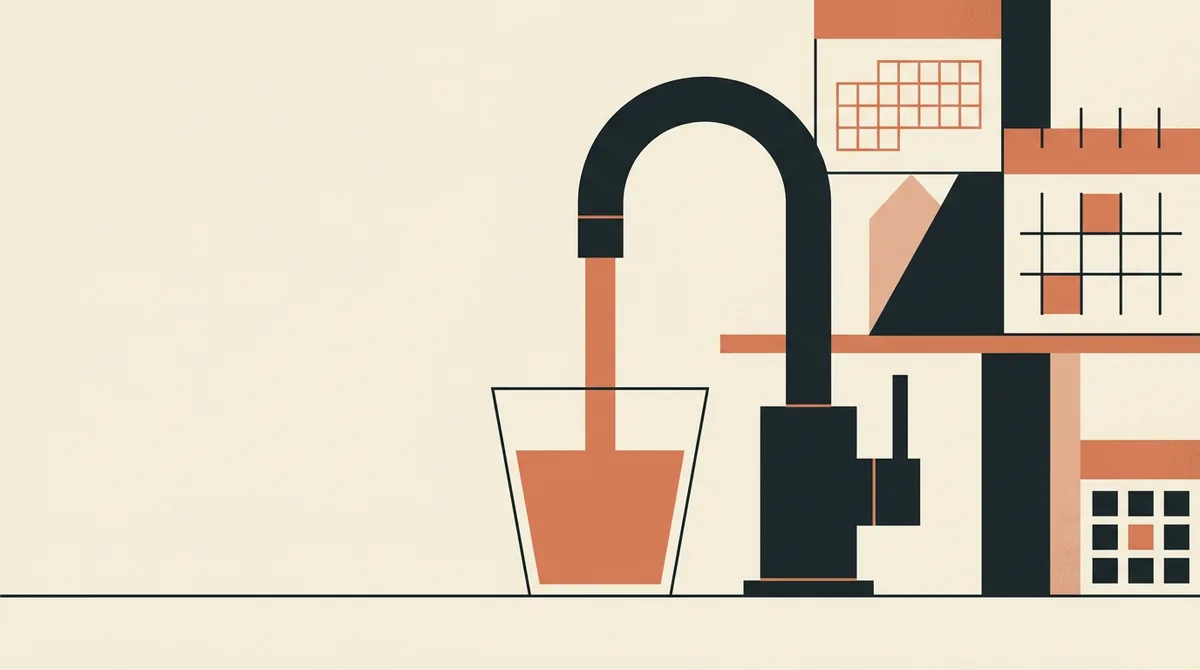
Most dental practices don't have a clinical quality problem. They have a predictability problem. Patients show up, but in waves: one month the schedule is packed, the next you've got three empty chairs at three in the afternoon. Word of mouth works, but you don't control it. It depends on whoever had a good experience and feels like talking about it. And when you need a steady flow, there's no tap you can just turn on.
Getting more patients predictably doesn't mean buying more advertising. It means building a system that captures people who are already interested, gets them to book without friction, and reactivates the patients already sitting in your database. In this guide we'll walk through, step by step, how to build that system starting with what you already have: reviews, recalls, and dormant patients.
Why word of mouth alone isn't enough anymore
Word of mouth is still the number-one channel for a dental practice, and it's worth cultivating. But it has three structural limits that make it unreliable as your only source of new patients.
- You can't control it. You don't decide how many patients it'll send you this month. It arrives when it arrives.
- You can't measure it. You don't know which patient generated which referral, so there's nothing to optimize.
- It doesn't scale. If you want 30% more first visits, word of mouth won't respond on command. Existing demand is simply what it is.
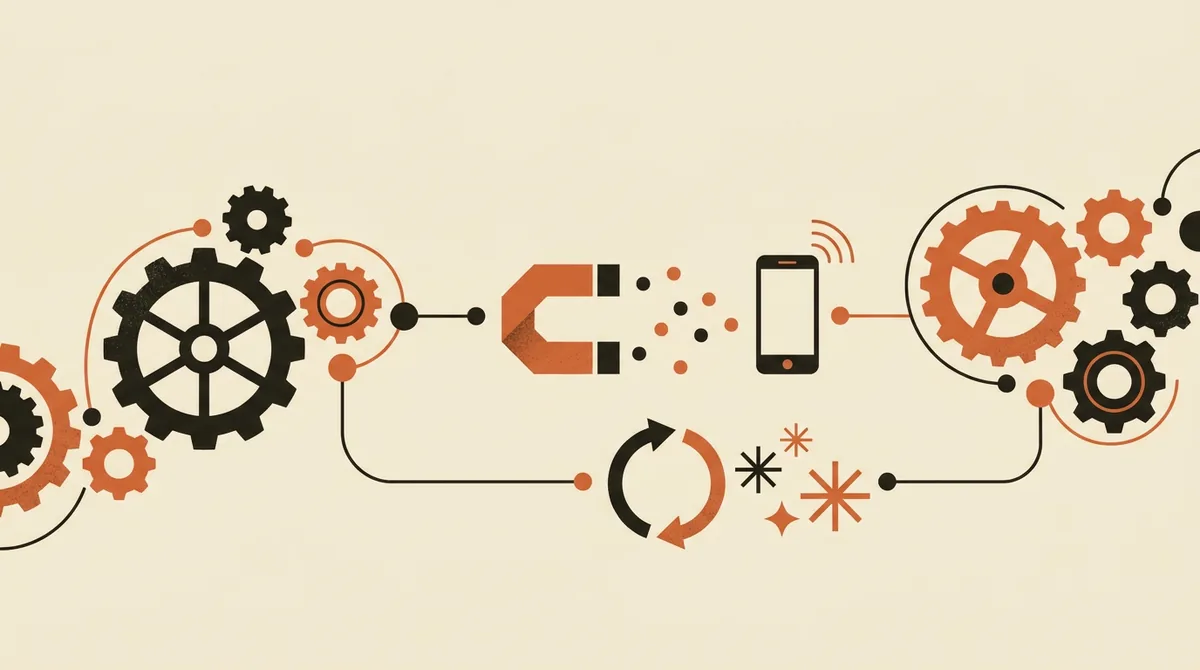
The point isn't to abandon word of mouth, but to pair it with channels you control. Someone Googling a dentist nearby, the reviews patients read before calling, ads shown to people searching "dental implants" in your city, automated recalls to patients already under your care. Each of these is a tap you can open and close. Put together, they form what we call a customer acquisition system: a complete machine, not a pile of disconnected tactics.
From scattered tactics to a system: the difference that matters
Almost every practice that tries marketing does it in fragments. One month they post on Instagram, then they try Google Ads for two weeks, then they quit because "it didn't work." The problem isn't the individual channel, it's the lack of a system that holds them together and turns traffic into real appointments.
An acquisition system for a dental practice has four components working in sequence.
- Attraction. Getting found by people who have a need (Google, reviews, local ads, content).
- Conversion. Turning a website or Google Business Profile visit into an appointment request (landing page, WhatsApp, form, phone call).
- Booking. Responding immediately and locking in the first visit, without losing the patient along the way.
- Reactivation. Calling back patients who've already been treated or haven't returned in a while (hygiene, check-ups, quotes that never closed).
That's the whole difference between a tactic and a system: if one link breaks, the rest doesn't work. You can have the best ad in town, but if nobody picks up the phone at one in the afternoon, you're just burning budget. If you want to understand the logic better, we've laid out in detail the difference between a complete system and simple lead generation.
Step 1: reviews are your best salesperson
Before spending a single euro on advertising, fix your reviews. Someone looking for a new dentist doesn't trust your website: they trust what other patients say. Your practice's Google Business Profile is the first thing they see, and the number and quality of your reviews decide whether they call you or the competitor two streets over.
How to build a steady flow of reviews
- Ask at the right moment. Not right after a numbing injection, but after a treatment that went well, when the patient is satisfied. The front desk can handle it, or an automated WhatsApp message the next day.
- Make it effortless. A QR code at reception, a direct link to the Google review via SMS. Every extra click you ask for cuts your response rate in half.
- Reply to all of them. Even the 5-star ones, with a couple of lines. Replies signal to Google that the practice is active, and to prospective patients that you care.
A realistic goal: go from sporadic reviews to 5-10 new reviews a month. Within six months your Google profile looks completely different, and so does your inbound call rate, at close to zero cost.
Step 2: answer immediately, or the patient is already with a competitor
This is the link where most practices lose the most patients, without even realizing it. A prospective patient has a toothache, searches Google, finds three practices, calls the first one. If you don't answer, they don't leave a voicemail: they call the second one. A missed call isn't a minor slip, it's a patient lost in real time.
We broke down exactly how much this problem is worth in our article on what a missed call costs a local business. For a dental practice, where average lifetime patient value easily exceeds a thousand euros, every missed first visit is a real hole in your schedule and, by year end, in your revenue.
The critical moments are predictable: lunch break, after 7pm, Saturdays, whenever the front desk is chairside with a patient. Those are exactly the hours people have time to call. Here are the concrete fixes.
- WhatsApp Business with quick replies to catch people who'd rather text than call (more and more of them).
- An AI voice assistant for medical and dental practices that answers calls when the front desk is busy, gives basic information, and books the appointment straight into the calendar, 24/7.
- Automatic callback for every missed call, within minutes, before the person turns elsewhere.
You don't need to replace your receptionist. You need to make sure the phone never rings out, because that's exactly where ad budget turns into nothing.
Step 3: the database you already have is the most overlooked goldmine
Before chasing new patients, look at the ones you already have. Every dental practice has hundreds of patients who haven't come back in a year or more: they had a treatment, then vanished. Not because they were unhappy, but because life moved on and nobody followed up.
Reactivating dormant customers from your database is the cheapest way to fill your schedule: you're not paying for acquisition, these are people who already know and trust you. A few concrete examples for a practice.
- Hygiene recall. An automated message to anyone who hasn't had a cleaning in over six months. It's the backbone of prevention and the easiest reason to bring someone back.
- Quotes that never closed. That patient who asked for an implant quote and never got back to you. A gentle follow-up reopens a conversation about real money.
- Overdue check-ups. Anyone who finished orthodontic or prosthetic treatment and is due for a review.
An automated follow-up system handles these recalls without anyone at the practice having to remember them manually. Many practices find that reactivating the database brings in more first visits than their first few months of advertising, at almost no cost.
Want to know which links in your practice are losing you the most patients right now? Request a free analysis: we'll look at your reviews, calls, and database together and tell you where to act first.
Step 4: advertising, but only once the rest is fixed
Only once reviews, call response, and reactivation are working does it make sense to put budget into paid acquisition. Doing it earlier means pouring water into a leaky bucket: you pay to generate calls that then get lost.
For a dental practice, the channels with the best returns are local and tied to search intent.
| Channel | What it's good for | Note |
|---|---|---|
| Local Google Ads | People searching "dentist + city", "implants", "emergency dentist" | High intent, higher cost per lead but better quality |
| Meta (Facebook/Instagram) | Whitening, cosmetic dentistry, invisible orthodontics | Generates demand for elective treatments, needs solid qualification |
| Local SEO + Google Business Profile | Ongoing visibility without paying per click | Slow but cumulative effect, the foundation of everything |
We go deeper on the paid side in our article on lead generation with Google Ads and the one on lead generation on Facebook and Instagram. The key idea is simple: advertising doesn't create the system, it fuels it. Without the earlier links in place, it just burns money.
Let's talk numbers: what to actually expect
Be wary of anyone who promises "guaranteed patients" without giving you numbers. Serious acquisition has unit economics you can check. For a dental practice, these are the rough benchmarks.
- Cost per lead (CPL): varies by treatment, generally from a few dozen euros up to over 50-70 euros for high-value treatments like implants.
- Lead-to-first-visit conversion rate: depends almost entirely on how fast you respond and how good your front-desk qualification is.
- Ramp-up time: a system isn't running at full speed from day one. Realistically it takes 60-90 days to tune channels, messaging, and qualification.
If these numbers matter to you, our article on acquisition KPIs and unit economics (CAC, CPL, LTV) explains how to track your real return, without illusions.
Qualify, don't just generate: filter before you fill the schedule
More leads isn't better if they're the wrong leads. People shopping only for the lowest quote, people who want information but will never book, people outside your area: they fill your front desk's day with dead-end calls, not patients.
Qualifying means filtering before booking: understanding the need, the location, the urgency, the type of treatment. A qualified lead for a practice is someone with a real problem, in your area, ready to book a first visit. We've written a practical guide on how to qualify leads that applies to any service business, dentistry included.
When the first filter is automated (an AI assistant, a smart form, a qualifying WhatsApp message), your front desk only receives pre-screened appointments and can focus on patient care instead of sorting through window shoppers.
Putting it all together: the system in practice
To recap, here's the right order for getting more patients without wasting budget.
- Reviews first. Fix your Google profile, build a steady flow of reviews. Near-zero cost, immediate effect on trust.
- Cover the phone. No call should ever go unanswered, with WhatsApp, automatic callback, or an AI voice assistant.
- Reactivate the database. Hygiene, open quotes, overdue check-ups. The cheapest goldmine you have.
- Then advertising. Local Google Ads and social, only once the earlier links hold up.
- Always qualify. Filter before booking, so the schedule fills with real patients.
None of these steps is magic on its own. Together, though, they turn a flow that depends on chance into a flow that depends on you: predictable, measurable, improvable month after month. That's the difference between hoping patients show up and knowing how many will. If you want the bigger picture applied to any service business, start with our guide on how to build a steady flow of customers.
Mistakes that wipe out your results
- Advertising with the phone uncovered. The first euro spent for nothing.
- Ignoring the database. Chasing strangers while hundreds of former patients are just waiting for a call.
- Not measuring anything. If you don't know where each first visit came from, you don't know what to double down on and what to cut.
- Switching channels every two weeks. A system needs 60-90 days to produce real numbers. Quitting early throws away the work already done.
Frequently asked questions
How long does it take to see more patients on the schedule?
Reviews and database reactivation show effects within a few weeks. Paid advertising needs 60-90 days to be properly tuned and produce stable numbers. Be wary of anyone promising guaranteed instant results.
How much does it cost to acquire a new patient for a dental practice?
It depends on the treatment. Cost per lead ranges from a few dozen euros up to over 50-70 euros for high-value services like implants. But the number that actually matters is cost per first visit, which depends heavily on how fast you respond to inquiries.
Is it better to advertise on Google or Facebook for a dental practice?
Google Ads captures people already searching for a dentist or a specific treatment, so it's high intent. Facebook and Instagram work better for generating demand for elective treatments (whitening, invisible orthodontics). Ideally you use both, but only after fixing call response and reviews.
How do I avoid losing patients when the front desk is busy?
Missed calls during peak hours, lunch breaks, or after closing time are the most common way practices lose patients. The fixes are WhatsApp Business, automatic callback on missed calls, and an AI voice assistant that answers and books appointments when reception can't.
Do I really need a whole system, or is running a few ads enough?
Ads on their own almost always disappoint, because they generate calls that then get lost downstream. A system brings together attraction, fast response, booking, and reactivation. It's the combination that makes the flow predictable, not any single ad.
How do I make the most of the patients I already have without spending on advertising?
Through database reactivation: automated recalls for overdue hygiene visits, follow-ups on quotes that never closed, reminders for overdue check-ups. These are people who already know and trust you, so they convert better and at almost no cost compared to new leads.
If you want to build a predictable flow of first visits instead of waiting on word of mouth, let's talk: we'll show you how to put the pieces together starting with what you already have.