Win Back Gym Members with Expired Memberships: SMS & WhatsApp AI
7 min read · AstraLoop Studio
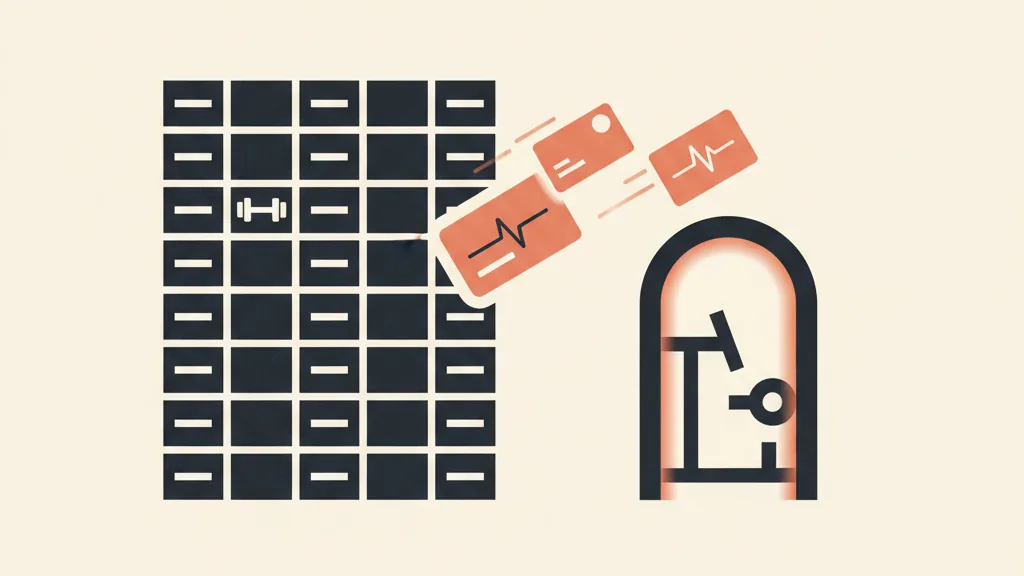
If you run a gym, your database of former members is worth more than the ad budget you spend every month acquiring new ones. That's not a slogan, it's arithmetic. In an average facility with 800 active members, somewhere between 40% and 60% of memberships expire without renewal every year. After three or four seasons, you're sitting on 1,000-1,500 phone numbers of people who already chose you once, walked through your door, and know your opening hours and your weight room. And who no longer call.
The paradox is that you keep pouring money into Meta campaigns at €15-25 per cold lead, while those warm contacts sit untouched in your CRM. Winning them back costs a fraction of that, converts better, and doesn't require a single euro of ad spend. In this guide we walk through the operational method for doing it with SMS, WhatsApp, and AI voice calls, with realistic recovery-rate numbers and without burning your gym's reputation in the process.
Why a former member is the cheapest lead you have
The logic is the same across every industry, but in fitness it's amplified by seasonality. Someone who cancelled in June because "I'll run outdoors over the summer" is often the same person who's looking for somewhere to go back to in September. Someone who stopped after an injury is ready to return the moment they've healed. In fitness, the reactivation window is cyclical and predictable.
On the cost side, winning back a dormant customer costs on average 5-7 times less than acquiring a new one. We dug into the reasoning in this comparison of reactivation cost versus acquisition cost, but for a gym the math is simple: a contact who already knows you doesn't need convincing about the quality of your equipment or your location. They need a reason to come back and a small incentive to do it now instead of "someday".
Who to call first: RFM segmentation applied to fitness
Not every former member is equal. Before launching a campaign, segment the database by how long ago the membership expired and how long the person was a customer. It's the same logic behind RFM analysis, translated for a fitness facility:
| Segment | Who they are | Priority |
|---|---|---|
| Recently expired (1-3 months) | Membership ended recently, still "warm" | Highest: best recovery rate |
| Dormant loyalists | Members for 12+ months, now inactive for 4-9 months | High: they already had a settled habit |
| Seasonal cancellers | Recurring summer cancellations, September comebacks | High, but only in the right window |
| Cold (12+ months) | Expired over a year ago | Low: recovery possible, but needs a strong offer |
Starting with the "recently expired" segment gets you the best results for the least effort. It's the same principle behind catching dormant customers before they become unrecoverable: the sooner you reach out, the higher the odds of winning them back.
SMS: the channel with an open rate above 98%
For a gym, SMS remains the most underrated and most effective tool. Open rates exceed 98% (compared to 20-30% for an average email), and messages are typically read within minutes of being sent. On a database of former members, a well-built SMS campaign can easily deliver an ROI above 1,000%, because the cost per message is a few cents while the value of a recovered membership runs into the hundreds of euros.
The secret is brevity and a clear offer. An example that works:
"Hi Marco, it's been a while since we last saw you at [Gym Name]. We've kept your spot: come back by 30/09 and your first 15 days are on us. Reply YES and we'll call you. STOP to opt out."
Notice three things: the name is personalized, the deadline is specific (it creates urgency), and there's a concrete incentive plus an opt-out option. That last part isn't a nice-to-have, it's mandatory. If you want to see just how well this channel performs, we gathered the data in our piece on SMS marketing open rates.
WhatsApp: where the conversation (and the booking) happens
SMS opens the door, but WhatsApp is where the conversion happens. Anyone who replies "YES" to the SMS can be routed into a WhatsApp Business flow where an automated assistant handles the conversation: answering typical objections ("how much does it cost now?", "do you still run the spinning class?"), presenting the win-back offer and, crucially, booking a trial session or a front-desk appointment directly.
The advantage of WhatsApp is that it closes the loop without any human involvement. The former member writes in, the assistant replies in real time, offers two or three available slots, and confirms. All of it integrated with the gym's CRM, so the appointment lands straight in the calendar. To see how this is built technically, take a look at how WhatsApp Business automation with AI works.
A common question is: SMS or WhatsApp? The right answer is "both, in sequence". SMS maximizes opens, WhatsApp maximizes the conversation. We cover this head-to-head in our comparison of WhatsApp versus SMS marketing.
AI voice calls: the phone call nobody has time to make anymore
The real bottleneck in phone-based reactivation is simple: nobody at the gym has time to call 800 former members. The receptionist is busy at the front desk, the owner is running the floor. So the lists just sit there.
This is where AI voice calling comes in. A voice agent can call through the entire database outbound, introduce itself naturally, mention the win-back offer, and, if the person is interested, hand the call off to a human or book an appointment directly. The economics change radically: an AI voice call costs around €0.40, compared to €7-12 for a human agent. On "warm" databases like a gym's own former members, positive response rates land between 15% and 35%.
One important transparency detail: an AI voice must state that it's an AI at the start of the call. In Italy, this is required under Law 132/2025, which introduces the obligation to disclose AI use over the phone. It's not a drawback: done well, it actually builds trust. If you want to see how an assistant like this behaves, we have a deep dive on how AI answers and makes phone calls.
The orchestrated funnel: SMS, WhatsApp, and voice in sequence
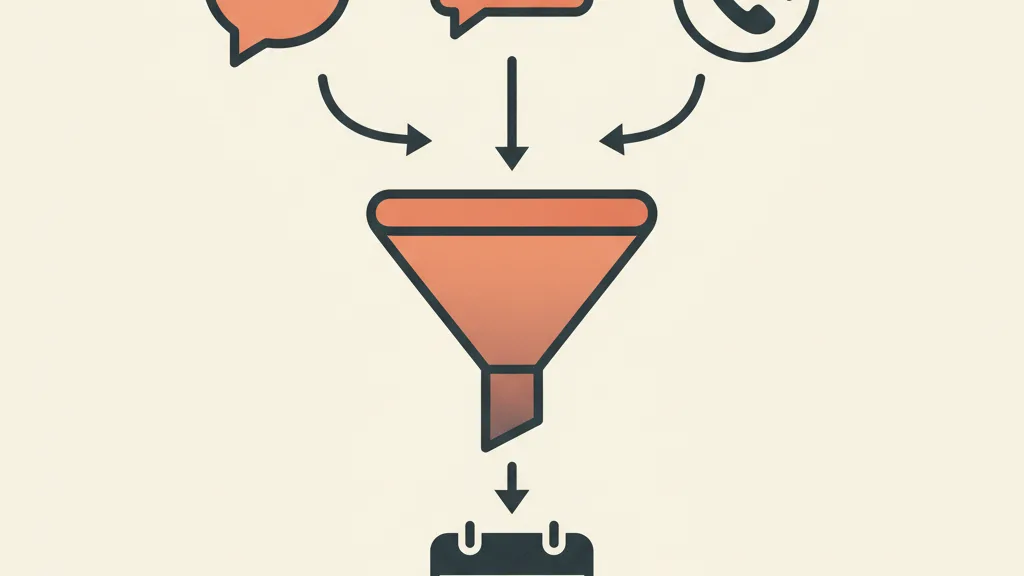
The real step up in performance isn't picking one channel, it's orchestrating all of them. Most articles talk about a single channel at a time. In practice, a gym reactivation campaign that actually works follows a sequence:
- Day 1, SMS: short message with a win-back offer and a deadline. Anyone who replies enters the WhatsApp flow.
- Day 3, WhatsApp: for anyone who opened but didn't reply, a conversational message with details and a trial offer.
- Day 6, AI voice call: an automated call to non-responders from the previous two channels, with handoff to a human for interested contacts.
- Day 10, closing SMS: one last reminder, "the offer expires tomorrow", sent only to those who haven't reacted yet.
Sequences built this way generate up to 320% more revenue than a single broadcast send, because each channel picks up a different slice of people. Whoever doesn't read the SMS answers the call. Whoever ignores the call reacts to the final reminder. It's the same principle behind win-back sequences, applied to high-open-rate channels.
This multichannel approach is the core of any serious reactivation project. For the full picture of the method, our complete guide to reactivating dormant customers is the starting point that every vertical playbook, gyms included, builds on.
Got a CRM full of former members that nobody's calling back? Request a free analysis of your database: we'll tell you how many memberships you can recover and with what sequence.
Real numbers: a gym reactivation campaign case study
Take a typical facility with a database of 1,200 former members with expired memberships. Here's a realistic projection, using conservative rates:
| Stage | Base | Rate | Result |
|---|---|---|---|
| Total contacts | 1,200 | - | 1,200 |
| Contacts reached (SMS opened) | 1,200 | 98% | ~1,176 |
| Positive replies / interested | 1,176 | 18% | ~211 |
| Appointments / trials booked | 211 | 55% | ~116 |
| Actual renewals | 116 | 50% | ~58 |
Fifty-eight recovered memberships. If the average annual value of a membership is €400, that's roughly €23,000 in revenue generated from a database that was sitting idle, at a campaign cost in the low hundreds of euros across SMS, WhatsApp, and AI calls. That's a recovery rate of around 5% of the total database, and it's a conservative estimate: on the "recently expired" segments, the rates climb significantly higher.
The exact number isn't the point, since it varies facility to facility, but the order of magnitude is. This is money you were leaving on the table. And it's the most direct way to bring down your average acquisition cost, as we explain in how to win back lost customers.
GDPR: reactivating without getting fined
Most marketing guides stay quiet on this, and lawyers tend to stay vague. Let's clarify this in practical terms, for informational purposes and not as definitive legal advice.
You can re-contact a former customer by email or SMS with an offer similar to services they already purchased, relying on legitimate interest or the "soft opt-in" exception under Article 130 of Italy's Privacy Code, as long as there was no objection at the time the contact was collected and every communication includes a clear opt-out mechanism (the classic "STOP" for SMS). The Italian Data Protection Authority and EDPB guidelines point to a practical principle: contact data cannot remain valid indefinitely. The commonly cited reference window is roughly 24 months from the last interaction, beyond which consent or the customer's reasonable expectation weakens.
In concrete terms, for a gym this means: start with contacts that expired less than two years ago, always include an opt-out, keep track of who unsubscribes, and don't re-contact them. We've dedicated a full operational guide to this topic in how to win back old customers while staying GDPR-compliant. For official sources, refer to the Italian Data Protection Authority (Garante) and the EDPB guidelines on promotional communications.
Where to actually start
If you already have the database and the phone numbers, you're already halfway there. The operational steps are:
- Export the contacts from your CRM and segment them by expiration date.
- Write a single, clear, time-limited win-back offer (e.g. "15 days free if you come back by the end of the month").
- Set up the sequence: SMS, then WhatsApp, then AI voice, with an opt-out on every channel.
- Exclude anyone who's already said they don't want to be contacted, and anyone whose membership expired more than 24 months ago.
- Measure everything: people reached, replies, appointments, renewals.
Reactivation isn't a one-off promotion. It's a financial lever that, repeated every season, keeps your funnel full without increasing ad spend. And it's the natural complement to any lead generation effort aimed at new customers: first you clear out the contacts you already have, then you pay to acquire new ones.
Frequently asked questions
Can I re-contact gym members with expired memberships by SMS?
Yes, as long as there was no objection at the time the contact was collected, the offer is for a service similar to one they already purchased, and every message includes a clear opt-out (e.g. 'STOP'). It's best to stick to contacts that expired less than 24 months ago.
What's a realistic recovery rate for a gym reactivation campaign?
On a mixed database, you typically recover around 5% of total contacts. On the 'recently expired' segments (1-3 months), the rates climb significantly. A lot depends on the quality of the win-back offer and how well the channels are orchestrated.
Is SMS or WhatsApp better for winning back members?
Both, in sequence. SMS has an open rate above 98% and is perfect for the first touch. WhatsApp handles the conversation, answers objections, and books the trial session directly. Used together, they perform far better than either channel alone.
How much does an AI voice reactivation call cost compared to a human agent?
An AI voice call costs around €0.40, compared to €7-12 for a human agent. On databases of former customers, positive response rates land between 15% and 35%, at a much lower cost and with the ability to call the entire list.
Does an AI voice have to disclose that it's artificial intelligence?
Yes. In Italy, Law 132/2025 requires disclosing at the start of the call that the person is speaking with an AI system. Done transparently, this builds trust rather than eroding it.
When is the best time to launch a gym reactivation campaign?
Fitness is cyclical: September (back from summer break) and January (New Year's resolutions) are the peaks. But it pays to reach seasonal cancellers earlier, in August, and to keep chasing 'recently expired' members continuously, rather than waiting for the two classic peaks.
Talk to us: we'll set up the SMS, WhatsApp, and AI voice sequence together to win back your former members, GDPR-compliant and without spending a cent on advertising.