Dental Patient Recall: Refill Your Schedule with SMS and WhatsApp AI
9 min read · AstraLoop Studio
There's a number almost no dental practice looks at closely: the share of patients who had a cleaning or checkup and never came back for the next one. In an average Italian practice it sits between 40 and 60 percent. These are people who already know you, already trust you, already have an open file. Yet the next six months of the schedule are full of gaps, and the receptionist spends half her time chasing them down one by one on the phone.
Patient recall isn't aggressive marketing. It's clinical practice: dental guidelines recommend a professional cleaning every 6-12 months depending on periodontal risk. The problem is that today this follow-up depends on the patient's memory or on however much time the front desk can carve out. Neither is reliable. In this guide we'll look at how to turn it into an automatic system that runs on its own, using SMS, WhatsApp, and AI voice calls, without burning the relationship with the patient and without risking penalties on the handling of health data.
Why manual recall no longer holds up
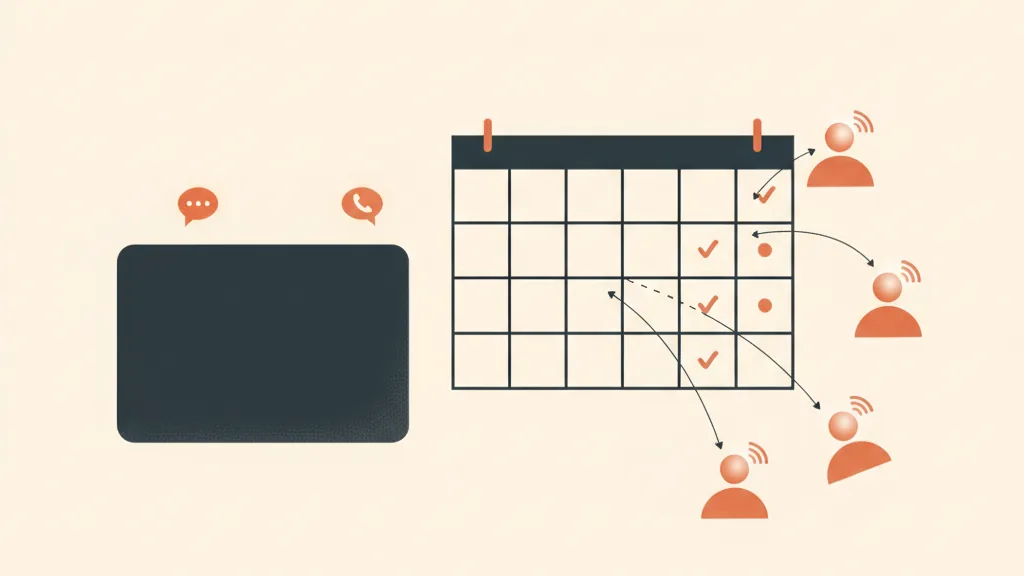
Let's run the numbers for a practice with 2,000 active patients. If each one should get an average of 1.8 cleanings a year, that's roughly 3,600 appointments to schedule. Manual phone recall means this: the receptionist calls, the patient doesn't pick up (this happens on 60-70 percent of first attempts), she calls again, leaves a message, waits for a callback, tries again. Every successful recall costs 6 to 12 minutes of staff time, not counting the calls that go nowhere.
The practical result is that recall only gets done for the "easy" and most recent patients, while anyone who missed a cycle or two slides into the dormant list. And reactivating a dormant patient, once you finally get to them, costs far less than acquiring a new one. On the comparison between reactivation cost and acquisition cost the gap is stark: reactivating costs 5-7 times less than winning a new customer through advertising. The practice has already spent money getting that person to know you. Not calling them back means throwing that investment away.
A dormant patient isn't a lost patient
A distinction is needed here. A patient who skipped their last cleaning reminder hasn't decided to switch dentists. In most cases they simply forgot, put it off, or went through a busy stretch. This is exactly the profile that customer analysis calls "About to Sleep" or "Hibernating." Catching them before they become truly unrecoverable is the whole game. If you want to understand the dynamic better, we covered what dormant customers are and why they drift away without any real reason.
The three channels of automated recall: SMS, WhatsApp, AI voice
There's no single "best" channel. Recall that works is orchestrated: it starts with the lightest-touch channel and escalates only if the patient doesn't respond. Let's look at each one.
SMS: the channel that always gets opened
SMS has an open rate above 98 percent, and it's read within an average of three minutes of arriving. For a cleaning reminder it's close to ideal: short, direct, no app to open. It costs a few cents per message, and the return on a contact who already knows you is disproportionate. We've gathered the data on why it works so well in the piece on SMS marketing open rates.
Here's an example of a recall message that works, with no fluff attached:
- "Hi Marco, it's been almost a year since your last cleaning at Studio Dentistico Bianchi. Want us to suggest a couple of dates? Reply YES and we'll get back to you."
No loud discount, no sales tone. A health reminder with a clear call to action. If you're curious about the technical comparison between the two text formats, here's the analysis of WhatsApp versus SMS marketing.
WhatsApp: where the conversation happens
If SMS gets opened, WhatsApp converts. Its strength is two-way conversation: the patient replies "yes, I'd like that," and an automated flow offers the open slots on the schedule, confirms the booking, and writes it into the practice management system. A simple reminder becomes a booked appointment without anyone at the front desk picking up the phone. The integration between WhatsApp Business and booking is the real leap forward: we cover it in detail in the guide to automating WhatsApp Business with AI.
One technical rule to watch: WhatsApp Business only allows proactive messages (outside the 24-hour window) through templates approved by Meta. A recall should therefore be set up as a utility template, not a promotion, which also helps on the compliance side.
AI voice: for patients who don't read messages
There's always a slice of patients (often the older ones, often the most loyal) who don't look at SMS and don't use WhatsApp. For them, the channel is the phone call. This is where AI voice comes in: a voice assistant that calls, introduces itself, reminds the patient it's time for their checkup cleaning, and offers to book the appointment, handling the conversation in natural Italian. A call like this costs around €0.40, against €7-12 for a human operator, and positive response rates on a patient database (which are warm contacts, not cold lists) are decidedly high.
To see how this applies specifically to healthcare, with privacy and scheduling handled properly, it's worth reading the deep dive on AI voice assistants for medical and dental practices. And if you're wondering how an AI voice handles callers less comfortable with phones, here's the piece on AI voice with older callers and spoken Italian.
The orchestrated recall funnel: how it all fits together
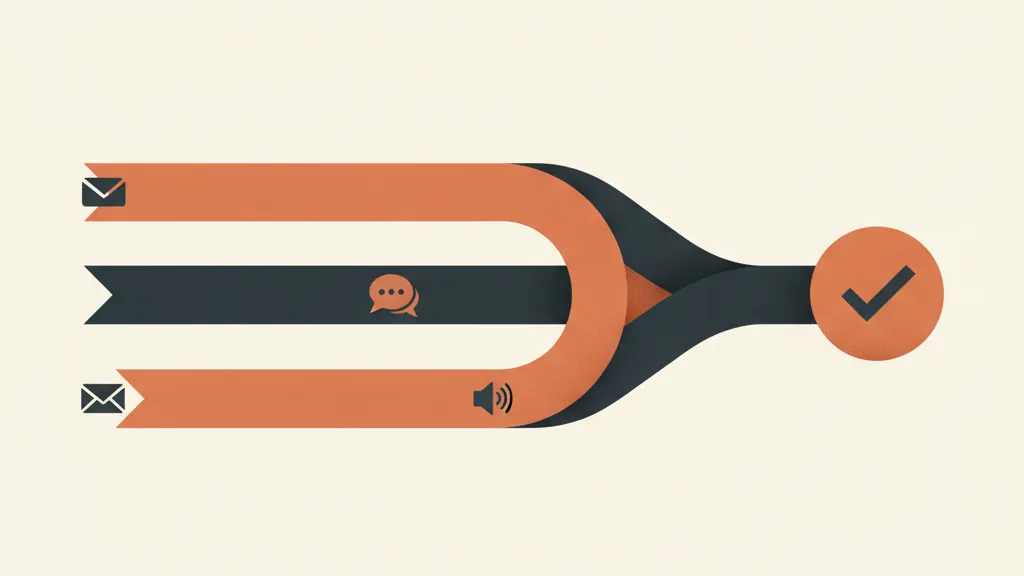
The value isn't in any single channel, but in the sequence. A well-built recall funnel follows an escalating logic, from the cheapest contact to the most demanding, and stops the moment the patient books. Here's a typical structure over a two-week window:
| Day | Channel | Action |
|---|---|---|
| 0 | SMS | Cleaning reminder asking for availability |
| 2 | Template with suggested slots and booking link | |
| 5 | SMS | Gentle reminder to anyone who hasn't replied |
| 8 | AI voice | Call to non-responders only, booking by voice |
| 12 | Human handoff | Short list to the receptionist for remaining open cases |
The key point is that last row. Automation doesn't remove the person, it frees her up: instead of calling 3,600 patients, the receptionist only handles the handful of complex cases the system didn't close. This clean handoff from machine to human is called human handoff, and it's what separates a serious system from an annoying robocaller.
Automated sequences like this, compared to a single broadcast sent to everyone at the same time, perform far better. Well-orchestrated reactivation campaigns show revenue gains reaching triple-digit percentages, simply because each patient gets the right message on the right channel at the right time.
Want to know how many empty chairs your schedule is hiding and how to fill them automatically? Request a recall analysis: we'll look at your numbers together and tell you what's recoverable.
Compliance: healthcare recall and GDPR without the risk
This is where precision matters, because dental data is health data, a special category under Article 9 of EU Regulation 2016/679 (GDPR). This isn't ground for improvising. Here are a few fixed points, offered for information and not as legal advice.
What legal basis you're using to process the data for recall
A cleaning reminder tied to an ongoing clinical treatment can in many cases fall under patient care, but a proactive recall message (especially over channels like SMS and WhatsApp) is safer to run on specific, documented consent, collected at the first visit alongside the privacy notice. Italy's Data Protection Authority (Garante) has repeatedly flagged health reminders sent over electronic channels: consent must be requested clearly and separately, and the patient must be able to withdraw it at any time.
The 24-month window
For contacts who haven't been back in a long time, there's a question of data currency. EDPB guidelines (Opinion 1/2024 on legitimate interest) and established practice point to a reasonable window of around 24 months, beyond which reactivating a contact becomes delicate. For a patient who hasn't set foot in the practice for three years, don't assume anything: the recall needs to be calibrated more carefully. We've dedicated a practical guide to this topic, how to reactivate old contacts in compliance with GDPR, worth reading before launching any campaign targeting dormant patients.
AI voice: the duty to disclose
If you use a voice assistant for phone recall, Italy applies the framework introduced by Law 132/2025 on artificial intelligence: whoever receives the call must be able to know they're talking to an automated system. The practical detail on how to phrase it is in the article on the obligation to disclose AI on the phone. It's one line of script, but it's required, and it also builds more trust with the patient.
One last technical point almost nobody connects to reactivation: deliverability. If you add email to the recall mix, poorly configured bulk sends damage the practice's domain reputation and can push important clinical communications into spam too. Domain authentication and clean lists aren't a technical footnote: they're what keeps the channel alive. If you want to dig deeper, here we explain why emails end up in spam.
Where a practice actually starts, in practice
You don't need to rebuild your practice management software. The realistic path looks like this:
- Pull the list. From your practice management software, pull out patients whose last cleaning was more than 6-9 months ago with no future appointment booked. This is your recall base.
- Segment it. Separate the "recent, easy to call back" group from the truly dormant ones (over 18-24 months, to be handled with GDPR caution). It's not the same campaign.
- Set up the sequence. SMS, WhatsApp, AI voice as in the table above, integrated with the practice management system so bookings get written into the schedule automatically. The integration between voice assistant and practice management software is what makes the whole thing run smoothly.
- Measure it. Response rate per channel, appointments booked, chairs filled. A well-run automated recall reliably recovers a double-digit share of dormant patients, which is schedule time that used to sit empty.
This kind of system fits into a broader strategy. Recall is the most immediate reactivation lever, but it lives within a fuller approach to bringing back people who already know you: the complete guide to reactivating dormant customers from your database is the general framework, while if your goal is also to bring in new patients we've gathered the tactics in how to grow patient numbers at a dental practice.
What it's really worth, in chairs
Let's close with the one number that matters to a practice owner. Take 2,000 patients and assume 45 percent are overdue on recall: that's 900 unscheduled cleanings. With an automated recall that recovers even just 15 percent of them, that's 135 extra checkup cleanings a year, on top of the treatments that often surface afterward (fillings, periodontal work, prosthetics caught in time). At a conservative average value per recovered patient, that's thousands of euros of production that were already yours and were slipping away, at zero advertising cost. Automated recall isn't a marketing expense: it's the upkeep of the patient base you've already built.
Frequently asked questions
How often should hygiene recall be done for patients?
It depends on each patient's periodontal risk: standard dental practice calls for a professional cleaning every 6-12 months. Automated recall should be tuned to that clinical interval, not a one-size-fits-all commercial deadline. Most practice management software lets you set a personalized reminder based on the last visit.
Can I send recall SMS to patients without risking GDPR penalties?
Yes, but you need a solid legal basis. Dental data is health data (a special category under Article 9 GDPR), so the safer route is to collect specific, documented consent for SMS and WhatsApp recall at the first visit, with the option to withdraw it. Italy's Data Protection Authority has repeatedly flagged electronic health reminders: consent must be clear and separate.
Does an AI voice calling patients have to disclose it's an AI?
In Italy, the framework introduced by Law 132/2025 requires that whoever receives the call be able to know they're talking to an automated system. In practice, it's one line of script at the start of the call. Besides being required, it increases the patient's perceived transparency.
SMS or WhatsApp for dental recall?
They're used together, not as alternatives. SMS has an open rate above 98 percent and is ideal as the first reminder. WhatsApp, with Meta-approved utility templates, opens up a two-way conversation and lets you offer slots and book the appointment automatically. The sequence starts with SMS and escalates to WhatsApp when needed.
How much does automated recall cost compared to having the receptionist call?
An SMS costs a few cents, an AI voice call about €0.40, against €7-12 for a human operator per successful recall, not counting the calls that go nowhere. But the real saving is freed-up time: the receptionist only handles complex cases instead of chasing hundreds of patients by phone.
Does automated recall work with older patients too?
Yes, but the channels need to be orchestrated well. Anyone who doesn't use SMS or WhatsApp should be reached by phone call, and that's where AI voice speaking natural Italian, capable of handling a simple conversation, closes the loop by reaching the least digital-savvy segment of patients too, who are often also the most loyal.
If you want an SMS, WhatsApp, and AI voice recall system built around your practice and your management software, talk to us: we start from your real patient base.