How to Lower Your CPL on Facebook Ads Without Wrecking Lead Quality
9 min read · AstraLoop Studio
A low CPL is a trap if that's the only number you look at
Anyone running Facebook campaigns eventually lands on the same obsession: pushing the cost per lead down. Fair enough. CPL is the most visible number on the dashboard, the one that makes you feel like a genius or a fraud within five seconds. The problem is that CPL, on its own, tells you nothing about what you're actually paying to acquire a customer.
Here's the simplest, most common example. Campaign A: €4 CPL, 100 leads a month, 3 customers closed. Campaign B: €11 CPL, 40 leads a month, 6 customers closed. The first one has the lower CPL and looks like the winner. Except the cost per acquired customer on Campaign A is roughly €133, while Campaign B's comes in at about €73. With a CPL nearly three times higher, Campaign B costs you half as much to land a real customer.
That's why "lowering the CPL" is only a sensible goal if you keep it tied to quality. A low CPL achieved through sloppy filtering, open-ended forms, generic offers, and broad targeting fills your CRM with people who don't pick up the phone, don't remember filling anything out, and never had the slightest intention of buying. And you pay for those leads twice: once to Meta, and again when your sales rep or setter burns hours dialing dead numbers.
In this guide I'll show you how to cut cost per lead by working the right levers (offer, creative, targeting, form) and how to add a downstream automatic qualification layer that stops you paying people to chase junk contacts. Because the CPL that actually matters is the cost per qualified lead.

Why your CPL is high (the real causes, ranked by impact)
Before you touch any settings, you need to understand where an out-of-control CPL actually comes from. In most of the accounts we analyze, the order of impact looks like this, heaviest first.
1. The offer isn't strong enough
This is cause number one, and almost nobody looks at it first because fiddling with targeting feels easier. If you're offering "request information" or "book a free consultation" like a thousand other advertisers, the cost of convincing someone to hand over their details will be high by definition. A specific offer, with a clear benefit and a reason to act now, lowers CPL more than any technical optimization ever will. If you haven't seriously worked on this yet, start there: building an offer the market can't ignore is the upstream lever behind everything else.
2. The creative doesn't stop the scroll
In the age of Advantage+ and automation, creative has become the variable you actually control. An image or video that doesn't grab attention in the first two seconds pushes CPC up, and a high CPC drags CPL up right behind it. You don't need show-stopping production: you need simple creative that communicates one clear idea and a solid hook in the first few seconds. If you're not sure where to start, our approach to Facebook Ad copy that sells gives you a reusable structure.
3. Targeting is too narrow (or you're managing it when Meta should)
In 2026 the most common mistake is no longer bad targeting, it's too much targeting. Meta's algorithm, working with broad audiences and Advantage+, finds the right people better than you can manually with stacked interests and layers. Narrowing the audience inflates your CPM (you pay more to reach fewer people) and pushes CPL up with it. We wrote a dedicated guide on this shift in Meta Ads targeting in the AI era.
4. The lead form is lazy
"Fast" instant forms (name, email, phone pre-filled with a single tap) give you the lowest CPL of all. But that's exactly where the junk comes from: people fill it in without thinking, often by accident, and the response rate collapses. The form is the most delicate lever of all, because it's the exact point where the cost-versus-quality trade-off gets decided. We'll come back to it shortly, because it deserves a section of its own.
5. The pixel doesn't have enough signal
After iOS 14 and the end of third-party cookies, if you're not feeding Meta quality conversion events, the algorithm optimizes blind and wastes budget. Setting up the Conversions API properly and feeding Meta real conversions (not just the form click, but the lead that actually got qualified) is what lets automated optimization work for you instead of against you.
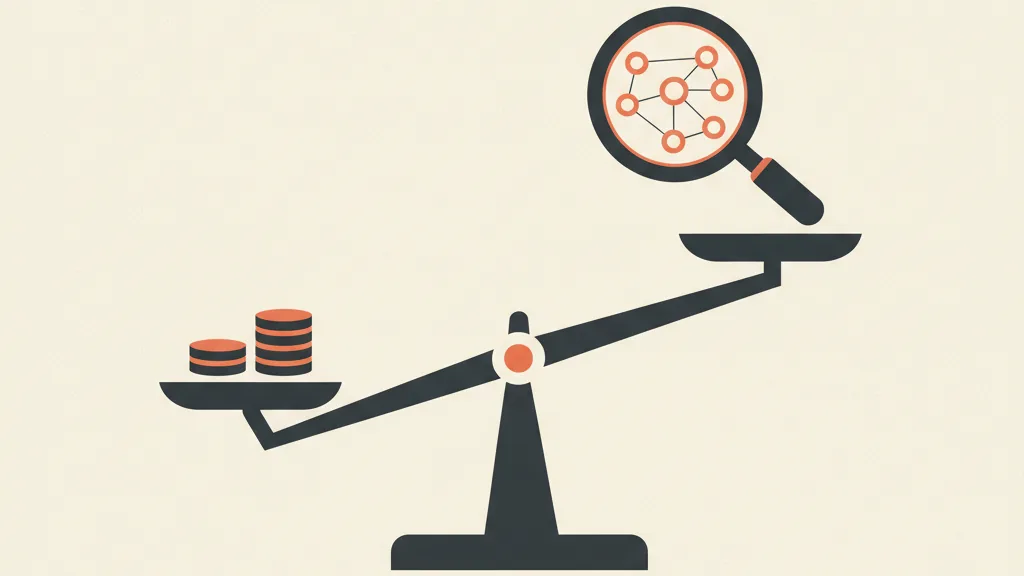
The levers to lower CPL without selling out on quality
Now for the operational part. These are the moves that, in our experience, move the needle without degrading lead quality. Listed in order of impact-to-effort ratio.
Make the offer specific and anchored to an outcome
Replace "request information" with something that communicates what the person gets and why it's worth acting now. "Find out how much you could save in 3 minutes" beats "contact us" every single time. A strong offer raises the conversion rate on both the landing page and the form, and a higher conversion rate means a lower CPL for the same spend. That's not marketing, that's arithmetic.
Let the creative do the work, not the audience
The lever you genuinely still control is testing lots of different creative. Different angles, different formats (static, video, UGC), different hooks. The good sign is when CPL drops while volume rises: it means you've found a concept the broad audience rewards. Before launching, run every creative through a copy review checklist so you don't burn budget on ads with avoidable mistakes.
Widen the audience and let the algorithm decide
If you're still stacking 6 interests and 3 behaviors, try a broad audience or Advantage+ with only the essential exclusions (people who already converted, employees, anyone irrelevant). In most cases CPM drops, delivery stabilizes, and CPL comes down with it. Give the algorithm enough budget and enough time (at least through the learning phase) before you judge it.
Fix your tracking and optimize for the right event
This is the most underrated move of all. Most campaigns optimize for a generic lead event, meaning anyone who fills in the form. But if you only send Meta the conversion event once the lead is qualified (they've replied, confirmed interest, booked a meeting), the algorithm learns to bring you people similar to your good leads, not similar to whoever happens to tap the button. This is the link between offline conversions from the CRM back to Meta and lead quality: you're teaching the machine what a real lead looks like. We go deeper on this in our guide to conversion signals between Meta and the CRM.
The form: where the cost/quality trade-off is really decided
Meta's lead form is the one lever that pushes CPL and quality in genuinely opposite directions. It's worth understanding well, because this is where most campaigns go wrong.
| Form type | Effect on CPL | Effect on quality |
|---|---|---|
| "Fast" instant form (pre-filled data) | Lower CPL | Lower quality, lots of junk |
| "Higher intent" instant form (confirmation screen, extra questions) | Medium CPL | Noticeably better quality |
| Custom qualifying question (budget, timeline, role) | Higher CPL | High quality, filters upstream |
| External landing page with its own form | Higher CPL | High quality, full control over tracking |
The practical rule is simple. If you need volume to feed an automated funnel that qualifies afterward, the fast form is fine, as long as something downstream filters it. But if every lead gets worked by a person, add at least a confirmation screen and a qualifying question: you'll pay a bit more per CPL, but you'll save a mountain of sales hours. The one thing you should never do is keep the fast form and send raw leads straight to a sales rep. That's the most expensive way to operate there is.
We have a dedicated guide on keeping lead form quality high: how to improve lead form quality on Meta Ads.
If you want to buy volume at a low CPL without burying your sales team in junk leads, we can build you the downstream automatic qualification. Request an analysis of your campaigns.
Downstream AI qualification: how you actually lower CPL, not just the vanity number
Here's the point almost nobody addresses, and it's the real reason you can afford a lower CPL without paying the price for it. If you have a system that qualifies leads automatically right after they submit the form, the cost/quality trade-off changes shape entirely. You can push for volume, accept a few more mediocre leads, and let a machine, not a human paid by the hour, separate the wheat from the chaff.
In practice it works like this. The lead fills in the form. Within seconds, an AI agent on WhatsApp (or via chat, or voice) picks it up, asks two or three qualifying questions (real interest, timeline, budget, minimum requirements) and, based on the answers, classifies it: hot, lukewarm, or discard. Hot leads reach the sales rep already filtered and with context. Lukewarm ones enter an automated nurturing sequence. The junk ones never consume a single minute of human time.
Here's what changes in the numbers:
- You stop paying setters to chase dead contacts. The cost of first contact collapses, because the machine handles the first pass on everyone and humans only step in for the qualified ones.
- You can afford a more aggressive CPL. If qualification costs a few cents per lead and automatically filters out 30-40% junk, you can run higher-volume campaigns with a low CPL, because the filter sits downstream.
- You feed Meta the right signal. When the agent marks a lead as qualified, that data flows back to Meta as a conversion. The algorithm learns and, over time, brings you more leads like the good ones. The qualified CPL drops on its own, campaign after campaign.
- You respond in seconds, not hours. Contact rate drops sharply after the first few minutes. An agent that replies instantly recovers leads a sales rep, calling back the next day, would have lost.
It's a complete reversal of the usual thinking. Instead of asking "how do I get leads that cost more but are better", you ask "how do I filter automatically so I can buy volume at low cost". It's a more defensible, more scalable approach. If you want to see how it's built, start with how an AI chatbot qualifies leads and books appointments and how you automate sales follow-up with AI.
The metrics that actually matter
If you only watch CPL, you'll eventually fool yourself. Here's the minimum dashboard you need to stay honest.
- Raw CPL: cost per submitted lead. Only useful as a delivery indicator.
- Qualification rate: how many leads pass the filter. If CPL drops but this rate collapses, you're buying junk.
- Cost per qualified lead (CPQL): raw CPL divided by the qualification rate. This is the number that actually matters.
- CAC: cost per acquired customer. The real king. We have a dedicated guide on keeping it low: customer acquisition cost.
- Close rate by source: if CPL is low but the leads don't close, the problem sits upstream, not with the sales rep.
Reading these together is everything. A CPL that drops with a stable qualification rate and a falling CAC is gold. A CPL that drops while qualification craters is a fire that looks like a saving. To keep the whole team aligned on which Meta numbers to check first, keep our guide to the Meta Ads KPIs that actually matter handy.
A five-step method you can apply starting tomorrow
- Define what a qualified lead is for your business (clear criteria: minimum budget, role, timeline, requirement). Without this definition you can't optimize anything.
- Set up downstream qualification, even something simple at first: one extra question on the form plus an AI agent that makes first contact and classifies.
- Send Meta the "qualified lead" event as the conversion, so the algorithm optimizes on the right data.
- Widen the audience and test creative relentlessly, looking for the point where CPL drops while volume grows.
- Judge on CPQL and CAC, not raw CPL. Cut the campaigns with a low CPL but qualification in the gutter.
The thread running through all of this is the same: a low CPL is a means, not the end. The end is paying little for real customers. And the most solid way to get there in 2026 isn't micro-optimizing targeting by hand, it's buying volume intelligently and putting an automatic qualification system downstream. Once this becomes part of a customer acquisition system properly integrated with the CRM, CPL stops being an obsession and goes back to being what it should be: one of many numbers you read, not the only one that counts.
Frequently asked questions
What's a good CPL on Facebook Ads?
There's no universal figure: it depends on the industry, customer value, and lead quality. A €3 CPL is terrible if those leads never close, and a €20 CPL is great if each one is worth hundreds of euros. Look at cost per qualified lead and CAC, not raw CPL, to know if you're actually spending well.
Why is my CPL low but leads don't reply?
Almost always it's the fast instant form with pre-filled data: people fill it in on impulse, often by mistake, with no real intent. Add a confirmation screen and a qualifying question, or put automatic qualification downstream to filter leads before they reach a sales rep.
How do I lower CPL without hurting lead quality?
Work on the offer and the creative first (the upstream levers), widen the audience and let the algorithm decide, and above all only send Meta the conversion event once the lead is qualified. That way the algorithm learns to bring you people similar to your good leads, and the qualified CPL drops over time.
Should I optimize the campaign for lead or qualified lead?
For qualified lead, whenever you can. Optimizing for the generic lead event tells Meta to find anyone who fills in the form. By sending back only the leads that pass qualification as the conversion (via offline conversions from the CRM), you teach the algorithm what a real lead looks like and improve quality campaign after campaign.
What is cost per qualified lead and how is it calculated?
It's raw CPL divided by the lead qualification rate. If you pay €5 per lead and only 50% pass the filter, your cost per qualified lead is €10. It's the metric that actually matters, because it ties cost and quality together in a single number.
Does an AI agent that qualifies leads actually save money?
Yes, on two fronts. It handles first contact on every lead within seconds (recovering ones a sales rep would lose by replying late) and automatically discards junk contacts, so you're not paying setters or reps to chase dead numbers. On top of that, it feeds Meta the quality signal that lowers CPL over time.
Want to find out what you're really paying for a real customer, and how to bring that number down? Talk to us: we'll analyze your Meta campaigns and your qualification funnel.