Facebook Ads Copy That Converts: Structure, Angles and Awareness
9 min read · AstraLoop Studio
Most Facebook Ads that don't convert don't have a targeting or budget problem. They have a copy problem. And it's almost always the same one: the text speaks to everyone the same way, as if every person scrolling the feed were equally ready to buy. They're not.
Someone who doesn't know you and someone whose cart is already half full read the same ad in two completely different ways. Copy that sells isn't the one that's better written in some abstract sense: it's the one calibrated to the exact point the reader is at in their decision journey. In this guide you'll see how to write starting from an old but still underrated concept (the five levels of customer awareness), moving through a repeatable structure, and arriving at a serious, non-lazy use of AI to generate variants.
This article is part of our cluster on copywriting for customer acquisition. Here we go deep on copy specific to Meta, but the principles hold outside the feed too.
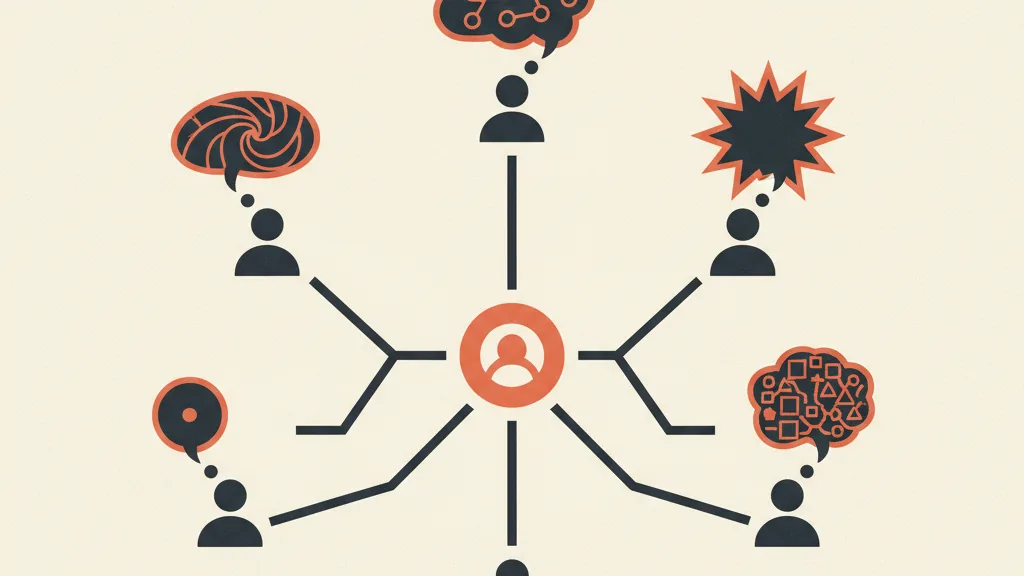
The real mistake: the same copy for people who know you and people who don't
Picture two people. The first has never heard of your product and may not even know they have the problem you solve. The second has been following you for months, has read three of your reviews, and is just waiting for the right excuse to buy. If you write an ad with "20% OFF TODAY ONLY" in it, it'll work (maybe) on the second person and get ignored by the first, who has no idea yet why it should matter to them.
Effective copy starts with a single question: how much does the reader already know? Everything follows from that: the tone of the opening, how much context you need to give, how direct you can be about the offer. Ignoring this question is the number one reason so many "well written" ads don't sell.
The 5 levels of customer awareness (Eugene Schwartz)
The framework comes from Eugene Schwartz, a legendary copywriter, and despite being decades old it's still the most useful tool for deciding what to write and in what order. We've dedicated a full deep dive to the five levels of awareness. Here we'll summarize them and translate them into Meta copy.
| Level | What the reader knows | What the copy needs to hit |
|---|---|---|
| 1. Unaware | Doesn't know they have a problem | Surface the problem with a story or a stat |
| 2. Problem-aware | Feels the pain, doesn't know the solutions | Name the problem precisely, agitate it |
| 3. Solution-aware | Knows solutions exist, not yours | Show that your type of solution is the best |
| 4. Product-aware | Knows you, is weighing whether to buy | Proof, differentiation, objections, guarantee |
| 5. Most aware | Knows you, waiting for a reason to act | Offer, urgency, blunt CTA |
The practical rule: the colder the audience, the higher up the table you start. A prospecting audience (people who don't know you) should almost always be handled at levels 1-3. A remarketing audience (people who visited the site, added to cart, engaged) sits at levels 4-5. Mismatching the awareness level and the campaign type wastes budget quietly, because the ad runs but doesn't sell.
A concrete example: same offer, three different levels
Say you sell appointment-scheduling software for beauty salons.
- Level 2 (problem): "Every no-show costs you €40-60 in an empty chair. If you had three last week, you gave away €150 without even noticing."
- Level 3 (solution): "Automated WhatsApp reminders cut no-shows by up to 70%. No one has to chase anyone by phone."
- Level 5 (product plus offer): "Try the booking software that wipes out no-shows. First month free, set up in 10 minutes."
Same product, three completely different ads. None of the three is the best one in absolute terms: it depends on who's reading it.

The structure that holds up almost every ad: hook, problem, solution, CTA
Once you've chosen the level, you need a skeleton. Not to write mechanically, but so you don't forget the pieces that matter. This is the most reliable structure for Meta, where the first second decides everything.
1. Hook (the first line and the first three words)
On Facebook and Instagram the user isn't reading: they're scrolling. Your copy is competing with friends' photos, memes, and videos. The first two lines (the ones visible before "...more") do 90% of the work. A weak hook sinks even the best copy that follows.
Hooks that work almost every time:
- The specific number: "We analyzed 312 campaigns. 71% failed for the same reason."
- The question that stings: "How many customers did you lose last month without even knowing it?"
- The counterintuitive claim: "Lowering our budget increased our leads. Here's why."
- The precise callout: "If you run a restaurant and you're still answering the phone by hand, this is for you."
If you want a bigger repertoire, we've collected several creative hook examples worth keeping on hand. It applies to the visual side too: the text hook and the visual hook need to work together, not contradict each other.
2. Problem (agitate without overdoing it)
After the hook, the reader needs to recognize themselves. This is where you describe the problem in their words, not your technical categories. "You end up with an inbox full of leads who never reply" works better than "low quality contact database." The more the reader thinks "that's exactly what happens to me," the more willing they are to keep reading. Be careful not to turn it into an endless complaint: two or three lines are enough, then you need to give hope.
3. Solution (your product as the bridge)
Here you introduce what you're offering, but the focus stays on the result, not the features. People don't buy "a CRM with automations": they buy "no longer losing quotes that never close." Translate every feature into a concrete benefit and, where you can, back it with a number or proof point. Persuasive writing techniques come in handy here: if you want to go deeper, check out our persuasive copywriting techniques.
4. CTA (one, clear)
The call to action needs to ask for one single thing and needs to match the awareness level. A cold audience rarely buys on the first ad: ask for a small step ("See how it works," "Download the guide"). A warm audience can get the direct CTA ("Start your trial," "Book a call"). Classic mistake: putting two contradictory CTAs in the same ad ("Buy now" and "Download the free PDF" together). A confused reader doesn't click.
Angles: the same product, ten different stories
The angle is the perspective from which you present the product. With a single product you can build many different ads just by changing the angle, and it's precisely that variety of angles that helps you find the one that converts. For a qualified-appointments service, for example:
- Time angle: "Get back the 8 hours a week you spend chasing leads."
- Money angle: "You only pay for the appointments that actually show up."
- Status-quo angle: "Word of mouth isn't enough anymore. Here's what's replacing it."
- Fear angle: "While you're reading this, a competitor is calling your leads."
- Proof angle: "How we brought a dental practice 47 appointments in 30 days."
Testing different angles matters more than polishing a single sentence. A good angle with mediocre copy almost always beats perfect copy with the wrong angle. If you want a method for generating them instead of starting from a blank page, our piece on how to find creative ideas for ads can help.
Want an ad system that sells predictably instead of relying on luck? Request an analysis of your campaigns: we'll look at copy, angles, and numbers together.
Using AI to generate variants (without producing fluff)
This is where the practical leap happens. AI isn't there to write the copy for you (the results are flat and easy to spot), but to multiply variants once YOU have decided the awareness level, the angle, and the structure. It's an amplifier, not a replacement.
The workflow that works:
- Give it the right context. Don't ask "write me a Facebook ad." Give the model the product, the ideal customer, the target awareness level, the chosen angle, the tone of voice, and the typical objections. More context, less generic fluff.
- Generate variable by variable, not all at once. Ask for 10 hooks, then pick the best 3, then have it develop the body only on those. If you generate whole ads in one block, they all come out similar.
- Train the model on your voice. Paste in 2 or 3 of your ads that performed well and ask it to keep that register. This is the step almost no one takes, and it's the one that changes the outcome.
- Filter by hand. AI will also produce mediocre or generic variants. Your critical judgment remains the most valuable part: cut ruthlessly.
We've described a complete operational workflow in how to use ChatGPT for Facebook Ads and, if the topic interests you more broadly, in how to use AI for copywriting. The key point: AI gets you to 20 testable variants in an hour instead of a week. But the strategic decisions (who you're talking to, with what angle) stay yours.
A mistake to avoid with AI
Never publish variants without a review. Models tend to produce empty superlatives ("revolutionize your business," "incredible results") and phrases that sound good but say nothing. Before launching, run every piece of copy through our copy review checklist: cut the empty adjectives, make sure there's a single message, and check the CTA is consistent.
How to tell if your copy is actually selling
Writing is half the job. The other half is reading the right numbers, because copy is judged by data, not by gut feeling. The metrics that tell you whether the copy is working:
- Hook rate (first 3 seconds): if few people stop, the problem is the hook (or the creative), not the offer.
- Link CTR: measures whether the copy convinces people to click. If you want to understand it properly, read what CTR means in Facebook Ads.
- Cost per lead or conversion: the final verdict. A high CTR with low conversions usually means the promise and the reality don't match.
Test one variable at a time. Changing the hook, the angle, and the CTA in the same test leaves you not knowing what actually worked. Isolate the element, compare, iterate. Copy that sells isn't born perfect: it comes from the second or third version, informed by the data from the first.
Putting it all together
Let's sum up the method in four moves:
- Decide the awareness level based on the audience (cold or warm).
- Choose an angle among the many possible ones for the same product.
- Write with the structure hook, problem, solution, CTA, matched to the level.
- Use AI to multiply variants, then filter by hand and test on the numbers.
Facebook Ads copy that sells isn't magic or innate talent: it's a process. Whoever applies it consistently stops relying on luck and starts producing ads that convert predictably. It's the kind of system we build to work, alongside the customer acquisition system downstream, for companies that want a lead flow that doesn't depend on the mood of the moment.
Frequently asked questions
How long should Facebook Ad copy be?
There's no universally right length: it depends on the awareness level. For a cold audience, who first needs to understand the problem, more context is needed, so longer copy works well. For a warm remarketing audience, less is enough: hook, offer, CTA. The real rule is that every line has to earn the next one.
What are the 5 levels of customer awareness?
They're a model from Eugene Schwartz that classifies the reader by how much they know: unaware of the problem, problem-aware, aware that solutions exist, aware of your product, and most aware. Each level calls for different copy. Cold audiences should be treated at the higher levels, warm ones at the lower levels.
Can I let AI write my Facebook Ads?
AI is great for generating lots of variants fast, but you shouldn't publish them without review. The strategic decisions (who you're talking to, with what angle, with what offer) stay yours. The best workflow is: you decide the strategy, AI multiplies the variants on hooks and body copy, you filter by hand and test on the data.
What's the most important part of an ad's copy?
The hook, meaning the first two lines visible before the "see more" button. On Facebook and Instagram people scroll fast: if the first words don't stop the scroll, nobody reads the rest, no matter how well it's written. A weak hook sinks even the best copy.
How do I know if my copy is working?
Look at three metrics in sequence: hook rate (how many people stop in the first seconds), link CTR (how many click), and cost per lead or conversion (how many buy). If CTR is high but conversions are low, it usually means the copy's promise doesn't match what people find after clicking.
Is it better to test many different pieces of copy or perfect one?
It's better to test different angles than polish a single sentence. A good angle with mediocre copy almost always beats perfect copy with the wrong angle. Change one variable at a time (angle first, then hook, then CTA) to understand what actually moves the numbers.
If you want to turn your copy into a real flow of customers, let's talk: we build the structure, the angles, and the AI automations tailored to your business.