CAC: How to Calculate and Reduce Customer Acquisition Cost in 2026
8 min read · AstraLoop Studio
If you're spending on advertising but don't know what it actually costs you to land a new customer, you're flying blind. Customer acquisition cost (CAC) is the metric that tells you, in a single number, whether your marketing is building a business or burning cash. And in 2026 the question matters more than ever: the cost per click on Google has risen roughly 40% in three years, Meta's CPMs climb double digits every year, and competition on paid channels has become an outright bidding war.
In this guide we'll cover how to calculate CAC properly (not the slide-deck version), what it costs to acquire a customer by channel with updated benchmarks, the practical rule for knowing when you're buying customers at a loss, and the concrete levers to bring it down. Here's the most underrated one upfront: most companies don't have a CAC-too-high problem, they have a paid-leads-left-to-die-in-the-CRM problem. Recovering them is the fastest way to lower your average cost.
What CAC is and why it's the metric that matters
CAC measures how much you spend, on average, to turn a stranger into a paying customer. It's the denominator of your entire acquisition economics: you can run the most creative campaigns in the world, but if every customer costs you more than they're worth, you're losing money in a very orderly fashion.
On its own, though, CAC says nothing. A CAC of 300 euros is great if you sell solar panels, disastrous if you sell 29-euro supplements. The number only makes sense once you compare it to how much a customer is worth over time, i.e. their lifetime value (LTV). Together these two numbers form what's called unit economics, the building blocks that tell you whether your model holds up. For the full picture of the baseline metrics, we've dedicated a separate piece to unit economics KPIs (CAC, CPL, LTV).
How to calculate CAC: the right formula
The base formula is simple:
CAC = total marketing and sales spend in the period / number of new customers acquired in that same period
The problem is what you put in the numerator. And that's exactly where serious companies part ways with the ones telling themselves stories.
"Media-only" CAC vs. "fully loaded" CAC
Most people take only the ad budget spent and divide it by the number of customers. Convenient number, but a false one. Real CAC (what investors call fully loaded) includes everything it takes to acquire a customer:
- Ad budget (Google Ads, Meta, LinkedIn, and so on)
- Salaries and commissions for the marketing and sales team, proportional to the time spent on acquisition
- Acquisition software: CRM, marketing automation, analytics tools, landing page builders
- Agencies and consultants directly tied to acquisition
- Creative production: video, graphics, copy
A concrete example. In one month you spend 8,000 euros across Meta and Google, your sales rep costs 3,000 euros and spends half their time on calls with leads, tools cost 500 euros, the agency 1,500 euros. Total acquisition spend: 11,500 euros. If you close 23 new customers that month, your "media-only" CAC is 348 euros, but the real one is 500 euros. Those are two different business decisions.
Practical rule: for day-to-day budget decisions you can reason in terms of ad CAC by channel, but the sustainability of your model should always be assessed on fully loaded CAC. Ignoring the cost of sales labor is the classic way to discover, at year-end, that campaigns "were doing great" while the company was bleeding margin.
What it costs to acquire a customer by channel in 2026
There's no such thing as a universal "right CAC": it varies by industry, product price, and channel. But updated benchmarks help you tell if you're out of range. Here's a ballpark on cost per lead for the most commonly used B2B channels. The numbers vary a lot by vertical, so treat them as a reference point, not a law.
| Channel | Indicative cost per lead (B2B, 2026) | Notes |
|---|---|---|
| Word of mouth / referral | among the lowest (~60-70 euros) | The cheapest channel, but hard to scale on its own |
| Organic social | ~55 euros | Low cost, requires time and consistency |
| Content marketing / SEO | ~85 euros (CPL), rising much higher for full acquisition cost | High cost upfront, then compounding returns |
| Meta Ads (retargeting) | ~110 euros | More efficient than cold prospecting |
| Meta Ads (cold) | average CPA ~35-40 euros per lead, much higher per customer | CPMs rising ~20% year over year |
| Google Ads (search) | CPL ~70 euros | CPC rising sharply, high intent |
| LinkedIn Ads | B2B CAC often above 900 euros | Expensive but excellent for enterprise targeting |
| Email marketing | among the lowest overall | On an existing database, near-zero cost per lead |
Two important takeaways. First: "owned" channels (email on an existing database, referral, organic) have a cost per lead that's a fraction of paid ones. If 90% of your budget goes to cold ads, your average CAC is structurally high by design. Second: cost per lead isn't CAC. A lead isn't a customer. If you pay 70 euros for a lead from Google but only close one in ten, that customer costs you 700 euros in media alone, before salaries and tools even enter the picture. That's why lead quality weighs on CAC just as much as click cost does.
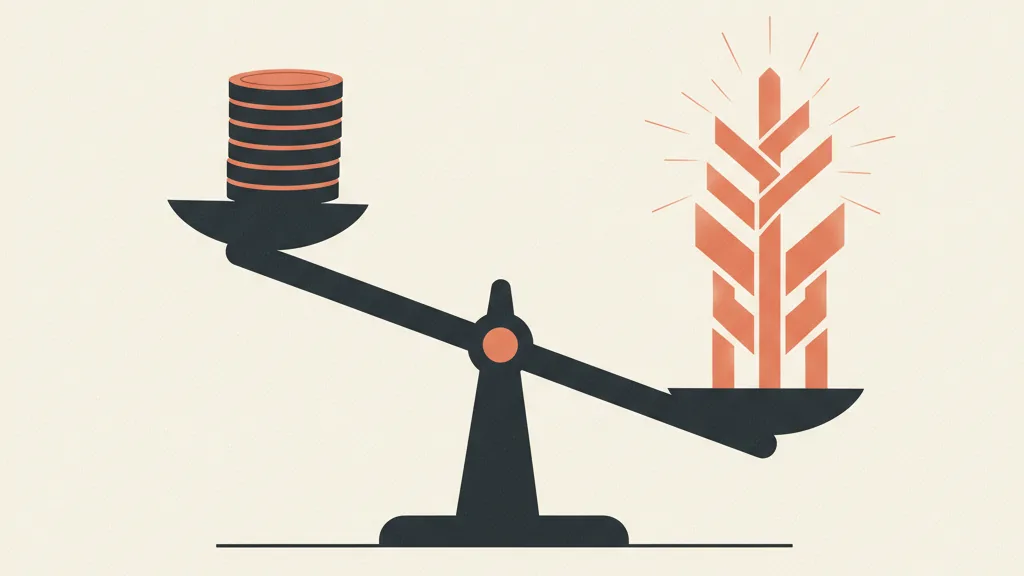
The threshold not to cross: max CAC = LTV / 3
Here's the single most useful practical rule in this whole guide. The ratio between customer value and acquisition cost (the LTV:CAC ratio) tells you whether you're buying customers at a profit or at a loss. The historical benchmark is clear:
- LTV:CAC of 3:1 is the minimum threshold for a healthy business. For every euro spent on acquisition, you recover three over the customer's lifetime.
- LTV:CAC below 3:1 (say, 2:1 or 1:1) means you're spending too much to acquire relative to what the customer is worth. You're buying revenue at the expense of margin.
- LTV:CAC of 4:1 or 5:1 signals efficient acquisition. Worth noting: in 2026 the bar has risen, and serious fundraising rounds now look at 4:1 as the benchmark.
Flip it around, and this rule gives you your max CAC: the ceiling you can't afford to go past. If a customer is worth 1,200 euros in margin over their lifetime, your CAC shouldn't exceed 400 euros (1,200 divided by 3). Simple, but it changes everything. From here on you stop asking "did this campaign perform well?" and start asking "does this campaign bring me customers below or above 400 euros?" That's a question with a clear-cut answer.
Payback period: the second threshold that saves your cash flow
The LTV:CAC ratio tells you whether the model is profitable over the long run. But a business can have great unit economics and still run short on cash if recovering CAC takes too long. That's what the CAC payback period is for: how many months it takes for the margin a customer generates to repay the cost of acquiring them.
The formula is: Payback = CAC / monthly margin per customer. 2026 benchmarks: under 12 months is considered great for a recurring business (SaaS, subscriptions), under 6 months is the target for e-commerce. Past 18 months, a warning light goes on: you're fronting cash for too long before recouping it, and growth drains your liquidity even if, on paper, every customer is profitable.
How to reduce CAC: the levers that actually work
Lowering CAC doesn't mean cutting your ad budget (that often makes everything worse). It means recovering efficiency along the funnel. There are four levers, in order of how fast they show impact.
1. Recover the leads you're already paying for and throwing away
This is the fastest and most overlooked lever. Every lead that comes in and doesn't get a quick response is money already spent evaporating. The data is unforgiving: a lead contacted within 5 minutes converts up to 9 times better than one contacted later. Most SMBs respond in hours, when they respond at all. The cost of that delay never shows up in any report, but it quietly inflates CAC: you've already paid for the lead, you don't close it, so the same budget produces fewer customers.
Add follow-up over time to the mix. A lead that says "no" today isn't lost: it's saying "not now." With a structured lead nurturing process, you can recover another 10-15% of the pipeline six months down the line, at nearly zero ad cost. These are customers you've already paid for once and are currently handing to your competitors. If this sounds familiar, the first step is understanding how to recover lost contacts systematically instead of by memory.
2. Automate sales follow-up
Leads don't die because sales reps aren't trying: they die because manual follow-up can't keep up with volume. An automated sequence (immediate reply, a value email on day 3, a soft close on day 7) consistently beats manual follow-up, with a conversion rate 3 to 5 times higher. Not because automation is magic, but because it does the one thing an overloaded human forgets to do: reach back out, at the right moment, every single time.
This is where AI changes the scale. An AI agent that engages leads on WhatsApp replies in seconds, around the clock, qualifies them, and books the appointment on its own. Sales reps stop chasing cold contacts; they only talk to people who are already warm. Same budget, more customers closed, so CAC drops. It's the same principle behind AI-driven sales follow-up automation: removing the human bottleneck from the repetitive part of the process.
Want to see where your CAC is hiding and how many already-paid-for leads you're losing? Request an audit of your acquisition funnel: we'll show you exactly where to step in.
3. Qualify better with AI (stop paying for junk leads)
Say two leads cost the same, but one is in-target and the other isn't. If your team treats them the same way, you're burning sales hours (which count in fully loaded CAC) on contacts who will never close. Automated qualification flips the math: well-qualified leads convert at around 40%, versus 11% for unqualified ones. That's not a rounding error, it's a three- or four-fold difference in close rate.
An AI lead scoring system scores every contact based on behavior and data, so sales reps go after the most promising ones first. The budget doesn't change, but output per hour worked rises, and with it the cost per customer falls. More broadly, companies that adopt AI in acquisition report meaningful cost reductions, with estimates ranging from 30% to 60% for those who integrate it across the whole funnel, not just one isolated piece. Treat these numbers as an optimistic ceiling, not a promise: they depend heavily on how inefficient the starting process was.
4. Shift weight toward owned channels
The structural lever, slower but longer-lasting. The more your revenue depends on cold ads, the more your CAC is held hostage by Google and Meta auctions, which rise every year. Building "owned" channels (a nurtured email list, a referral engine, content that drives organic traffic) shifts a share of acquisition to near-zero marginal cost. A customer who comes from your email or a recommendation costs a fraction of a paid one. It doesn't eliminate ads, but it lowers the weighted average. This is the reasoning behind a real customer acquisition system: not a single campaign, but a setup where paid leads feed a CRM that works them, re-engages them, and recovers them over time.
The mistakes that inflate CAC without you noticing
- Counting only the ad budget. As we've seen, real CAC includes salaries, tools, and agencies. "Media-only" CAC makes you look more efficient than you are.
- Optimizing for cost per lead instead of cost per customer. A 20-euro lead that never closes is more expensive than a 70-euro one that converts.
- Looking at average CAC instead of CAC by channel. The average hides a losing channel inside one that's pulling its weight. Always segment.
- Ignoring response time. Slow follow-up is an invisible CAC increase: same money, fewer customers.
- Not connecting marketing and CRM. If you don't know which leads become customers, you're calculating CAC blind. You need tracking that closes the loop from click to sale.
On that last point: without integration between your campaigns and your contact management system, CAC by channel remains a guess. If you want to understand how to get the two talking to each other, we've covered how to integrate CRM and sales funnel separately, which is the prerequisite for attributing every customer to the channel that actually brought them in.
In summary
CAC is the compass of acquisition, but only if you calculate it honestly (fully loaded), read it by channel, and compare it against LTV and payback. The one operating rule worth pinning up in the office is: max CAC = LTV / 3. Below that threshold, you're acquiring at a profit; above it, you're buying revenue at a loss.
And here's the good news for lowering it: in most SMBs, the biggest lever isn't spending less on ads, it's not wasting the leads you're already paying for. Respond in seconds instead of hours, follow up with every contact over time, qualify with AI so sales reps only talk to the people who matter. Same budget, more customers closed, and the cost of each one drops. A lower CAC isn't bought: it's earned by not throwing away what you've already paid for.
Frequently asked questions
What's a good customer acquisition cost (CAC)?
There's no universal figure: it depends on the industry and product price. The rule that always holds is comparing it to customer value: CAC should be at most a third of LTV (an LTV:CAC ratio of at least 3:1). If a customer is worth 1,200 euros in margin over time, CAC shouldn't exceed 400 euros.
How do you calculate CAC?
You add up all marketing and sales spend for a period and divide by the number of new customers acquired in that same period. The correct version (fully loaded) includes not just ad budget but also salaries and commissions, software (CRM, automation), agencies, and creative production. CAC calculated on ad budget alone is understated.
What's the difference between CAC and cost per lead (CPL)?
CPL is what you pay to generate a contact; CAC is what you pay to turn those contacts into a paying customer. They differ because not every lead closes. If you pay 70 euros for a lead but only convert one in ten, the cost per customer is at least 700 euros. Optimizing only for CPL while ignoring close rate is a classic mistake.
What's a good CAC payback period in 2026?
Payback period is the number of months it takes for a customer's margin to repay the cost of acquiring them. 2026 benchmarks: under 12 months is great for recurring businesses, under 6 months for e-commerce. Past 18 months it becomes a cash flow risk, because you're fronting money for too long before recouping it.
How do you lower CAC without cutting the ad budget?
The fastest lever is recovering the leads you're already paying for: respond within minutes (a lead contacted within 5 minutes converts up to 9 times better), follow up with every contact over time using automated sequences, and qualify with AI. For the same spend you close more customers, so the average cost per customer falls. Over the long run, shifting weight to owned channels (email, referral, organic) helps too.
Does AI actually reduce acquisition cost?
It can, but it's not magic. It works by removing concrete inefficiencies: instant replies to leads, automated follow-up that beats manual follow-up by 3-5x in conversion, and qualification that lets sales reps talk only to warm contacts (well-qualified leads convert at around 40% versus 11% for unqualified ones). Reported reductions reach 30-60% for those who integrate AI across the whole funnel, but the result depends on how inefficient the starting process was.
If you want to lower your cost per customer by recovering the leads currently slipping through your CRM, talk to us: we design custom follow-up and qualification automation for your business.