Customer Retention: Strategies to Keep Customers (and Why It Beats Acquisition)
8 min read · AstraLoop Studio
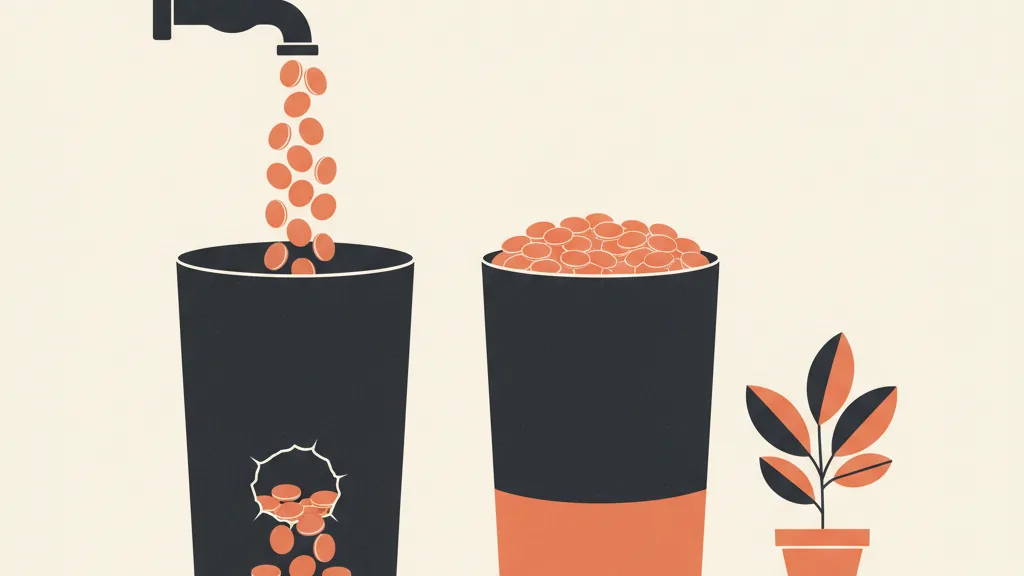
If you're pouring every euro of budget into acquisition and nothing into retention, you're filling a bucket with a hole in the bottom. That's not a flourish of a metaphor: it's exactly what happens to your P&L. Every customer who walks in the front door and slips out the back has to be replaced, and replacing them costs between 5 and 25 times more than keeping them. Do that for enough months and you end up running faster and faster just to stay in place.
Customer retention is your company's ability to keep the customers it has already won active, getting them to buy again over time. It's not a "soft" topic to hand off to customer care: it's the most direct lever on the economic value of every customer and, by extension, on the profitability of the whole business. In this article we look at why retention outweighs acquisition, how to measure it, which strategies actually work, and how AI automation lets you recover revenue from an asset you already own: the dormant contacts sitting in your CRM.
Why retention outweighs acquisition (the numbers)
Let's start with the data, because here the math is brutal and unambiguous.
- Cost: acquiring a new customer costs 5 to 25 times more than retaining an existing one. In e-commerce, average CAC today sits between 68 and 84 euros, up more than 60% in five years. Reactivating a customer already in your database costs a fraction of that figure.
- Odds of selling: the probability of selling to an existing customer is 60-70%. To a cold prospect? Between 5 and 20%. You're talking to someone who already knows you, has already paid you and, if the product is good, trusts you.
- Effect on profit: the classic research by Frederick Reichheld and Earl Sasser for Bain & Company ("Zero Defections") showed that raising the retention rate by just 5% can lift profits by 25% to 95%, depending on the industry. Not revenue: profits. Because a retained customer requires no new ad spend, buys more over time, and often brings referrals.
The paradox is that, even though these numbers have been known for thirty years, roughly 44% of companies still prioritize acquisition. The reason is human: a new customer is visible, measurable, "exciting." A customer who stops buying leaves quietly. Nobody celebrates a churn that didn't happen, which makes it the most overlooked revenue line there is.
Retention and Lifetime Value: two sides of the same coin
Retention isn't a goal in itself: it's the engine that feeds Customer Lifetime Value (LTV), the total economic value a customer generates across the entire span of their relationship with you. The longer you keep a customer and the more often you get them to buy again, the higher their LTV.
And this is where the game really changes, because LTV governs how much you can afford to spend on acquisition. The benchmark ratio is LTV to CAC: below 3:1 the model is fragile, below 2:1 you have an immediate problem. Now notice this: if you double retention, you roughly double LTV, and suddenly the same CAC that used to be unsustainable becomes profitable. Retention doesn't just save you money: it unlocks the ability to acquire more aggressively. It's the hidden competitive advantage of companies that scale.
If you don't yet have a method for calculating it, start with our guide on how to calculate Customer Lifetime Value: it's the first number to put on a dashboard before you even start talking strategy.
How to measure retention: the KPIs that matter
You can't improve what you don't measure. Before rolling out any strategy, get these indicators in place.
| KPI | What it measures | How to calculate it |
|---|---|---|
| Retention Rate | % of customers kept over a period | (Customers at period end - new customers acquired) / customers at period start |
| Churn Rate | % of customers lost (the inverse of retention) | Customers lost in the period / customers at period start |
| Repeat Purchase Rate | % of customers who buy again | Customers with >1 purchase / total customers |
| Average repurchase time | How often a customer buys again | Average number of days between one order and the next |
| LTV | Total value generated per customer | AOV x purchase frequency x average relationship length |
Average repurchase time deserves special attention: it's the threshold that tells you when a customer is "overdue" and sliding toward churn. If your customers typically repurchase every 90 days and one is stuck at 120, that's your warning sign. Waiting until it hits 300 means you've already lost the customer.
The retention strategies that actually work
Forget point-based loyalty programs as a cure-all. Retention is built on sturdier foundations.
1. Flawless onboarding and first experience
The most critical window is right after the first purchase. A customer who gets clear value in the first few days buys again; one left alone with their doubt ("did I make the right call?") disappears. A good welcome email flow that guides, educates, and reassures is the single move with the highest ROI on a new customer's retention.
2. Segmentation: not all customers are equal
Treating your entire database as one homogeneous block is the fastest way to burn the relationship. The go-to tool is RFM analysis (Recency, Frequency, Monetary), which scores every customer on three axes: how recently they bought, how often, how much they spent. That produces very different clusters (your best customers, at-risk customers, dormant ones) that deserve opposite messages. Ask your top customers for a review or pitch an upsell; send the dormant ones a win-back offer. For the operational detail, see our customer database segmentation strategies.
3. Targeted upsell and cross-sell
Raising LTV isn't just about getting customers to come back: it's also about growing the value of every purchase they make. Relevant offers at the right moment (complementary products, upgraded versions, refills) tap into that 60-70% odds of selling. Here's a method for upsell and cross-sell without being pushy.
4. Customer experience as a system, not a department
A customer doesn't leave you over one single problem; they leave over the buildup of small frictions: slow replies, a complicated return, the feeling of not being heard. Customer experience is what turns a one-off buyer into a repeat customer. You don't need to wow them at every touchpoint; you need to never disappoint on what matters.
The forgotten asset: the dormant customers in your CRM
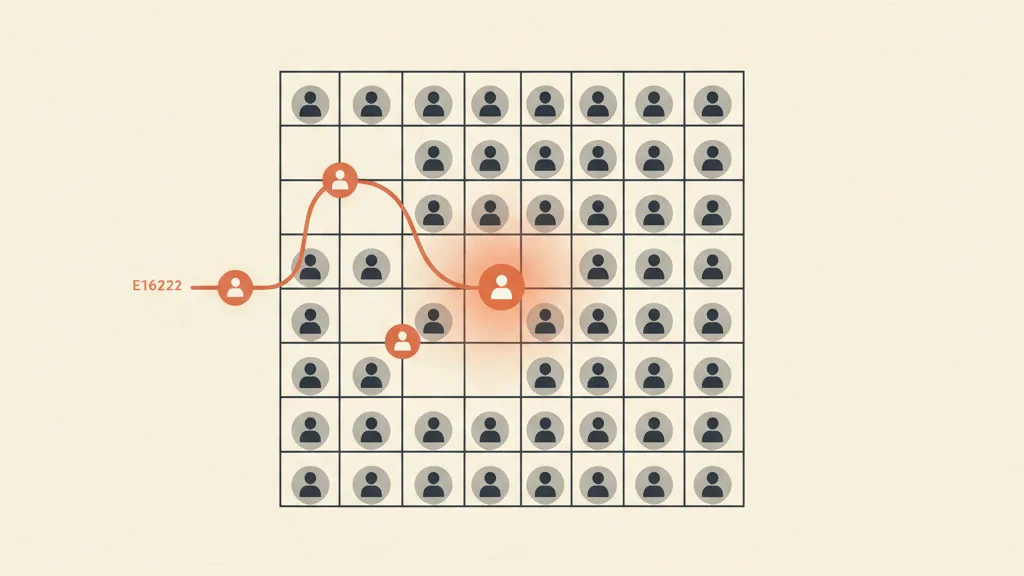
And here we arrive at the point where most companies leave money on the table. While you're spending on ads to reach strangers, you already have a half-neglected asset at home: dormant customers. These are people who have already bought, who already know the brand, but haven't engaged in months. In most databases, 30 to 40% of contacts sit inactive over a 12-month window.
That's revenue you already paid once to acquire and never monetized again. Reactivating a lapsed customer costs 5 to 10 times less than acquiring a new one, and reactivated customers tend to spend more per order than new ones do. The problem isn't the potential: it's the execution. Manually reactivating hundreds or thousands of contacts, with the right message at the right moment, is simply impossible without automation. And that's exactly the gap AI fills.
AI reactivation and nurturing automation
This is where our approach at AstraLoop gets concrete: we build systems that monitor purchase behavior and act on their own once a customer crosses their repurchase threshold. In practice:
- Automated signal: the system cross-references CRM data with average repurchase time and flags whoever is sliding toward dormant, before it's too late.
- Personalized win-back sequence: a win-back email sequence kicks off built on the customer's profile (what they bought, how often, how much they're worth), not a generic one-size-fits-all message.
- Ongoing nurturing: whoever doesn't repurchase right away enters an AI-driven nurturing flow that keeps the relationship alive until the right moment.
- Multi-channel: email, but also AI reactivation outbound on other channels when email alone isn't enough.
The difference between doing all of this by hand and handing it to a system isn't marginal. Industry data is clear: automated win-back campaigns reactivate around 15% of lapsed customers, versus roughly 3% for manual campaigns blasted out in bulk. You get five times the result simply because the right message reaches the right person at the right moment, without depending on someone at the company remembering to do it.
Do you have hundreds of customers sitting idle in your CRM who haven't bought in months? Request a free analysis: we'll show you how much dormant revenue you can recover with an AI reactivation system.
Retention and acquisition aren't enemies
Careful not to swing the error the other way. This article isn't telling you to stop acquiring: without new customers no company grows, and retention alone isn't enough to scale. The point is balance and sequence.
Retention is what makes acquisition profitable. A well-built customer acquisition system brings new leads into the top of the funnel; a good custom-built CRM and retention automations make sure those leads generate value for years, not for a single order. The two work together: retention raises LTV, and a higher LTV lets you invest more (and win more ad auctions) in acquisition. It's a self-feeding cycle.
The companies that lose are the ones stuck in "always acquisition" mode, treating the CRM as a dead archive and rediscovering their customers only when it's time to clear out inventory. The companies that win treat the database as a productive asset, work it continuously, and let automation do the heavy lifting.
Where to start, concretely
If your retention is currently left to chance, here's the priority order that makes sense:
- Measure. Calculate retention rate, repeat purchase rate, and average repurchase time. Without these numbers you're flying blind.
- Segment. Apply RFM analysis to your database and identify the three key groups: top customers, at-risk customers, dormant ones.
- Automate win-back. Set up an automatic reactivation sequence anchored to the repurchase threshold. It's the quick win with the fastest payback.
- Systematize. Build onboarding, nurturing, and upsell flows that run on their own, integrated into the CRM.
The good news is that, unlike acquisition (where every improvement needs more budget), retention is improved mainly through method and automation, not extra spend. The revenue is already there, in your database. You just need the system to go get it.
Frequently asked questions
How much more does it cost to acquire a new customer than to retain one?
Acquiring a new customer costs 5 to 25 times more than retaining an existing one. Reactivating a dormant customer already in your database costs even less, 5 to 10 times less than acquiring from scratch, because the contact is already yours and already knows you.
What does customer retention mean?
It's a company's ability to keep the customers it has already acquired active over time, getting them to come back and buy again. It's measured with indicators like retention rate, repurchase rate, and churn rate, and it's the most direct lever on Customer Lifetime Value and profitability.
How much do profits increase by improving retention?
According to research by Frederick Reichheld and Earl Sasser for Bain & Company, raising the retention rate by just 5% can lift profits by 25% to 95%, depending on the industry. The impact is on profits, not just revenue, because a retained customer requires no new acquisition spend.
How do you reactivate dormant customers?
Start by segmenting your database with RFM analysis to find who hasn't bought in a while, then trigger a win-back email sequence personalized to the customer's profile. Automating the process with AI pushes reactivation rates to around 15%, versus roughly 3% for manual campaigns sent the same way to everyone.
What's the ideal LTV to CAC ratio?
The minimum benchmark for a sustainable model is an LTV:CAC ratio of 3:1. Below 2:1 you have an immediate profitability problem. Improving retention raises LTV and automatically improves this ratio, letting you invest more in acquisition.
Is retention more important than acquisition?
It's not an either-or: they're complementary. Without acquisition no new customers come in, but without retention every customer you win generates value for a single order instead of for years. Retention is what makes acquisition profitable, by raising LTV and letting you spend more to acquire.
If you want to turn your database into an asset that generates revenue on autopilot, let's talk: we build the retention and reactivation system tailored to your business.