Why Customer Experience Matters: How It Becomes a Competitive Advantage
10 min read · AstraLoop Studio
Ask ten business owners what customer experience means and you'll get ten different answers. Some confuse it with customer care, others with website design, others reduce it to being polite on the phone. The truth is simpler, and more uncomfortable. Customer experience (CX) is the sum of every interaction a person has with your company, from the first ad they see to the after-sales support they need three months later. It isn't a department. It's the result of everything you do.
And here's a point almost nobody addresses honestly: most Italian companies don't have a product problem. They have an experience problem. The product is fine, the price is competitive, but the customer goes through a journey full of friction (a form that doesn't respond, an email that arrives late, information from the call center that contradicts the website) and buys elsewhere at the next opportunity. In a market where acquiring a customer keeps getting more expensive, this silent bleed is what separates companies that grow from those that stay stuck.
In this article we look at why CX is now a genuine competitive advantage (not a conference buzzword), how it ties directly to retention and lifetime value, and how AI assistants and automation let you deliver a consistent experience across every channel without tripling your team.

What customer experience really is (and isn't)
Let's clear up the boundaries, because that's where investment mistakes start.
- Customer service: support when something goes wrong or help is needed. It's a part of CX, not the whole thing.
- User experience (UX): the usability of a specific interface, the website or the app. This too is a piece, not the entire experience.
- Customer experience: the customer's overall experience across their entire journey, on every touchpoint, at every stage. It includes CX, UX and customer care, but also the tone of your emails, how fast you reply on WhatsApp, and whether what your ads promise matches what the customer actually finds.
The practical difference is this: you can have excellent customer service and a mediocre customer experience. All it takes is the customer being forced to contact support because the normal journey is full of snags. The best customer service is the one the customer never needs to use.
The moments that matter more than the rest
Not every touchpoint carries the same weight. CX research talks about "moments of truth": points in the journey where the experience is disproportionately won or lost. For most Italian SMBs there are three.
- The first sales contact. How much time passes between the customer raising their hand (filling out a form, calling, writing) and getting a useful reply? If we're talking hours or days, the experience is already compromised, no matter how good everything else is.
- Onboarding or the first delivery. This is the moment the customer moves from promise to reality. It decides whether trusting you was the right call.
- The first problem. How you handle the unexpected determines whether the customer stays or leaves. A problem solved well builds more loyalty than a perfect but forgettable journey.
Before investing in "improving CX" across the board, map your journey and pinpoint your own moments of truth. That's where every euro you spend returns the most.
Why CX is a competitive advantage (the numbers, not the opinions)
This topic invites a lot of conference fluff, so let's stick to what's concrete and defensible.
1. CX drives retention, and retention drives margins
This is arithmetic, not philosophy. Acquiring a new customer costs on average far more than retaining an existing one (serious estimates range from 5 to 7 times as much, depending on the industry). An existing customer also spends more over time, is less price-sensitive, and costs you less to serve because they already know you.
The lever that decides whether a customer stays or leaves is, in the vast majority of cases, the experience. Not the price (loyal customers often knowingly pay more), but how effortful or how smooth the relationship feels. Improving retention by even a few percentage points has an outsized impact on profit, because it works on customers you've already acquired, with no acquisition cost attached. If you want to go deeper on the mechanics, we've written a dedicated guide to customer retention strategies that covers the operational detail.
2. CX is what lifts lifetime value
Lifetime value (LTV) is what a customer is worth across your entire relationship with them. A consistent, friction-free experience acts on all three of its levers: it increases purchase frequency, extends the length of the relationship, and opens the door to upsell and cross-sell. A customer who feels good buys more from you, with less resistance.
The LTV/CAC ratio is probably the single most important metric for telling whether your business is healthy. CX is the lever that moves the numerator. If you know your unit economics (CAC, CPL, LTV), you already know what every point of retention gained is worth.
3. CX lowers acquisition cost (indirectly)
A customer who has a good experience comes back, speaks well of you, and brings referrals. Word of mouth is the cheapest acquisition channel and the one with the highest conversion rate, because it arrives already warmed up. A poor experience does the opposite: it generates negative reviews that raise the cost of every new customer, because now you're fighting your own reputation. CX isn't just a retention topic. It's also a multiplier (or a drag) on acquisition.
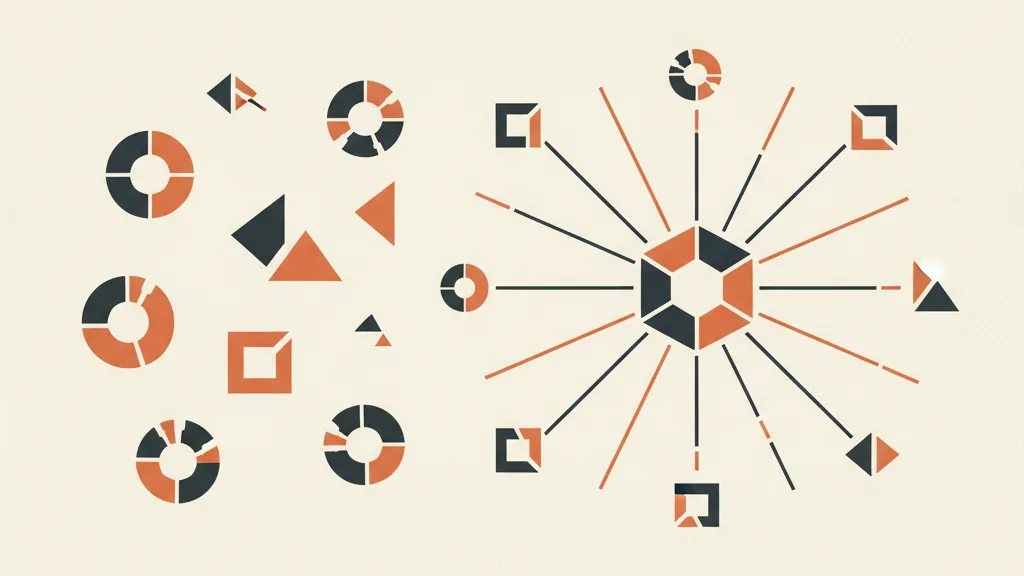
The real problem: CX is inconsistent across channels
Here's where almost every company trips up. The customer doesn't think in channels. To them, there's only one company: yours. But behind the scenes the experience is fragmented.
- They message you on WhatsApp and get one tone, call and get another, send an email and nobody connects the two.
- Sales doesn't know what support wrote to the customer the week before.
- The website says one thing, the ad promised another, the quote a third.
- The customer has to repeat their story at every contact, as if it were the first time.
This inconsistency is the number one killer of CX in SMBs. Not for lack of good intentions, but because customer information is scattered: some in a colleague's inbox, some in the management software, some in the salesperson's head. Without a single source of truth about the customer, consistency is structurally impossible.
The root of the problem is both organizational and technological. And this is exactly where CRM, automation and AI assistants come in. Not as gadgets, but as the infrastructure that makes the experience consistent by default.
How to make CX consistent across every channel with AI and automation
AstraLoop's approach starts from one principle: consistency isn't achieved by asking people to pay closer attention. It's achieved by designing a system where the correct experience is the one that happens automatically. Here are the concrete levers.
1. A CRM as the backbone of the experience
Everything starts with one question: where does the customer's history live? If the answer is "scattered," nothing else works. A CRM built for your SMB centralizes every interaction (who said what, when, on which channel) and makes it accessible at every touchpoint. Sales sees the support conversation, support sees the purchase history, email marketing knows what stage the customer is at. It's the single source of truth we mentioned. Without this layer, every effort on CX remains a temporary patch.
2. Immediate response times, on every channel, with AI assistants
We said the first contact is a moment of truth. The problem is that no human team can reply in 30 seconds, 24 hours a day, on WhatsApp, phone, email and chat at the same time. An AI agent that qualifies leads on WhatsApp replies instantly, gathers the right information, and hands the contact to sales already primed. On the phone, an AI voice assistant answers calls that would otherwise be lost. And every missed call is a customer experiencing the worst possible outcome: silence.
The key is that these assistants draw on the same CRM. The customer therefore gets consistent answers regardless of channel, and every interaction enriches the same customer record. Consistency stops being an effort: it becomes a consequence of the architecture.
3. Automation that removes friction before the customer feels it
Most bad CX comes from small things nobody gets to in time: the forgotten follow-up, the reminder never sent, the status update that never arrives. AI-powered business process automation fixes this whole category of problem at the root. An automatic reminder cuts no-shows, a sales follow-up sequence ensures no lead falls through the cracks, an automatic update keeps the customer informed without them having to ask. They're micro-frictions, but added together they decide whether the experience feels smooth or exhausting.
4. Personalized, human communication (at scale)
Personalization doesn't mean "Hi [Name]." It means the message accounts for where the customer is in their journey, what they've already bought, what problems they've had. AI now makes it possible to write more human emails through personalization across thousands of contacts, while keeping your brand's voice. The result is a customer who feels treated like a person, not a row in a database, without you having to write every message by hand.
If your customer experience is inconsistent because data is scattered across emails, software and your team's memory, we can help you turn it into a system. Request a free analysis of your customer journey.
Where to start: a three-step path
CX improves through iteration, not a big bang. Here's the order that makes sense.
Step 1. Map the journey and find the friction
Before buying any tool, sketch out your customer's real journey, from first contact to after-sales. Note where they wait, where they repeat information, where they have to struggle, where the message is inconsistent. This doesn't take a consultant: it takes honesty. Often the three or four biggest friction points surface in a single afternoon.
Step 2. Centralize customer data
Without a single source, every improvement is fragile. The CRM is the first infrastructure investment that pays off, because it makes everything else possible. If you're not sure where to start, our guide on how to bring artificial intelligence into an SMB lays out the priorities.
Step 3. Automate the moments of truth
With centralized data, tackle the moments that carry the most weight: immediate response on first contact, reliable follow-ups, reminders, proactive updates. These are the interventions with the fastest payback, because they work exactly where the customer decides whether to stay.
Mistakes to avoid
| Mistake | Why it's a problem | What to do instead |
|---|---|---|
| Investing in customer care without touching the journey | Treats the symptom (complaints) and ignores the cause (friction) | Reduce the need for support by improving the journey upstream |
| Adding channels without connecting them | More disconnected channels means more inconsistency, not more service | Connect every channel to the same CRM before adding new ones |
| Automating to save money, not to improve | Cold automation makes the experience worse (the classic useless chatbot) | Automate to respond faster and better, with human handoff when needed |
| Measuring satisfaction only at the end of the purchase | You miss the signals along the way, while you can still act on them | Track the moments of truth, not just the final rating |
One last note on automation. The goal isn't to remove the human from the experience, but to free the human from repetitive tasks so they can focus on what actually matters. The AI assistant handles the instant reply and qualification; the person steps in for the decisive moment, the relationship, the complex negotiation. It's the combination of the two, not automation for its own sake, that produces an experience that becomes a competitive advantage.
In summary
Customer experience matters because it's the most direct lever on retention and lifetime value, the two metrics that decide whether a business is profitable over time. The real problem, for most Italian SMBs, isn't a lack of good intentions but inconsistency: scattered information that makes a smooth experience across every channel impossible. The fix is infrastructural (a CRM as the single source of truth, AI assistants for immediate response, automation to remove friction), and it makes the right experience the one that happens by default. It's not a years-long project: you start by mapping the journey, centralizing the data, and automating the moments that carry the most weight. That's where CX stops being a cost and becomes the advantage that's hardest to copy.
Frequently asked questions
What's the difference between customer experience and customer service?
Customer service is the support a customer gets when they need help or something goes wrong. Customer experience is the overall experience across the entire journey, on every channel and at every stage. Customer service is a part of CX, not the whole thing: the best service is the one the customer never needs to use, because the journey is already smooth.
Why is customer experience so important for an SMB?
Because it's the most direct lever on retention and lifetime value. Retaining a customer costs far less than acquiring a new one (estimates put it at 5-7 times as much), and a customer who has a good experience buys more, stays longer, and brings referrals. For an SMB, improving CX means growing margins by working on customers you've already acquired, with no new acquisition cost.
How do you measure customer experience?
Beyond classic satisfaction metrics (NPS, CSAT), the most useful signals are operational: response time on first contact, rate of returning customers, purchase frequency, churn rate. The common mistake is measuring only the final rating. It's far more useful to track the moments of truth along the journey, while you can still act on them.
Does automation make the customer experience worse?
It depends on the purpose. Automation built purely to cut costs (the chatbot that goes in circles) makes CX worse. Automation built to respond faster and more consistently, with a handoff to a human when needed, clearly improves it. The key is freeing the human from repetitive tasks so they can focus on the decisive moments.
How do I make the experience consistent across WhatsApp, phone, email and the website?
Consistency comes from a single source of truth: a CRM where every interaction is logged and made accessible across all channels. If AI assistants and the human team draw on the same data, the customer gets consistent answers no matter how they contact you, and never has to repeat their story. Without this layer, consistency is structurally impossible.
Where should I start to improve customer experience?
With three steps, in order. First: map the customer's real journey and identify the friction points (they often surface in a single afternoon). Second: centralize customer data in a CRM. Third: automate the moments of truth (immediate response, follow-ups, reminders). It's the order with the fastest payback, because it works exactly where the customer decides whether to stay.
Want a customer experience that's consistent across every channel, without tripling your team? Talk to us: we'll analyze your journey and show you where AI and automation make the difference.