RFM Analysis: What It Is and How to Segment Customers to Win Them Back
9 min read · AstraLoop Studio
You have a customer database. Maybe thousands of contacts built up over years of work. The problem is you treat them all the same way: same newsletter, same offer, same frequency. But a customer who bought three times last month is not the same as one who bought once two years ago and then vanished. RFM analysis exists for exactly this: to tell the two apart, gauge the health of each relationship, and act accordingly.
In this article I'll explain what RFM analysis is in concrete terms, no data-scientist jargon, and show you how to use it for one specific goal: catching customers who are slipping away. Specifically the "About to Sleep" and "Hibernating" segments, before they become unrecoverable.
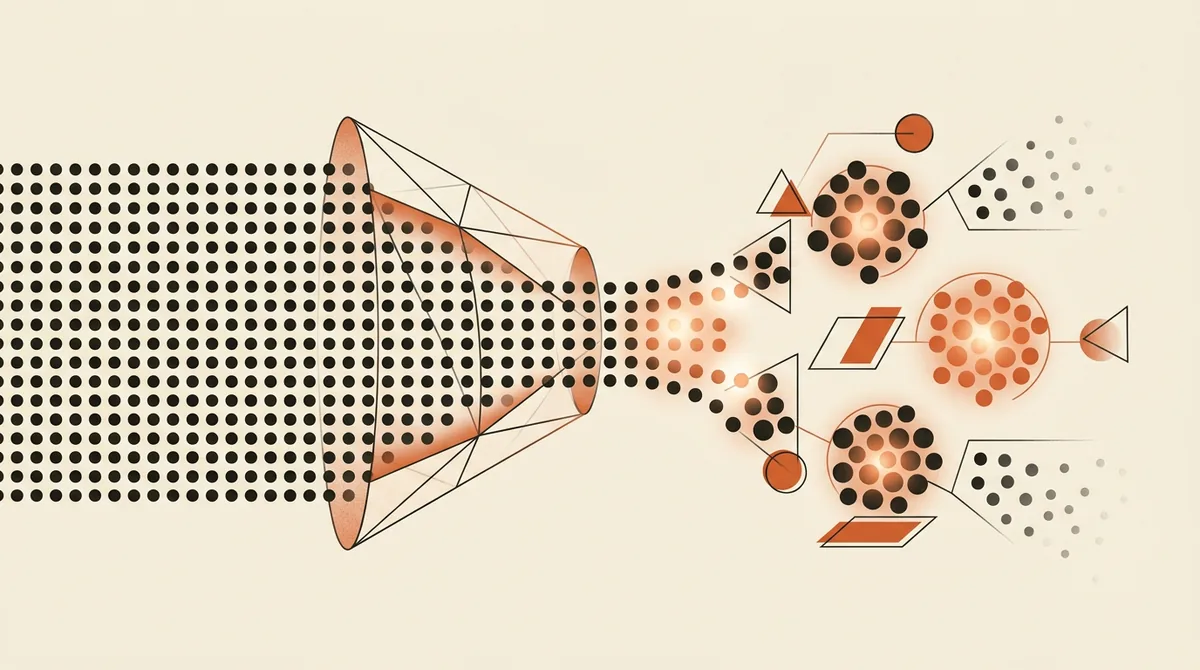
RFM analysis: what it is in plain terms
RFM is the acronym for three metrics you use to measure every customer in your database. In practice, they're three questions:
- Recency (R): how long since the last purchase? A customer who bought yesterday is "hotter" than one who bought eight months ago.
- Frequency (F): how many times have they bought in a given period? Frequent buyers have a stronger bond with your brand.
- Monetary (M): how much have they spent in total (or on average)? This separates the customer who leaves 30 euros a year from the one who leaves 3,000.
The underlying idea, validated by decades of direct marketing, is that these three data points predict future behavior better than almost any other information. Someone who bought recently, often, and generously will most likely buy again. Someone who hasn't bought in a while, rarely, and modestly is on their way out of your commercial life. You don't need to know a customer's age, gender, or interests to figure this out: three numbers you already have in your management software or CRM are enough.
And that's exactly what makes RFM so useful for non-technical people. It isn't a complicated AI model, it's arithmetic. It doesn't predict the future with esoteric formulas, it reads the signals the customer has already given you through their purchases.
How to build the RFM score (without losing your mind)
The classic method assigns each customer a score from 1 to 5 on each of the three metrics. Here's how it works in practice.
Take all your customers and rank them by Recency, from most recent to oldest. Then split them into five equal groups (quintiles). The 20% who bought most recently get R = 5, the next 20% get R = 4, and so on down to R = 1 for those who haven't bought in the longest time. Repeat the same logic for Frequency and for Monetary.
In the end, every customer has a triplet, say "5-4-3" or "1-1-2". From there you derive the segments. Here's a typical reading:
| Segment | Typical RFM profile | What it means |
|---|---|---|
| Champions | High R, high F, high M | Your best customers. They buy often, recently, and generously. |
| Loyal Customers | High F, mid-high M | Loyal, and they respond well to promotions. |
| Potential Loyalist | High R, mid F | Recent customers worth nurturing. |
| At Risk | Low R, high F, high M | They used to be great customers, but haven't bought in a while. |
| About to Sleep | Mid-low R, low F | Below average across the board. They're about to fall asleep. |
| Hibernating | Low R, low F, low M | Practically inactive. Last purchase a long time ago. |
| Lost | Very low across the board | Rock-bottom scores. Hard to recover. |
To get started you don't need the precision of an algorithm. Even an Excel spreadsheet with three columns and a sort function gets you 90% of the value. If you want to understand who your inactive contacts really are before segmenting them, this pairs well with our breakdown of what dormant customers are and how they form.
Why "About to Sleep" and "Hibernating" are the segments that matter most
Most RFM guides focus on Champions: pamper them, reward them, turn them into ambassadors. Fair enough. But it's the least urgent advice out there, because those customers already love you. The real hidden treasure, in terms of ROI, lies elsewhere.
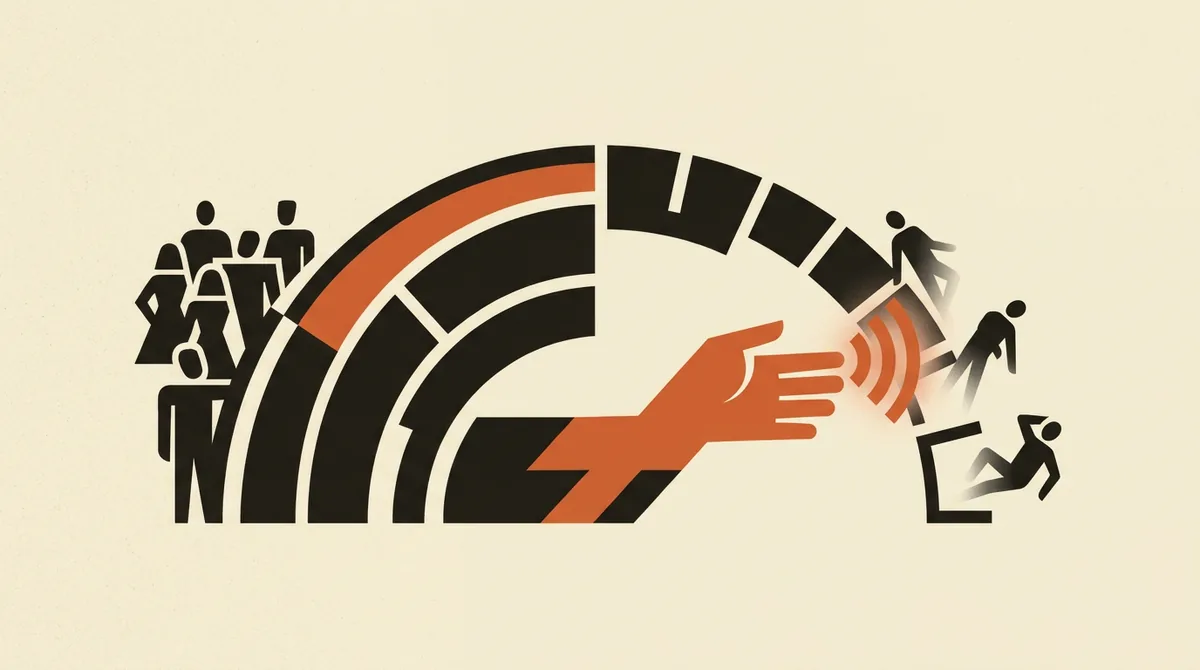
About to Sleep: the window almost everyone misses
The About to Sleep segment groups customers who have purchased before, but whose Recency is slipping below average and whose Frequency is low. They're not lost yet. They're at a crossroads: a small nudge brings them back in, silence pushes them out.
This is the moment when reactivation costs the least and pays off the most. The customer still remembers you, still trusts you, their data is still "fresh". Waiting means letting them slide toward Hibernating, where every euro of recovery gets harder to earn. This is where good segmentation makes the difference between a living database and one that fades out piece by piece.
Hibernating: not lost yet, but close
Hibernating customers score low on all three metrics: last purchase a long time ago, few transactions, modest spend. They look dead, but the key word is "look". Unlike Lost customers, many still have a latent reason to return (a product they need, a need that resurfaces). The cost to reactivate them is higher than for About to Sleep, but it's still a fraction of what you'd spend acquiring a brand-new customer from scratch.
A number worth remembering: reactivating a dormant contact costs on average 5-7 times less than acquiring a new one through advertising. If you have a few thousand Hibernating contacts in your database, you're literally sitting on opportunities you've already paid for like inventory but aren't cashing in. We cover this in detail in our analysis of reactivation cost versus acquisition cost.
From segmentation to action: what to do with each group
Segmenting without acting is just an academic exercise. Here's the operational translation, segment by segment, with a focus on the two that matter most here.
| Segment | Message | Suggested channel |
|---|---|---|
| Champions / Loyal | Previews, loyalty program, upsell | Email, WhatsApp |
| At Risk | "We miss you" plus a strong incentive | Email plus SMS |
| About to Sleep | Gentle reminder plus a small incentive | Win-back email, SMS |
| Hibernating | Aggressive offer plus social proof | SMS, voice AI, WhatsApp |
| Lost | Last-ditch attempt or list cleanup | Single email, then removal |
For About to Sleep the logic is an automated "Are you still with us?" sequence: two or three closely spaced messages with an escalating incentive. Automated sequences like this generate up to 320% more revenue than a single broadcast send, precisely because they respect the contact's timing and warmth. If you want to see how to structure one, check out concrete examples in our win-back email sequence and the general logic of a win-back campaign.
For Hibernating customers, it pays to raise the incentive and switch channels. Email alone often isn't enough: cold contacts open it less. This is where SMS comes in (open rates above 98%) and, at meaningful volumes, an AI outbound reactivation approach that reaches the contact directly at very low cost. With an AI voice agent you're looking at roughly €0.40 per call versus €7-12 for a human agent, with positive response rates of 15-35% even on cold databases.
Want to know how many customers in your database are still recoverable? Ask us for an RFM analysis of your contact list and we'll show you where the hidden opportunities are.
RFM and churn prediction: from snapshot to movie
RFM analysis is a snapshot: it tells you where your customers stand today. Churn prediction adds the motion, trying to forecast who will leave in the coming months. They're complementary, not alternatives.
In practice, RFM is your starting point because it doesn't require machine learning models: you build it with the data you already have. As volumes grow, you can pair it with predictive models (Random Forest, Gradient Boosting) that weigh dozens of variables and give you a churn probability customer by customer. That way you send the offer only to those genuinely at risk, without burning margin on people who would have stayed anyway. But start with RFM: it's 80% of the result for 20% of the effort. To dig deeper into the connection, read how to win back lost customers with a structured method.
The mistake that ruins everything: reactivating badly and burning your domain
There's one point almost nobody connects to segmentation, and it's a critical one. When you reactivate Hibernating customers via email, you're writing to addresses that haven't opened anything in months. Do this in bulk, without criteria, and mail providers notice: few opens, many spam reports, your sender reputation tanks. The result: even your Champions end up in spam.
RFM segmentation protects you from exactly this. Knowing who's cold and who's warm lets you warm up the domain gradually, start with the most recent segments, keep the spam rate under 0.3%, and include one-click unsubscribe (the 2026 standard for Gmail and Yahoo). Before launching any mass campaign to dormant contacts, it's worth understanding why emails end up in spam and getting the technical side in order.
The same applies on the compliance front. In Italy, reactivating old contacts through direct marketing follows precise rules: the legal basis, the time window within which consent or legitimate interest remains valid (the practical benchmark is 24 months, in line with EDPB and Italian Data Protection Authority guidance), and the right to object, always available. This isn't a detail to hand off to lawyers after the fact: it needs to be built into the strategy from the start. You'll find a practical framework in how to reactivate old customers in line with GDPR. This is informational, not legal advice: always check with a professional for your specific situation.
Where to actually start
If you have a CRM or management software, the data for RFM is already there: last order date, number of orders, total spent. Here are the minimum steps:
- Export your customers with those three columns.
- Assign a score from 1 to 5 on each metric (rank into quintiles).
- Group them into segments, isolating At Risk, About to Sleep, and Hibernating.
- Prepare a different win-back sequence for About to Sleep (gentle) and for Hibernating (aggressive, multi-channel).
- Sort out deliverability and compliance before you hit send.
The most important message is this: RFM segmentation isn't a project to put off until you have "time and tools". It's the cheapest lever you have for lowering your average acquisition cost, because it lets you cash in on a database you already own. All of this fits into a broader strategy, laid out in full in our complete guide to reactivating dormant customers in your database.
Frequently asked questions
What is RFM analysis in a nutshell?
It's a segmentation method that scores every customer on three metrics: Recency (how long since their last purchase), Frequency (how often they buy), and Monetary (how much they spend). With three numbers you already have in your management software, you can tell your valuable customers apart from the ones about to leave you.
Do you need software or a data scientist to run RFM analysis?
No. In its basic form, RFM is arithmetic: you rank customers into quintiles and assign a score from 1 to 5 on each metric. A spreadsheet gets you 90% of the value. Machine learning models only come into play later, for churn prediction at large volumes.
What's the difference between the 'About to Sleep' and 'Hibernating' segments?
About to Sleep customers have a Recency that's slipping, but they're not lost yet: a reminder and a small incentive are usually enough. Hibernating customers score low across the board with a last purchase long ago: they need a stronger offer and direct channels like SMS or voice AI. Both are still recoverable.
Why focus on customers who are about to go dormant?
Because reactivating a dormant customer costs 5-7 times less than acquiring a new one through advertising. Catching About to Sleep customers before they become Hibernating is the moment when recovery costs the least and pays the most, since the customer still remembers you.
How often should RFM analysis be updated?
It depends on how often customers typically buy in your industry. For an e-commerce business with monthly purchases, a monthly or quarterly update is appropriate. What matters is that the segments stay aligned with real, recent behavior, not a year-old snapshot.
Is reactivating dormant customers via email risky?
If done poorly, yes: emailing cold contacts in bulk who haven't opened anything in months can tank your domain reputation and send even your active customers' emails into spam. RFM segmentation lets you proceed gradually, keeping your spam rate low and staying GDPR-compliant.
If you have a stalled database and want to turn it into revenue without spending on advertising, let's talk: we build custom segmentation and reactivation funnels for your business.